
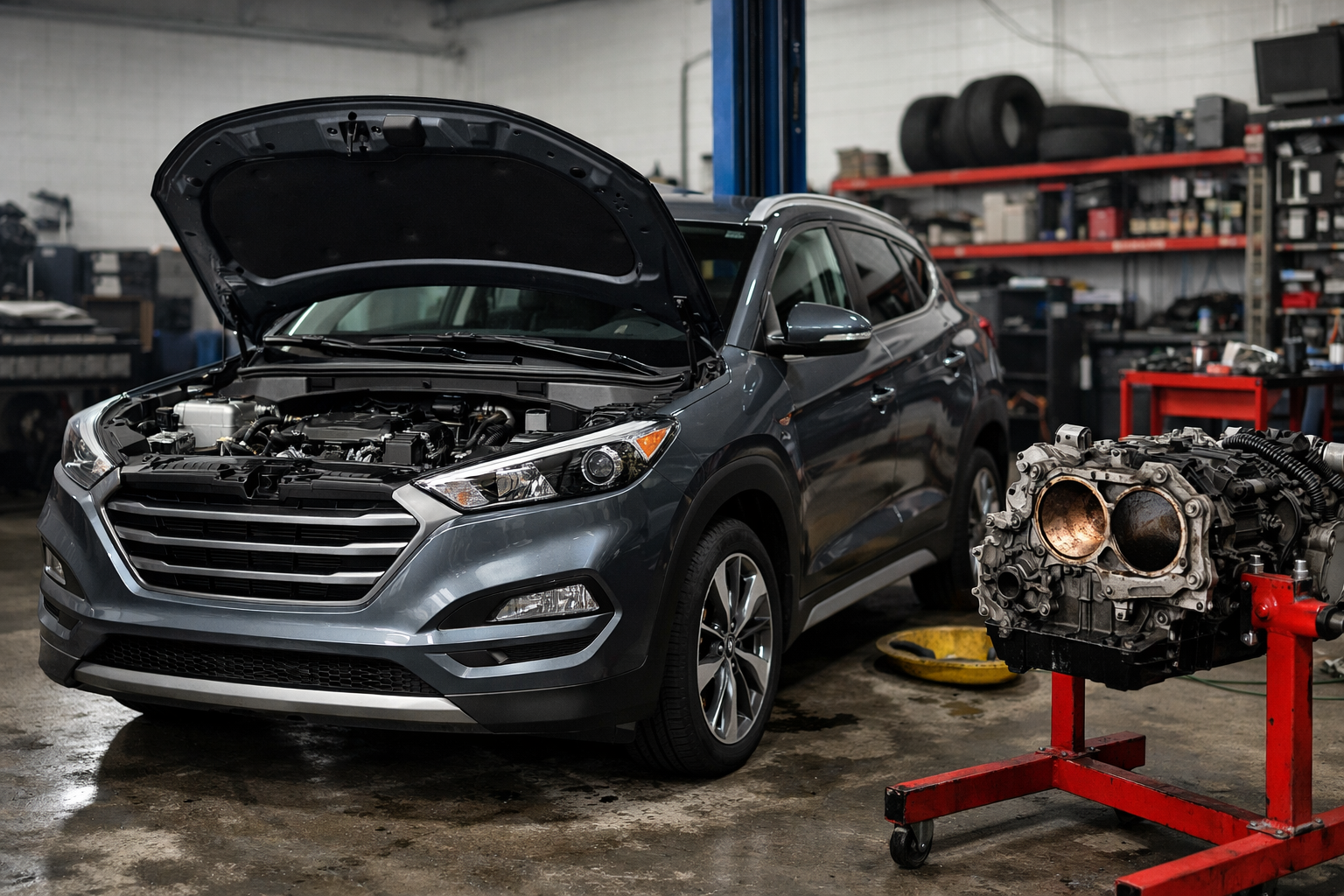
The Hyundai Tucson has evolved from a budget-friendly also-ran into a genuinely competitive crossover SUV, but certain model years carry serious risks that used buyers need to understand. The Theta II engine recall is the single biggest concern, affecting hundreds of thousands of Hyundai and Kia vehicles with potential for catastrophic engine failure.
Knowing which years are affected, how to verify recall status, and which years avoided the problem engine entirely is essential for shopping the used Tucson market safely.
Tucson Years to Avoid
2016-2018 (Theta II Engine Failures)
The 2.0L and 2.4L Theta II engines used in 2016-2018 Tucson models are part of one of the largest engine recalls in automotive history. The issue traces back to the manufacturing process at Hyundai’s engine plant, where metal debris (machining shavings) was left inside the crankshaft oil passages during production.
Over time, this debris restricts oil flow to the connecting rod bearings, causing them to overheat and seize. When a bearing seizes, the engine locks up, sometimes while the vehicle is being driven at highway speeds.
The failure can happen without warning, though some owners report a knocking or ticking noise in the days or weeks before seizure. Hyundai issued recalls covering engine inspection and replacement, along with extended warranties on affected powertrains.
However, the volume of affected vehicles overwhelmed the dealer network, leading to long wait times for inspection and repair. Some owners waited months for replacement engines.
Hyundai also installed knock sensor detection software (KSDS) as an interim measure. The software monitors for abnormal engine sounds and can trigger a limp mode before catastrophic failure occurs. Verify that the KSDS update has been installed on any 2016-2018 Tucson you’re considering.
2011 (Transmission Problems)
The 2nd generation Tucson’s 2011 model year had a higher rate of automatic transmission complaints, including harsh shifting between gears, delayed engagement when moving from park to drive, and premature wear of the torque converter. The 6-speed automatic in these models was less refined than in later years, and the transmission issues made daily driving noticeably less pleasant.
Early 2022 (First-Year NX4 Teething Issues)
The completely redesigned 2022 Tucson (NX4 platform) had some first-year growing pains. The dual-clutch transmission (DCT) on hybrid models exhibited hesitation during low-speed maneuvering and parking.
The new infotainment system experienced freezing, slow boot times, and occasional Bluetooth connectivity drops. Minor build quality complaints (interior rattles, uneven panel gaps) were also more common than on the outgoing model. The 2023 and later models addressed most of these concerns through software updates and production refinements.
How to Check for the Theta II Recall
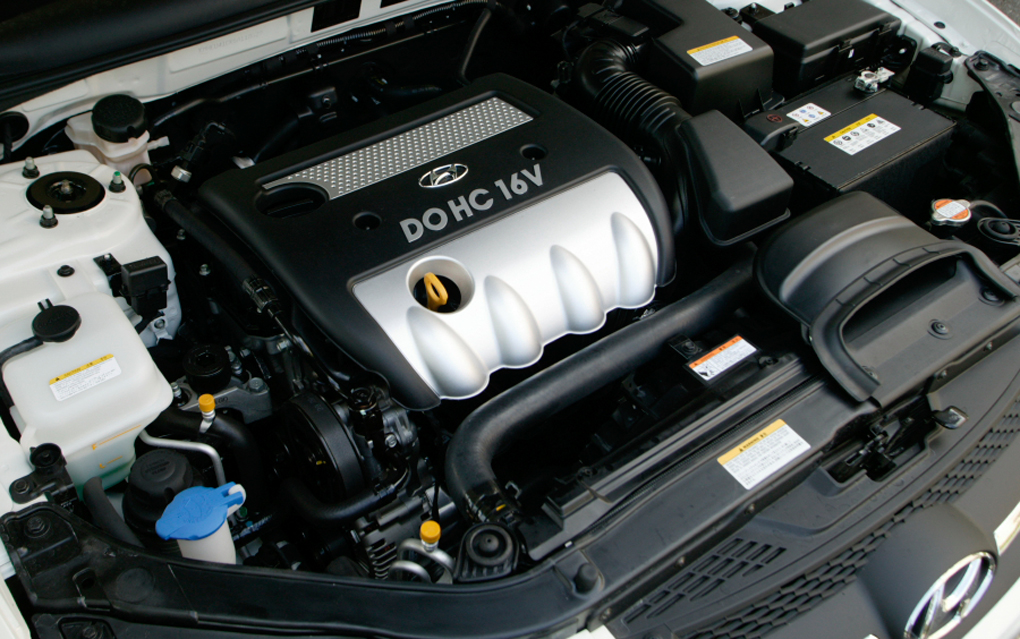
Enter the vehicle’s 17-digit VIN at nhtsa.gov/recalls to check whether the Tucson is part of the Theta II recall. The results will show whether the recall applies and whether the repair has been completed.
Pay attention to the recall status: “incomplete” means the vehicle hasn’t been inspected or repaired; “complete” means the work was done.
Vehicles with a replaced engine under the recall actually make reasonable used purchases. You’re essentially getting a vehicle with a new or remanufactured engine that has been installed by a Hyundai dealership under warranty. Ask for documentation of the engine replacement, including the replacement engine’s serial number and the installation date.
Best Tucson Years to Buy
For the 2nd gen (2010-2015): 2013 and 2014 are the best picks, with mature production quality and no Theta II engine concerns (those engines are in the 3rd gen).
For the 3rd gen (2016-2021): 2020 and 2021 are the safest, ideally with confirmed engine recall completion and KSDS software installed. For the NX4 (2022+): 2023 and later are well-sorted with resolved DCT and infotainment issues.
The NX4 Tucson Hybrid (2022+) uses the SmartStream 1.6T engine, which is not affected by the Theta II recall. It’s a completely different engine family with no known widespread issues, making the hybrid an excellent choice for buyers who want to avoid the Theta II entirely.
If you’re considering a used Tucson, make sure to review what to look for during a used car test drive and how to read a vehicle history report to identify potential red flags.
Always run an OBD2 scanner on any used Tucson and check recall status before purchasing.

OBD2 Scanner for Hyundai
Verify engine health and check for recall-related codes before purchasing
Comparing the Tucson to Other Crossovers
If you’re shopping in the compact crossover segment, you might also be considering competitors. The Mazda CX-5 vs Hyundai Tucson comparison highlights some key driving dynamics differences, while the Hyundai Tucson vs Kia Sportage comparison reveals what’s actually different between these platform-sharing siblings.
For buyers prioritizing reliability above all else, the Toyota RAV4 vs Honda CR-V comparison explores the two most dependable options in this class. Both the Toyota RAV4 and Honda CR-V have their own model years to avoid, but generally offer stronger reliability track records than the Theta II-equipped Tucsons.
Frequently Asked Questions
Are all 2016-2018 Tucsons affected by the engine recall?
Not every individual unit is affected, but the recall covers the Theta II engine family broadly. The manufacturing defect doesn’t affect every engine, but there’s no way to know which specific engines have debris and which don’t without disassembly.
Have any 2016-2018 Tucson inspected by a Hyundai dealer before purchasing, regardless of whether it shows symptoms.
Is the new 2022+ Tucson reliable?
The NX4 Tucson uses SmartStream engines that are completely separate from the Theta II family and are not part of any engine recall. The 2023+ models have proven reliable so far, with the hybrid powertrain being particularly well-regarded for both efficiency and dependability.
Does Hyundai’s warranty cover used buyers?
Hyundai’s warranty transfers to second owners with reduced coverage (5 years/60,000 miles on powertrain vs. 10 years/100,000 miles for the original owner). Safety recalls, however, apply regardless of ownership status and have no mileage limit.
The Theta II engine recall and associated repairs are covered for all owners.
What should I do if I find a used Tucson with an incomplete recall?
You can still purchase the vehicle, but factor in the time required for the dealer to complete the recall work. Get confirmation in writing from a Hyundai dealer about the availability of replacement engines and expected completion time.
Some dealers may offer a loaner vehicle during the repair. You might also negotiate a lower purchase price to account for the inconvenience and potential wait time.
This article contains affiliate links. We may earn a small commission at no extra cost to you.


Leave a Reply