
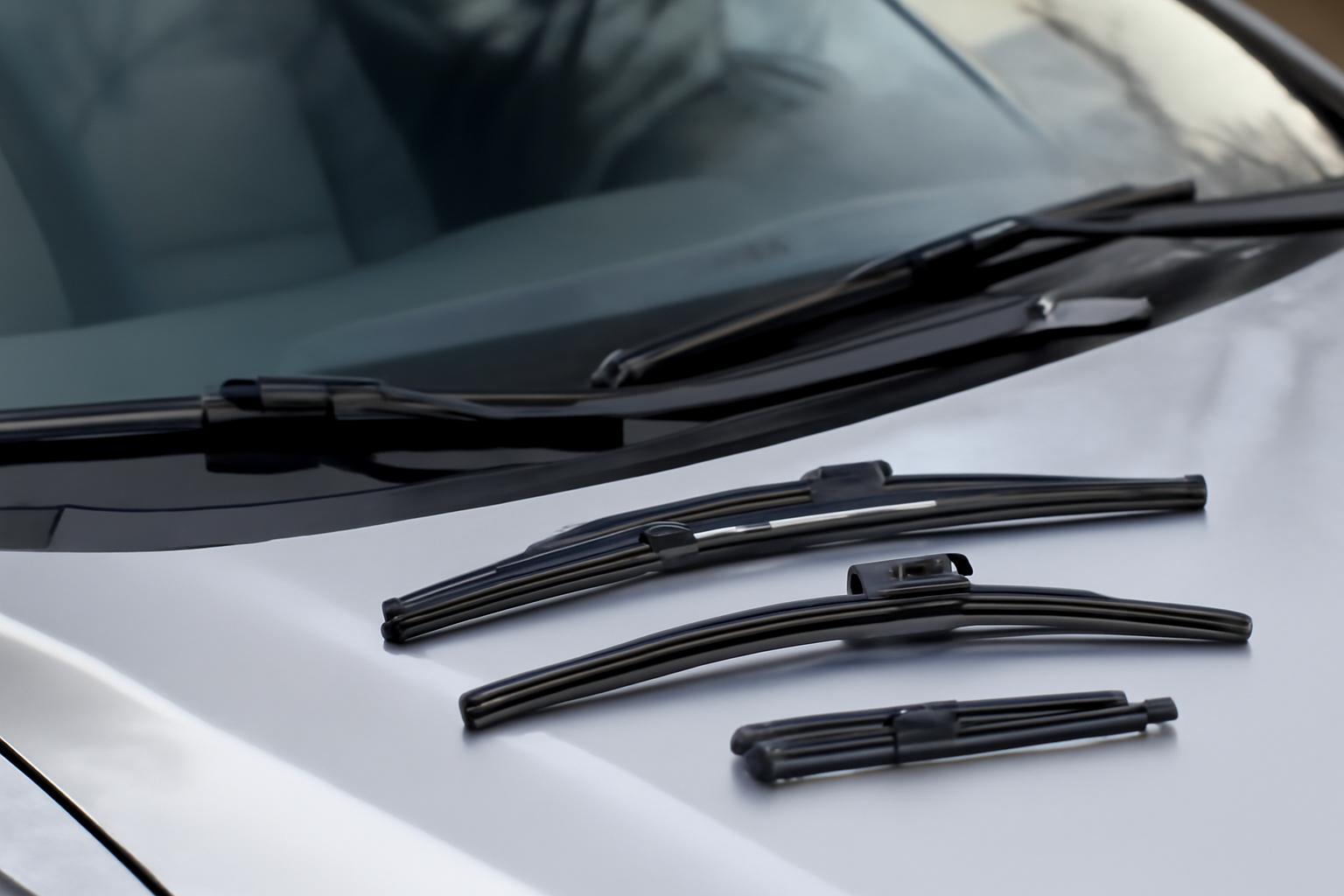
Worn windshield wipers streak, skip, and leave gaps that make driving in rain or snow genuinely dangerous. Replacing them twice a year takes five minutes and costs less than lunch, yet most drivers wait until visibility is already compromised. Fresh wipers transform a blurry windshield into a clear one in a single pass.
Types of Windshield Wipers
Beam (Frameless) Wipers
Beam wipers use a curved, spring-steel frame covered by a rubber housing. The entire blade contacts the windshield uniformly, which provides consistent pressure from end to end.
They handle curved windshields better than traditional wipers, resist ice buildup, and have a sleek, low-profile look. Most new cars come equipped with beam wipers from the factory.

Beam Style Windshield Wipers
Best all-around choice for daily drivers in any climate with superior performance and durability
A quality set of beam-style windshield wipers is the best all-around choice for daily drivers in any climate.
Hybrid Wipers
Hybrid wipers combine a traditional metal frame with an aerodynamic shell that covers the framework. They offer good performance in rain and moderate snow, with better ice resistance than traditional blades but less than beam wipers.
They’re a solid middle ground in terms of price and performance.
Traditional (Bracket) Wipers
Traditional wipers use an exposed metal frame with multiple contact points. They’re the most affordable option and work fine in mild climates.
In freezing conditions, ice can jam the frame’s pivot points, causing streaking and gaps. If you live where it snows, beam or hybrid wipers are the better investment.
Finding the Right Size
Wipers come in specific sizes (measured in inches) for the driver and passenger sides, and the two sides are often different lengths. Check your owner’s manual, measure your current blades, or use the sizing guide at any auto parts store.
Using the wrong size causes gaps in coverage or blades hitting each other.
Some vehicles use a different connector type to attach the blade to the arm. Most modern cars use a J-hook, but you’ll also find pin-style, bayonet, and top-lock connectors. Quality wiper brands include multiple adapters in the box to fit the most common connector types.
When to Replace
Replace wipers every 6 to 12 months, or sooner if you notice any of these signs: streaking or smearing on the windshield, chattering or skipping across the glass, squeaking noises, visible cracks or tears in the rubber, or areas of the windshield the blade misses entirely.
UV exposure and temperature extremes degrade the rubber faster, so wipers in sunny or hot climates may need replacement more frequently. A wiper that looks fine from the outside can have a deteriorated wiping edge that only shows up during rain.
Whether you’re maintaining a reliable used car or a budget-friendly first car, replacing wipers regularly is one of the simplest maintenance tasks that significantly improves safety.
Installation Tips
Lift the wiper arm away from the windshield carefully. If you let it snap back without a blade attached, it can crack the glass.
Release the old blade by pressing the tab on the connector and sliding the blade off. Slide the new blade on until it clicks into place.
Test it with washer fluid to verify clean contact across the full sweep.
Frequently Asked Questions
Are expensive wipers worth it over budget ones?
Premium wipers (beam style) last longer, perform better in harsh weather, and streak less. Budget wipers work adequately in mild conditions but deteriorate faster. For most drivers, a mid-range beam wiper offers the best value.
Should I replace both wipers at the same time?
Yes. Wipers wear at similar rates since they’re exposed to the same conditions. Replacing both ensures consistent visibility across the entire windshield.
A new wiper on one side and a worn one on the other creates an inconsistent view in rain.
Do I need a separate rear wiper blade?
If your vehicle has a rear wiper (most SUVs, hatchbacks, and wagons do), replace it on the same schedule as the front wipers. Rear wiper sizes are often different from the front and specific to your vehicle model.
Can worn wipers damage my windshield?
Worn wiper blades with exposed metal frames can scratch your windshield over time. Replace wipers as soon as you notice the rubber is cracked, torn, or missing chunks to prevent permanent glass damage.


Leave a Reply