
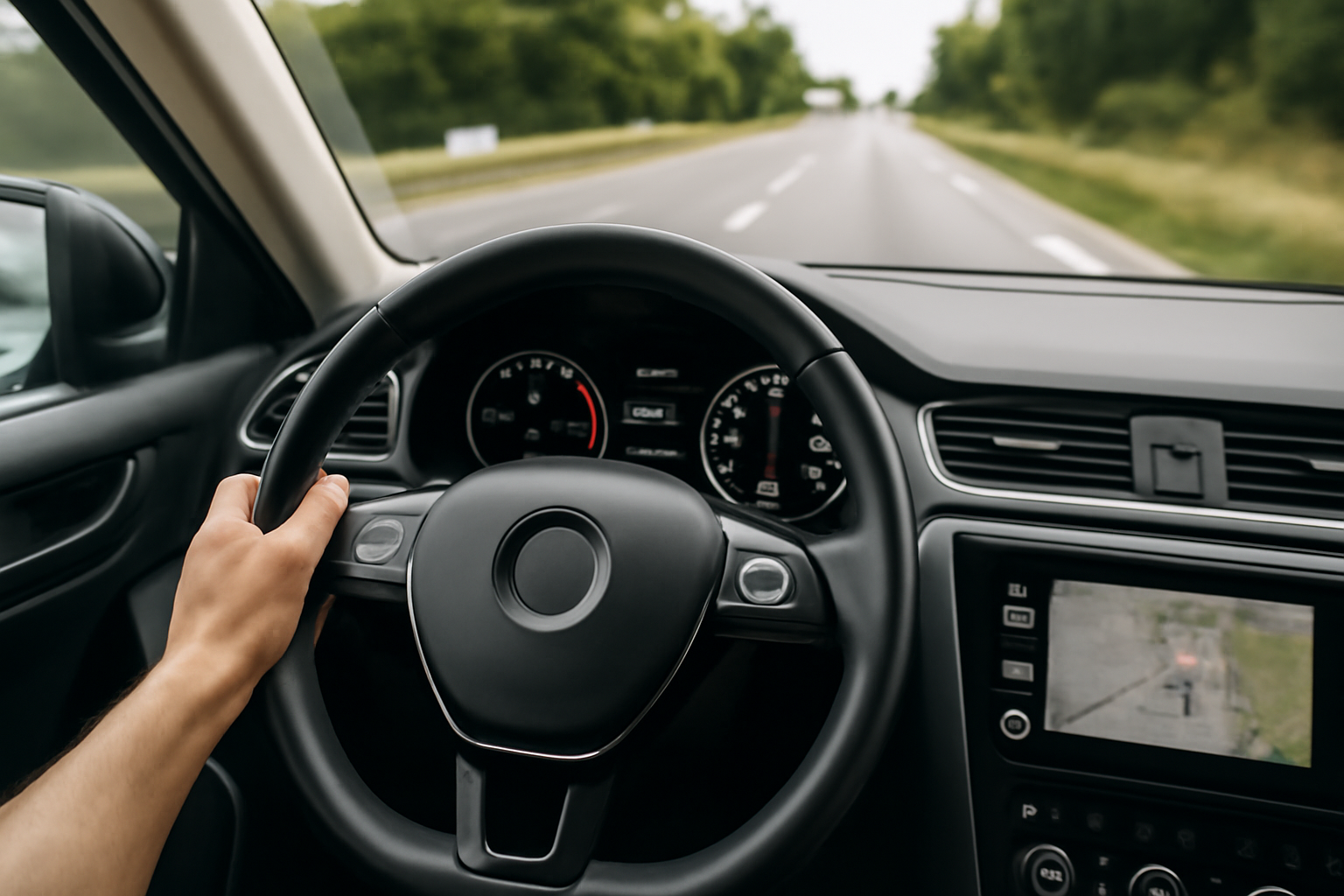
A car that drifts left or right when you let go of the steering wheel is more than just annoying. It’s a sign that something in the tires, alignment, brakes, or suspension needs attention. The pull might be subtle enough that you’ve been unconsciously compensating without realizing it.
Let’s look at the six most common causes and how to fix them.
Uneven Tire Pressure
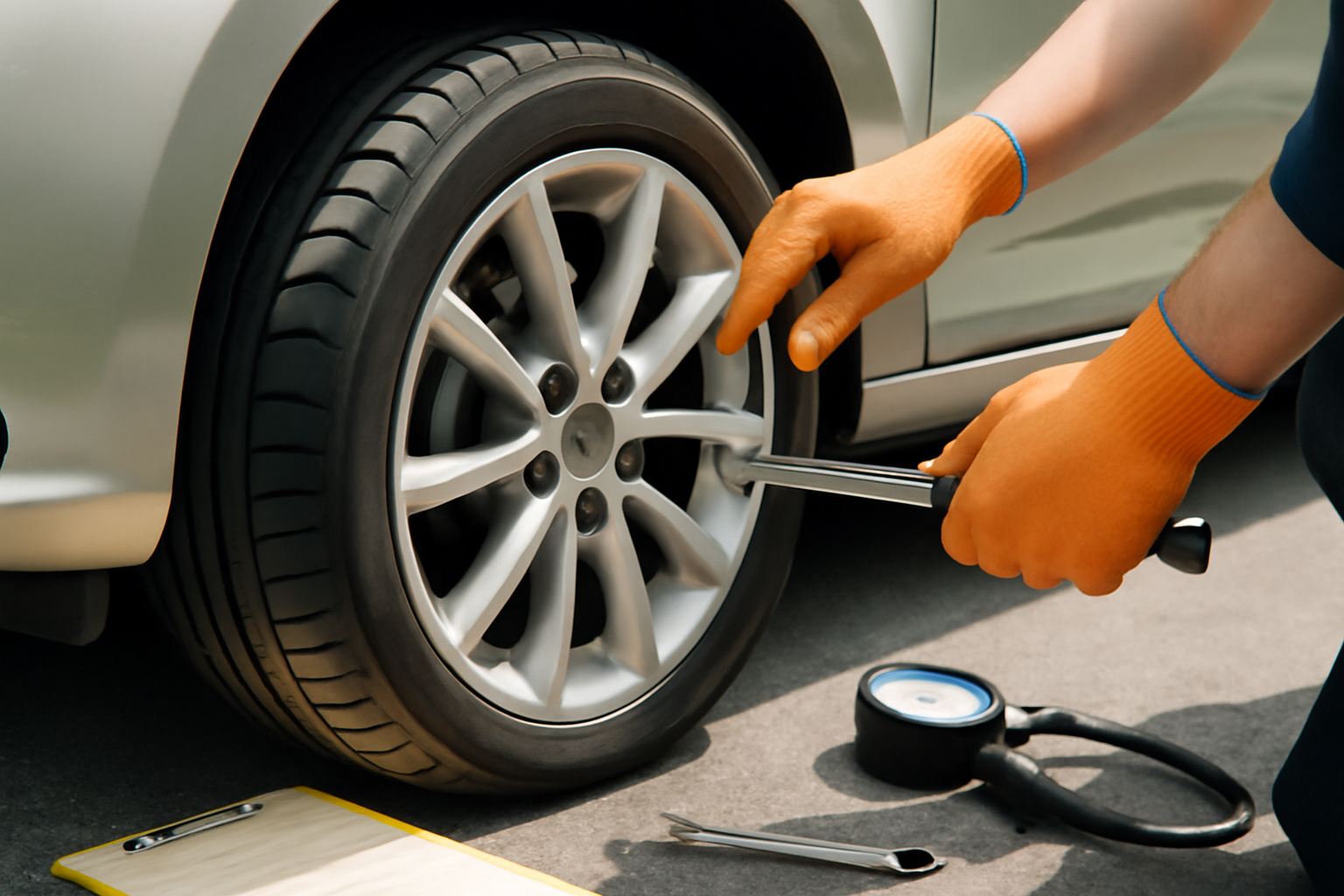
This is the most common cause and the easiest to fix. A tire with lower pressure than the others creates more rolling resistance, pulling the car toward that side. Even a 5 PSI difference between left and right can produce a noticeable pull.
Check all four tires with a gauge and inflate to the manufacturer’s spec. If the pull disappears after equalizing pressure, you’re done. If one tire keeps losing pressure, it has a slow leak that needs repair.
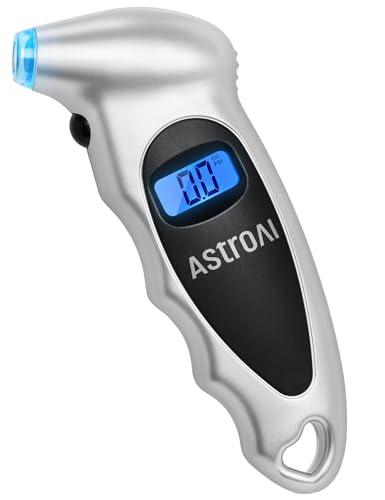
Digital Tire Pressure Gauge
Essential for accurate pressure checks, a quality digital gauge is more reliable than gas station gauges
Wheel Alignment
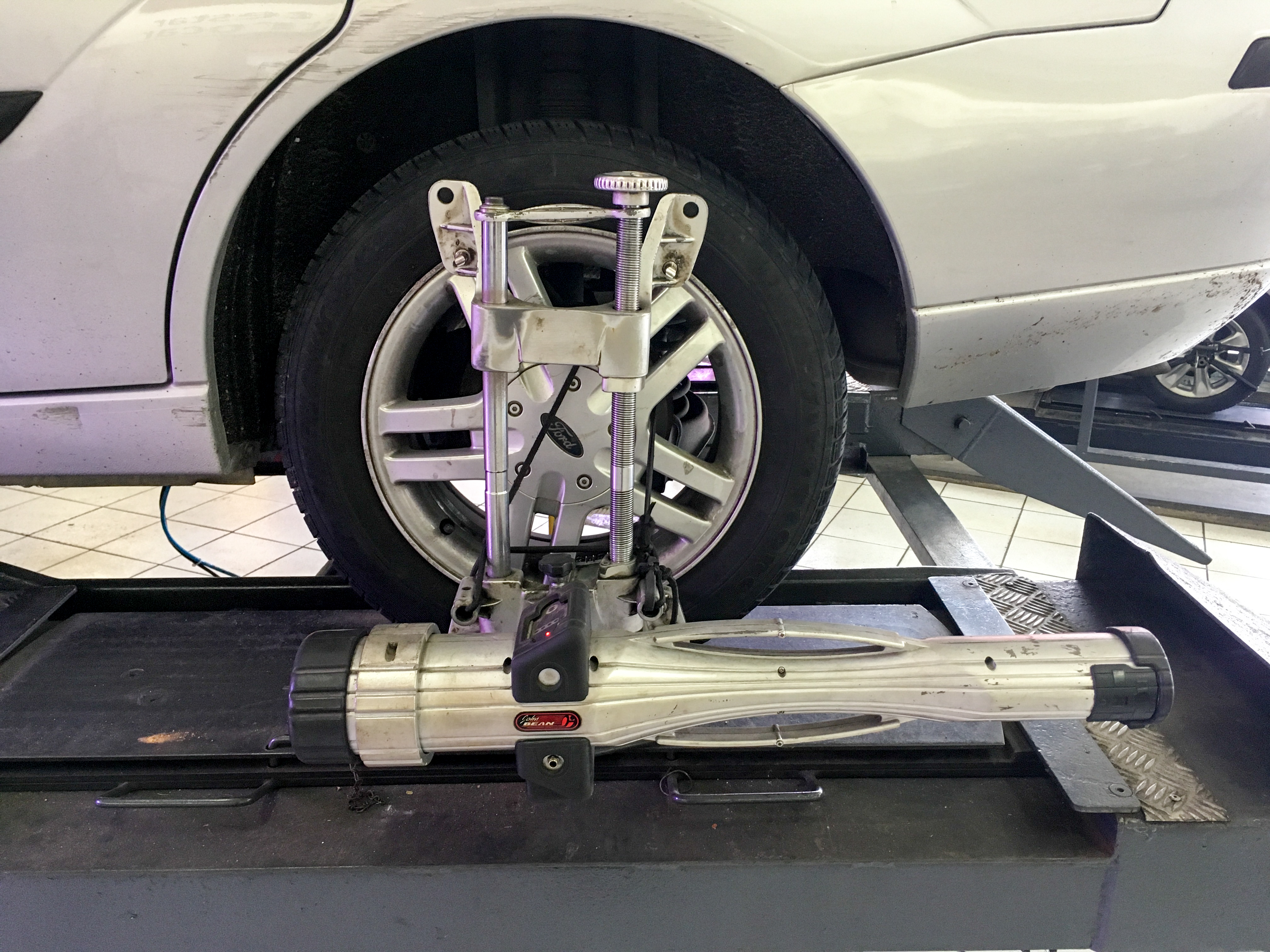
Misaligned wheels are the second most common cause. Hitting potholes, curbs, or speed bumps can knock the alignment out of spec. The three alignment angles (camber, caster, and toe) all affect whether the car tracks straight.
Signs of alignment issues beyond pulling include uneven tire wear (one edge wearing faster than the other) and a steering wheel that’s off-center when driving straight. A professional alignment typically takes about an hour and corrects all three angles.
Alignment issues can develop gradually, especially if you’re driving on rough roads regularly. Many tire shops include a free alignment check with routine maintenance, so take advantage of it at least once a year.
Uneven Tire Wear or Mismatched Tires
Tires with different tread depths or different brands on the same axle can cause pulling. The tire with less tread has a slightly smaller diameter and different rolling characteristics. Always replace tires in pairs (both fronts or both rears) and ensure matching tread depths on the same axle.
Even if you’re shopping for budget-friendly vehicles, don’t skimp on tire quality or matching. Mismatched tires wear out faster and compromise handling and safety.
Brake Caliper Sticking
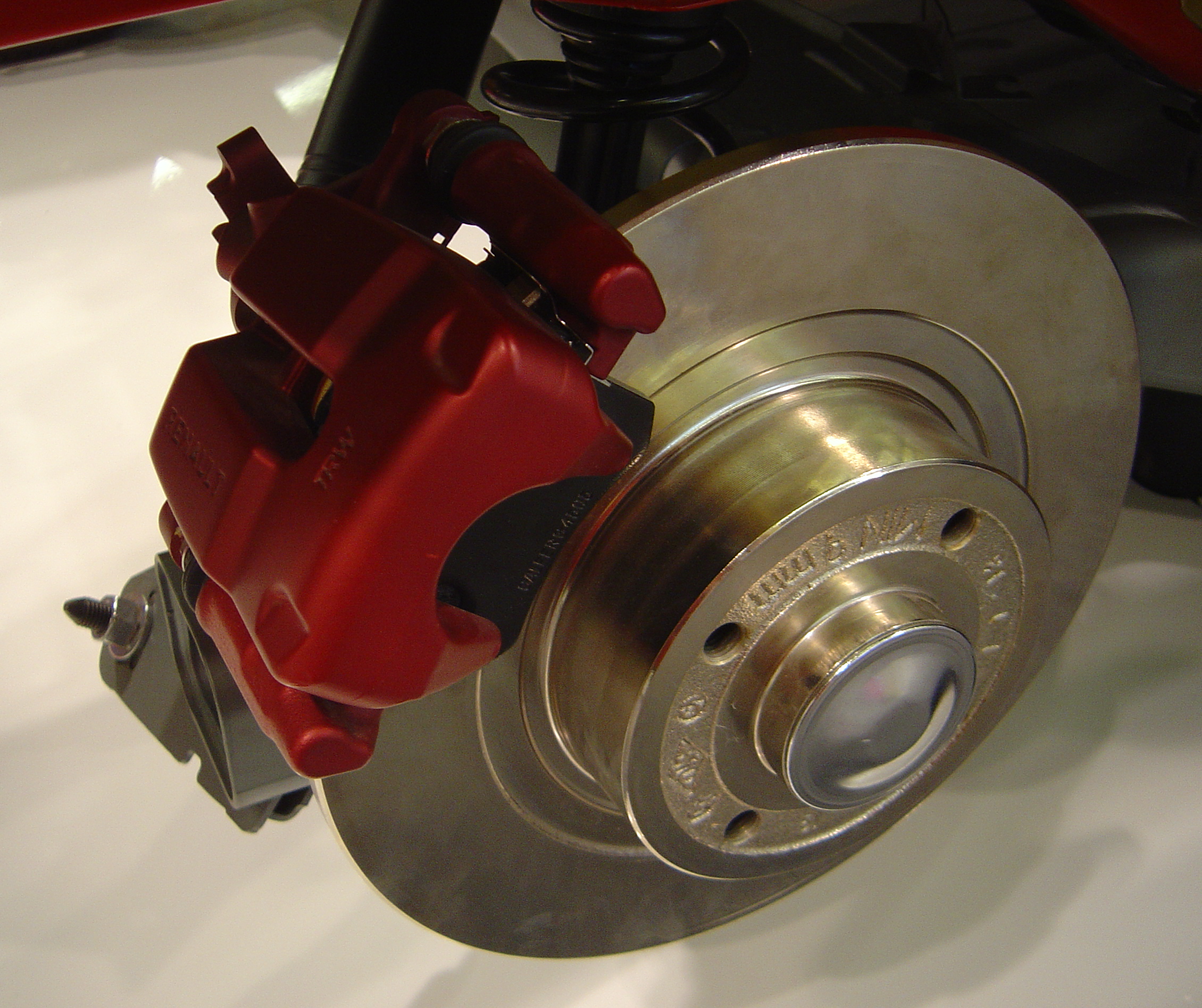
A caliper that doesn’t fully release after you lift off the brake pedal creates drag on one side. The car pulls toward the side with the stuck caliper during braking, and you may notice the wheel on that side is hotter than the other after driving.
Sticking calipers also cause uneven brake pad wear and a burning smell. Cleaning and lubricating the caliper slide pins often resolves the issue. Severely seized calipers need replacement.
You can check for this yourself by taking a short drive, then carefully touching each wheel (not the center or rotor, just the wheel itself). If one is significantly hotter than the others, that’s your culprit.

Brake Caliper Tool Set
Makes DIY brake maintenance much easier, especially for cleaning and servicing caliper slide pins
Suspension Wear
Worn ball joints, tie rod ends, control arm bushings, or strut mounts allow the wheel alignment to shift under load. The pull may vary depending on speed and road conditions as the worn components allow movement in the suspension geometry.
Jack up each front wheel and check for play by rocking the tire at 12 and 6 o’clock (ball joint) and 3 and 9 o’clock (tie rod). Any perceptible movement indicates a worn component that should be replaced before getting an alignment.
Suspension components wear faster on vehicles driven on rough roads or in harsh climates. If you’re considering used trucks or older vehicles, have the suspension thoroughly inspected before purchase.
Torque Steer
Front-wheel-drive vehicles can pull during hard acceleration due to unequal-length half shafts or worn CV joints. This is called torque steer and is most noticeable in high-powered FWD cars. It’s a characteristic of the drivetrain design rather than a defect, but worn CV joints can make it worse.
Torque steer affects vehicles differently. Some manufacturers use equal-length half shafts or intermediate shafts to minimize the effect, while others accept it as part of the FWD experience.
Frequently Asked Questions
Can road crown cause pulling?
Yes. Most roads are slightly crowned (higher in the center) for drainage, which naturally causes a slight drift to the right. If the pull only occurs on crowned roads and disappears on flat surfaces, it’s the road, not your car.
How much does a wheel alignment cost?
A standard front-end alignment is relatively affordable. A four-wheel alignment costs more. Most vehicles should have their alignment checked annually or after any significant impact with a pothole or curb.
Can new tires cause pulling?
Occasionally, a new tire may have a slight conicity (manufacturing variance in the belt layup) that causes a pull. Quality tire manufacturers will replace a tire that exhibits this defect under warranty. Drive for 500 miles before pursuing a warranty claim, as the pull sometimes resolves as the tire breaks in.
Should I fix a pull immediately or can it wait?
Don’t delay fixing a pull. Beyond the safety concerns, driving with misalignment or uneven tire pressure causes accelerated tire wear and can lead to more expensive problems. Uneven tire wear alone can cost you hundreds in premature tire replacement, and ignoring worn suspension components can damage other parts.
This article contains affiliate links. We may earn a small commission at no extra cost to you.

Leave a Reply