

I’ve been asked more times than I can count whether buying a used rental car is a smart move. After all, they’re usually cheaper than comparable vehicles, sometimes by several thousand dollars. The price tag is tempting. But there’s a reason rental companies offload these cars in bulk, and it’s not because they’re overflowing with reliable, well-maintained vehicles.
Former rental cars have spent their entire lives being driven by people who have zero stake in their longevity. That’s not a small detail. It changes everything about how these vehicles are treated, maintained, and what you can expect when you sign on the dotted line.
How Rental Cars Are Actually Used

Let’s start with the reality of rental car life. When someone rents a car for a weekend trip or business travel, they’re not thinking about gentle acceleration or avoiding potholes. They’re thinking about getting from point A to point B, often in an unfamiliar area, sometimes running late.
I’ve seen rental returns that tell stories. Curb rash on every wheel. Suspensions that sound like they’ve been through a rally course. Interiors that smell like a combination of fast food, spilled coffee, and air freshener trying its best to mask everything else. These cars get hammered in ways that private owners would never consider.
Cold starts followed immediately by highway driving. No warm-up period. Rapid acceleration from stoplights because the driver is late to catch a flight. Hard braking because they’re navigating an unfamiliar city. The transmission gets shifted into reverse while still rolling forward. Parking curbs get hit at speeds that would make you wince if it was your own car.
Rental companies rotate their fleets every year or two, which means these vehicles rack up 30,000 to 50,000 miles in a very short time. That’s not necessarily bad in itself. Highway miles can be easier on a car than stop-and-go city driving. But rental miles? Those are different. They’re aggressive, inconsistent, and delivered by dozens of different drivers with varying skill levels and zero emotional investment.
Maintenance Reality vs Marketing
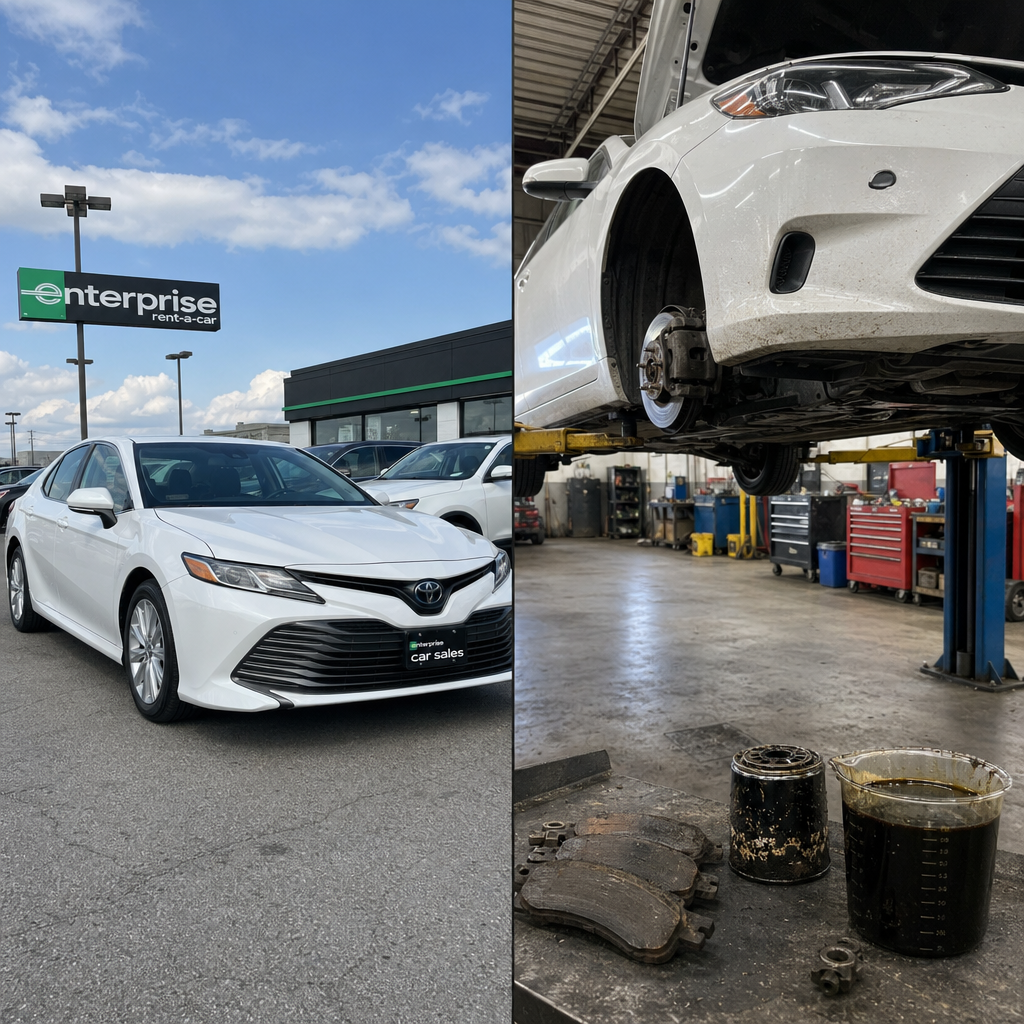
Rental companies will tell you their vehicles are meticulously maintained. They have service records. They follow manufacturer schedules. All true, technically.
But here’s what they don’t mention. Maintenance on rental fleets is done to meet minimum requirements, not maximize longevity. Oil changes happen on schedule, sure. But quality of oil? Basic stuff. Any repairs beyond absolute necessities? Deferred until the car goes to auction.
I once inspected a rental return that had a check engine light. The service record showed the light had been cleared four times in six months. No actual repair. Just clearing codes. That’s not uncommon. Minor issues that would get addressed immediately by a private owner get ignored in rental fleets as long as the car still runs and passes safety requirements.
Brake pads get replaced when they’re down to the wear indicators, not before. Tires get rotated when convenient, not necessarily when optimal. Alignment issues? Only addressed if the car pulls hard enough to generate customer complaints. That slight vibration at highway speeds? Not worth investigating until something actually fails.
Scotty Kilmer explains the rental car problem in detail:
Hidden Damage You Won’t See on the Lot
When rental companies prep cars for resale, they clean them up nicely. New floor mats. Fresh detailing. Maybe new wiper blades. The car looks presentable, sometimes even great.
What you’re not seeing is the wear that happens beneath the surface. Clutches that have been riding the friction point for 40,000 miles of city traffic. Transmissions that have been shifted aggressively through every gear range. Engine mounts stressed by repeated hard launches. Suspension bushings compressed and twisted by drivers who treat speed bumps like suggestions.
Body panel gaps tell stories if you know what to look for. Rental cars get minor fender benders that result in insurance claims and quick repairs. The work gets done at volume pricing by shops that specialize in fleet repairs. It’s not always the same quality you’d get choosing your own body shop after an accident with your personal vehicle.
I’ve seen rental cars with paint that doesn’t quite match from door to door. Headlight assemblies that were replaced but aren’t quite the same brightness. Bumpers that fit correctly but have different texture than the factory pieces. None of this shows up on a Carfax as accident damage because it was all handled internally through the rental company’s insurance process.
The Resale Value Problem
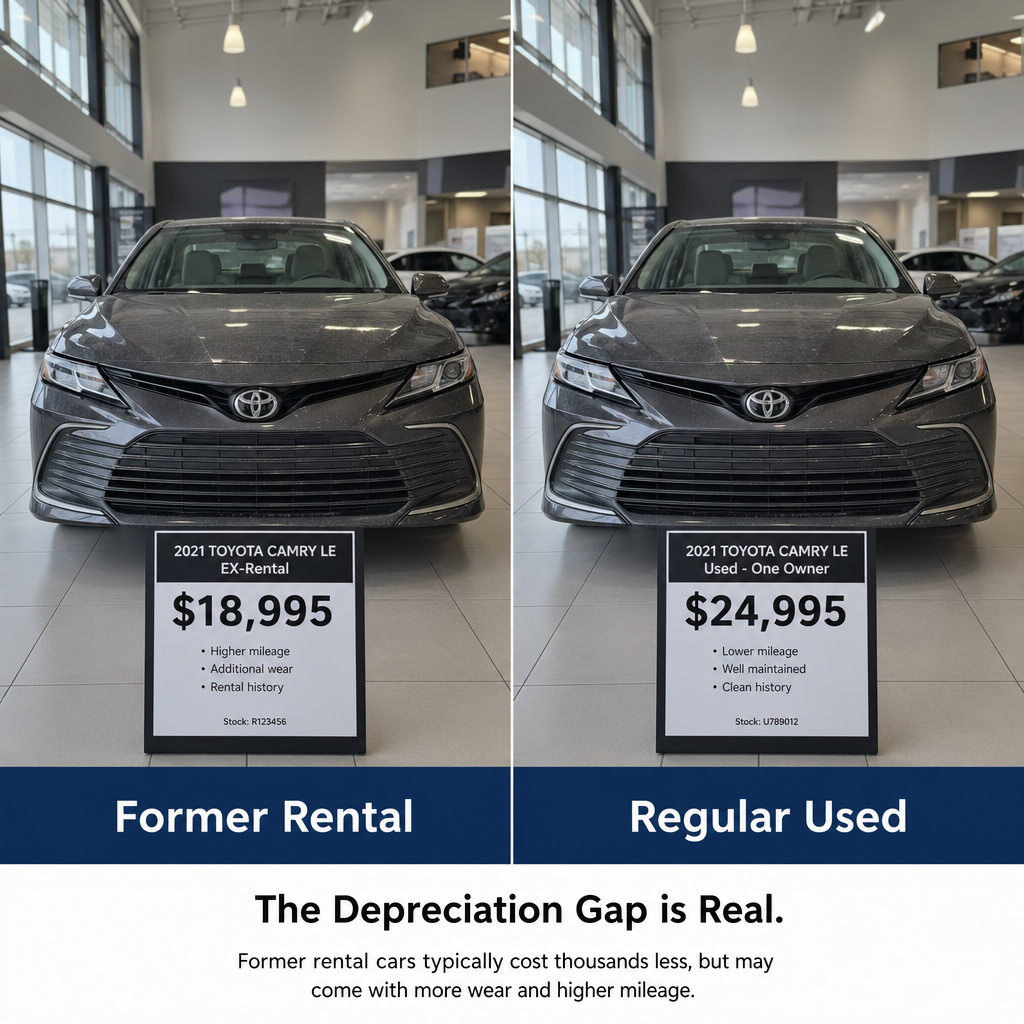
Even if you’re willing to overlook the abuse factor, there’s a practical financial reality. Former rental cars have lower resale values, period. When you eventually try to sell or trade in a car that has rental history in its VIN records, dealers and private buyers factor that into their offers.
That discount you got when buying it? You’re going to give it right back when selling it. Maybe more. The rental stigma sticks with the vehicle through its entire life. Some buyers won’t even consider a former rental, regardless of condition or price.
Financing can also be trickier. Some lenders have restrictions on former rental vehicles or offer less favorable terms. Insurance companies sometimes charge slightly higher premiums because rental history correlates with higher claim rates down the line.
The Exception That Proves the Rule
There are scenarios where a former rental might make sense. If you’re looking for a bare-bones transportation appliance, plan to drive it into the ground, and don’t care about long-term value, a heavily discounted rental might work. Some buyers specifically target rental Corollas or Civics with this strategy.
Cars that were rented in certain markets can be better bets. Airport location rentals in warm climates see mostly highway miles from business travelers. That’s easier on a vehicle than urban rentals in cold climates where cars face harsh winters and constant stop-and-go traffic.
But even in best-case scenarios, you’re buying someone else’s problem. The rental company has sophisticated analytics telling them exactly when a vehicle becomes more expensive to maintain than to replace. They’re not dumping these cars into the used market out of generosity. They’re offloading them right before maintenance costs spike.
What to Do Instead
For just slightly more money, you can usually find a one-owner vehicle with complete service records. A car that’s been driven by someone who actually cared about it. Someone who warmed it up before driving in winter. Someone who avoided potholes instead of plowing through them. Someone who addressed that weird noise instead of ignoring it for six months.
Certified pre-owned programs from manufacturers offer warranties and inspection processes that rental auctions simply don’t match. Yes, you’ll pay more upfront. But you’re buying peace of mind and a vehicle that hasn’t been systematically abused during its formative miles.
Private party sales from original owners often represent better value than rental inventory. You can talk to the person who actually drove the car. Ask about their driving habits. See service records with local shops that they chose themselves. Get a sense of whether this vehicle was maintained out of pride or obligation.
If the price difference between a rental and a clean private party car is check current prices, that gap will close quickly once you start addressing the deferred maintenance and accelerated wear on the rental. Brake jobs, suspension work, premature tire replacement, transmission issues… these costs add up fast.
How to Spot a Former Rental
Not all sellers are upfront about rental history. Some will scrub that detail from listings or dance around direct questions. There are telltale signs.
Check the VIN through multiple history services. Carfax sometimes misses rental history that AutoCheck catches. Look for registration records showing fleet ownership or corporate registration in states where rental companies are headquartered (looking at you, Florida).
Physical clues on the car itself can be revealing. Mounting holes or adhesive residue where barcode stickers were placed. Extra wear on the driver’s door handle and B-pillar from dozens of different users. Unusual wear patterns on the steering wheel that suggest many different grip styles. Key fob scratches from being tossed into bins and handled roughly.
Service records done at quick-lube chains or generic fleet service centers rather than dealerships or trusted independent shops. Tires from budget brands you’ve never heard of. Aftermarket parts replacing OEM components to save costs on repairs.
The glove box is often telling. Rental cars sometimes still have faint outlines or mounting points where rental agreements were stored. Documentation that references fleet numbers or rental locations. Service receipts with fleet discount codes.
Final Thoughts
I get it. Everyone wants to save money on a car purchase. The automotive market is expensive, and finding ways to stretch your budget makes sense. But a former rental car is a false economy in most cases.
You’re buying accumulated stress and deferred maintenance wrapped in a clean exterior. The discount you’re getting today will be eaten up by repairs, lower resale value, and the general headache of owning a vehicle that started its life being treated as disposable transportation.
There are smarter ways to save money. Buy a less popular trim level of a reliable model. Choose last year’s body style instead of the current generation. Consider a higher mileage car from a meticulous single owner instead of a lower mileage rental from dozens of careless drivers.
Your time, money, and peace of mind are worth more than the rental lot discount. Find a car that was actually cared for, and you’ll spend less on repairs, keep it longer, and sell it for more when you’re done. That’s where the real value lives.




Leave a Reply