
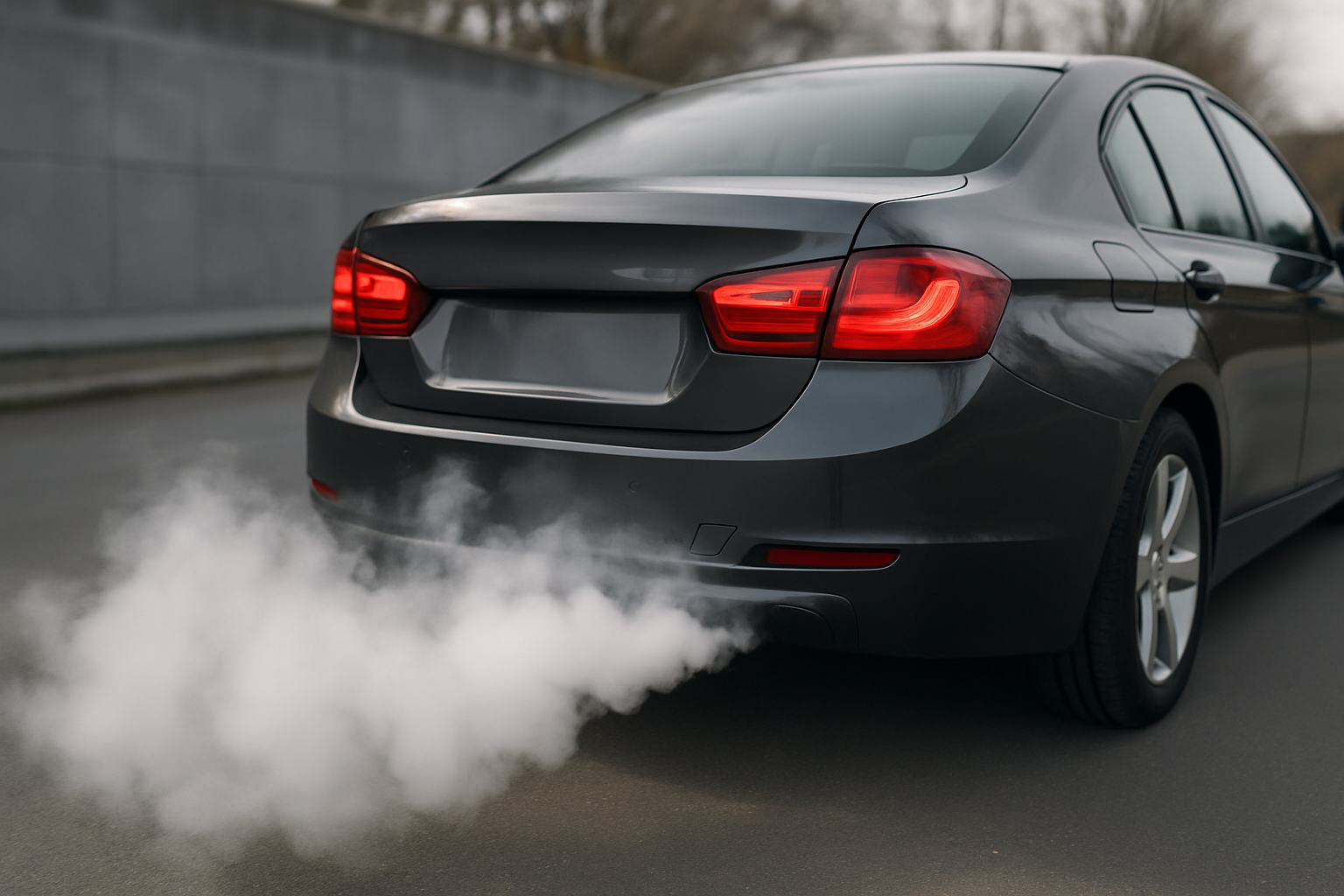
White smoke billowing from your exhaust pipe can stop you in your tracks and send your mind racing to expensive repair bills. The key is figuring out whether you’re dealing with harmless water vapor or a serious engine problem that needs immediate attention.
Understanding Normal vs. Problematic White Smoke
Not all white smoke means disaster for your engine. On cold mornings, especially when temperatures drop below 40°F, you’ll often see white vapor streaming from your tailpipe. This is completely normal water vapor created when hot exhaust gases meet cold air and moisture condenses in your exhaust system.
This normal steam typically disappears within a few minutes of driving as your exhaust system warms up. The vapor looks thin and wispy, almost like breath on a cold day, and it doesn’t have any particular smell.
The concerning white smoke is different. It’s thicker, more persistent, and often has a sweet smell that reminds you of antifreeze. This smoke continues even after your engine reaches operating temperature and your exhaust system is fully warmed up.
Common Causes of Problematic White Smoke
Head Gasket Failure
A blown head gasket is the most common culprit behind persistent white smoke. The head gasket seals the combustion chambers from your cooling system, and when it fails, coolant leaks into the cylinders where it gets burned along with your fuel.
When coolant burns in your combustion chambers, it creates thick white smoke with that characteristic sweet smell. You’ll also notice your coolant level dropping without any visible external leaks, and your engine may run rough or misfire.
Head gasket problems often start small but get worse over time. You might initially notice white smoke only during cold starts, but eventually it becomes constant as the gasket deteriorates further.
Cracked Engine Block or Cylinder Head
A cracked engine block or cylinder head allows coolant to enter the combustion chambers, just like a blown head gasket. These cracks can develop from overheating, freezing, or normal wear and tear in high-mileage engines.
Block and head cracks are more serious than head gasket failures because they typically require engine rebuilding or replacement. The symptoms are similar to head gasket problems, but the damage is usually more extensive.
You might also notice air bubbles in your radiator or coolant reservoir, which indicates combustion gases are entering your cooling system through the crack.
Faulty Fuel Injectors
Leaking fuel injectors can cause white smoke, particularly in diesel engines. When injectors don’t atomize fuel properly or leak fuel into cylinders during shutdown, incomplete combustion creates white smoke.
This type of white smoke usually appears more gray than pure white and may be accompanied by rough idling, poor fuel economy, and hard starting. Diesel engines are especially prone to injector-related white smoke issues.
Warning Signs That Accompany Serious White Smoke
Coolant Loss Without External Leaks
If you’re constantly adding coolant to your radiator or reservoir but can’t find any puddles under your car, the coolant is likely burning in your engine. Check your coolant level regularly and note how quickly it drops.
Keep track of how much coolant you’re adding and how often. A quart every few hundred miles indicates a significant internal leak that needs immediate attention.
Milky Oil
Check your oil dipstick and oil filler cap for signs of coolant contamination. When coolant mixes with engine oil, it creates a milky, chocolate milk-colored substance that you’ll see on these components.
This contamination destroys your oil’s lubricating properties and can cause catastrophic engine damage if you continue driving. If you see milky oil, stop driving immediately and have your engine diagnosed.
Engine Overheating
White smoke problems often cause overheating because coolant loss reduces your cooling system’s effectiveness. Watch your temperature gauge closely and pull over immediately if it approaches the red zone.
Overheating can turn a repairable head gasket problem into a complete engine rebuild, so don’t ignore temperature warnings even if your engine seems to run fine otherwise.
Diagnostic Tests for White Smoke Issues
Combustion Leak Test
A combustion leak test is the most reliable way to diagnose head gasket and internal engine problems. This test uses a special tool that draws air from your radiator through a solution that changes color if combustion gases are present.
Most auto parts stores rent or sell combustion leak test kits for around $30-50. The test takes about 10 minutes and gives you a definitive answer about whether combustion gases are entering your cooling system.
You can also have this test performed at any repair shop for $50-100, which includes their diagnosis and recommendations for next steps.
Cooling System Pressure Test
A pressure test checks for leaks in your cooling system by pressurizing it with a special pump and gauge. External leaks will cause pressure to drop quickly, while internal leaks may show slower pressure loss.
This test also reveals whether your radiator cap is maintaining proper system pressure. A faulty cap can cause overheating and coolant loss that mimics more serious problems.
Oil Analysis
An oil analysis can detect coolant contamination before it becomes visible as milky oil. Labs like Blackstone Labs analyze your oil sample for coolant glycol and other contaminants for about $30.
This test is particularly useful for catching head gasket problems early, before they cause major engine damage or obvious symptoms.
What to Do When You See White Smoke
Immediate Steps
When you first notice persistent white smoke, check your coolant level immediately. If it’s low, add coolant but don’t drive until you determine the cause of the loss.
Monitor your temperature gauge constantly and pull over if the engine starts overheating. Continuing to drive with a cooling system problem can transform a moderate repair into engine replacement.
Check your oil condition by pulling the dipstick and removing the oil filler cap. If you see any signs of coolant contamination, stop driving immediately.
Professional Diagnosis
Have your vehicle diagnosed by a qualified technician as soon as possible. Most shops charge $100-150 for a comprehensive diagnosis that includes combustion leak testing and cooling system evaluation.
Get a written estimate for any recommended repairs before authorizing work. Head gasket jobs typically cost $1,500-3,000 depending on your vehicle, while engine rebuilds or replacements can run $4,000-8,000 or more.
Prevention and Maintenance
Regular cooling system maintenance prevents many white smoke problems. Flush your coolant according to your manufacturer’s schedule, typically every 60,000-100,000 miles or 5-7 years.
Address overheating issues immediately before they damage your head gasket or engine block. Replace your thermostat, water pump, and radiator cap at recommended intervals or when they show signs of failure.
Use the correct coolant type for your vehicle. Mixing different coolant types or using the wrong specification can cause corrosion and gasket deterioration that leads to internal leaks.
When White Smoke Isn’t Serious
Remember that some white smoke situations don’t require expensive repairs. Normal condensation on cold mornings, brief white smoke after sitting for extended periods, and thin vapor during warm-up are typically harmless.
If your white smoke disappears within 5-10 minutes of driving and doesn’t return, you’re probably seeing normal water vapor. Monitor your coolant level over the next few weeks to confirm there’s no internal leak.
Vehicles that sit unused for weeks or months often produce white smoke initially as accumulated moisture burns out of the exhaust system. This should clear up after a few miles of driving.
Frequently Asked Questions
Can I drive with white smoke coming from my exhaust?
If it’s just cold weather condensation that disappears quickly, you’re fine to drive normally. However, persistent white smoke with coolant loss or oil contamination requires immediate attention. Continuing to drive can cause catastrophic engine damage that costs thousands more to repair than addressing the original problem.
How much does it cost to fix white smoke problems?
Repair costs vary widely depending on the cause. Simple issues like a bad radiator cap cost under $50, while head gasket replacement typically runs $1,500-3,000. Cracked blocks or heads often require engine rebuilding or replacement, which can cost $4,000-8,000 or more depending on your vehicle.
How can I tell if my head gasket is blown?
Common signs include persistent white smoke, coolant loss without external leaks, milky oil, overheating, and bubbles in the radiator. A combustion leak test provides definitive diagnosis and costs much less than guessing wrong about the problem.
Will head gasket sealer stop white smoke?
Chemical sealers occasionally work for very minor leaks but rarely provide permanent fixes for significant head gasket failures. These products can also clog your cooling system and make proper repairs more expensive later. Professional repair is usually the most cost-effective long-term solution.
Leave a Reply