
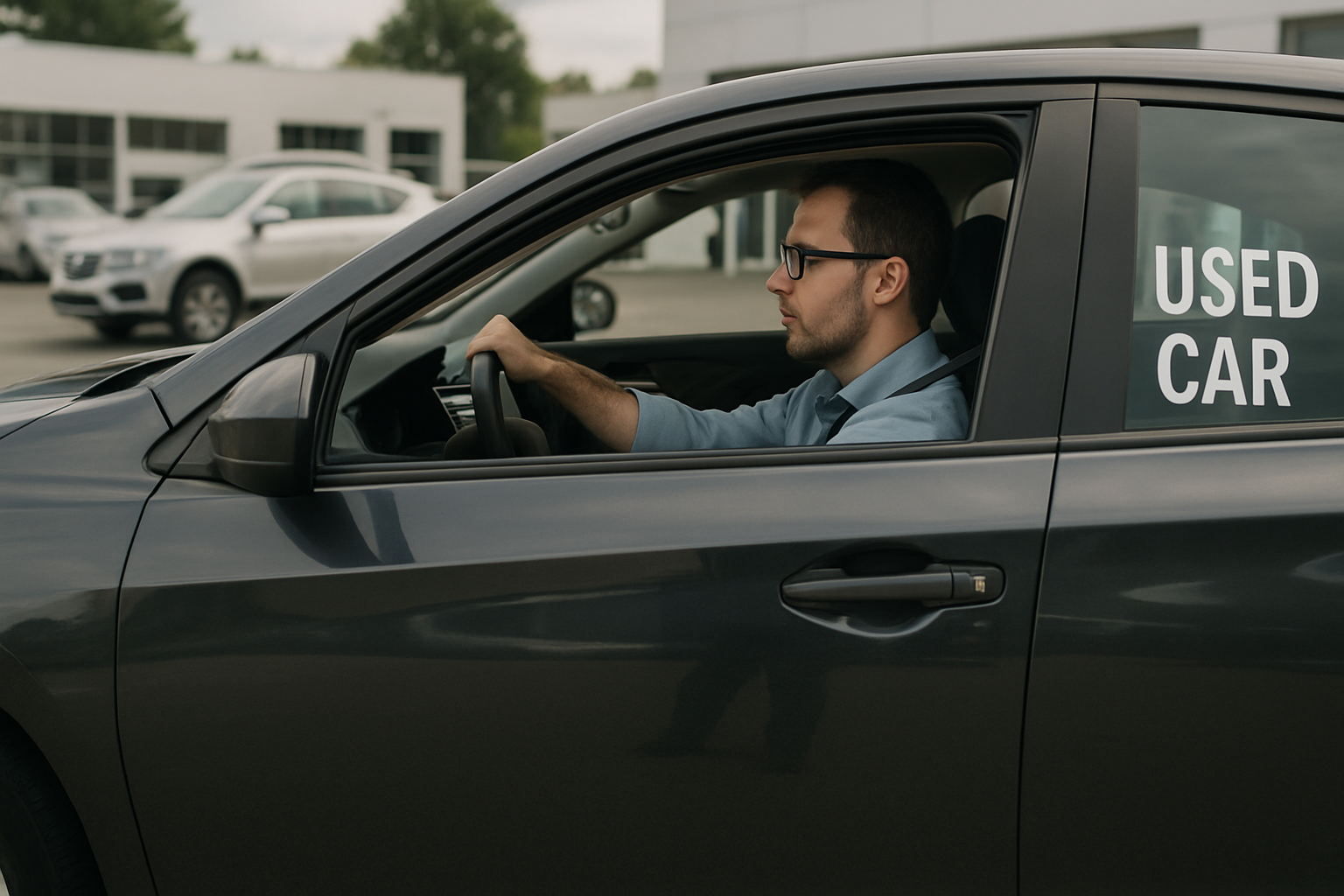
Every used car test drive feels exciting until you realize you missed something important after signing the papers. A thorough test drive can save you from costly repairs and buyer’s remorse later. Knowing exactly what to check during those crucial 20-30 minutes can make the difference between finding a reliable car and inheriting someone else’s problems.
Before You Turn the Key
Start your inspection before the engine even starts. Check that all the warning lights illuminate when you turn the key to the “on” position without starting the car. This tells you the dashboard warning system works properly.
Look for any lights that stay on after the engine starts, especially the check engine light, ABS warning, or oil pressure light. These could signal expensive problems hiding under the hood.
Take a moment to adjust the seat, mirrors, and steering wheel. This isn’t just about comfort. You’ll get a feel for how worn the adjustments mechanisms are and whether everything moves smoothly.
Cold Start Behavior
How a car starts when cold tells you a lot about its mechanical health. A healthy engine should start within a few seconds without excessive cranking or rough idling.
Listen for any unusual noises during startup. A brief tick from the engine is normal as oil circulates, but loud knocking, grinding, or squealing sounds indicate problems. Pay attention to how the engine settles into idle after starting.
If the car has been sitting for a while before your test drive, that’s actually better for this test. You’ll get a more accurate picture of how the car behaves during a typical morning startup.
Transmission Performance
Transmission problems can cost thousands to fix, so test this system thoroughly. With an automatic transmission, shifts should feel smooth and happen at appropriate speeds. You shouldn’t feel hard jolts or delays between gears.
Drive in stop-and-go traffic if possible. This forces the transmission to work harder and reveals problems that might not show up during highway driving. Listen for whining noises or feel for slipping sensations when the car shifts.
For manual transmissions, the clutch should engage smoothly without grabbing or slipping. Test each gear, including reverse. The shifter should move cleanly between positions without grinding or resistance.
Don’t forget to test park and reverse thoroughly. Back out of the parking space and into another one. These gears often get neglected during quick test drives but can hide expensive problems.
Brake System Evaluation
Good brakes should feel firm and responsive from the first press of the pedal. The brake pedal shouldn’t sink toward the floor when you apply steady pressure, and you shouldn’t need to pump it to get stopping power.
Test the brakes at different speeds. Start with gentle stops from low speeds, then try moderate braking from higher speeds if traffic and safety allow. The car should stop in a straight line without pulling to one side.
Listen for grinding, squealing, or scraping noises when braking. Some light squeaking might just indicate brake dust, but loud grinding suggests worn brake pads that need immediate replacement.
Feel for vibrations through the brake pedal or steering wheel when stopping. This often indicates warped brake rotors, which require resurfacing or replacement.
Steering and Alignment Check
Find a straight, level road where you can safely test the steering alignment. The car should track straight when you lightly hold the steering wheel, not pull to one side or require constant correction.
Test the steering response at different speeds. At parking lot speeds, the steering should feel light and responsive. On the highway, it should feel stable and require only small inputs to maintain your lane.
Check for excessive play in the steering wheel. You shouldn’t be able to turn the wheel more than an inch or two in either direction without the front wheels responding.
Unusual noises when turning, especially at low speeds, can indicate problems with the power steering system or suspension components.
Air Conditioning and Climate Control
Test the AC system even if you’re shopping in winter. Turn on the air conditioning and let it run for several minutes. Cold air should start flowing within a minute or two on most modern cars.
Check that air flows from all the vents and that you can redirect it using the climate controls. Test both the AC and heating systems if possible. Weak airflow might indicate a clogged cabin filter, while no cold air could mean expensive AC repairs ahead.
Listen for unusual noises from the climate system. Loud clicking, grinding, or squealing when you turn on the AC compressor suggests problems with the system.
Don’t ignore the defrost and defog functions. These safety features need to work properly, and problems here often indicate issues with the broader climate control system.
Electronic Systems and Features
Modern cars have dozens of electronic features that can be expensive to repair. Test the radio, navigation system, power windows, and power locks during your drive.
Check that all the lights work, including headlights, taillights, turn signals, and hazard lights. Ask someone to help you verify the brake lights function properly.
If the car has advanced safety features like lane departure warning or automatic emergency braking, ask the seller to demonstrate how they work or consult the owner’s manual.
Test any charging ports for your phone or devices. With how much we rely on staying connected, a broken USB port or 12V outlet can be more annoying than you’d expect.
Highway Performance
Take the car on the highway if the seller allows it. This tests the engine under load and reveals problems that don’t show up in city driving.
The car should accelerate smoothly onto highway on-ramps without hesitation or loss of power. Pay attention to how the transmission behaves during acceleration and when maintaining highway speeds.
Check that the car maintains speed easily on hills and doesn’t struggle with highway merging. Engine problems often become obvious when the car needs to work harder.
Highway driving also tests the cooling system under load. Watch the temperature gauge to make sure it stays in the normal range even after extended driving.
Parking and Low-Speed Maneuvers
Don’t end your test drive without testing parking lot maneuvers. This reveals problems with the power steering system and suspension components that only show up at low speeds.
Try parking between two cars if possible. This tests your visibility out of the car and how well you can judge its dimensions. It also gives you a chance to test the backup camera if the car has one.
Turn the steering wheel fully in both directions while moving slowly. Listen for grinding, whining, or clicking noises that might indicate worn suspension parts or power steering problems.
What Your Senses Tell You
Trust your nose during the test drive. Burning smells could indicate overheating, oil leaks, or brake problems. Sweet smells might suggest coolant leaks, while fuel odors could mean evaporative system problems.
Pay attention to vibrations through the steering wheel, seat, or pedals. Different vibrations can indicate specific problems, from unbalanced wheels to engine misfires.
Listen to the overall sound of the car. You’ll learn to distinguish between normal operating sounds and potential problems. A car that runs smoothly should sound confident and steady, not labored or irregular.
Professional Inspection Tools
Consider bringing a basic OBD2 diagnostic scanner to read any stored trouble codes. Even if the check engine light isn’t on, the car’s computer might have recorded codes from previous problems.
These diagnostic tools can reveal issues the current owner might not know about or might not have mentioned. Many smartphones apps work with inexpensive Bluetooth OBD2 adapters to give you this information instantly.
A simple code reader can save you from buying a car with hidden problems that could cost hundreds or thousands to repair.
Red Flags to Walk Away
Some problems are immediate deal-breakers during a test drive. If the car pulls hard to one side while driving or braking, this could indicate serious safety issues with the alignment, suspension, or brakes.
Any grinding noises from the brakes, transmission, or engine should raise major concerns. These sounds usually indicate metal-on-metal contact and expensive repairs.
If the seller doesn’t allow you to drive the car on the highway or for an extended period, consider this a red flag. A confident seller with a good car should be comfortable letting you thoroughly test it.
Frequently Asked Questions
How long should a used car test drive last?
Plan for at least 20-30 minutes of driving time, including city streets, highway driving, and parking maneuvers. This gives the car’s systems time to warm up and reveal any problems that only show up after the engine reaches operating temperature.
Should I test drive a used car in different weather conditions?
If possible, yes. Rain can reveal problems with wipers, defrosters, and traction control systems. However, don’t let weather delays keep you from seeing a good car. Focus on testing the systems you can evaluate safely in current conditions.
What if the seller wants to drive during the test drive?
You should be the one driving for most of the test drive. While it’s fine for the seller to demonstrate specific features, you need to feel how the car responds to your driving style. If they insist on doing all the driving, consider this a potential red flag.
Can I take a used car to my mechanic during a test drive?
Many sellers will allow this for serious buyers, especially if you offer to leave a deposit or provide identification. A pre-purchase inspection from a trusted mechanic can reveal problems you might miss during a test drive. Just arrange this in advance and be respectful of the seller’s time.
This article contains affiliate links. If you purchase through these links, we may earn a small commission at no extra cost to you.

Leave a Reply