
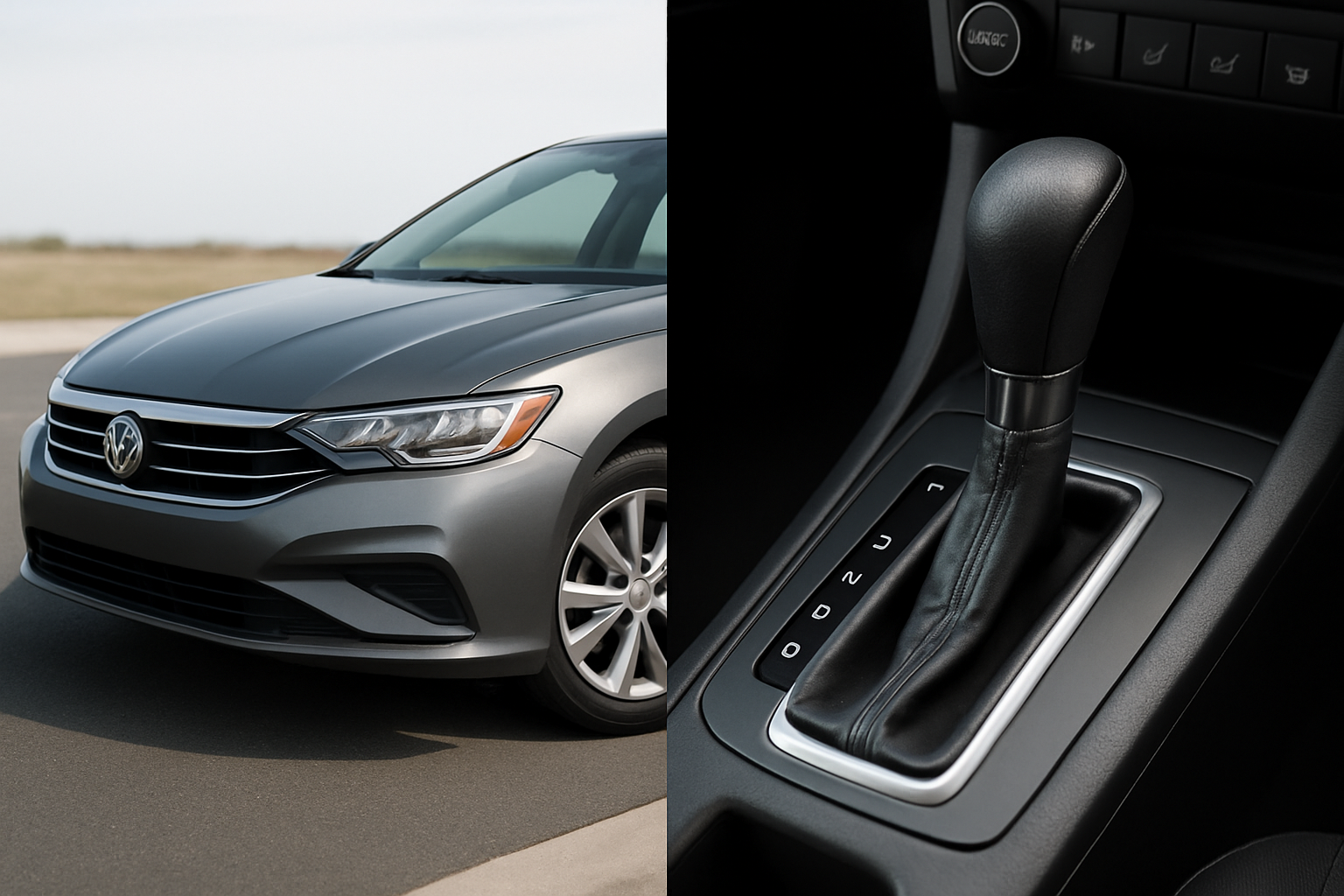
CVT transmissions have become increasingly common in modern vehicles, but they’ve also sparked heated debates among car enthusiasts and everyday drivers alike. While some appreciate their fuel efficiency and smooth operation, others complain about their unnatural feel and long-term reliability concerns.
What Exactly Is a CVT Transmission?
CVT stands for Continuously Variable Transmission. Unlike traditional automatic transmissions that use a series of gears to transfer power from the engine to the wheels, CVTs use a completely different approach involving pulleys and belts or chains.
Instead of shifting between fixed gear ratios like first, second, third gear, and so on, a CVT can seamlessly adjust to any ratio within its operating range. Think of it like the difference between walking up stairs (traditional transmission) versus walking up a smooth ramp (CVT).
The core components of a CVT include two cone-shaped pulleys connected by a metal belt or chain. One pulley connects to the engine (primary pulley), while the other connects to the wheels (secondary pulley). By changing the diameter of these pulleys, the transmission can provide infinite gear ratios between its minimum and maximum limits.
How CVTs Work vs Traditional Transmissions
Traditional automatic transmissions use planetary gears, clutches, and bands to create distinct gear ratios. When you accelerate, you can feel the transmission “shift” as it moves from one gear to the next. Each gear provides a specific mechanical advantage for different driving situations.
CVTs eliminate this stepped approach entirely. As you accelerate, the pulleys continuously adjust their diameters to keep the engine running at its most efficient RPM. This creates a smooth, uninterrupted power delivery without any shift points.
The primary pulley (connected to the engine) and secondary pulley (connected to the wheels) work together like a sophisticated bicycle gear system. When one pulley gets larger, the other gets smaller, changing the effective “gear ratio” infinitely variable within its range.
Why Some Drivers Love CVTs
CVT transmissions offer several genuine advantages that make them appealing to many drivers, especially those prioritizing fuel economy and comfort.
Superior Fuel Economy
CVTs excel at keeping engines in their optimal efficiency zone. Because they can maintain any ratio needed, the engine doesn’t have to work harder while waiting for the next gear shift. This translates to noticeably better gas mileage, often 2-4 mpg better than comparable traditional automatics.
Smooth Power Delivery
You’ll never feel a CVT shift because it doesn’t actually shift. This creates an incredibly smooth driving experience, especially in stop-and-go traffic. There’s no jerking, no hunting for gears, and no interruption in power delivery.
Better Hill Climbing
CVTs can instantly find the perfect ratio for climbing hills or merging onto highways. You won’t experience that frustrating moment when a traditional transmission is “hunting” between gears on an incline.
The “Rubber Band” Effect and Other CVT Complaints
Despite their technical advantages, CVTs have earned criticism from many drivers. The most common complaint involves what enthusiasts call the “rubber band effect.”
Unnatural Engine Behavior
When you press the accelerator in a CVT-equipped vehicle, the engine RPM often jumps up and stays there while the car gradually speeds up. This feels disconnected and unnatural compared to traditional transmissions where engine speed and vehicle speed increase together.
Many drivers describe this sensation as feeling like the engine is “revving but not going anywhere” or like there’s a slipping clutch. While this is actually the CVT doing its job efficiently, it feels wrong to drivers accustomed to conventional automatics.
Lack of Engine Braking
CVTs don’t provide the same engine braking sensation you get with traditional transmissions. When you lift off the throttle going downhill, the car doesn’t slow down as noticeably. This can feel unsafe to drivers who rely on engine braking, especially in mountainous areas.
Noise and Vibration Issues
Some CVTs, particularly under heavy acceleration, can create a droning noise as the engine sits at high RPM while the car builds speed. This constant engine note can be annoying during highway merging or passing situations.
Reliability Concerns: The Nissan Problem
CVT reliability varies dramatically between manufacturers, but Nissan’s experience with Jatco CVTs has significantly damaged the technology’s reputation.
Nissan’s Jatco CVT Issues
Nissan has used Jatco-manufactured CVTs in many of their vehicles since the mid-2000s, including the Altima, Sentra, Versa, Murano, and Pathfinder. These transmissions have experienced widespread premature failures, often occurring between 60,000-100,000 miles.
Common problems include shuddering during acceleration, slipping, overheating, and complete transmission failure. Nissan has faced multiple class-action lawsuits and has extended warranties on some CVT-equipped vehicles due to these issues.
The problems stem from several factors including inadequate cooling, poor CVT fluid quality, and design flaws in the pulley and belt systems. Many Nissan owners report transmission replacements costing $4,000-6,000 when they occur outside warranty.
Why Jatco CVTs Fail
The Jatco CVTs used by Nissan have several known weak points. The metal belt can stretch or break, the pulleys can wear prematurely, and the valve body can develop internal leaks. Additionally, the CVT fluid breaks down faster than traditional transmission fluid, but many owners don’t realize they need more frequent service.
Heat is another major enemy of these CVTs. Under heavy loads or in stop-and-go traffic, they can overheat and damage internal components. Unlike traditional automatics that can often limp home with problems, CVT failures tend to be more catastrophic.
Which Brands Do CVTs Well
Not all CVTs are created equal. Some manufacturers have developed much more reliable systems that avoid many of the problems associated with Nissan’s implementation.
Toyota’s CVT Success
Toyota develops their own CVT technology and has achieved much better reliability than Nissan. Their CVTs, found in vehicles like the Corolla, Camry (4-cylinder), and RAV4, use different engineering approaches that have proven more durable.
Toyota’s CVTs feature better cooling systems, improved fluid formulations, and more robust internal components. They also program their CVTs to simulate gear shifts at times, which helps reduce the rubber band feeling that many drivers dislike.
Maintenance intervals for Toyota CVTs are typically longer, and failure rates are significantly lower than Nissan’s Jatco units. When problems do occur, they’re often less catastrophic and more repairable.
Subaru’s Lineartronic System
Subaru’s Lineartronic CVT, used in most of their current lineup including the Outback, Forester, and Impreza, has generally earned better reliability marks than Nissan’s systems. Subaru co-developed this technology with their own specifications and quality requirements.
The Lineartronic CVT uses a chain instead of a belt, which can handle more torque and tends to be more durable. Subaru also programs their CVTs with simulated shift points to make them feel more like traditional automatics.
While not perfect, Subaru CVT problems are typically less severe and occur less frequently than with Nissan vehicles. Proper maintenance with Subaru-specified CVT fluid is crucial for longevity.
Honda’s CVT Implementation
Honda uses CVTs in several vehicles including the Civic, Accord (4-cylinder), and CR-V. Their approach focuses on durability and includes features like G-Design Shift logic that creates simulated gear steps for a more familiar driving feel.
Honda CVTs generally receive better reliability ratings than Nissan’s, though they’re not immune to problems. The key difference is that Honda has invested more in robust internal components and better programming to reduce the unnatural driving sensations.
CVT Maintenance: Critical for Longevity
Proper maintenance is absolutely critical for CVT longevity, more so than with traditional automatics. Many CVT problems stem from inadequate or improper maintenance.
Fluid Changes Are Essential
CVT fluid breaks down faster than traditional transmission fluid and must be changed more frequently. While some manufacturers claim “lifetime” fluid, real-world experience shows that changes every 30,000-50,000 miles significantly extend CVT life.
You must use the exact CVT fluid specified by your manufacturer. These fluids have different friction characteristics than traditional ATF, and using the wrong fluid can cause immediate damage.
Heat Management
CVTs generate more heat than traditional transmissions, especially under heavy loads. If you regularly tow, drive in mountains, or sit in heavy traffic, your CVT needs extra attention to cooling system maintenance.
Some owners install aftermarket CVT coolers to help manage heat, particularly on vehicles used for towing or in hot climates.
Should You Buy a CVT Vehicle?
The decision depends on your priorities and driving needs. CVTs work well for drivers who value fuel economy, smooth operation, and don’t mind the different driving characteristics.
If you prioritize sporty driving, engine braking, or the traditional “connected” feel between engine and wheels, a conventional automatic or manual transmission will likely satisfy you more.
Brand choice matters enormously. A Toyota or Subaru CVT represents a much safer bet than a Nissan Jatco unit, based on real-world reliability data.
Living with a CVT: Tips for Better Experience
If you own or are considering a CVT vehicle, these tips can help you get the best experience and longevity from the transmission.
Learn to drive differently. Don’t expect the engine response of a traditional transmission. Instead of quick throttle inputs, use gradual, steady pressure for the best CVT behavior.
Stay on top of maintenance religiously. Change CVT fluid at or before recommended intervals, using only the specified fluid type. Monitor your transmission cooler and ensure proper airflow.
Watch for early warning signs like shuddering, slipping, or unusual noises. CVT problems often start small but can quickly become catastrophic if ignored.
Frequently Asked Questions
How long do CVT transmissions last?
CVT lifespan varies dramatically by manufacturer and maintenance. Toyota and Subaru CVTs often reach 200,000+ miles with proper care, while some Nissan Jatco units fail between 60,000-100,000 miles. Regular fluid changes and avoiding extreme operating conditions significantly extend CVT life.
Can you repair a CVT transmission?
CVT repairs are possible but often expensive and complex. Unlike traditional automatics where you might rebuild individual components, CVT repairs frequently require complete unit replacement. The specialized pulleys, belts, and control systems aren’t easily serviceable at most independent shops.
Do CVTs really save fuel?
Yes, properly functioning CVTs typically deliver 2-4 mpg better fuel economy than comparable traditional automatics. This advantage comes from keeping the engine in its most efficient RPM range more often. However, fuel savings can disappear if the CVT develops problems or isn’t maintained properly.
Why does my CVT feel like it’s slipping?
The “slipping” sensation is usually normal CVT operation, where engine RPM rises before vehicle speed increases. However, true slipping (engine revs with no acceleration), shuddering, or jerking indicates potential problems that need immediate attention. Learn to distinguish between normal CVT feel and actual transmission problems.
This article contains affiliate links. If you purchase through these links, we may earn a small commission at no extra cost to you.
Leave a Reply