
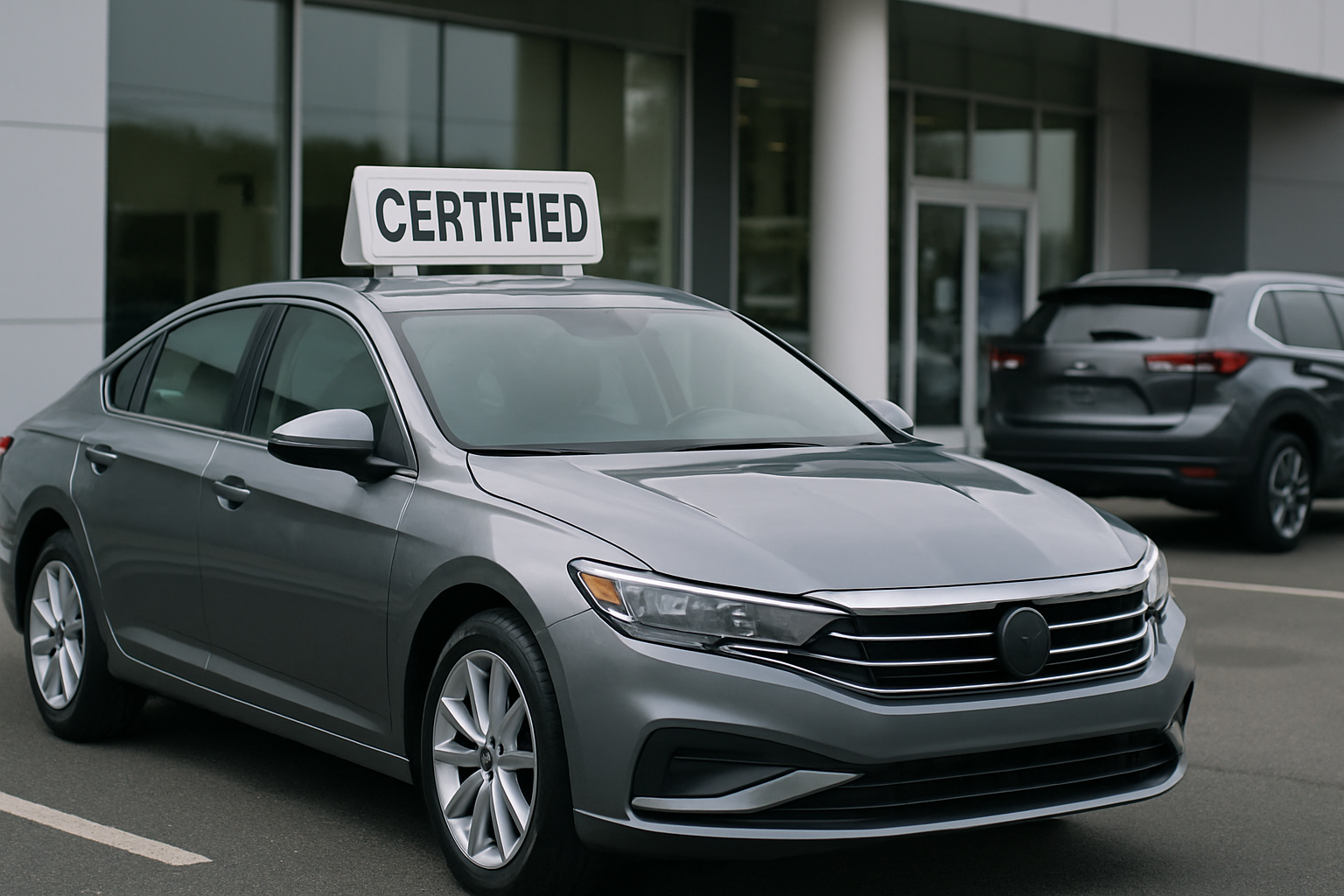
Certified Pre-Owned (CPO) vehicles promise the reliability of new cars with the affordability of used ones. But these programs vary dramatically between manufacturers, and understanding what you’re actually getting can save you thousands.
What Certified Pre-Owned Really Means
A Certified Pre-Owned vehicle is a used car that has passed through a manufacturer’s inspection and reconditioning program. Unlike regular used cars, CPO vehicles come with extended warranties, often including roadside assistance and other perks.
Every manufacturer sets their own standards for what qualifies as CPO. This creates massive differences in value and quality between programs. A Toyota CPO inspection might check 160 points, while another brand’s program could examine fewer than 100.
Most CPO programs require vehicles to be under a certain age (typically 5-6 years) and mileage limit (usually 60,000-80,000 miles). Cars with accident damage, flood history, or previous use as rentals or fleet vehicles are typically excluded.
The CPO Inspection Process
CPO inspections aren’t created equal. Toyota’s program includes a comprehensive 160-point inspection covering everything from engine compression tests to brake pad thickness measurements. Their technicians check fluid levels, test electrical systems, and examine wear items like tires and belts.
BMW’s CPO inspection covers 180+ points but focuses heavily on their complex electronic systems. They test the iDrive system, adaptive suspension components, and advanced driver assistance features. BMW also includes a detailed paint and body inspection since their customers expect near-perfect cosmetic condition.
Generic dealership inspections might only cover 50-75 basic points. They’ll check that the car starts, drives, and stops, but they won’t dive deep into potential future problems.
What Gets Fixed During CPO Reconditioning
Manufacturers replace or repair items that don’t meet their standards. This typically includes:
- Brake pads and rotors below minimum thickness
- Tires with uneven wear or insufficient tread depth
- Worn suspension components
- Faulty electronic modules or sensors
- Fluid leaks and worn seals
- Interior damage like torn seats or broken trim
Premium brands like Mercedes-Benz and Lexus often replace items that other manufacturers would leave alone. They might install new floor mats, replace scratched interior trim, or refinish minor paint imperfections.
CPO Warranty Coverage Differences
Warranty coverage reveals the true differences between CPO programs. Hyundai extends their 10-year/100,000-mile powertrain warranty to CPO vehicles, giving you coverage that rivals new car warranties. Their bumper-to-bumper coverage adds another year or 12,000 miles to whatever factory warranty remains.
BMW’s CPO warranty provides 2 years of unlimited-mileage coverage from the purchase date. This sounds generous until you realize their complex systems can generate repair bills exceeding $3,000 for seemingly minor issues.
Ford’s CPO program offers a 12-month/12,000-mile limited warranty plus 7 years/100,000 miles of powertrain coverage. However, their warranty excludes many electronic components that commonly fail on modern Fords.
What CPO Warranties Don’t Cover
CPO warranties exclude normal wear items like brake pads, tires, and wiper blades. They won’t cover damage from accidents, neglect, or modifications. Many programs also exclude certain high-tech features or aftermarket accessories.
Read the warranty terms carefully. Some manufacturers require you to use their dealerships for all maintenance to keep the warranty valid. Others allow independent shops but require proper documentation.
Cost Analysis: Is CPO Worth the Premium?
CPO vehicles typically cost $1,500-$4,000 more than comparable non-certified used cars. Whether this premium makes sense depends on the specific vehicle and manufacturer.
For reliable brands like Toyota and Honda, the CPO premium might not be worth it. These vehicles rarely need major repairs during their early years, so you’re essentially paying extra for warranty coverage you probably won’t use.
For luxury brands like BMW, Mercedes-Benz, and Audi, CPO programs offer genuine value. A single repair to a BMW’s electronic systems can cost more than the CPO premium. The warranty coverage becomes insurance against expensive surprises.
Real-World CPO Value Examples
A 2020 Toyota Camry with 30,000 miles might sell for $24,000 as a regular used car or $26,500 as CPO. Given Toyota’s reliability record, you’re paying $2,500 extra for warranty coverage you’re unlikely to need.
A 2019 BMW 330i with similar mileage could cost $32,000 used or $35,000 CPO. That $3,000 premium looks reasonable when you consider that replacing a failed iDrive system costs $2,800, or that BMW’s adaptive suspension repairs often exceed $2,000.
How to Evaluate a CPO Vehicle
Don’t assume CPO certification guarantees a perfect vehicle. Inspect the car just as thoroughly as you would any used vehicle. Check for signs of accident damage, uneven paint, or misaligned panels that might indicate bodywork.
Request the CPO inspection report. This document lists everything the technicians checked and any repairs they performed. Missing pages or vague descriptions could indicate a rushed inspection.
Verify the vehicle’s history using the VIN. Some cars slip through CPO programs despite having accident damage or flood history. Cross-reference the dealer’s claims with Carfax or AutoCheck reports.
Questions to Ask CPO Dealers
Ask specifically what repairs were performed during reconditioning. A good CPO program should have detailed records of replaced parts and completed work. Vague answers like “everything was fine” suggest minimal inspection effort.
Find out where you can get warranty service. Some manufacturers limit CPO warranty work to their dealerships, which could be inconvenient if you live far from a dealer.
Understand what happens if major problems appear shortly after purchase. Quality CPO programs will work with you to resolve issues, while others might point to warranty fine print to avoid responsibility.
Brand-Specific CPO Recommendations
Toyota and Lexus offer some of the best CPO programs in the industry. Their thorough inspections and comprehensive warranties provide genuine value, especially on higher-mileage vehicles where potential problems become more likely.
Genesis CPO vehicles come with impressive 10-year/unlimited-mileage warranties that transfer to subsequent owners. This extensive coverage makes Genesis CPO vehicles attractive even if you plan to sell them later.
Avoid CPO programs from manufacturers with poor reliability records unless the warranty coverage is exceptionally comprehensive. Paying extra for certification on vehicles that will likely need repairs anyway doesn’t make financial sense.
When CPO Isn’t Worth It
Skip CPO certification on vehicles under 20,000 miles that still have substantial factory warranty remaining. You’re paying extra for coverage that duplicates what you already have.
Very old or high-mileage vehicles make poor CPO candidates even if they qualify for programs. A 5-year-old car with 70,000 miles will likely need expensive maintenance soon, regardless of CPO certification.
If you’re mechanically inclined or have a trusted independent mechanic, regular used cars often provide better value. You can invest the CPO premium savings into preventive maintenance and repairs as needed.
CPO Financing and Insurance Considerations
CPO vehicles often qualify for better financing rates than regular used cars. Lenders view manufacturer certification as reducing their risk, which translates to lower interest rates for buyers.
Insurance companies typically don’t charge different rates for CPO vehicles versus regular used cars of the same model. However, the extended warranty coverage might reduce your need for expensive mechanical breakdown insurance.
Some manufacturers offer special lease deals on CPO vehicles. These programs let you lease a used car with lower payments than a new vehicle lease, though mileage allowances are usually reduced.
FAQ
Can I negotiate the price on a CPO vehicle?
Yes, CPO vehicles are negotiable just like regular used cars. The certification doesn’t create fixed pricing, though dealers might be less flexible given the additional value they’re providing through warranty coverage and inspection.
What happens to CPO warranty coverage if I sell the car?
Most CPO warranties transfer to subsequent owners, though some manufacturers require the new owner to pay a transfer fee. This transferability can increase your vehicle’s resale value compared to similar non-certified cars.
Are CPO vehicles better than buying new?
CPO vehicles offer a middle ground between new and used car ownership. You get many benefits of new car ownership (warranty, roadside assistance) while avoiding the steepest depreciation hit. However, you’ll have fewer color and option choices.
Do CPO programs cover rental cars while my vehicle is being repaired?
Many CPO warranties include rental car coverage, but terms vary significantly. Premium brands often provide unlimited rental coverage, while mainstream manufacturers might limit you to a few days or require you to pay upfront and get reimbursed.
This article contains affiliate links. If you purchase through these links, we may earn a small commission at no extra cost to you.


Leave a Reply