
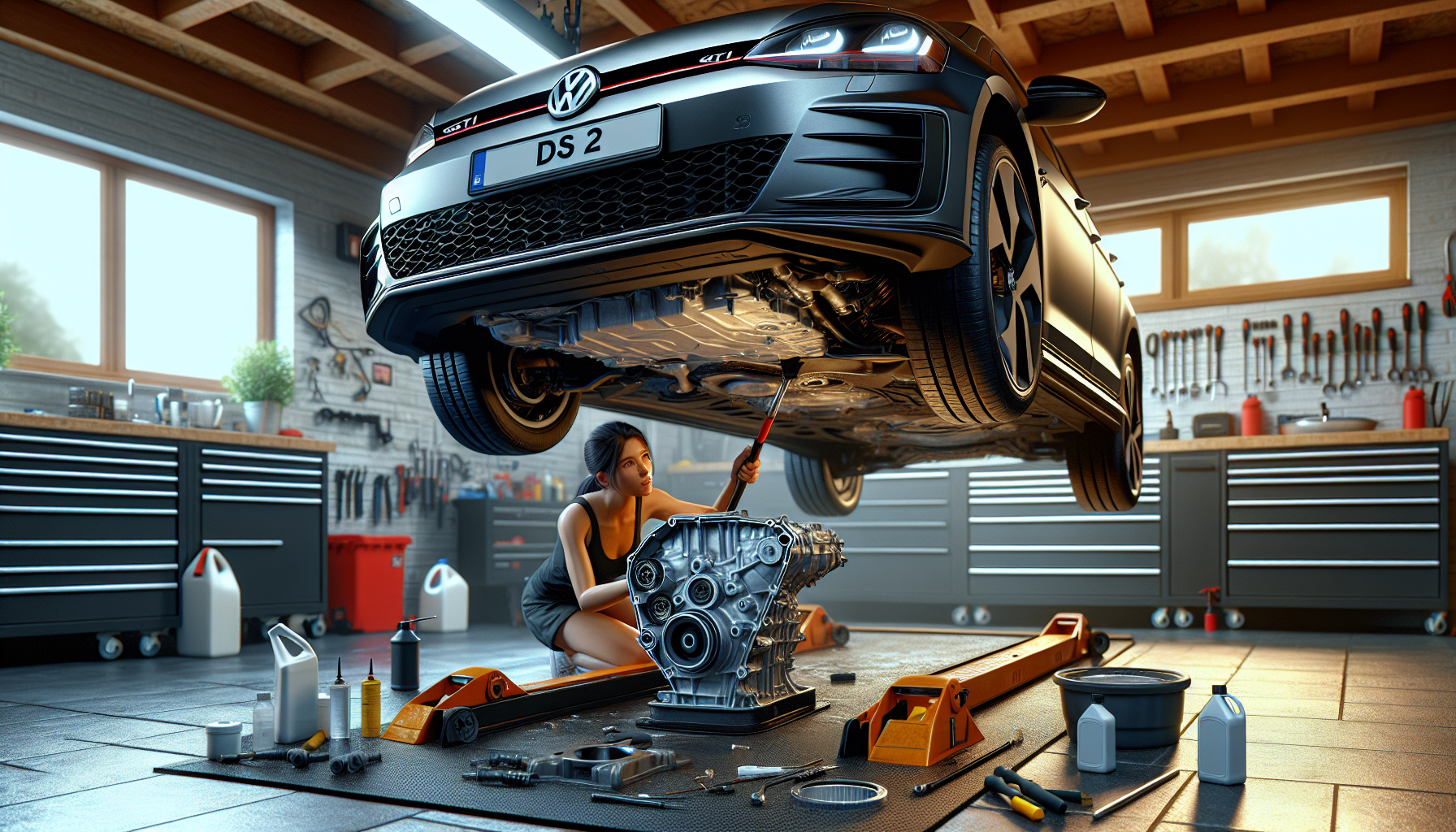
The DSG (Direct Shift Gearbox) in your GTI is a sophisticated dual-clutch transmission that delivers lightning-fast shifts and sports car performance. But like any high-performance component, it needs regular maintenance to stay healthy. Skip the service intervals, and you’re looking at rough shifts, shuddering, and potentially a five-figure repair bill.
VW’s official service interval calls for a DSG fluid and filter change every 40,000 miles. Some dealers will tell you it’s “lifetime fluid” — don’t believe that for a second. The fluid breaks down, the clutches wear, and metal particles accumulate in the mechatronic unit. Regular changes keep everything running smooth and extend the life of your transmission significantly.
Why DSG Maintenance Matters
The DSG uses two separate clutch packs and constantly shifts between them for seamless gear changes. This creates heat and friction, which degrades the transmission fluid faster than a conventional automatic. The fluid does three critical jobs: it lubricates the gears and clutches, cools the mechatronic unit, and provides hydraulic pressure for shifts.
When the fluid gets contaminated or loses its properties, you’ll notice delayed engagement when shifting from Park to Drive, jerky low-speed shifts, or harsh downshifts. In severe cases, the transmission goes into limp mode and throws fault codes. Catching it early with regular maintenance prevents these problems entirely.
The filter is just as important. It sits inside the transmission pan and catches metal particles from normal clutch wear. Once it gets clogged, contaminants circulate through the mechatronic valve body and can cause expensive failures. Changing both the fluid and filter together is the only way to do this right.
Service Intervals and Warning Signs
The standard service interval is 40,000 miles, but if you drive hard or do a lot of stop-and-go traffic, consider doing it at 30,000 miles. Track days or aggressive driving generate more heat and accelerate fluid degradation.
Watch for these warning signs that your DSG needs service now:
- Rough or delayed shifts when cold
- Shuddering or juddering during acceleration, especially from a stop
- Hesitation or “searching” when downshifting
- Burning smell after hard driving
- Check engine light with transmission-related codes (P17xx series)
- Transmission temperature warnings on the dash
If you’re experiencing any of these symptoms and you’re past 40,000 miles without a service, the fluid change should be your first step. It solves the majority of these issues if caught early enough.
What You Need for a DSG Service
The job requires some specialized tools and the correct fluids. Using the wrong fluid will damage your transmission, so don’t cut corners here. You need genuine VW/Audi DSG fluid (part number G052182A2) — about 6 liters for a complete drain and fill. Some people use aftermarket equivalents like Liqui Moly or Pentosin, but stick with OEM if you want to be safe.
The DSG filter kit includes the pan gasket, filter, and drain plug seal. You’ll also need a fluid pump or transfer setup because the fill port is on the side of the transmission, not the top. A VAG-COM scanner or VCDS cable is essential for checking fluid temperature during the fill process — you need the fluid at exactly 35-45°C for the correct level.
Other tools you’ll need: a 5mm Allen socket for the fill plug, 8mm Allen for the drain plug, a torque wrench, and a large drain pan. The job takes 2-3 hours if you’re methodical about it.
How to Service Your DSG Transmission
Get the car on level ground and up on jack stands or ramps. The transmission needs to be warm but not hot — drive it for about 10 minutes before starting. This gets the old fluid flowing so it drains more completely.
This video walks through the complete service process:
Remove the belly pan under the car to access the transmission. You’ll see the drain plug on the bottom of the pan and the fill plug on the passenger side of the transmission case. Remove the drain plug with the 8mm Allen socket and let the old fluid drain into your pan. It’ll be dark and smell burnt if you’re overdue.
Once drained, remove the pan bolts in a crisscross pattern. The pan will have residual fluid in it, so have your drain pan ready. Inside, you’ll see the filter attached to the valve body. Remove the three T30 Torx bolts holding it in place and carefully pull it straight down. Install the new filter with new bolts (they’re one-time-use stretch bolts).
Clean the pan thoroughly with brake cleaner and check for metal shavings. A small amount of fine glitter is normal clutch wear, but chunks or excessive material means you have bigger problems. Install the new gasket on the pan and torque the bolts to 8 Nm in a star pattern. Don’t overtighten — the pan is aluminum and cracks easily.
Install the new drain plug seal and torque the drain plug to 20 Nm. Now comes the tricky part: filling the transmission. You need to pump fluid through the side fill port until it starts dripping back out. The transmission holds about 5.5-6 liters total.
With fluid filled to the correct level, start the car and let it idle. Use your scanner to monitor transmission fluid temperature. Once it hits 35°C, cycle through all the gear positions with your foot on the brake — hold each gear for 3-5 seconds. This circulates fluid through all the clutch packs and valve body passages.
When the temperature reaches 35-45°C, remove the fill plug again. If fluid drips out at a steady stream (about one drip per second), the level is correct. If nothing comes out, add more fluid. If it pours out, you overfilled and need to drain some. This step is critical — too much or too little fluid causes shift problems.
Once the level is confirmed, torque the fill plug to 25 Nm and take the car for a test drive. The shifts should feel noticeably smoother and more responsive. If you still have issues after the service, you might have mechanical problems that fluid can’t fix.
Common Mistakes to Avoid
Don’t skip the temperature check during filling. Eyeballing the fluid level doesn’t work with DSG transmissions — the correct level only exists within that narrow temperature range. Fill it cold and you’ll overfill it; fill it too hot and you’ll underfill.
Never reuse the drain plug seal or pan gasket. They’re designed to compress once and won’t seal properly the second time. Leaks are guaranteed if you try to save $10 here.
Some people try to do a “drain and fill” without dropping the pan to save time. This leaves half the old contaminated fluid in the transmission and doesn’t change the filter. You’re wasting your money and your new fluid. Always drop the pan and change the filter.
When to See a Mechanic
If the transmission is already in limp mode or throwing multiple fault codes, have it scanned properly before attempting a fluid change. Sometimes the mechatronic unit has failed and a service won’t fix it. A good VW specialist can tell you whether you’re looking at a simple service or a major repair.
Harsh shifts or shuddering that doesn’t improve after a fresh fluid change usually indicates worn clutch packs. At that point, you’re looking at a transmission rebuild or replacement. The earlier you catch these symptoms with regular maintenance, the less likely you are to face this scenario.
If you’re not comfortable working with transmission fluid and torque specs, this is a job worth paying for. A bad DIY service can cause more problems than it solves. Independent VW shops typically charge $400-600 for this service, which is still cheaper than the dealer.
Estimated Service Costs
| Service Type | DIY Cost | Independent Shop | Dealer |
|---|---|---|---|
| DSG Fluid & Filter Change | $200-250 | $400-600 | $600-800 |
| Fluid Only (no filter) | $120-150 | $250-350 | $350-500 |
| DSG Clutch Replacement | Not DIY | $2,500-4,000 | $4,000-6,000 |
| Mechatronic Unit Replacement | Not DIY | $2,000-3,500 | $3,500-5,000 |
The DIY cost includes OEM fluid, filter kit, and drain plug seals. You’ll save several hundred dollars doing it yourself, but only if you have the tools and comfort level to do it right.
Prevention and Long-Term Care
Stick to the 40,000-mile service interval religiously. This is the single most important thing you can do to extend your DSG’s life. If you tune your GTI for more power, consider shortening the interval to 30,000 miles since you’re generating more heat and stress.
Avoid launching the car repeatedly or doing aggressive standing starts. The DSG can handle it occasionally, but constant abuse wears the clutches faster. Let the transmission warm up before driving hard — cold fluid doesn’t protect the clutches as well.
In stop-and-go traffic, shift to neutral at long lights instead of holding the brake in Drive. This reduces heat buildup in the clutches and gives them a break. Some people think this wears the transmission, but it’s actually the opposite with a DSG.
If you live in a hot climate or do track days, consider adding a transmission cooler. The stock cooling is adequate for street driving, but extended high-performance use can push fluid temperatures too high. An auxiliary cooler provides insurance against overheating.
Final Thoughts
The DSG is an incredible transmission when maintained properly, but it’s not forgiving if you neglect it. The 40,000-mile service isn’t optional or negotiable — it’s mandatory if you want your GTI to last. Dealers and some owners perpetuate the “lifetime fluid” myth, but the reality is that regular changes prevent the majority of DSG failures.
The DIY service isn’t particularly difficult if you’re mechanically inclined and have the right tools. The biggest challenge is getting the fluid level correct, which requires patience and a scanner. If that sounds intimidating, paying a good independent shop is money well spent.
Keep up with the maintenance, drive with some mechanical sympathy, and your DSG will deliver flawless shifts for well over 200,000 miles. Ignore it, and you’ll be shopping for a used transmission at 80,000 miles. The choice is pretty clear.
Leave a Reply