
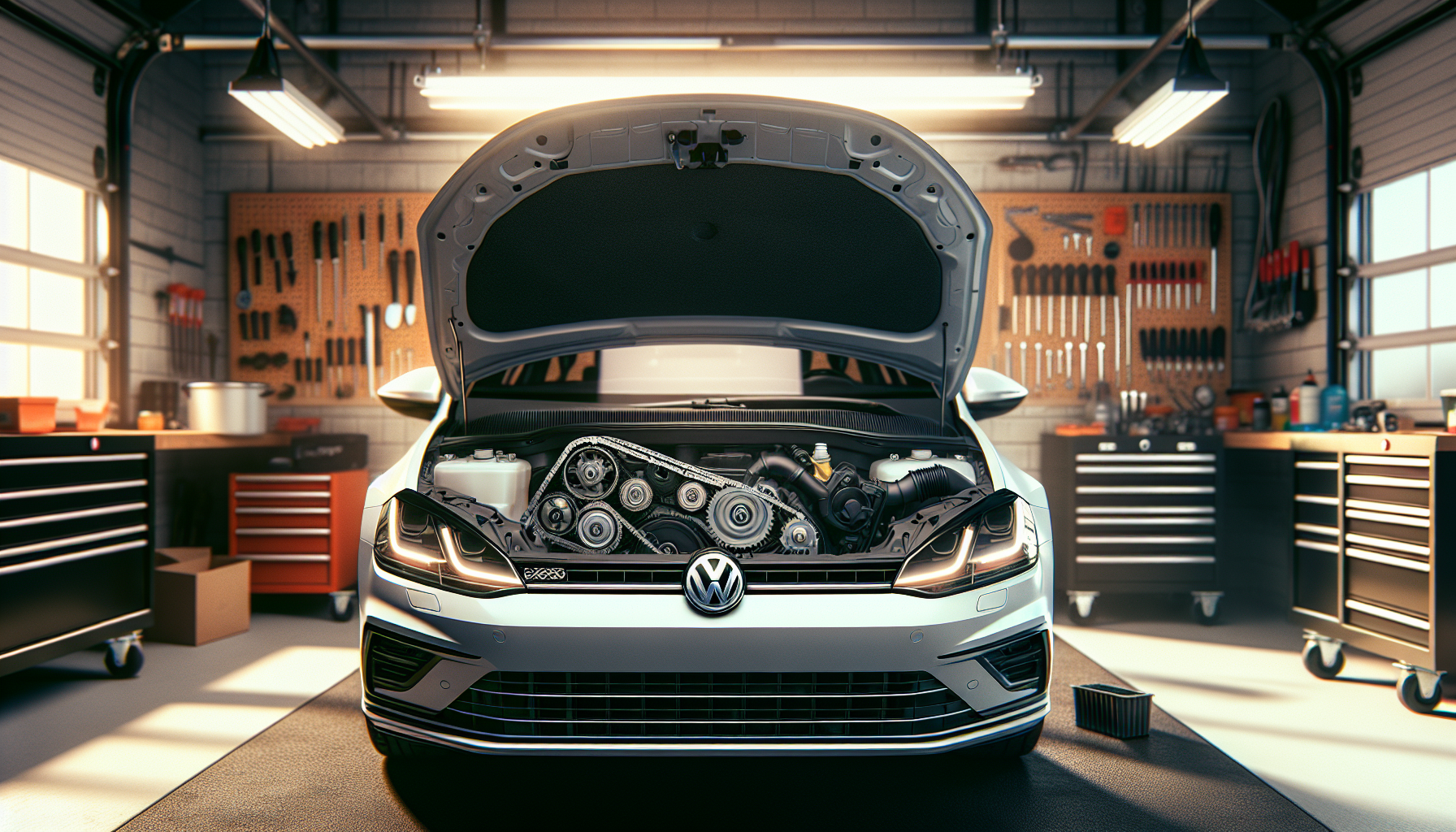
The Volkswagen Golf, particularly models with the 1.4 TSI engine, has earned a reputation for premature timing chain and water pump failures. These aren’t isolated incidents—they’re documented problems that VW owners need to know about. The timing chain tensioner wears out too quickly, and the water pump can fail catastrophically, sometimes taking the engine with it. If you’re hearing a rattling noise on cold starts or seeing coolant leaks, you need to act fast.
Common Causes
The timing chain issue on VW’s 1.4 TSI (and some 1.2 TSI) engines stems from a faulty tensioner design. The tensioner uses a spring-loaded mechanism that’s supposed to keep proper tension on the chain throughout the engine’s life. Problem is, the early versions of these tensioners fail prematurely—sometimes as early as 40,000 miles.
When the tensioner fails, the chain starts slapping around inside the timing cover. This causes that distinctive rattling sound on startup, especially when the engine is cold. If left unchecked, the chain can jump teeth on the sprockets or even snap completely. Either scenario means bent valves and a destroyed engine.
The water pump failure is a different beast entirely. VW integrated the water pump into the timing chain system on these engines—it’s driven by the chain rather than the serpentine belt. The pump’s plastic impeller and housing deteriorate over time, and when they fail, coolant dumps into places it shouldn’t be. The worst part? Because it’s chain-driven and internal, you often don’t know there’s a problem until it’s too late.
Some water pumps fail gradually with external leaks, but others break apart internally and scatter debris through the cooling system. Overheating follows quickly, and if you keep driving, you’re looking at head gasket failure or worse.
How to Diagnose the Problem
Listen for a rattling or chattering noise from the front of the engine during cold starts. It typically lasts 2-5 seconds and then goes away once oil pressure builds. That’s the timing chain slapping because the tensioner isn’t doing its job.
This video shows you a simple DIY test to check for timing chain wear:
For a more thorough check, remove the oil filler cap while the engine is running and listen carefully. Excessive rattling or a loud grinding noise points to chain problems. You can also check the oil for metal particles—drain a bit into a clean container and look for glittery flakes or chunks. Metal in the oil means internal wear is already happening.
Water pump diagnosis is trickier since it’s buried inside the engine. Watch for these signs:
- Coolant level drops without visible external leaks
- White smoke from the exhaust (coolant burning)
- Engine overheating, especially in traffic or at idle
- Coolant in the oil (check the dipstick for milky brown sludge)
- Sweet smell from the exhaust
Check under the car after it’s been parked overnight. A small puddle of coolant might indicate an external leak from the pump housing. Some pumps develop leaks at the weep hole, which is actually a designed failure point to warn you before catastrophic failure.
If you’re mechanically inclined, you can remove the timing cover for a visual inspection. Look at the chain guide rails—if they’re worn or cracked, the chain needs replacement. Check the tensioner itself for cracks or damage. For the water pump, spin the impeller by hand (if accessible). Any roughness, play, or resistance indicates bearing wear.
How to Fix It
Fixing timing chain issues isn’t a weekend warrior job unless you’ve got serious mechanical experience. The repair involves removing the front of the engine, timing cover, and replacing not just the chain but the tensioner, guides, and sprockets. That said, if you’re determined to DIY it, here’s what you need to know.
You’ll need the updated timing chain kit—VW revised the tensioner design, so make sure you’re getting the new version. The kit should include the chain, tensioner, guide rails, and all necessary hardware. Don’t cheap out and replace just the tensioner. Once the chain has been running loose, it’s stretched and the guides are worn.
Special tools are required: a camshaft locking tool, crankshaft holding tool, and timing pin set specific to the 1.4 TSI. You cannot time this engine by eyeballing it or using generic tools. Get the right equipment or don’t attempt this repair.
The water pump replacement follows a similar process since it’s driven by the timing chain. In fact, most mechanics recommend doing both jobs simultaneously if either component is failing. You’re already in there, the labor overlaps completely, and the water pump isn’t expensive compared to the labor cost.
Here’s the general process:
- Disconnect the battery and drain the coolant
- Remove the engine mount and support the engine from below
- Take off the serpentine belt and accessories blocking access
- Remove the timing cover (multiple bolts, some hidden)
- Rotate the crankshaft to TDC and install locking tools
- Release tension on the old chain and remove it
- Replace the water pump while everything is accessible
- Install new chain, tensioner, and guides
- Double-check timing marks before releasing locking tools
- Reassemble everything with new gaskets and seals
- Refill coolant and check for leaks
This job takes 6-10 hours for a skilled DIYer with the right tools. If anything goes wrong with the timing, you’ll damage the engine, so be honest about your skill level before diving in.
When to See a Mechanic
If you hear timing chain noise and you’re not experienced with engine teardowns, take it to a shop immediately. Don’t wait to see if it gets worse—it will, and driving on a failing timing chain is gambling with your engine’s life.
Any signs of water pump failure also warrant immediate professional attention. Overheating causes exponentially more damage the longer you drive. If the temperature gauge starts climbing or you see steam from under the hood, shut the engine off and call for a tow.
Find a shop that specializes in VW or European cars. They’ll have the special tools and experience with these specific failures. Ask if they’re using the updated parts—some shops might install the old-style tensioner if they have one in stock, which just sets you up for failure again in 50,000 miles.
If your Golf is still under warranty or you purchased an extended warranty, check your coverage before paying out of pocket. VW issued some service campaigns and extended warranties for timing chain issues on certain models. The dealer might cover part or all of the repair.
Estimated Repair Costs
| Repair Type | DIY Cost | Shop Cost |
|---|---|---|
| Timing chain kit (parts only) | $300-500 | — |
| Water pump (parts only) | $100-200 | — |
| Timing chain replacement (labor) | — | $1,200-2,000 |
| Water pump replacement (labor) | — | $800-1,400 |
| Both timing chain and water pump | $400-700 | $1,800-3,000 |
These costs vary by location and shop rates. Dealer prices run higher, usually $2,500-3,500 for both jobs. Independent European specialists typically charge less while still having the expertise and tools.
If you catch the problem early and only need the tensioner replaced, some shops can do a tensioner-only job for $600-1,000. This only works if the chain and guides aren’t worn yet, which is rare by the time symptoms appear.
Prevention Tips
Use the correct oil spec and change it religiously. These TSI engines require VW 502.00/505.00 approved oil (or 508.00/509.00 for later models). The timing chain tensioner relies on proper oil pressure and clean oil to function. Cheap oil or extended drain intervals accelerate tensioner wear.
Change your oil every 5,000 miles maximum, even if VW says you can go longer. The factory interval is too long for engines with known timing chain issues. Spend $50 on an oil change or $2,000 on a timing chain—your choice.
Check your coolant level monthly. A slowly dropping coolant level is your early warning system for water pump problems. Catch it before the pump fails completely and you’ll avoid the overheating damage.
If you’re buying a used Golf with the 1.4 TSI, ask for service records proving the timing chain has been replaced with updated parts. If there’s no documentation, budget for the repair immediately or negotiate the price down accordingly. A Golf with 60,000+ miles and the original timing chain is a ticking time bomb.
Some owners report success with using a slightly heavier oil (5W-40 instead of 5W-30) to help cushion the timing chain, but this is controversial. Stick with VW-approved specs unless your mechanic specifically recommends otherwise based on wear patterns they’ve seen in your engine.
Consider replacing the water pump preventatively around 80,000-100,000 miles even if it’s not showing symptoms. Since the engine has to come apart anyway for the timing chain service, adding the water pump only adds $150-200 in parts. It’s cheap insurance against a second teardown later.
Final Thoughts
The timing chain and water pump issues on the VW Golf aren’t minor problems you can ignore. These are serious, engine-destroying failures that require prompt attention. The good news is that the updated parts seem to hold up much better than the originals, so once fixed properly, you shouldn’t face the same issue again.
If you’re already hearing rattling noises, don’t put this off. Every cold start with a loose timing chain risks jumping a tooth and bending valves. Get it diagnosed, get it fixed, and then stay on top of your oil changes to protect your investment.
Leave a Reply