
Most people assume that owning a luxury car means signing up for wallet-draining maintenance costs. And yeah, that’s often true. But there are some outliers in the used luxury market that won’t bleed you dry every time something needs attention.
I’ve worked on plenty of luxury cars over the years, and I can tell you that brand reputation doesn’t always match reality when it comes to maintenance costs. Some German cars will nickel-and-dime you to death. Others are built on platforms shared with regular brands and use parts that won’t require a second mortgage.
Let’s talk about which used luxury cars you can actually afford to maintain without selling a kidney.
Why Some Luxury Cars Cost Less to Maintain
Before we dive into specific models, it helps to understand what separates the budget-friendly luxury cars from the money pits.
Platform sharing is the big one. When a luxury brand builds a car on the same basic structure as a mainstream model, parts costs drop dramatically. The Lexus ES shares tons of components with the Toyota Avalon. That means you’re paying Toyota prices for many repairs, not Lexus prices.
Reliability matters too, obviously. A luxury car that rarely breaks down is cheaper to maintain than one that’s constantly in the shop, even if individual repairs aren’t that expensive. Japanese luxury brands dominate here.
Parts availability makes a huge difference. Some European luxury cars use components that are only available through the dealer network. Others use parts you can find at any auto parts store or order online for a fraction of the price.
This video covers important considerations when shopping for used luxury cars:
Lexus ES Series
If someone asked me to name the single most reliable used luxury sedan with low maintenance costs, I’d say Lexus ES without hesitation.
The ES has been built on Toyota platforms for its entire existence. The ES 350 from 2007-2012 shares its V6 engine and transmission with the Camry and Avalon. Same goes for newer models. When you need brake pads, you’re not paying Lexus prices. You’re paying what you’d pay for a well-equipped Toyota.
I’ve seen these cars roll past 200,000 miles with nothing more than regular oil changes, brake jobs, and the occasional starter or alternator. The 3.5L V6 is bulletproof. Transmission failures are rare. There’s no complicated air suspension to fail or expensive all-wheel-drive system to service.
Even when something does break, labor times are reasonable because mechanics are familiar with Toyota engineering. You’re not paying for specialized diagnostic equipment or dealer, only procedures.
Acura TL and TSX
Honda’s luxury division doesn’t get enough credit for making cars that drive like luxury vehicles but maintain like Hondas.
The Acura TL, especially the 2009-2014 models, uses Honda’s proven J-series V6. It’s the same basic engine family found in Accords and Pilots. Parts are everywhere and cheap. Independent mechanics know these engines inside and out.
The TSX is even better from a maintenance standpoint. It’s essentially a Euro-spec Honda Accord with nicer leather and more sound deadening. The four-cylinder engine is dead reliable, and when it needs work, you’re paying Honda prices.
I’ve replaced more than a few alternators and power steering pumps on these cars, and the parts cost about the same as they would for a regular Accord. Brake jobs are cheap. Suspension components are readily available.
The main thing to watch out for is the automatic transmission in some TL models. The 2004-2006 TL had transmission problems, but Honda fixed those issues in later years.
Lincoln MKZ
American luxury doesn’t always mean American maintenance costs.
The Lincoln MKZ shares its platform with the Ford Fusion. That means you’re getting Ford parts pricing on most components. The 3.7L V6 is solid and used across multiple Ford products. The 2.0L EcoBoost turbo four-cylinder is also shared with Fusions and Escapes.
When you need an oil change, you can go to any quick lube place. When you need brakes, any shop can handle it. There’s nothing exotic about these cars mechanically, which keeps costs down.
The hybrid version is actually quite reliable too. Ford’s hybrid system isn’t as complicated as some European implementations, and parts availability is good.
Interior quality is decent, especially in 2013 and newer models. You get legitimate luxury features without the European maintenance bill.
Infiniti G35 and G37
These are luxury sports sedans with Nissan bones, and that’s a good thing from a maintenance perspective.
The VQ-series V6 engines in these cars are legendary for reliability. Nissan put these engines in everything from 350Zs to Maximas. They run forever with basic maintenance.
When something does need fixing, parts aren’t crazy expensive. You can get aftermarket brake pads and rotors for reasonable money. Oil changes are normal. Spark plugs are accessible.
The rear-wheel-drive layout means slightly higher maintenance costs than a front-wheel-drive car, but nothing outrageous. Differential fluid needs changing, and rear-drive cars go through more tires. But we’re talking hundreds of dollars over the life of the car, not thousands.
Watch out for rust in older models if you live in the salt belt. And some G35s had issues with the window regulators failing. But these are minor annoyances compared to the problems you’ll find in German cars from the same era.
Lexus GX 470 and GX 460
If you want a luxury SUV that’ll outlast the apocalypse, get a Lexus GX.
These are body-on-frame SUVs built on the Toyota 4Runner platform. The GX 470 uses the same 4.7L V8 found in the Tundra and Land Cruiser. The GX 460 uses the 4.6L V8 from the same engine family.
These engines are absurdly reliable. I’ve seen them go 300,000 miles with just oil changes. The transmissions are equally tough. The four-wheel-drive system is simple and durable.
Brake jobs cost about the same as a 4Runner. Suspension work is straightforward. There’s no fancy air suspension to leak. No complicated transfer case to rebuild.
The downside is fuel economy. These things drink gas. But if you can live with 15 mpg, you’ll save that money back in maintenance costs compared to a Range Rover or BMW X5.
Buick LaCrosse
Buick has quietly been making reliable luxury cars for years, and nobody seems to notice.
The LaCrosse from 2010-2016 is built on GM’s Epsilon platform, which it shares with the Chevy Malibu. Parts are cheap and available everywhere. The 3.6L V6 is proven and used in dozens of GM vehicles.
These cars depreciate like crazy, which means you can pick one up cheap. And because they’re common, any mechanic can work on them. You’re not paying dealer rates for specialized knowledge.
The interiors are genuinely nice, especially with the leather package. You get real luxury features like heated and cooled seats, good sound systems, and smooth, quiet rides.
Reliability is solid if you avoid the eAssist mild hybrid system. The regular V6 models are nearly bulletproof.
What to Avoid
Since we’re talking about cheap-to-maintain luxury cars, I should mention which ones to avoid.
Anything from BMW’s 2000s era with the N54 or N63 engines. These are maintenance nightmares. Water pumps fail constantly. Turbos leak oil. High-pressure fuel pumps fail without warning.
Range Rovers of any vintage. I don’t care how good the deal looks. These will bankrupt you.
Mercedes-Benz S-Class or CLS from the mid-2000s. The air suspension alone will cost you thousands when it fails, and it will fail.
Volkswagen Phaeton. Parts have to be shipped from Germany, and labor times are insane because everything is overengineered.
Jaguar XJ or XF with the supercharged V8. Beautiful cars. Terrible to maintain. Electrical gremlins galore.
Maintenance You Can’t Skip
Even the most reliable luxury car will turn into a money pit if you skip basic maintenance.
Oil changes are non-negotiable. Use the recommended oil weight and change it on schedule. These engines often have tighter tolerances than economy cars, and old oil will trash them.
Transmission fluid needs changing despite what the manual says about “lifetime” fluid. Change it every 60,000 miles and your transmission will last twice as long.
Cooling system maintenance is critical. Flush the coolant every few years. Replace aging hoses before they burst. A $30 hose can prevent a $3,000 engine rebuild.
Don’t cheap out on tires. Luxury cars have more power and weight than economy cars. They need good rubber to handle safely.
This video covers maintenance basics that apply to any car:
Finding the Right Car
When shopping for a used luxury car, maintenance history matters more than mileage.
A Lexus ES with 150,000 miles and complete service records is a better buy than one with 80,000 miles and no documentation. Cars that have been maintained properly last way longer.
Get a pre-purchase inspection from a mechanic who specializes in that brand. It’ll cost you $150-200, but it’ll save you from buying someone else’s problem.
Check for recalls and technical service bulletins. Some cars have known issues that manufacturers will fix for free, even on older vehicles.
Buy from private sellers when possible. You’ll pay less than dealer prices, and private sellers are more likely to have maintenance records and actually know the car’s history.
Real World Ownership Costs
Let me give you some real numbers from cars I’ve personally maintained or seen maintained over several years.
A 2010 Lexus ES 350 with 100,000 miles typically needs about $800-1,200 per year in maintenance and repairs beyond basic oil changes. That includes brakes, tires, occasional repairs.
A 2011 Acura TL runs about $1,000-1,500 per year once it’s past 100,000 miles. Slightly higher because of the more powerful engine and sportier suspension.
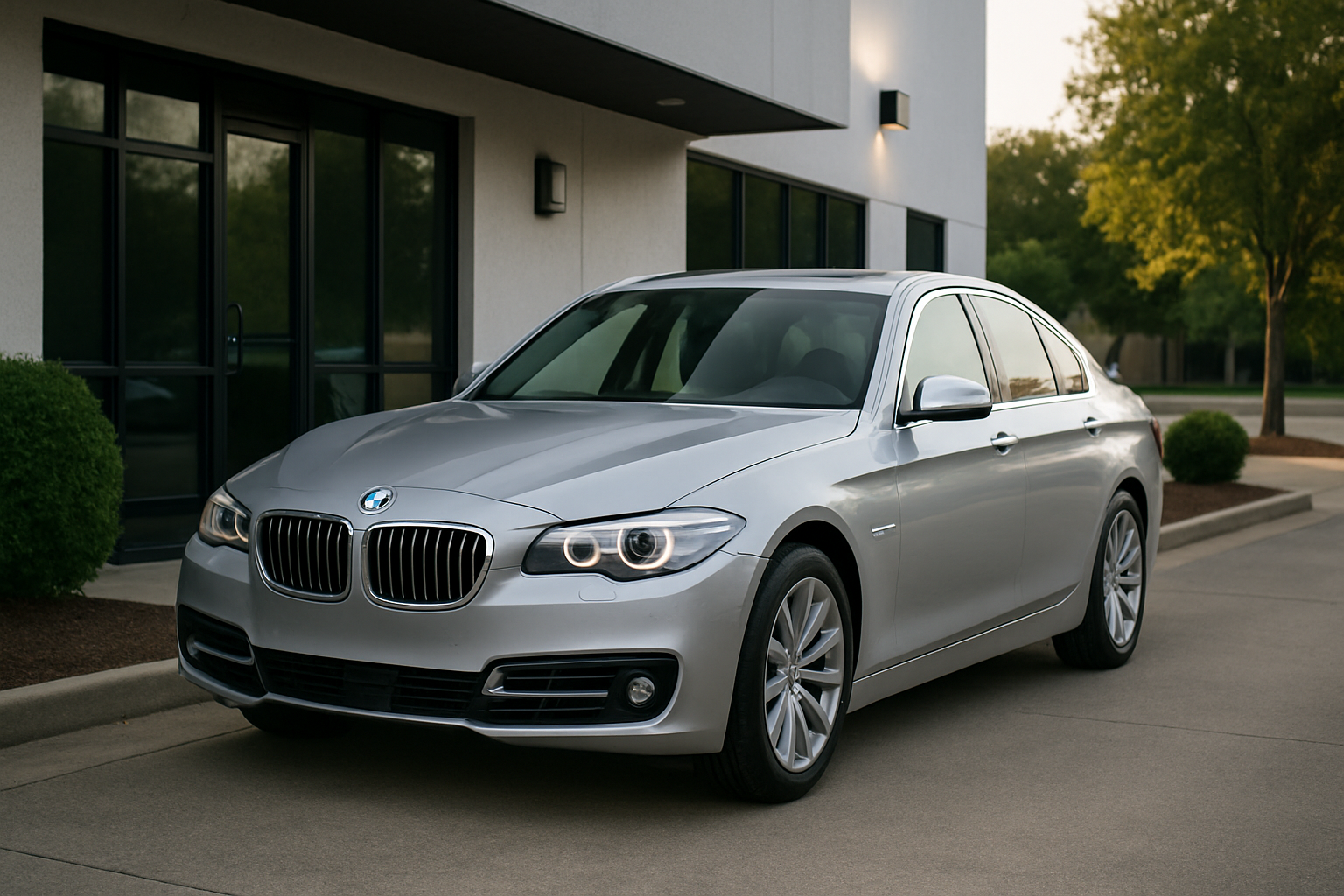
Compare that to a 2010 BMW 5-Series, which can easily cost $3,000-5,000 per year in the same mileage range. Sensors fail constantly. The turbos wear out. The plastic cooling system components crack.
The difference adds up fast. Over five years of ownership, you could spend $15,000 more maintaining the BMW than the Lexus. That’s enough to buy another used car.
My Take
Luxury car ownership doesn’t have to mean luxury repair bills.
If you stick with Japanese luxury brands or American luxury cars built on mainstream platforms, you can get heated leather seats and premium sound systems without emptying your bank account every time the check engine light comes on.
The key is doing your research before buying. Know which engines are reliable. Understand what platform the car is built on. Check what parts cost before you commit.
And once you own it, maintain it properly. Cheap oil changes now prevent expensive engine rebuilds later. Keep up with the basics, and these cars will treat you well.
I’d take a well-maintained Lexus ES with 150,000 miles over a neglected BMW with 50,000 miles any day of the week. The badge on the hood doesn’t matter if the car spends half its time at the shop.



Leave a Reply