
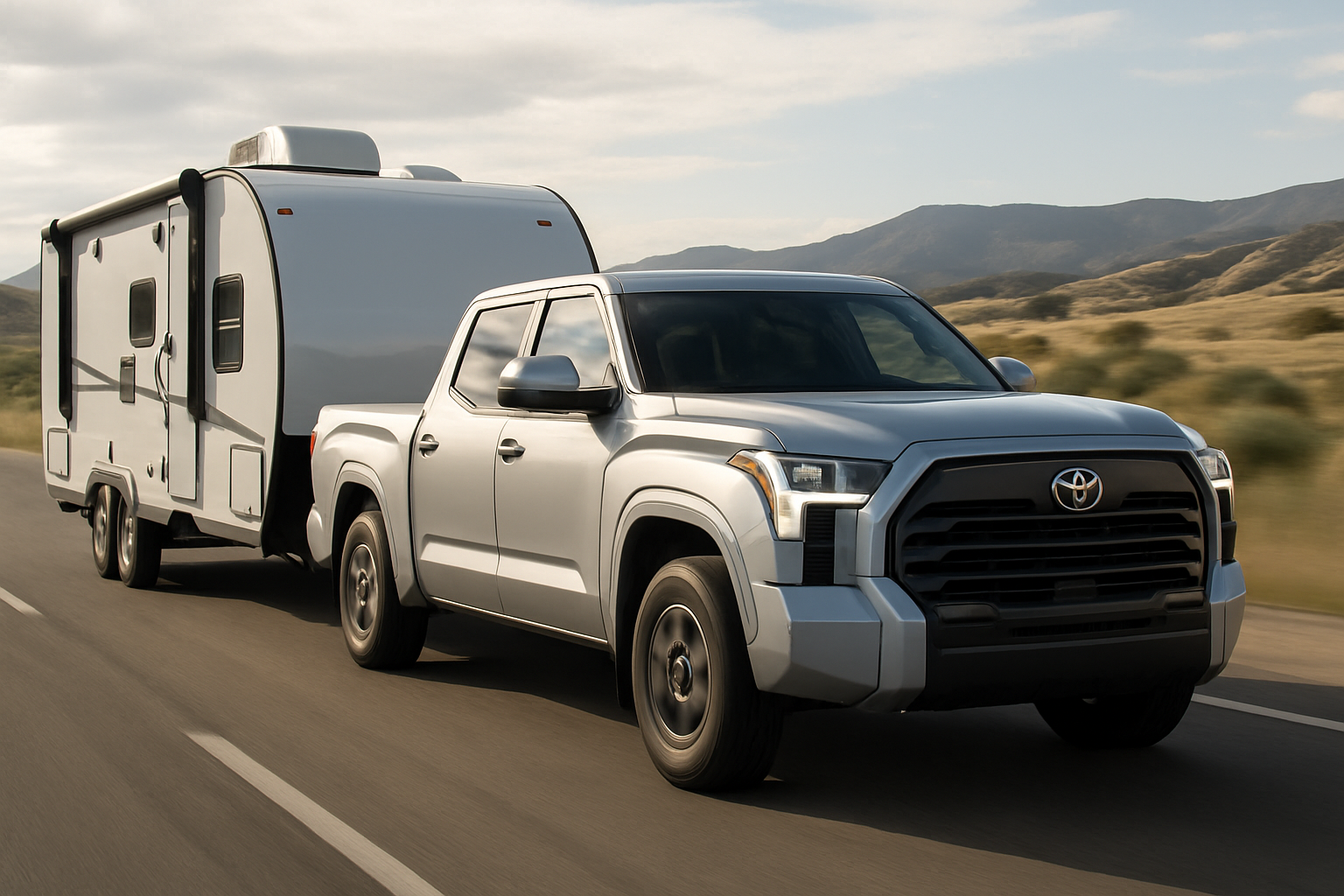
When you’re pulling a heavy trailer behind your Toyota Tundra, the last thing you want is to feel that unsettling back-and-forth swaying motion. Your Tundra comes equipped with an advanced trailer sway control system that can detect and correct this dangerous situation automatically, but understanding how to use it properly makes all the difference in safe towing.
This system works across multiple generations of the Tundra and integrates seamlessly with other towing features to keep you and your cargo safe on the road.
What is Trailer Sway Control and How Does It Work
Trailer sway control is an electronic safety system that monitors your vehicle’s movement and detects when your trailer starts swaying side to side. The system uses sensors throughout your Tundra to measure yaw rate, steering angle, and lateral acceleration.
When the system detects trailer sway, it automatically applies the brakes to specific wheels on your truck. This selective braking creates forces that counteract the swaying motion and help straighten out both your vehicle and trailer.
The beauty of this system lies in its automatic operation. You don’t need to press any buttons or make adjustments while driving. The computer handles everything in milliseconds, often correcting sway before you even notice it starting.
How the System Detects Trailer Sway
Your Tundra’s trailer sway control uses multiple sensors working together to identify problematic movement patterns. The vehicle stability control sensors continuously monitor how your truck is moving through space.
When you’re towing normally, these sensors detect predictable movement patterns. Your steering inputs create expected changes in direction, and the trailer follows smoothly behind. But when sway begins, the sensors pick up irregular oscillations that don’t match your steering commands.
The system can distinguish between normal driving maneuvers and dangerous trailer sway by analyzing the frequency and amplitude of these movements. Sharp turns, lane changes, and emergency maneuvers all create different sensor signatures than trailer sway.
Individual Wheel Braking Technology
Once trailer sway is detected, your Tundra doesn’t just apply all the brakes equally. Instead, it uses individual wheel braking to create corrective forces that specifically counteract the swaying motion.
If your trailer is swaying to the right, the system will typically apply more braking force to the left front wheel. This creates a moment that pulls the front of your truck slightly left, which helps straighten the entire vehicle-trailer combination.
The system modulates brake pressure multiple times per second, making tiny adjustments that you’ll barely feel. You might notice a slight pulsing in the brake pedal or a subtle change in how the truck feels, but the corrections happen so quickly that the overall effect is smooth stabilization.
This selective braking works much more effectively than simply slowing down the entire vehicle. Traditional advice for trailer sway was to gradually reduce speed, but modern electronic systems can stop sway while maintaining better control and highway speeds.
Tow/Haul Mode Integration
Your Tundra’s Tow/Haul mode works hand-in-hand with trailer sway control to provide better overall towing performance. When you activate Tow/Haul mode using the button on your gear selector, you’re not just changing shift patterns.
Tow/Haul mode adjusts the sensitivity and response characteristics of multiple systems, including trailer sway control. The system becomes more aggressive in detecting and correcting sway because it knows you’re pulling a heavy load.
The transmission programming in Tow/Haul mode also supports sway control efforts. By maintaining lower gears and providing better engine braking, the transmission reduces the likelihood that acceleration or deceleration will trigger trailer sway in the first place.
You should always engage Tow/Haul mode when pulling any significant trailer. The button is located on the side of your gear selector and will illuminate when active. This simple step dramatically improves both the performance and safety of your trailer sway control system.
Weight Distribution Hitch Importance
While your Tundra’s electronic trailer sway control is highly effective, it works best when your trailer is properly balanced from the start. A quality weight distribution hitch is essential for maximizing the system’s effectiveness.
Weight distribution hitches do exactly what their name suggests. They redistribute some of the trailer’s tongue weight from your truck’s rear axle back to the front axle and to the trailer’s axles. This creates a more balanced, stable combination that’s less prone to sway.
When your truck’s rear end is overloaded and the front end is too light, trailer sway becomes more likely and harder to control. Even the best electronic systems struggle to compensate for poor weight distribution. Your steering becomes less responsive, and the physics working against you become stronger.
Most Tundra owners pulling travel trailers, boat trailers, or car haulers over 3,000 pounds should use a weight distribution system. The investment pays off in improved handling, reduced wear on your truck, and better performance from your sway control system.
Recognizing When Sway Control is Active
Your Tundra provides several indicators when the trailer sway control system is working. The most obvious sign is usually a pulsing sensation in the brake pedal, similar to what you feel when ABS activates.
You might also notice your truck making subtle steering corrections that you didn’t input. The vehicle may seem to resist slight steering movements or feel like it’s guiding itself back to center. This is the system working to counteract sway forces.
The traction control warning light on your dashboard may also flash when sway control is active. This light typically shows a car with squiggly lines behind it and illuminates whenever the stability systems are intervening.
If you’re experiencing frequent sway control activation, you should pull over safely and check your trailer. Common causes include improper loading, insufficient tongue weight, or mechanical problems with the trailer’s suspension or tires.
Optimizing System Performance
You can take several steps to help your Tundra’s trailer sway control work more effectively. Proper tire pressure on both your truck and trailer is critical. Under-inflated tires make sway more likely and reduce the system’s ability to correct it.
Loading your trailer correctly makes an enormous difference. Heavy items should go low and forward in the trailer. The tongue weight should typically be 10-15% of the total trailer weight. You can measure this at truck stops with individual wheel scales.
Your truck’s suspension and steering components should be in good condition. Worn shocks, loose steering components, or sagging springs all reduce the effectiveness of electronic stability systems. Regular maintenance keeps everything working together properly.
Driving habits also matter. Smooth, gradual inputs work better than sudden changes. Avoid sharp steering corrections if you feel sway starting. Instead, maintain a firm grip on the wheel and let the system do its work while you gradually reduce speed if needed.
System Limitations and Precautions
Trailer sway control is extremely effective, but it’s not magic. The system works within the laws of physics and has limitations you should understand. Excessive speed, overloading, or severe crosswinds can overwhelm even the best electronic systems.
The system also can’t compensate for mechanical failures or extremely poor trailer setup. A blown trailer tire, broken suspension component, or completely wrong tongue weight may create forces too strong for the system to handle.
You should never rely solely on electronic systems for towing safety. Proper equipment, loading, and driving techniques remain essential. The trailer sway control system is an excellent backup, but prevention is always better than correction.
If your system activates frequently or seems unable to control sway, stop and investigate immediately. Continuing to drive with an unstable trailer puts you and other drivers at risk.
Maintenance and Troubleshooting
Your Tundra’s trailer sway control system requires minimal maintenance but benefits from regular attention to related components. Keep your brake system in excellent condition since the sway control relies on precise brake modulation.
The wheel speed sensors that help detect sway can become dirty or damaged. Regular cleaning and inspection during tire rotations helps ensure accurate readings. These sensors are typically located near each wheel hub.
If your sway control system stops working, you’ll usually see warning lights on your dashboard. The VSC (Vehicle Stability Control) light or a “Check VSC System” message indicates problems that need professional diagnosis.
Software updates from Toyota occasionally improve system performance. Your dealer can check for and install any available updates during regular service visits.
Frequently Asked Questions
Can I turn off trailer sway control if I don’t want it?
You can temporarily disable the Vehicle Stability Control system by pressing and holding the VSC OFF button, but this also disables other important safety features. The system automatically reactivates when you restart your truck. Most experts recommend leaving trailer sway control active since it only intervenes when needed.
Does trailer sway control work with all types of trailers?
The system works with most conventional trailers including travel trailers, boat trailers, and utility trailers. However, it’s designed for trailers that push down on the hitch (positive tongue weight). Fifth-wheel and gooseneck trailers use different physics and have their own stability characteristics.
Why does my sway control activate even when I don’t feel any sway?
The system can detect the beginning stages of sway before you feel it. Early intervention is much more effective than waiting until sway becomes noticeable. This proactive approach prevents small oscillations from developing into dangerous situations.
Will trailer sway control work if my trailer has its own brake controller?
Yes, the two systems work together. Your truck’s sway control system operates your truck’s brakes independently of the trailer brake controller. Having properly functioning trailer brakes actually helps the sway control system work more effectively by providing additional stability.
Leave a Reply