
The Jeep Grand Cherokee’s Selec-Terrain system gives you serious control over how your SUV handles different driving conditions. This advanced traction management technology automatically adjusts various vehicle systems to optimize performance whether you’re crawling over rocks, plowing through snow, or cruising down the highway.
Understanding Selec-Terrain Traction Management
Selec-Terrain works by coordinating multiple vehicle systems including the transmission, throttle response, stability control, and four-wheel drive system. When you select a specific mode, the system adjusts these components to match the terrain you’re tackling.
Your Grand Cherokee’s Selec-Terrain system includes five distinct modes: Auto, Sport, Rock, Snow, and Mud/Sand. Each mode changes how aggressively the traction control intervenes, how the transmission shifts, and how power gets distributed between the wheels.
The system integrates with either the Quadra-Trac or Quadra-Drive four-wheel drive systems, depending on your specific Grand Cherokee trim level. Both systems work seamlessly with Selec-Terrain, but they distribute power differently.
Locating and Using the Selec-Terrain Controls
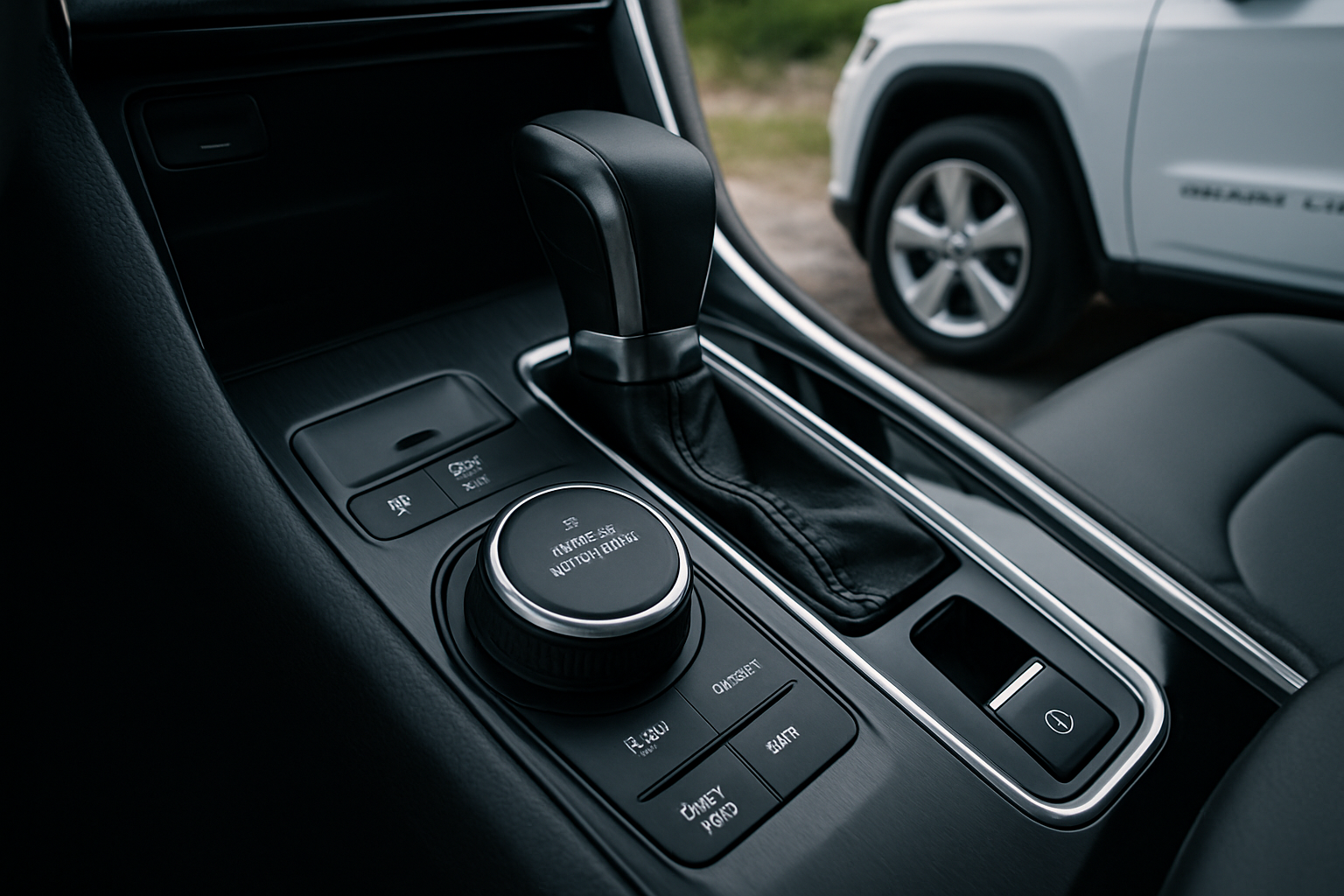
You’ll find the Selec-Terrain knob on the center console, typically located near the gear shifter or electronic parking brake. The knob features clearly marked positions for each terrain mode, with LED indicators showing your current selection.
The system activates automatically when you start your Grand Cherokee, defaulting to Auto mode. You can change modes while driving at speeds up to 25 mph, though some modes work best when engaged before you encounter challenging terrain.
On Grand Cherokee models equipped with air suspension, you’ll also find height adjustment controls nearby. These buttons let you raise or lower the vehicle to complement your selected terrain mode.
Auto Mode: Your Daily Driver Setting
Auto mode serves as the default setting for normal driving conditions. This mode balances fuel economy with capability, automatically engaging four-wheel drive when sensors detect wheel slip or challenging conditions.
In Auto mode, the transmission shifts normally for smooth acceleration and optimal fuel economy. The stability control system remains active but allows for reasonable wheel slip before intervening. This setting works well for dry pavement, light rain, and most everyday driving scenarios.
The system continuously monitors road conditions in Auto mode, ready to send power to all four wheels within milliseconds when needed. You won’t feel any harsh engagement or disengagement as the system seamlessly transitions between two-wheel and four-wheel drive.
Sport Mode: Enhanced Performance
Sport mode transforms your Grand Cherokee’s character for more aggressive driving. The transmission holds gears longer, providing more engine braking and keeping the engine in its power band during spirited driving.
Throttle response becomes sharper in Sport mode, with less delay between pressing the accelerator and feeling power delivery. The stability control system allows for more wheel slip before intervening, giving you greater control over the vehicle’s dynamics.
This mode works exceptionally well on winding roads or when you need quick acceleration for highway merging. The four-wheel drive system remains ready to engage when needed, but the focus shifts toward performance rather than pure traction.
Snow Mode: Winter Weather Confidence
Snow mode optimizes your Grand Cherokee for slippery winter conditions. The system reduces throttle sensitivity to prevent wheel spin when accelerating from a stop or climbing snow-covered hills.
Transmission shifts occur at lower RPMs to maintain steady power delivery without overwhelming available traction. The anti-lock brake system becomes more sensitive to prevent wheel lockup on icy surfaces.
Four-wheel drive engages more readily in Snow mode, often staying active throughout your drive rather than cycling on and off. This provides consistent traction and prevents the brief power interruptions that can occur when the system transitions between drive modes.
Rock Mode: Serious Off-Road Capability
Rock mode unleashes your Grand Cherokee’s maximum off-road potential. This setting provides the most aggressive four-wheel drive engagement and significantly reduces traction control intervention to allow for controlled wheel spin.
The transmission shifts are optimized for low-speed crawling, with the torque converter staying locked to provide immediate power delivery. Engine braking increases substantially, helping you maintain control on steep descents without riding the brake pedal.
Hill Descent Control activates automatically in Rock mode on equipped models, maintaining a steady downhill speed without any input from you. The stability control system allows maximum wheel articulation while still preventing rollovers.
Mud/Sand Mode: Loose Surface Mastery
Mud/Sand mode calibrates the traction management system for loose, low-traction surfaces. The system allows more wheel spin than other modes, which helps clear mud from tire treads and prevents digging in soft sand.
Transmission programming emphasizes maintaining momentum rather than precise control. Shifts occur to keep engine RPMs in the torque band where you can power through challenging sections without getting stuck.
The four-wheel drive system distributes power more aggressively to wheels with traction while allowing slipping wheels to spin freely. This prevents the system from applying brakes to spinning wheels, which could cause you to lose forward momentum in soft conditions.
Quadra-Trac vs Quadra-Drive Systems
Your Grand Cherokee’s four-wheel drive system affects how Selec-Terrain manages traction. Quadra-Trac systems use a center coupling to distribute power between front and rear axles, while Quadra-Drive systems add electronic limited-slip differentials.
Quadra-Trac systems provide excellent capability for most drivers and terrain types. The system can send up to 100% of available torque to either the front or rear axle depending on traction needs.
Quadra-Drive systems take capability further with electronic limited-slip differentials at both axles. This setup can direct power to individual wheels, providing maximum traction in extreme off-road situations. You’ll typically find Quadra-Drive on higher trim levels and more off-road focused variants.
Air Suspension Integration
Grand Cherokee models with air suspension add another dimension to the Selec-Terrain system. The air springs can raise or lower the vehicle to complement your selected terrain mode.
In Rock mode, you can raise the suspension to maximum height for improved ground clearance and approach angles. The system maintains this height automatically as long as you stay below certain speeds.
Highway speeds automatically lower the suspension for improved aerodynamics and fuel economy. You can override this by manually selecting a higher ride height, though the system will lower the vehicle again for safety at very high speeds.
The air suspension also includes a convenient entry/exit mode that lowers the vehicle for easier access, then returns to your selected height once you start driving.
Maximizing Selec-Terrain Performance
Get the most from your Selec-Terrain system by selecting the appropriate mode before you encounter challenging conditions. Switching modes while already struggling with traction won’t be as effective as choosing the right setting proactively.
Don’t forget to adjust your driving style to match the selected mode. Rock mode requires patience and smooth inputs, while Mud/Sand mode often benefits from maintaining momentum through obstacles.
Learn to trust the system’s capabilities, especially in Rock mode where allowing controlled wheel slip can actually improve traction. The computers react far faster than human reflexes and can manage individual wheels independently.
Common Selec-Terrain Issues and Solutions
If your Selec-Terrain knob becomes unresponsive or modes don’t seem to engage properly, check for any active warning lights or messages on your instrument cluster. Many system faults trigger protective modes that limit Selec-Terrain operation.
Extremely cold weather can temporarily affect system operation until components warm up. This typically resolves itself within a few minutes of driving.
Remember that Selec-Terrain works with your existing tires and suspension setup. Worn tires or damaged suspension components will limit the system’s effectiveness regardless of which mode you select.
Maintenance Considerations
Keep your Selec-Terrain system operating properly with regular maintenance of related components. This includes changing transfer case fluid according to your maintenance schedule and keeping wheel speed sensors clean.
Off-road driving puts additional stress on drivetrain components, so consider more frequent fluid changes if you regularly use Rock or Mud/Sand modes. Your owner’s manual should specify severe duty maintenance intervals.
Have any unusual noises, vibrations, or warning messages diagnosed promptly. Early attention to minor issues prevents more expensive repairs and keeps your Selec-Terrain system working properly.
Frequently Asked Questions
Can I switch between Selec-Terrain modes while driving?
Yes, you can change modes while driving at speeds up to 25 mph. However, it’s best to select the appropriate mode before encountering challenging terrain for optimal performance.
Does using Sport mode hurt my fuel economy?
Sport mode can reduce fuel economy due to more aggressive transmission programming and throttle response. The impact varies depending on your driving style and how often you use the mode.
Should I use Snow mode for all winter driving?
Snow mode works best on slippery surfaces like snow and ice. For dry winter roads, Auto mode provides better fuel economy while maintaining the ability to engage four-wheel drive when needed.
Can Selec-Terrain damage my drivetrain if used incorrectly?
The system includes protective measures to prevent drivetrain damage. However, aggressive off-road driving in any mode increases wear on components and requires appropriate maintenance intervals.
Leave a Reply