
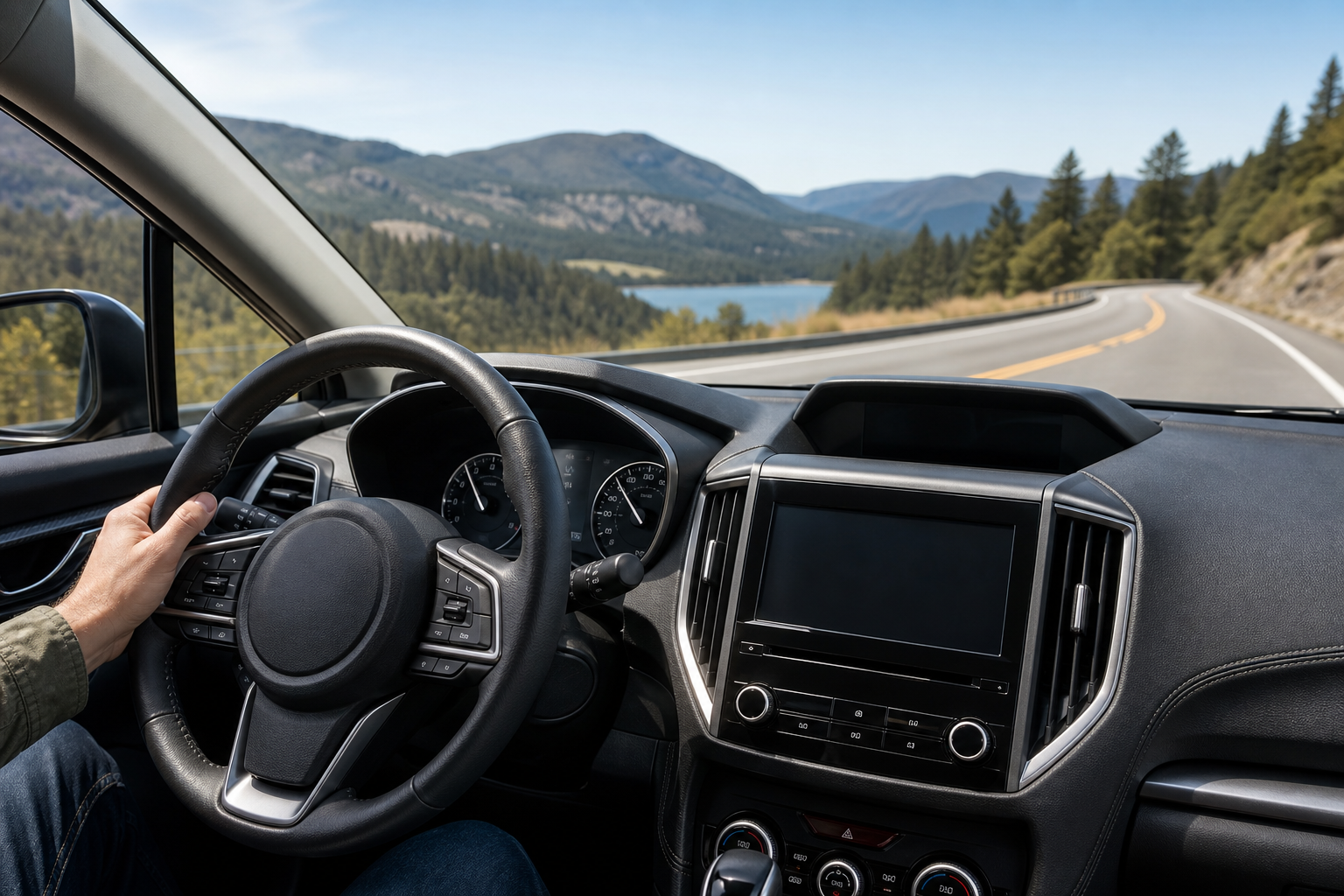
If you’ve been hunting through your Subaru Outback’s steering wheel buttons trying to find a way to switch off adaptive cruise control and go back to plain old “set it and forget it” cruise, you’re not alone. A lot of Outback owners miss the simplicity of conventional cruise control, especially in light traffic where the adaptive system’s constant speed adjustments can feel intrusive. Here’s the real answer, without any invented workarounds.
Does the Outback Actually Have a Conventional Cruise Mode?
For any Outback equipped with EyeSight, and that’s the vast majority of Outbacks built since around 2015, the cruise control system is built entirely around the stereo camera setup that reads the road and traffic ahead. Subaru didn’t design a separate, non-adaptive mode you can toggle into. The cruise control and the adaptive following behavior are the same system, not two different settings hiding behind a menu.
This surprises people because most other automakers that offer adaptive cruise also keep a traditional cruise option available as a fallback. Subaru’s EyeSight architecture doesn’t work that way. When EyeSight is active, cruise control is adaptive, period.
Model Year Breakdown: When Conventional Cruise Actually Existed
Before you assume your Outback is stuck with adaptive cruise, check which generation and trim you’re driving. The answer really does depend on the model year.
- 2010-2012 Outback: These pre-EyeSight cars only had conventional cruise control. There was no radar or camera-based following system at all, so what you had was a true fixed-speed cruise.
- 2013-2014 Outback: EyeSight became an optional package on Premium and Limited trims. If your Outback from this era doesn’t have EyeSight, you’re driving with conventional cruise. If it does have EyeSight, adaptive cruise is your only option.
- 2015-2019 Outback: EyeSight became standard on any Outback with the CVT automatic transmission. Manual transmission trims (where still offered) kept conventional cruise since EyeSight required the automatic.
- 2020-2024 Outback: EyeSight is standard across every trim, and there’s no manual transmission option anymore. Every current Outback runs adaptive cruise exclusively.
So if you’re shopping for a used Outback specifically because you want traditional cruise control, you’ll want to look at 2010-2012 models or a 2013-2014 trim built without the EyeSight package. Anything newer, and adaptive is what you’re getting.
Steering Wheel Controls for Cruise Control on EyeSight-Equipped Outbacks
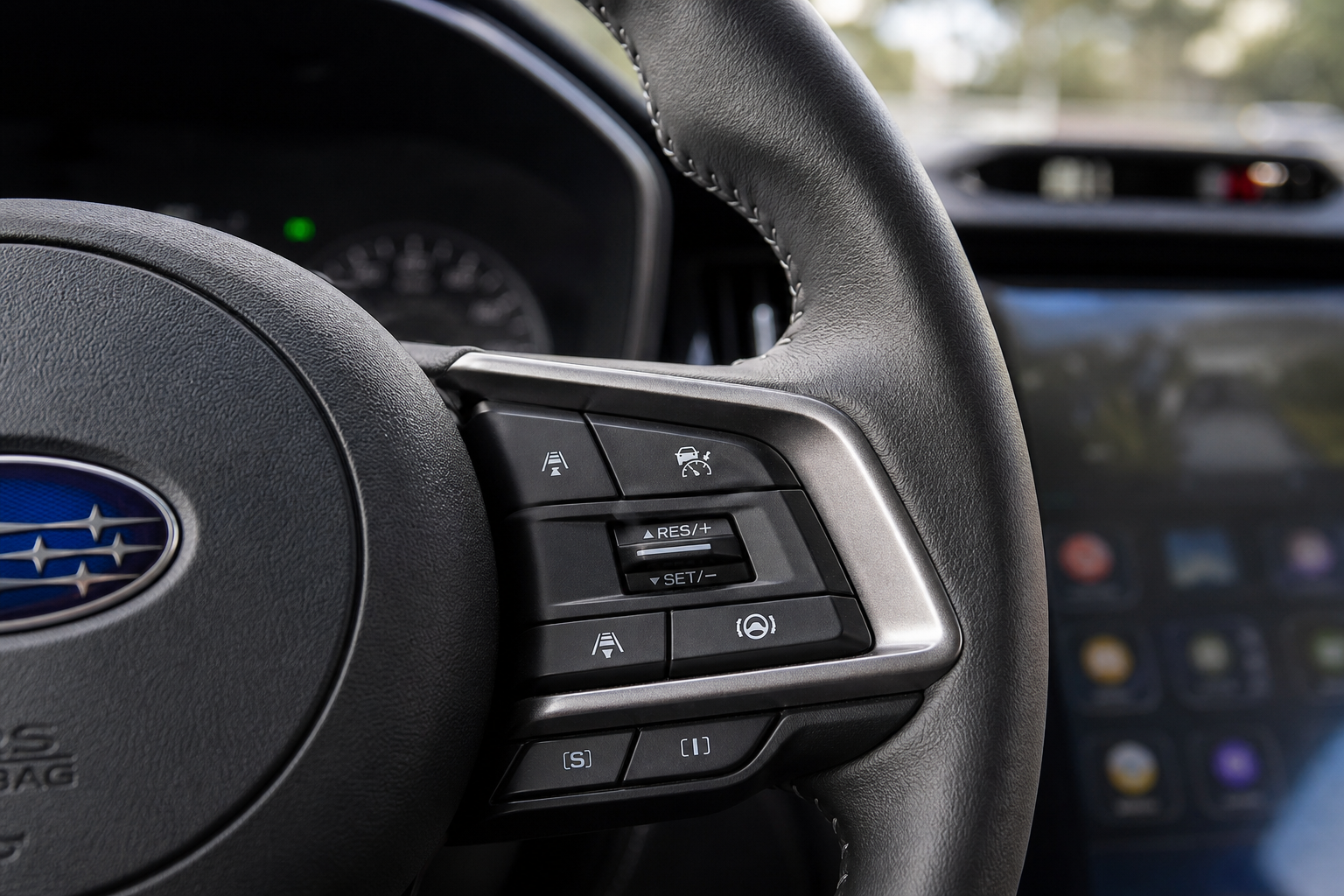
Even though you can’t disable the adaptive function, the steering wheel controls still let you fine-tune how it behaves. Here’s the exact sequence:
- Press the MAIN switch on the right side of the steering wheel to power on the cruise control system.
- Accelerate to your desired speed, then press SET/- to lock it in.
- Use the RES/+ button to resume your set speed after braking, or to nudge the speed up in small increments.
- Use the distance interval switch (usually a separate toggle below the main cruise buttons) to adjust the following gap between three or four settings, depending on your model year.
That interval switch is the closest thing to customizing the feel of conventional cruise. Setting it to the longest available gap gives you a driving experience much closer to old-school cruise control, since the car won’t react to vehicles ahead until they’re genuinely close. It still isn’t a true disable, but in open highway driving it minimizes how often the system intervenes.
Reading the Dashboard Indicator
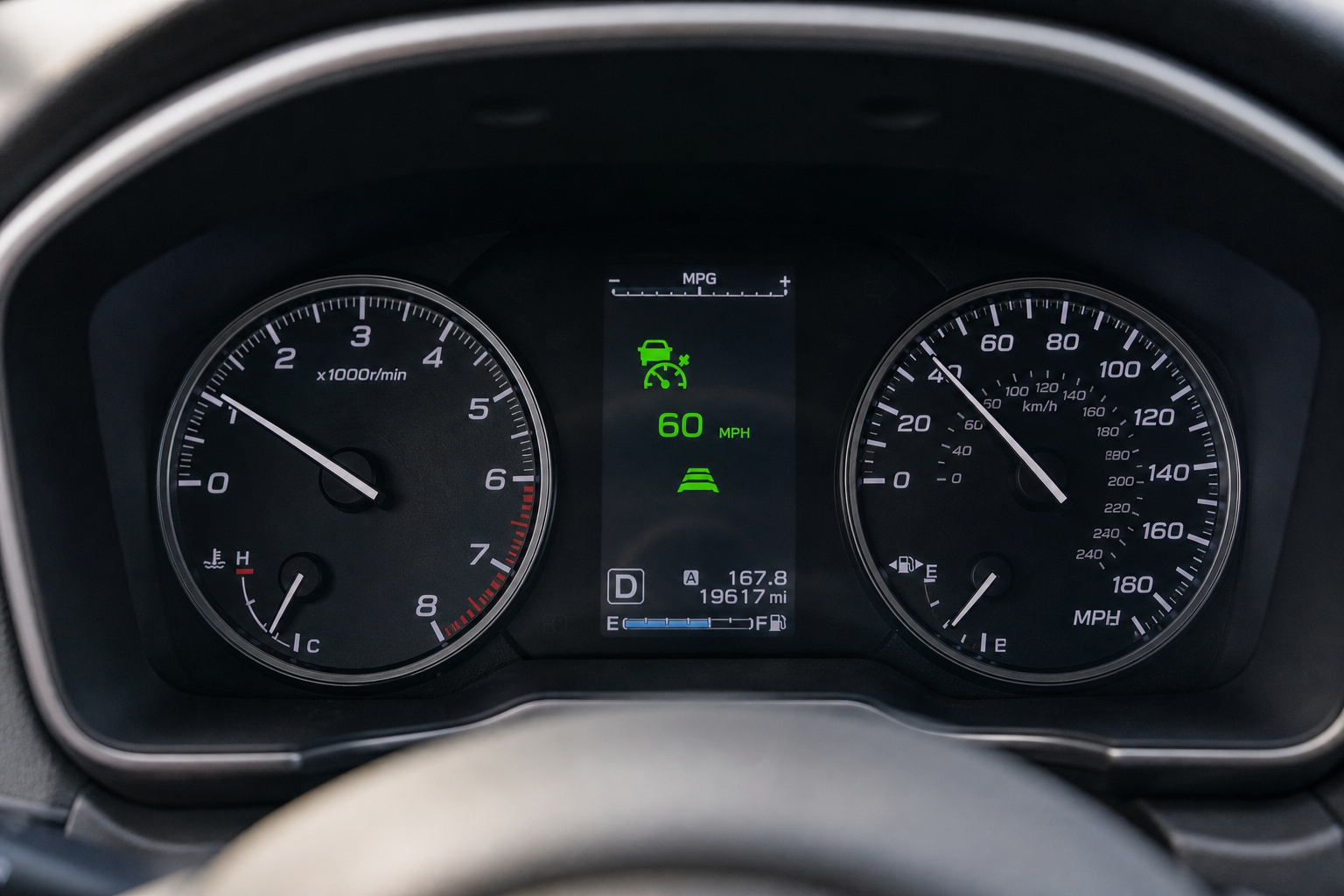
Your instrument cluster tells you exactly what mode the system is in, and it’s worth knowing how to read it correctly. When cruise control is active, you’ll see your set speed displayed along with a small vehicle icon.
If that vehicle icon shows a car silhouette in front of your own car icon with distance bars underneath, EyeSight has detected a vehicle ahead and is actively managing your following distance. If the lead vehicle icon disappears or grays out, there’s nothing detected in your lane, and the car will simply hold your set speed, functionally behaving like conventional cruise control until something else enters its path.
This is honestly the best real-world approximation of “conventional cruise” you’ll get in a modern Outback. On an empty highway, the adaptive system and a traditional cruise control system behave almost identically. The difference only shows up once traffic appears ahead of you.
If You Want the Fixed-Speed Feel Anyway
Don’t go looking for a hidden menu, a dealer reflash, or an aftermarket module claiming to disable the adaptive function. EyeSight is tied directly into Subaru’s safety systems, including features like Intersection Turning Assist, and tampering with it isn’t worth the risk to your car’s safety systems or your warranty.
Your best move is setting the distance interval to its farthest setting and getting used to trusting the system on open roads. Most owners find that after a few weeks, the adaptive behavior stops feeling intrusive and starts feeling like it’s just doing the job a good cruise control system should do anyway.
While you’re getting familiar with your Outback’s driver assistance features, it’s worth checking out how the auto-dimming rearview mirror and compass work too, since both systems share space on the same information displays. And if you ever notice vibration through the wheel while cruising at highway speed, that’s a separate issue worth diagnosing on its own, covered in this guide on steering wheel shakes at high speed.
Frequently Asked Questions
Can I turn off adaptive cruise control on my Outback and just use a set speed?
Not on any EyeSight-equipped Outback. The adaptive function is built into the same system as the cruise control itself, so there’s no separate conventional mode to switch into. Adjusting the distance interval to its longest setting is the closest workaround, but the system will still react if it detects a vehicle ahead.
Which Subaru Outback model years do NOT have adaptive cruise control?
2010-2012 Outbacks never had EyeSight, so they only offer conventional cruise. Some 2013-2014 trims without the optional EyeSight package also stick with conventional cruise. Every Outback from 2015 onward with the CVT automatic transmission, and every Outback from 2020 forward regardless of trim, comes with adaptive cruise only.
Why does my Outback slow down on its own even though I set a speed?
That’s the adaptive function detecting a slower vehicle ahead and adjusting your speed to maintain the following gap you’ve selected. It’s not a malfunction. Check your distance interval setting on the steering wheel and increase the gap if the braking feels too aggressive for your taste.
Related posts:
 How to Use Regular Cruise Control Instead of Adaptive Cruise on Toyota RAV4
  How to Use Regular Cruise Control Instead of Adaptive Cruise on Toyota Highlander
  How to Use Regular Cruise Control Instead of Adaptive Cruise on Honda CR-V
  How to Use Regular Cruise Control Instead of Adaptive Cruise on Honda Pilot
Leave a Reply