
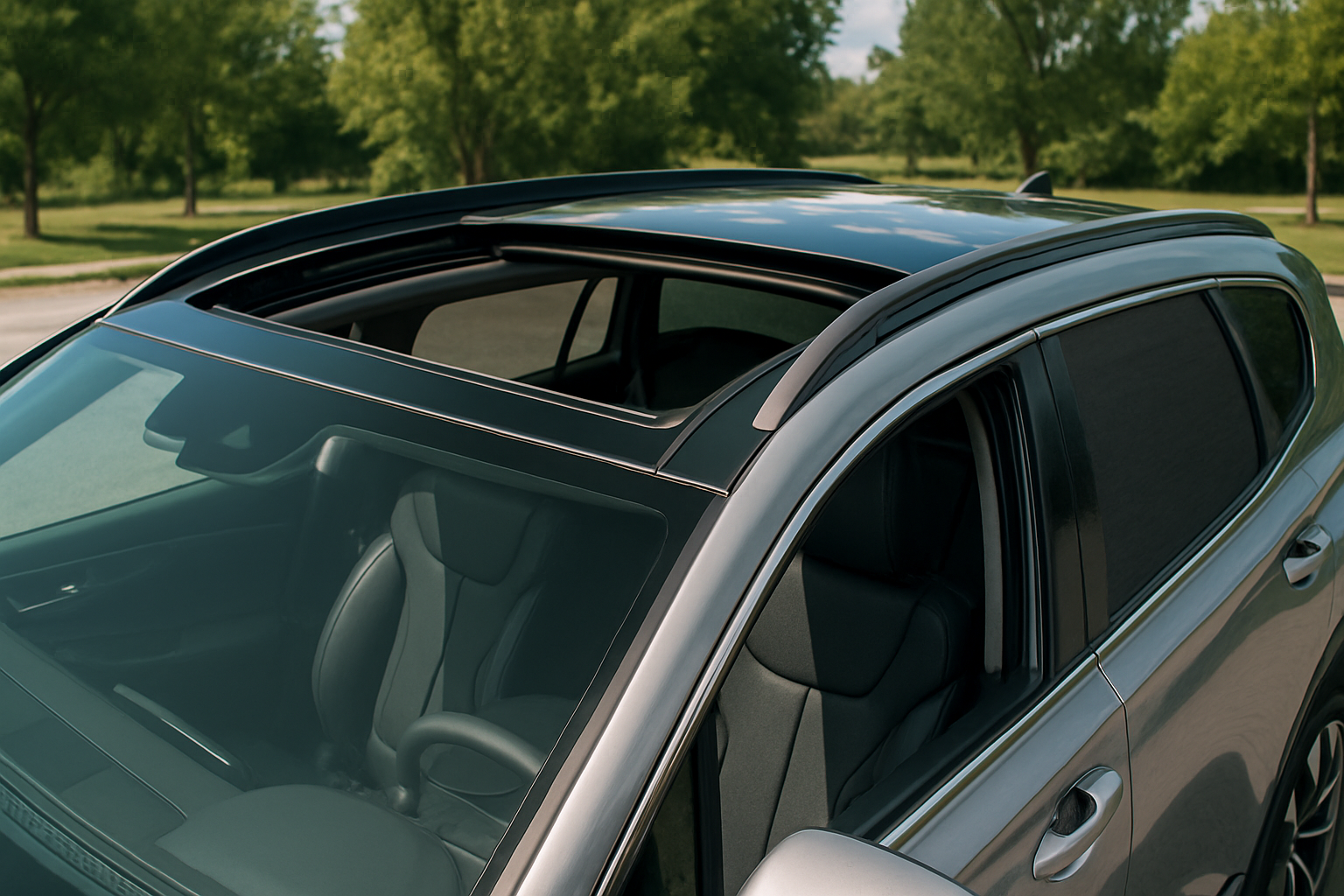
The Hyundai Santa Fe’s panoramic sunroof transforms your driving experience by bringing natural light and fresh air into your cabin. Understanding how to properly operate both the sunroof and its power shade system will help you get the most out of this premium feature while avoiding potential issues.
Understanding Your Santa Fe’s Panoramic Sunroof System
Modern Hyundai Santa Fe models feature a large panoramic sunroof that spans much of the roof area above both front and rear passengers. This isn’t just a simple pop-up sunroof like older vehicles had. Instead, you’re dealing with a sophisticated glass panel system that can tilt upward or slide completely open, depending on your preference.
The system includes two main components you’ll interact with: the glass panel itself and the interior power shade. The glass panel provides the actual opening to the outside, while the power shade acts as an interior cover that blocks sunlight and heat when you want the structural benefits of glass overhead without the brightness.
Both systems operate independently, which means you can have the shade closed while the glass is open, or vice versa. This flexibility gives you precise control over your cabin environment throughout different driving conditions.
Locating and Using the Sunroof Controls
You’ll find the sunroof controls in the overhead console, typically positioned between the front seats near the map lights and garage door opener buttons. The control panel features a rectangular switch with directional arrows and a separate button for shade operation.
The main sunroof switch has arrows pointing in four directions. The upward arrow tilts the rear of the glass panel up for ventilation, while the backward arrow slides the entire panel open. The forward arrow closes the panel from any position, and the downward arrow closes the tilt function.
For basic operation, press and hold the desired direction. The sunroof will continue moving as long as you hold the button. Most Santa Fe models also include an auto-open feature where a quick press (less than one second) will fully open or close the sunroof automatically.
Tilt vs Slide Operation Explained
The tilt function raises the rear edge of the glass panel about 1-2 inches while keeping the rest of the panel in place. This creates a small opening that allows air circulation without the wind noise and buffeting you’d get from a fully open sunroof. Tilt mode works particularly well at highway speeds when a fully open roof would create uncomfortable air turbulence.
Slide operation moves the entire glass panel backward into a pocket above the rear passenger area. This gives you a large rectangular opening that dramatically changes your cabin’s feel. The slide function works best at lower speeds or when parked, since highway speeds can create significant wind noise and air movement.
You can use both functions simultaneously. Start with tilt mode, then activate slide mode, and the panel will slide back while maintaining its tilted position. This combination can help reduce wind buffeting while still providing a large opening.
Operating the Power Shade System
The power shade button is separate from the main sunroof controls and typically marked with a shade or blind icon. This button controls an interior fabric panel that slides back and forth underneath the glass.
Press and hold the shade button to open the shade toward the rear of the vehicle. The fabric panel will retract, allowing light to enter through the glass even when the sunroof itself remains closed. Press and hold the button again to close the shade forward, blocking light and reducing heat buildup.
Many Santa Fe owners find the shade system particularly useful during summer parking. You can keep the glass closed for security while opening the shade to prevent the interior from becoming too dark. Conversely, closing the shade while keeping the glass open maintains airflow while blocking direct sunlight.
The shade system includes an auto-reverse function that stops operation if it encounters resistance. This prevents damage if something gets caught in the mechanism, though you should always ensure the shade path is clear before operating.
Auto-Close Rain Function on Select Trims
Higher trim levels of recent Santa Fe models include a rain-sensing auto-close feature. This system uses the same rain sensor that controls automatic wipers to detect moisture and automatically close an open sunroof.
The rain sensor is located on the windshield near the rearview mirror. When it detects sufficient moisture, it sends a signal to close the sunroof glass panel. However, this system only closes the glass itself, not the power shade.
You can typically disable this function through the vehicle’s infotainment settings menu. Look for sunroof or convenience settings in the vehicle setup menus. Some drivers prefer manual control, especially in light mist conditions where the auto-close might activate unnecessarily.
Keep in mind that the auto-close function has a slight delay to prevent activation from car wash spray or brief moisture exposure. The system needs to detect consistent moisture for several seconds before initiating closure.
Essential Maintenance for Sunroof Drains
Your Santa Fe’s sunroof includes a drainage system that channels water away from the opening. Four drain tubes, one at each corner of the sunroof frame, direct water down through the vehicle’s pillars and out through small openings near the wheels.
These drains can become clogged with leaves, dirt, and debris over time. Blocked drains cause water to back up and potentially leak into your cabin, creating expensive damage to electronics and upholstery.
Check your drains every few months by pouring a small amount of water into each corner of the sunroof track. You should see water emerge from drain holes near each wheel well. If water backs up instead of draining, you’ve found a blockage.
For minor blockages, try using compressed air to blow debris out through the drain openings. More stubborn clogs might require a flexible wire or specialized drain cleaning tools. Avoid using rigid objects that could damage the drain tubes themselves.
Cleaning and Care Tips
Regular cleaning keeps your sunroof system operating smoothly and prevents premature wear. Use a soft brush or cloth to remove debris from the sunroof tracks and seal areas. Accumulated dirt and leaves can interfere with proper closing and create seal problems.
Clean the glass panel with standard automotive glass cleaner, but avoid getting cleaner into the track areas. The rubber seals around the sunroof benefit from periodic treatment with rubber conditioner to maintain flexibility and prevent cracking.
The power shade fabric can collect dust and debris over time. Use a vacuum with a brush attachment to gently clean the fabric surface. Avoid using liquid cleaners on the shade material, as moisture can damage the fabric or create staining.
Lubricate the sunroof tracks annually with white lithium grease or the lubricant specified in your owner’s manual. Apply a thin layer to the metal tracks where the sunroof panel slides, but keep grease away from the rubber seals.
Troubleshooting Common Issues
Sunroof Won’t Open or Close
Check your vehicle’s electrical system first. A weak battery can prevent sunroof operation since the motor draws significant power. Try operating other electrical accessories to verify adequate battery voltage.
Debris in the tracks can also prevent movement. Inspect the sunroof rails for leaves, ice, or other obstructions. Remove any visible debris and try operating the sunroof again.
Sunroof Opens But Won’t Close
This often indicates a problem with the sunroof’s limit switches or motor. Try the initialization procedure from your owner’s manual, which typically involves holding the close button for several seconds after the sunroof reaches the closed position.
If initialization doesn’t work, you may need professional diagnosis of the motor or control module. Avoid forcing the sunroof closed manually, as this can cause additional damage.
Power Shade Operates Intermittently
The shade system uses a separate motor that can develop issues independent of the main sunroof. Check for fabric bunching or binding that might cause the motor to overwork and shut down on thermal protection.
Ensure the shade fabric hasn’t come loose from its guides. A partially detached shade can bind during operation and trigger the auto-reverse function.
Maximizing Your Sunroof Experience
Different driving conditions call for different sunroof configurations. For highway driving, start with just the tilt function to minimize wind noise while still getting fresh air circulation.
In stop-and-go traffic, you can fully open both the glass and shade for maximum airflow. The lower speeds won’t create uncomfortable buffeting, and the extra ventilation helps combat heat buildup from idling.
During winter months, occasionally operate your sunroof to keep the mechanisms exercised and prevent seals from sticking. Even if you don’t want cold air entering the cabin, running the sunroof through its full range of motion monthly helps maintain proper operation.
Consider your parking orientation when using the sunroof system. Parking with the sunroof facing away from direct sun reduces heat buildup and makes the cabin more comfortable when you return to your vehicle.
Frequently Asked Questions
Can I open the sunroof while driving in light rain?
The tilt function works fine in light rain since it creates only a small opening at the rear of the panel. However, sliding the sunroof open during any precipitation will allow water to enter the cabin. The drainage system handles water that lands on the closed sunroof, not water that enters through an open panel.
Why does my sunroof sometimes stop working after sitting in hot weather?
Extreme heat can cause the sunroof motor to shut down on thermal protection. This prevents damage to the motor windings but temporarily disables operation. Allow the vehicle to cool down, then try operating the sunroof again. If this happens frequently, have the system inspected for binding or motor issues.
How do I reset my sunroof if it stops working properly?
Most Santa Fe models include a sunroof initialization procedure. Close the sunroof completely, then continue holding the close button for 5-10 seconds after movement stops. This teaches the control module the proper closed position and often resolves minor operational issues.
Is it normal for the sunroof to make noise during operation?
Some mechanical noise is normal, particularly a low humming from the motor and slight clicking as the panel moves through its guides. However, grinding, scraping, or loud clicking sounds indicate problems that need professional attention. These noises often point to worn guides, debris in the tracks, or motor issues.
This article contains affiliate links. If you purchase through these links, we may earn a small commission at no extra cost to you.


Leave a Reply