
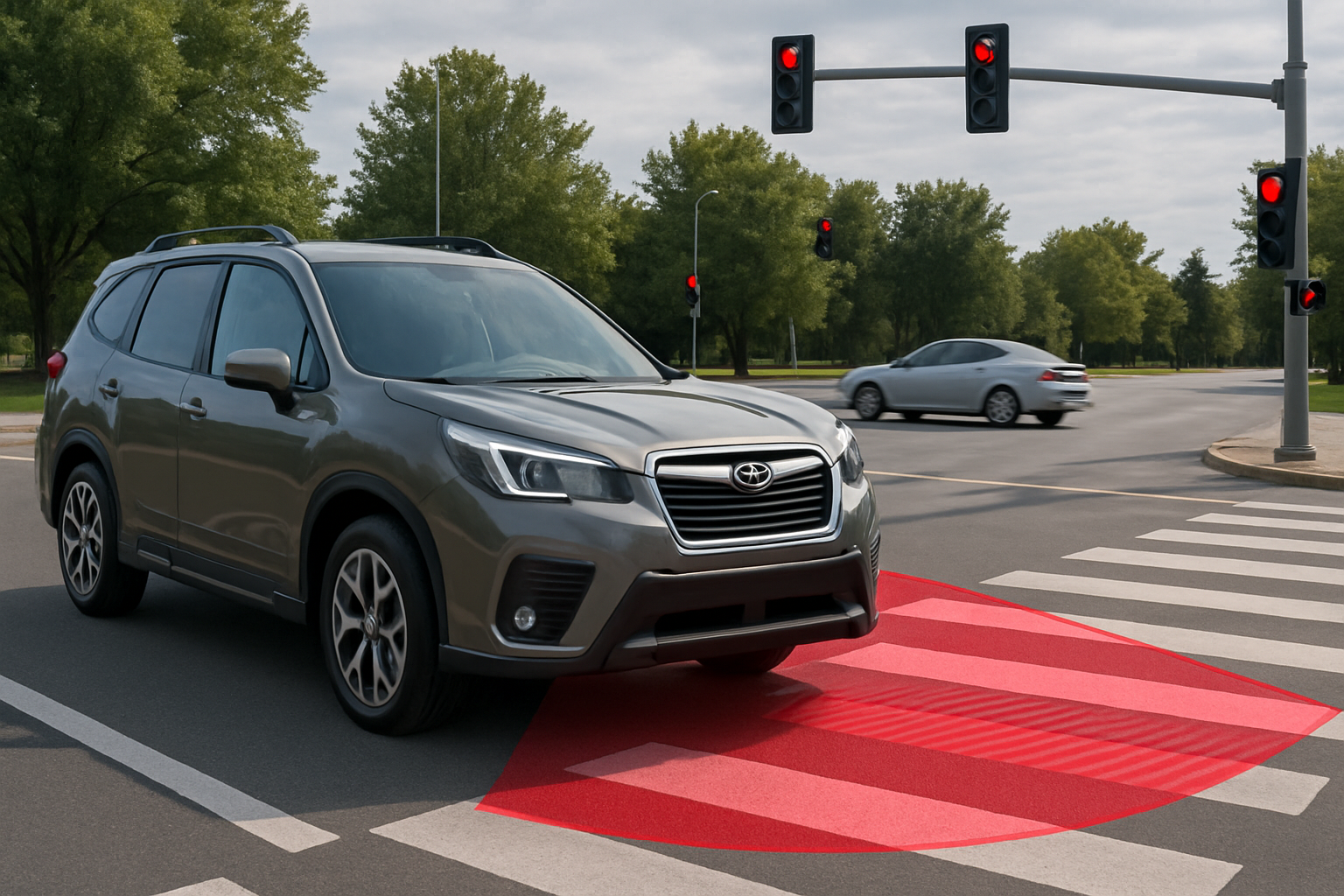
Intersection accidents are among the most dangerous types of collisions you can encounter. The Subaru Forester’s Intersection Collision Avoidance System helps protect you from side-impact crashes by automatically detecting approaching vehicles and applying the brakes when necessary.
Understanding the Intersection Collision Avoidance System
The Intersection Collision Avoidance System is a sophisticated safety feature that monitors cross traffic when you’re turning left or proceeding through an intersection. Unlike traditional forward-facing collision detection, this system uses multiple sensors to watch for vehicles approaching from the sides.
This technology integrates seamlessly with Subaru’s EyeSight 4.0 suite, which includes the dual-camera system mounted behind your rearview mirror. The cameras work alongside radar sensors to create a comprehensive picture of your surroundings, particularly focusing on blind spots and cross-traffic scenarios.
The system activates automatically when you’re driving at speeds between 3 and 19 mph in intersections. It’s designed specifically for those tricky situations where you might not see an approaching vehicle due to visual obstructions like parked cars, buildings, or other traffic.
How the System Detects Side Traffic
Your Forester uses a combination of camera technology and radar to identify potential collision threats. The EyeSight cameras continuously scan the road ahead and to the sides, while additional sensors monitor your vehicle’s position relative to the intersection.
When you enter an intersection or begin a left turn, the system calculates the trajectory of approaching vehicles. It measures their speed, distance, and predicted path to determine if they’ll intersect with your vehicle’s intended route.
The detection range extends approximately 60 feet to either side of your vehicle. This gives the system enough time to process the threat and react accordingly. The technology can identify cars, trucks, motorcycles, and other vehicles, though it may struggle with bicycles or pedestrians in certain lighting conditions.
Visual and audio alerts activate first when the system detects a potential collision. You’ll hear a series of beeps while an indicator appears on your dashboard display. If you don’t respond to these warnings and the system determines a collision is imminent, automatic braking engages.
Integration with EyeSight 4.0
EyeSight 4.0 represents a significant upgrade over previous generations of Subaru’s safety technology. The intersection collision avoidance feature works as part of this integrated system, sharing data with other safety functions like pre-collision braking and adaptive cruise control.
The dual-camera setup provides stereoscopic vision, allowing your Forester to judge distances and speeds more accurately than single-camera systems. This enhanced depth perception is crucial for intersection scenarios where split-second timing matters.
You can monitor the system’s status through your multi-function display. When EyeSight is active, you’ll see a green indicator light on your dashboard. If any component malfunctions, a yellow or red warning light appears, and the system may temporarily disable itself.
The cameras require a clear view to function properly. Keep your windshield clean, especially in the area directly behind your rearview mirror. Snow, ice, or even heavy rain can temporarily disable the system until visibility improves.
Adjusting Sensitivity Settings
Your Forester allows you to customize how aggressively the intersection collision avoidance system responds to potential threats. You’ll find these settings in your vehicle’s infotainment system under the EyeSight menu.
Access the settings by pressing the “Settings” button on your center console, then navigate to “Driver Assist” or “EyeSight” depending on your model year. Look for “Pre-Collision Braking” or “Intersection Support” in the submenu.
The system typically offers three sensitivity levels: Early, Standard, and Late. The Early setting triggers warnings and braking sooner, potentially preventing more accidents but possibly creating false alarms. The Late setting waits longer before intervening, reducing false positives but giving you less reaction time.
Most drivers find the Standard setting works well for everyday driving. However, you might prefer the Early setting if you frequently drive in busy urban areas with complex intersections. Rural drivers with long sight lines might opt for the Late setting to minimize unnecessary alerts.
When the System Activates
Understanding when your Forester’s intersection collision avoidance system activates helps you work with the technology rather than against it. The system monitors several specific scenarios where side-impact collisions commonly occur.
Left turns across traffic trigger the most frequent activations. When you’re waiting to turn left and then accelerate into the intersection, the system watches for vehicles approaching from your right that might not stop or might be traveling faster than expected.
The system also activates when you’re proceeding straight through an intersection and cross traffic might run a red light or stop sign. This protection is particularly valuable at busy intersections where visibility is limited.
Four-way stop intersections can sometimes confuse the system, especially when multiple vehicles are present. The technology works best at controlled intersections with clear traffic patterns rather than complex multi-way stops with unclear right-of-way situations.
Limitations to Keep in Mind
While the intersection collision avoidance system provides valuable protection, it’s not foolproof. Understanding its limitations helps you drive more safely and avoid overrelying on the technology.
Weather conditions significantly affect performance. Heavy rain, snow, or fog can reduce the system’s effectiveness or disable it entirely. Direct sunlight or bright reflections might also interfere with the cameras’ ability to detect approaching vehicles accurately.
The system works best with standard passenger vehicles and trucks. Motorcycles, especially smaller ones, might not trigger the sensors consistently. Bicycles and pedestrians may also go undetected, particularly in low-light conditions.
Construction zones and unusual intersection layouts can confuse the system. Temporary traffic patterns, detour signs, or non-standard road markings might prevent the technology from activating when needed or cause false alarms.
Troubleshooting Common Issues
If your intersection collision avoidance system isn’t working properly, several common issues might be the cause. Most problems are easy to resolve without visiting your dealer.
Dirty or obstructed cameras are the most frequent culprit. Clean your windshield thoroughly, paying special attention to the area around the rearview mirror mount. Use glass cleaner and avoid products that leave residue.
Check for any stickers, decals, or accessories that might block the cameras’ view. Even small obstructions can disable the entire system. Remove anything that interferes with the sensors’ line of sight.
Temperature extremes can temporarily affect system performance. Very hot or cold weather might cause the cameras to fog or ice over. Allow your vehicle to reach normal operating temperature, and ensure your defrosters are working properly.
If warning lights persist or the system frequently malfunctions, schedule service with your Subaru dealer. The cameras may need recalibration or cleaning that requires professional tools and knowledge.
Maximizing System Effectiveness
Getting the most from your intersection collision avoidance system requires developing good driving habits that complement the technology. The system works best when you remain alert and engaged while driving.
Always check your mirrors and blind spots before entering intersections, even with the safety system active. The technology is designed to assist you, not replace careful observation and defensive driving techniques.
Maintain a reasonable following distance and approach intersections at appropriate speeds. The system has specific speed ranges where it functions optimally, and excessive speed reduces its effectiveness.
Keep your vehicle properly maintained, including regular windshield cleaning and ensuring all lights work correctly. Other drivers need to see your intentions clearly for the overall safety system to work effectively.
Practice using the system in familiar, low-risk situations to understand how it responds. This familiarity helps you react appropriately when the technology activates in genuine emergency situations.
Frequently Asked Questions
Can I completely turn off the intersection collision avoidance system?
You can disable the system through your EyeSight settings menu, though Subaru recommends keeping it active for safety. The system reactivates automatically each time you start your vehicle, requiring you to disable it manually if you choose not to use it. Most drivers find adjusting the sensitivity settings provides better results than completely disabling the feature.
Will the system work at highway speeds?
The intersection collision avoidance system only operates at speeds between 3 and 19 mph, making it ineffective for highway driving. At higher speeds, other EyeSight features like pre-collision braking and adaptive cruise control provide safety assistance. The low-speed limitation is intentional, as the system is designed specifically for intersection and urban driving scenarios.
Does the system affect my vehicle’s warranty or insurance?
The intersection collision avoidance system is a standard feature that doesn’t affect your warranty coverage. Many insurance companies offer discounts for vehicles equipped with advanced safety features like EyeSight, potentially reducing your premiums. Contact your insurance provider to learn about available discounts for safety technology.
How do I know if my system needs recalibration?
Warning lights on your dashboard indicate when the system requires attention. You might also notice frequent false alarms or failure to detect obvious threats. After windshield replacement or any front-end collision repair, professional recalibration is typically necessary. Your Subaru dealer can perform diagnostic tests to determine if recalibration is needed.
This article contains affiliate links. If you purchase through these links, we may earn a small commission at no extra cost to you.
Leave a Reply