
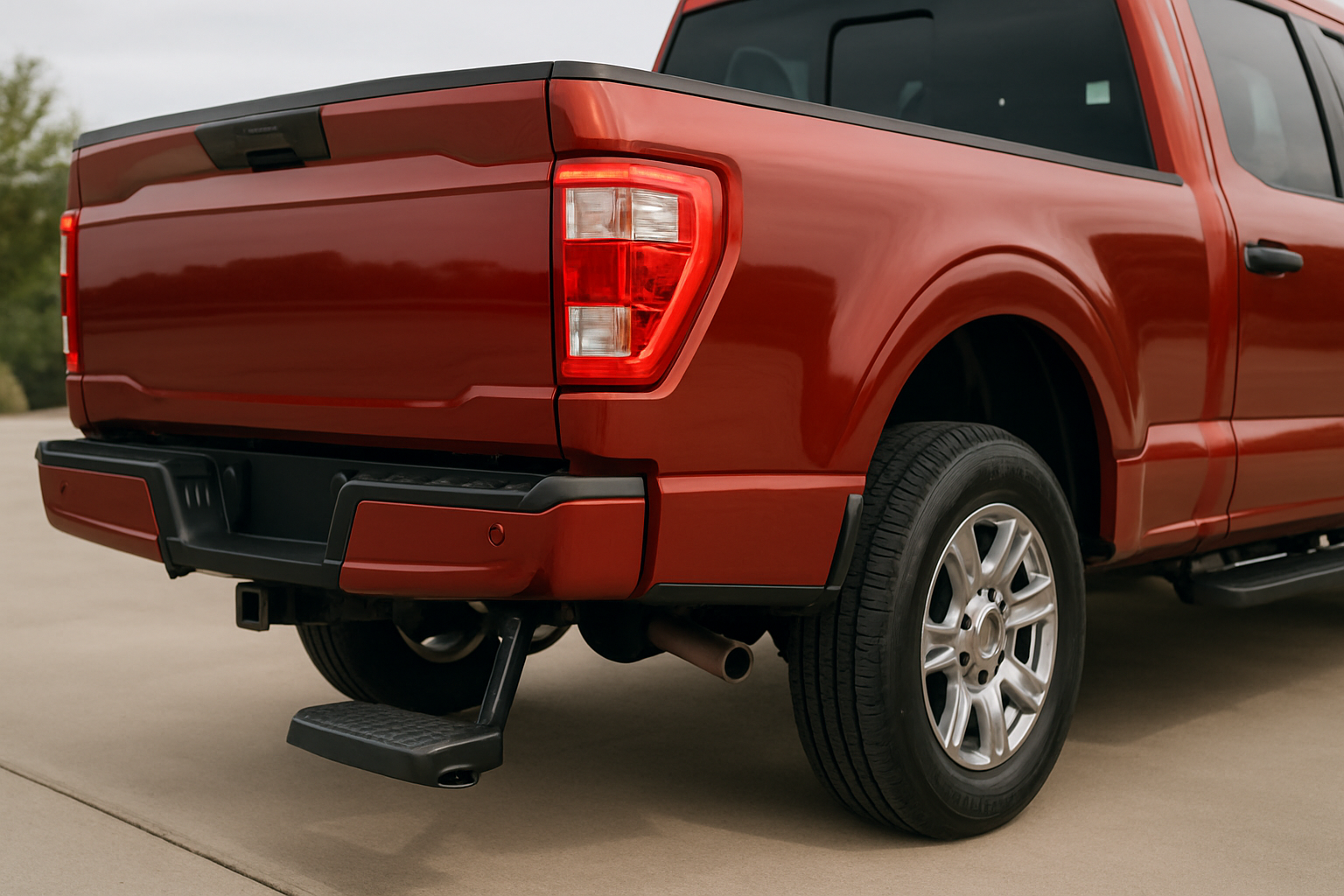
Ford’s F-150 and Super Duty trucks come equipped with convenient bed steps that make accessing your truck bed much easier and safer. These integrated steps can save you from awkward climbing and reduce strain on your back and knees when loading or unloading cargo.
Understanding how to properly use these bed steps will help you get the most out of your truck’s design and keep you safer while working around your vehicle.
Understanding Ford’s Bed Step Systems
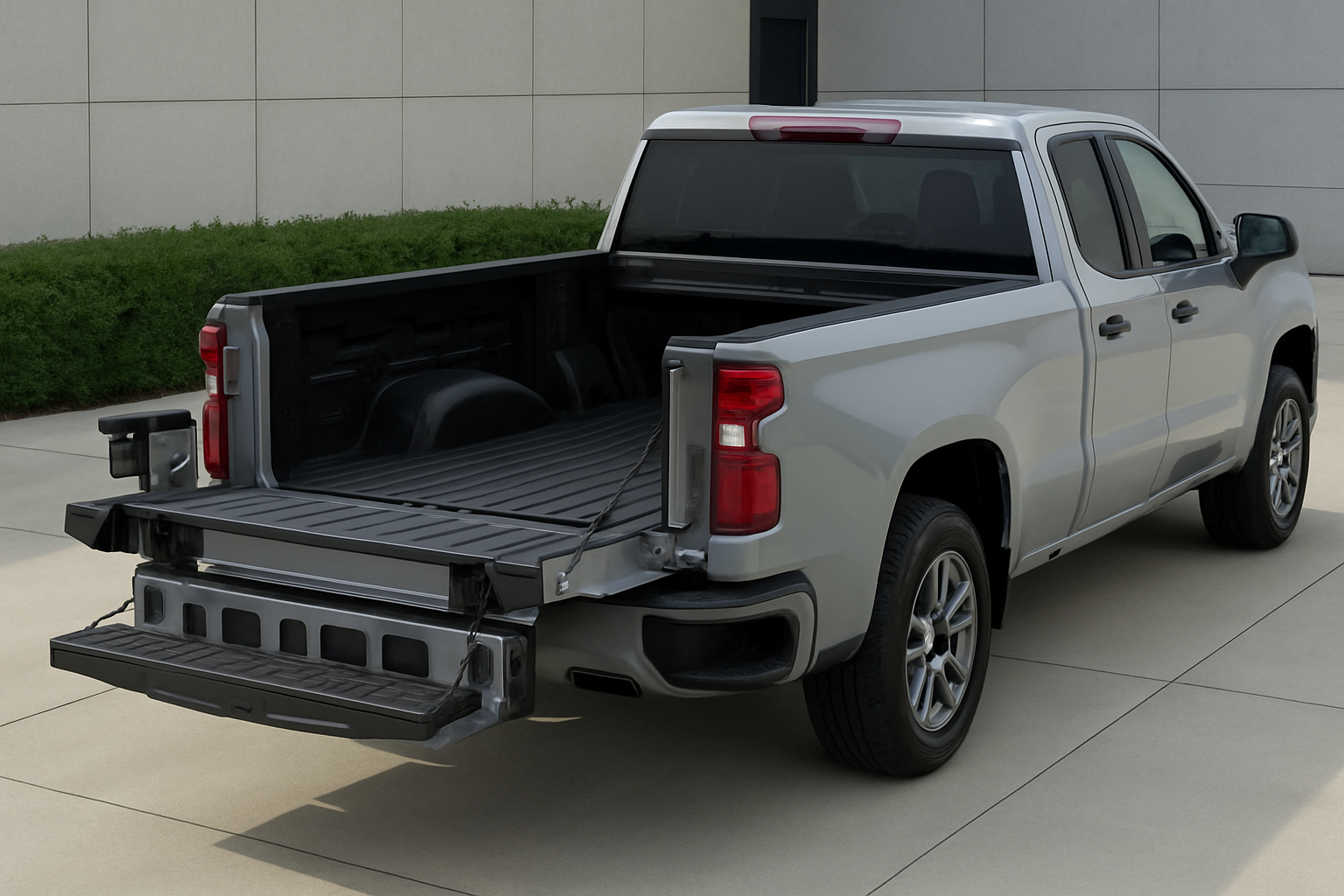
Ford offers two main types of bed access solutions on their F-150 and Super Duty trucks. The integrated tailgate step with grab bar system provides a sturdy platform built right into the tailgate itself. Additionally, many F-150 models feature bumper-mounted side steps that give you alternative access points.
These systems are engineered to support significant weight while maintaining the truck’s overall functionality. The tailgate step typically supports up to 350 pounds, while bumper steps can handle around 300 pounds depending on the specific model year.
Both systems deploy easily and fold away when not needed, keeping your truck’s clean lines intact while providing practical utility when you need it most.
Using the Integrated Tailgate Step
Deploying the Tailgate Step
Start by lowering your tailgate completely until it’s horizontal. You’ll notice a rectangular panel in the tailgate’s inner surface with a release handle or button. On most models, this release mechanism is located on the driver’s side of the tailgate panel.
Press the release button or pull the handle while gently pulling the step panel toward you. The step will unfold downward, creating a stable platform approximately 8-10 inches wide. You’ll hear a distinct click when the step locks into position.
The integrated grab bar typically deploys automatically with the step, or you may need to pull it out manually depending on your truck’s specific design. This grab bar provides essential stability when stepping up into the bed.
Proper Step Usage Technique
Always use the grab bar when stepping onto the tailgate step. Place one hand firmly on the grab bar and step up with your foot closest to the truck. Keep your weight centered on the step platform rather than on the edges.
Don’t use the step as a workbench or place tools on it while working in the bed. The step is designed for human weight, not as a shelf for heavy equipment or materials.
When climbing down, maintain your grip on the grab bar and step down facing the truck. This gives you better control and reduces the chance of slipping or falling backward.
Retracting the Tailgate Step
To fold the step back up, lift it slightly to relieve pressure on the locking mechanism, then press the release and push the step back into its storage position. The step should sit flush with the tailgate’s inner panel when properly stowed.
Make sure the step is completely secured before closing your tailgate. A partially deployed step can interfere with the tailgate’s closing mechanism and potentially cause damage.
Using F-150 Bumper Side Steps
Locating the Bumper Steps
Many F-150 models feature small fold-down steps integrated into the rear bumper corners. These steps are typically located just inboard of the taillights and appear as small rectangular panels in the bumper face.
You’ll find release tabs or buttons near each step location. Some models have the release mechanism on top of the bumper, while others place it on the back face of the bumper itself.
Deploying Bumper Steps
Press the release tab while pulling the step panel outward and downward. The step will rotate down to create a small platform. These steps are smaller than the tailgate step but provide convenient access points for reaching into the bed from the sides.
Bumper steps work particularly well when you need to grab something from the bed quickly without fully deploying the tailgate step system. They’re also useful when the tailgate is up and you need to access items near the bed rails.
Each bumper step can typically support 200-300 pounds, but check your owner’s manual for the exact weight rating on your specific model year.
Weight Ratings and Safety Considerations
Ford engineers these step systems with specific weight limits that you should never exceed. The tailgate step generally supports 350 pounds on most F-150 and Super Duty models, while bumper steps handle somewhat less weight.
Exceeding these weight limits can damage the step mechanism, the tailgate, or even cause personal injury if the step fails. Always distribute your weight evenly across the step platform rather than concentrating it on one edge or corner.
Avoid using the steps when they’re wet, icy, or covered with mud or debris. Clean the step surface if necessary before use, and wear appropriate footwear with good grip.
Never use the steps while wearing loose clothing that could catch on the truck or step mechanism. Keep your movements deliberate and controlled rather than rushing when using any bed access system.
Maintenance and Care
Regular Cleaning
Keep the step mechanisms clean and free of dirt, salt, and debris. Road salt can be particularly damaging to the pivot points and locking mechanisms over time. Rinse these areas regularly, especially during winter months.
Use a soft brush to clean out any accumulated debris from the step storage areas and pivot points. Compressed air can help blow out stubborn dirt and particles that might interfere with smooth operation.
Lubrication Points
Apply a light coating of white lithium grease to the pivot points and locking mechanisms annually or whenever you notice the steps becoming harder to deploy or retract. Avoid using heavy oils that can attract dirt and debris.
Check the grab bar pivot points as well, since these components see significant stress during use. A small amount of marine-grade grease works well in these locations.
Inspecting for Wear
Periodically inspect the step platforms for cracks, bent edges, or other damage that could create safety hazards. Pay particular attention to the locking mechanisms to ensure they’re engaging properly.
Check that the grab bar locks securely in both the deployed and stowed positions. A loose or wobbly grab bar creates a serious safety risk and should be addressed immediately.
Troubleshooting Common Issues
Step Won’t Deploy
If your tailgate step won’t deploy, first check for obstructions in the storage area or around the release mechanism. Dirt, ice, or debris can prevent proper operation.
Try working the release mechanism several times while gently pulling on the step panel. Sometimes these mechanisms stick from lack of use or exposure to weather.
For persistent problems, you may need to remove the tailgate’s inner panel to access the step mechanism directly. This typically requires removing several plastic clips or screws.
Step Won’t Lock in Position
A step that deploys but won’t lock securely usually has debris in the locking mechanism or worn locking components. Clean the area thoroughly and try lubricating the locking points.
Never use a step that won’t lock properly, as it could collapse under load and cause injury. Address locking problems before attempting to use the step system.
Grab Bar Problems
Grab bars that won’t deploy or feel loose require immediate attention since they’re critical safety components. Check the mounting points and pivot mechanisms for wear or damage.
Some grab bar issues stem from overtightening during previous maintenance, which can bind the pivot mechanism. Try backing off any adjustment screws slightly to restore proper movement.
Maximizing Your Bed Access Strategy
Combine the various step options strategically based on your specific task. Use bumper steps for quick access to items near the bed rails, and deploy the full tailgate step system when you need to spend time working in the bed.
Consider your truck’s bed height when deciding which access method works best. Higher trucks benefit more from the integrated systems, while lower trucks might not need them as frequently.
Position frequently used items toward the tailgate area where they’re easier to reach using the step systems. Save the deeper bed areas for lighter items or things you don’t access regularly.
Remember that these step systems are just tools to make your truck more functional. Use them when they help, but don’t feel obligated to use them for every bed access situation. Sometimes reaching over the tailgate or bed rail is still the most efficient approach.
Frequently Asked Questions
Can I add bed steps to a truck that didn’t come with them?
Ford doesn’t offer retrofit kits for the integrated tailgate step system, since it requires a specific tailgate design. However, you can add aftermarket step solutions like bumper-mounted steps, hitch-mounted steps, or portable truck bed steps.
Do the bed steps affect towing capacity?
The integrated bed steps don’t impact your truck’s towing capacity since they’re part of the truck’s original design. However, some aftermarket step solutions might interfere with trailer connections or reduce ground clearance.
How much does it cost to repair a broken bed step?
Tailgate step repairs can range from $200-600 depending on what components need replacement. Simple fixes like replacing springs or adjustment hardware cost less, while complete step mechanism replacement approaches the higher end of this range.
Are there any model years to avoid for bed step reliability?
Early implementations of Ford’s bed step systems had some durability issues, but most problems were resolved by the mid-2010s. Current F-150 and Super Duty bed steps are generally reliable when maintained properly.
Leave a Reply