
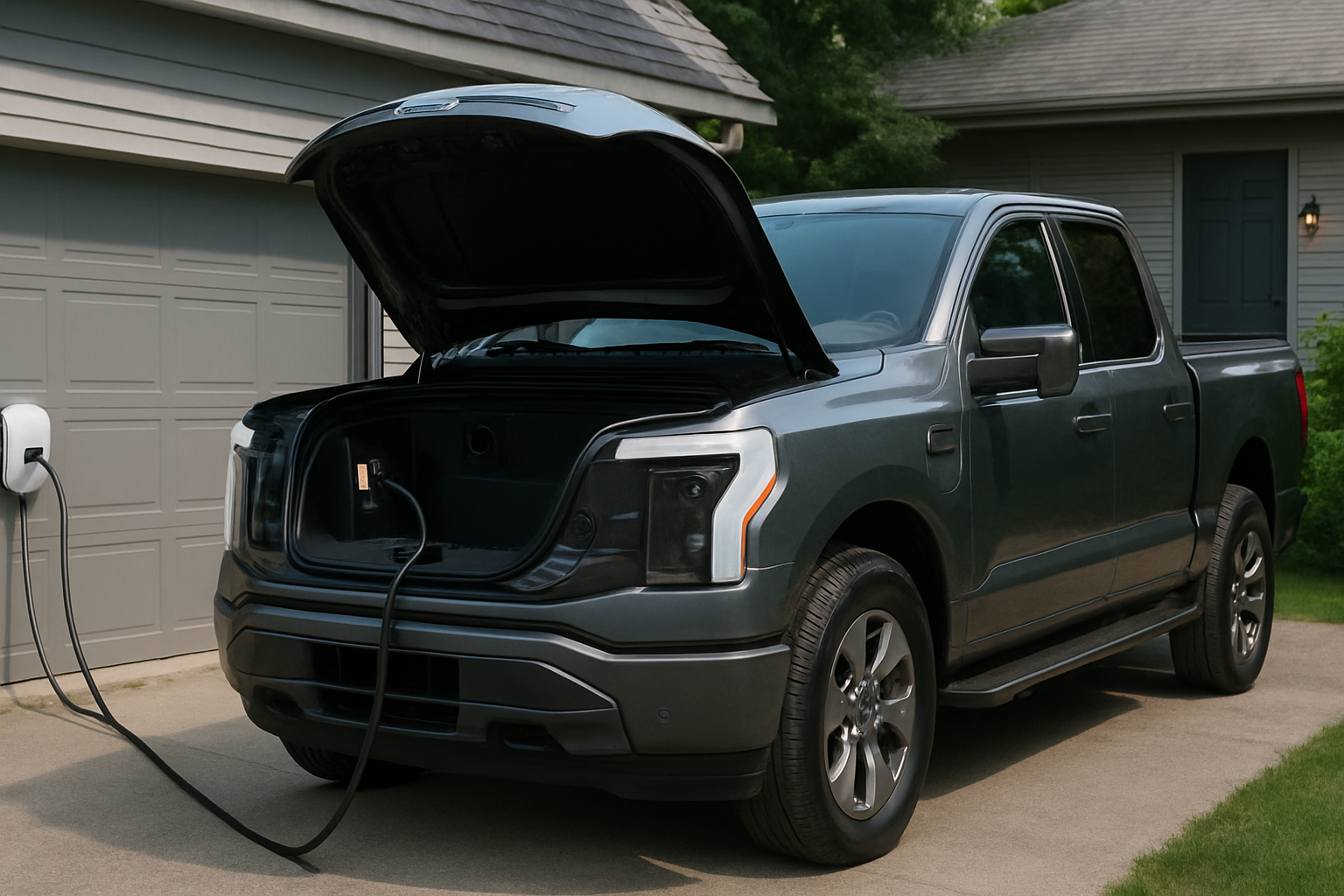
The Ford F-150 Lightning brings serious backup power capabilities to your driveway. When the grid goes down, this electric truck can power your entire home for days using its massive battery pack and built-in 240V outlet system.
Ford’s Intelligent Backup Power system transforms your Lightning into a mobile generator that automatically kicks in during outages. With 9.6kW of continuous output power, you can keep essential appliances running while your neighbors wait in the dark.
Understanding the Ford F-150 Lightning’s Backup Power System
The Lightning’s backup power capability centers around its Intelligent Backup Power feature, which works through the Ford Charge Station Pro. This isn’t just a simple outlet you plug extension cords into. It’s a sophisticated whole-house backup system that integrates directly with your home’s electrical panel.
The system provides 9.6kW of continuous power output, which covers most homes’ essential electrical needs. You can run your refrigerator, lights, heating system, and other critical appliances without interruption. The Lightning’s extended-range battery holds 131 kWh of energy, giving you substantial backup duration.
During a power outage, the system automatically detects the loss of grid power and switches your home to truck power within seconds. When grid power returns, it seamlessly switches back and resumes charging the truck’s battery.
Required Equipment and Installation
Ford Charge Station Pro
The Ford Charge Station Pro is the heart of the backup power system. This isn’t the standard mobile charging cord that comes with the truck. You’ll need to purchase this separately, and it requires professional installation by a qualified electrician.
The Charge Station Pro mounts to your garage wall or exterior wall near where you park the Lightning. It connects to both your home’s electrical panel and provides 80-amp Level 2 charging when the truck is plugged in normally.
Transfer Switch Installation
Your electrician must install a transfer switch in your electrical panel. This device safely isolates your home from the electrical grid during backup power operation. Without this switch, you risk sending power back into utility lines, which creates serious safety hazards for line workers.
The transfer switch automatically detects when grid power fails and switches your home’s electrical load to the truck. Most installations use an automatic transfer switch, but manual switches are also available at lower cost.
You can choose between a whole-house transfer switch or a partial-house switch that covers only essential circuits. The partial approach costs less and extends your backup power duration by reducing the electrical load.
How Long Will Your Home Run on Truck Power
Backup duration depends entirely on your home’s electrical consumption. The Lightning’s 131 kWh battery pack provides different runtime depending on your power usage patterns.
A typical home using 30 kWh per day can run for about 4 days on a full Lightning battery. If you reduce consumption to essential items only, you might stretch this to a week or more. Heavy electrical users with electric heating, air conditioning, or high-consumption appliances will see shorter backup times.
Your actual runtime also depends on the battery’s charge level when the outage begins. If your truck has only 50% charge remaining, you’ll get half the backup duration. The system reserves some battery capacity for driving, so you won’t completely drain the pack powering your house.
Setting Up Intelligent Backup Power
Professional Installation Requirements
This isn’t a DIY project. Local electrical codes require licensed electrician installation for transfer switches and high-voltage charging equipment. The electrician will pull permits, install the transfer switch, run appropriate wiring, and ensure everything meets code requirements.
Installation typically takes 4-8 hours depending on your electrical panel location and complexity. Some homes need panel upgrades to accommodate the 80-amp charging circuit and transfer switch equipment.
FordPass App Configuration
After installation, you’ll configure the backup power system through the FordPass mobile app. The app lets you set backup power preferences, monitor energy usage, and control which circuits receive power during outages.
You can set the system to preserve a minimum driving range, so the truck won’t completely drain its battery powering your house. This ensures you can still drive if needed during extended outages.
Operating Your Backup Power System
Automatic Operation
During normal operation, keep your Lightning plugged into the Charge Station Pro whenever it’s parked at home. The truck charges normally and stays ready to provide backup power instantly when needed.
When grid power fails, the system detects the outage within 10 seconds and automatically switches your home to truck power. Your lights might flicker briefly during the transition, but most appliances won’t even notice the change.
Manual Control Options
You can manually activate backup power mode through the truck’s touchscreen or the FordPass app. This feature helps when you want to use truck power for outdoor events or when grid power is unreliable but still technically available.
The manual mode also lets you test the system periodically to ensure everything works correctly. Ford recommends monthly tests to verify proper operation.
Cost Considerations and Installation Planning
Equipment Costs
The Ford Charge Station Pro costs approximately $1,300, but prices vary by dealer and region. Installation costs depend on your home’s electrical setup but typically range from $1,500 to $4,000 for standard installations.
Complex installations requiring panel upgrades, long wiring runs, or unusual transfer switch locations cost more. Get quotes from multiple electricians experienced with Ford’s backup power systems.
Electrical Panel Considerations
Your electrical panel needs adequate space for the transfer switch and 80-amp charging circuit breaker. Older homes with 100-amp or 150-amp main panels might need upgrades to support the full system.
The electrician will perform a load calculation to ensure your panel can handle both normal household loads and the charging system simultaneously.
Maximizing Backup Power Efficiency
Load Management During Outages
Reduce electrical consumption during outages to extend backup duration. Turn off non-essential items like decorative lighting, entertainment systems, and unnecessary appliances. Focus power usage on refrigeration, heating/cooling, lighting, and communications.
Electric water heaters consume significant power. Consider switching to gas heating or reducing hot water usage during extended outages. Pool pumps, hot tubs, and electric vehicle chargers should be disabled during backup power operation.
Battery Management
Keep your Lightning’s battery charged above 80% when severe weather threatens. This ensures maximum backup power availability when outages occur. The truck’s scheduled charging features help maintain optimal charge levels automatically.
Consider reducing the minimum driving range reserve during long outages if you don’t need to drive. This gives you access to more battery capacity for home power, but plan carefully to avoid stranding yourself.
Maintenance and Troubleshooting
Regular System Checks
Test your backup power system monthly by simulating an outage. Turn off your main breaker and verify the transfer switch activates properly. Check that essential circuits receive power and the truck’s display shows backup power mode.
Keep the Charge Station Pro connections clean and inspect charging cables regularly for damage. Damaged cables create safety hazards and reduce charging efficiency.
Software Updates
Ford regularly updates the truck’s software to improve backup power functionality. Keep your FordPass app updated and install truck software updates promptly. These updates often include bug fixes and performance improvements for the backup power system.
Frequently Asked Questions
Can I use other outlets on the truck during backup power mode?
Yes, the Lightning’s bed outlets and frunk outlets remain available during backup power operation. However, using these outlets increases your overall power consumption and reduces backup duration accordingly.
What happens if I need to drive during a power outage?
You can unplug the truck and drive normally during outages. Your home will lose power when you disconnect, but the transfer switch safely returns to grid power when available. When you return and plug back in, backup power resumes automatically if the outage continues.
Does backup power work with solar panels?
Integration with solar panels requires additional equipment and planning. Most grid-tied solar systems shut down during outages for safety reasons. You’ll need special inverters and batteries to combine solar with the Lightning’s backup power system effectively.
Can I add a generator as backup to the backup power?
Yes, you can install a traditional generator alongside the Lightning backup power system. This requires additional transfer switch equipment or a more complex automatic transfer system that prioritizes different power sources based on availability.
Leave a Reply