
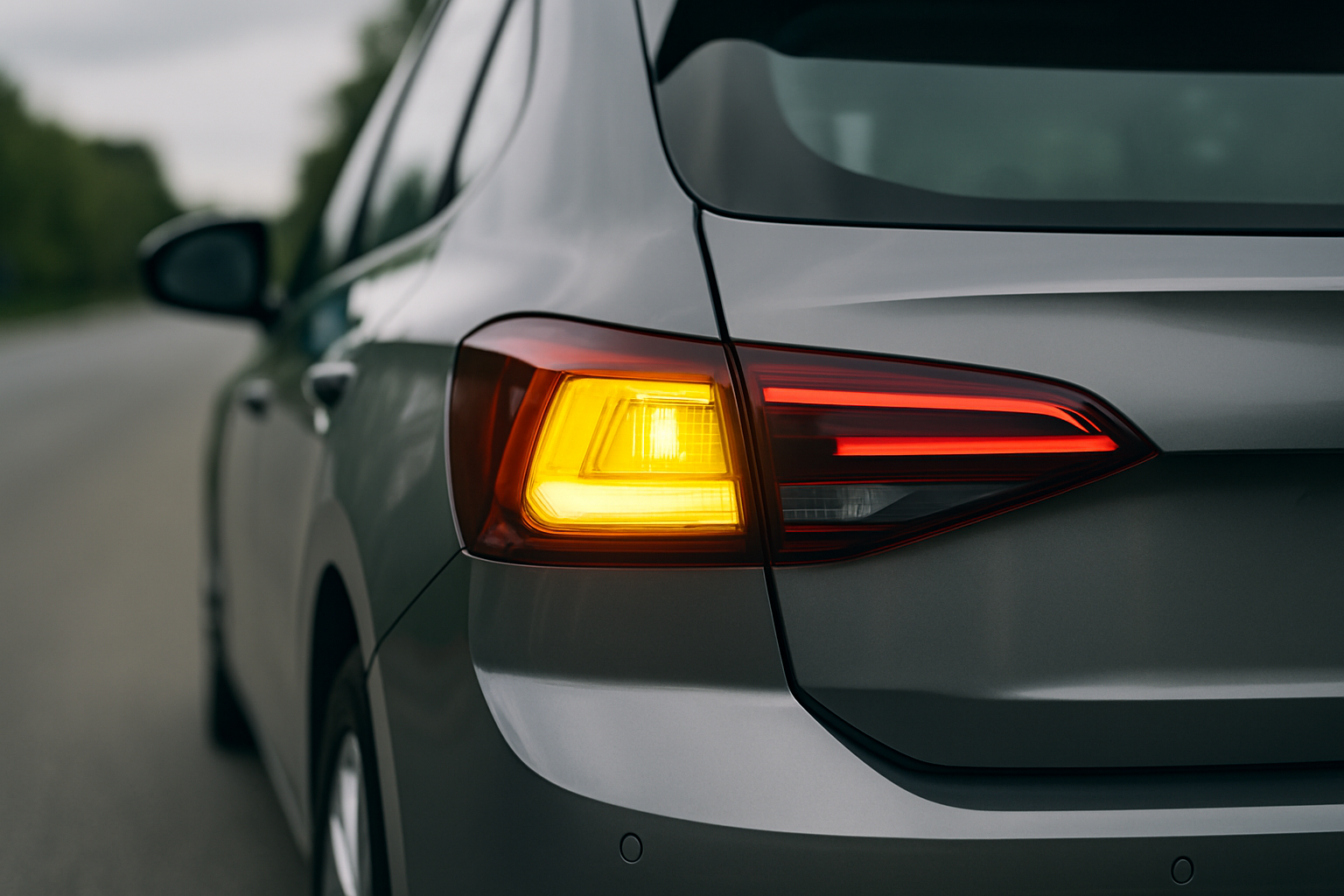
A rapidly blinking turn signal catches your attention immediately because it sounds and looks different from normal operation. This hyperflashing indicates a problem that needs your attention, and understanding the cause can save you from getting pulled over or causing confusion for other drivers.
What Causes Your Turn Signal to Blink Fast
Your turn signal system relies on a specific electrical load to function properly. When you activate your turn signal, current flows through the flasher relay and then to both the front and rear bulbs on that side of your vehicle. The flasher relay is designed to blink at a normal rate when it detects the correct amount of electrical resistance from working bulbs.
When one bulb burns out, the electrical load decreases significantly. The flasher relay responds to this reduced load by blinking much faster than normal. This hyperflashing serves as a built-in warning system to alert you that a bulb has failed and needs replacement.
The most common cause is a burned-out incandescent bulb on the same side as the fast-blinking signal. This could be either the front turn signal bulb or the rear one. Both bulbs work together to create the proper electrical load, so losing either one triggers the hyperflash.
The LED Conversion Problem
LED bulbs draw much less power than traditional incandescent bulbs. While this makes them more energy-efficient and longer-lasting, it creates the same hyperflashing issue you’d see with a burned-out bulb. Your flasher relay interprets the low power draw as a failed bulb.
Many drivers discover this problem after upgrading to LED turn signals without realizing they need additional components. The LEDs work perfectly fine, but the fast blinking makes it seem like something’s wrong.
You have two main solutions for LED-related hyperflashing. You can install load resistors to simulate the electrical draw of incandescent bulbs, or replace your flasher relay with an LED-compatible version. Each approach has its advantages depending on your specific situation.
How to Diagnose the Problem
Start with a simple walk-around test while your turn signal is activated. Turn on your hazard lights or have someone operate the turn signals while you check each corner of your vehicle. Look for any bulbs that aren’t lighting up or appear dimmer than others.
Check both the front and rear bulbs on the affected side. Sometimes a bulb might still glow slightly even when it’s failing, so compare the brightness to the opposite side. A significantly dimmer bulb needs replacement even if it’s still producing some light.
Don’t forget to check your side mirror turn signals if your vehicle has them. These small bulbs can burn out and cause hyperflashing just like the main turn signal bulbs. They’re easy to overlook during a visual inspection.
If all bulbs appear to be working normally and you haven’t recently installed LED bulbs, the problem might be with your flasher relay itself. A failing relay can cause erratic blinking patterns even with properly functioning bulbs.
Replacing Burned-Out Bulbs
Once you’ve identified a burned-out bulb, replacement is usually straightforward. Most turn signal bulbs are either 1156 or 3157 types, but check your owner’s manual or the existing bulb for the correct part number.
Front turn signal bulbs typically require removing the headlight assembly or accessing them through the wheel well. Rear bulbs are usually accessible by removing tail light screws or popping out the entire tail light assembly. Some vehicles have tool-free access panels in the trunk or behind interior trim pieces.
Always replace bulbs in pairs when possible. If one bulb has burned out, the other bulb on the same axle is likely nearing the end of its life as well. This prevents you from having to repeat the repair process in a few weeks.
Handle new bulbs carefully and avoid touching the glass portion with your bare hands. Oils from your skin can cause hot spots that shorten bulb life. Use a clean cloth or the bulb’s packaging when installing.
Fixing LED Hyperflash with Load Resistors
Load resistors solve LED hyperflashing by adding electrical resistance to simulate incandescent bulbs. These resistors get quite hot during operation, so proper mounting and heat dissipation are crucial for safe installation.
You’ll need 6-ohm, 50-watt load resistors for most applications. Install one resistor for each LED bulb on the affected circuit. Connect the resistor in parallel with the LED bulb using the positive and negative wire connections.
Mount the resistors to metal surfaces that can handle heat dissipation. Avoid mounting them near plastic components, wiring harnesses, or anything that could be damaged by heat. The engine bay firewall or body panels work well for mounting locations.
Use proper electrical connections with heat shrink tubing or weatherproof connectors. Poor connections can cause voltage drops, overheating, or intermittent operation. Take time to make solid, corrosion-resistant connections.
Using LED-Compatible Flasher Relays
An LED-compatible flasher relay eliminates hyperflashing without the heat and complexity of load resistors. These electronic relays work with both LED and incandescent bulbs, making them ideal for mixed lighting setups.
Locate your current flasher relay by checking your owner’s manual or the relay box diagram. Common locations include the fuse box under the hood, the interior fuse panel, or behind the dashboard. The relay is usually labeled “TURN” or “FLASHER.”
Most flasher relays simply pull straight out and push straight in for replacement. However, some vehicles use relays with different pin configurations, so verify compatibility before purchasing. The new relay should match your original relay’s pin count and arrangement.
Electronic LED flasher relays typically cost between $15 and $30. Popular brands include Novita, EFlash, and Grote. These relays often provide more precise timing and longer service life compared to traditional thermal flashers.
When the Flasher Relay Itself Fails
A failing flasher relay can cause various symptoms beyond just hyperflashing. You might experience no blinking at all, extremely slow blinking, or irregular flash patterns. These symptoms often affect both sides of the vehicle rather than just one side.
Thermal flasher relays contain a bimetallic strip that heats up and cools down to create the blinking action. Over time, this strip can become fatigued or corroded, leading to erratic operation. Electronic relays can fail due to component degradation or moisture intrusion.
Relay replacement is usually a simple swap, but test the new relay before reassembling everything. Turn on your hazard lights and verify that all four corners blink at the correct rate. Check both turn signals individually as well.
Keep a spare flasher relay in your glove box for emergencies. They’re inexpensive and can fail without warning, potentially leaving you without functioning turn signals. A spare relay can get you back on the road quickly when needed.
Checking Wiring and Connections
Corroded or loose connections can mimic the symptoms of burned-out bulbs. Water intrusion, road salt, and age can cause electrical connections to develop high resistance, reducing current flow to the bulbs.
Inspect bulb sockets for corrosion, especially on older vehicles or those driven in harsh conditions. Clean corroded contacts with electrical contact cleaner and fine sandpaper. Apply dielectric grease to prevent future corrosion.
Wiggle test all connections while the turn signal is operating. Intermittent connections will cause flickering or momentary hyperflashing when disturbed. Replace any connectors that show signs of overheating, melting, or severe corrosion.
Ground connections are particularly important for proper turn signal operation. Poor grounds can cause dim bulbs, erratic flashing, or complete failure. Clean and tighten ground connections at the light assemblies and body panels.
Safety Considerations
Hyperflashing turn signals can confuse other drivers who might not recognize your signaling intentions. The rapid blinking might be interpreted as hazard lights or a vehicle malfunction rather than a turn signal.
Address hyperflashing issues promptly to maintain clear communication with other drivers. Even if the front bulb is working and only the rear bulb has failed, drivers behind you won’t see your turn signal properly.
Some states have laws requiring functional turn signals on both the front and rear of vehicles. Driving with burned-out signal bulbs could result in a citation, even if the remaining bulbs still produce the hyperflash warning.
Emergency situations require reliable turn signals for safe lane changes and turns. Don’t postpone repairs simply because you can still see the hyperflashing from inside your vehicle.
Frequently Asked Questions
Can I drive with hyperflashing turn signals?
While your vehicle will still operate, hyperflashing signals can confuse other drivers and may not meet legal requirements in some areas. The rapid blinking indicates a bulb failure that should be repaired promptly for safety and legal compliance.
Why do my hazard lights work normally but turn signals hyperflash?
Hazard lights and turn signals often use separate circuits and flasher relays. A burned-out bulb affects only the turn signal circuit, while the hazard light circuit might still have all bulbs functioning properly. This creates different electrical loads for each system.
Will hyperflashing damage my vehicle’s electrical system?
Hyperflashing itself won’t damage your electrical system, but the underlying cause might indicate problems that could worsen over time. Corroded connections or failing components should be addressed to prevent more extensive electrical issues.
How long do turn signal bulbs typically last?
Incandescent turn signal bulbs typically last 1,000 to 2,000 hours of operation. Under normal driving conditions, this translates to several years of service. LED bulbs can last 25,000 hours or more, making bulb failure much less common after conversion.
Leave a Reply