
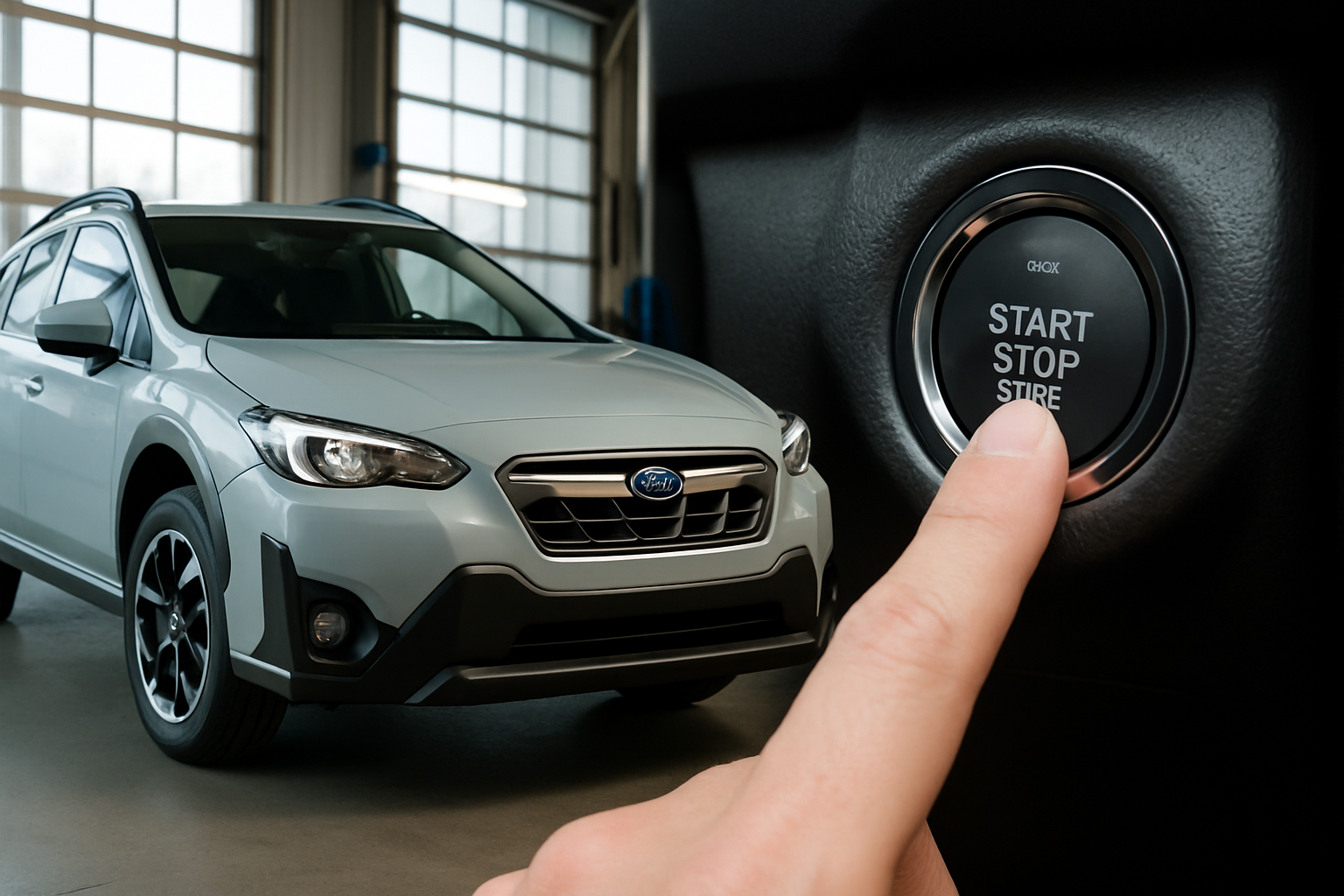
Auto start/stop technology might save fuel, but many Crosstrek drivers find it downright annoying. The constant engine shutting off at red lights creates vibrations, delays, and an overall jerky driving experience that takes away from Subaru’s otherwise smooth ride.
What Auto Start/Stop Does in the 2020-2026 Crosstrek
Your Crosstrek’s auto start/stop system automatically shuts down the engine when you come to a complete stop and meet certain conditions. The system kicks in when you’re stopped at traffic lights, in drive-throughs, or stuck in traffic with your foot on the brake.
The engine restarts as soon as you lift your foot off the brake pedal. While Subaru designed this feature to improve fuel economy and reduce emissions, many drivers find the experience jarring and disruptive to smooth driving.
The system is particularly intrusive in stop-and-go traffic where the engine constantly cycles on and off. You’ll notice slight delays when accelerating from stops, plus vibrations and sounds that many Crosstrek owners simply don’t want to deal with during their daily commute.
The Temporary Fix: Using the Dashboard Button
Every 2020-2026 Crosstrek comes with a manual override button to disable auto start/stop temporarily. You’ll find this button on your dashboard, typically located near the center console area or integrated into the infotainment system controls.
The button features a circular arrow icon with an “A” in the center, often accompanied by “OFF” text when the system is disabled. When you press this button, an indicator light appears on your dashboard confirming that auto start/stop is temporarily turned off.
This method works perfectly for individual drives. Your engine will stay running normally at stops, giving you the smooth driving experience you want without any interruptions or delays.
Why the Dashboard Button Isn’t a Real Solution
The major frustration with using the dashboard button is that it resets every single time you start your car. Turn off your Crosstrek, and when you start it again, auto start/stop is automatically re-enabled.
This means you have to remember to press the button every time you drive. Miss it once, and you’re back to dealing with the engine shutting off at the first red light. For daily drivers, this becomes a tedious routine that defeats the purpose of wanting a permanent solution.
Many Crosstrek owners report forgetting to disable it, especially during rushed morning commutes or when other people drive their vehicle. This inconsistency makes the temporary fix more of a band-aid than a real solution.
Permanent Solutions: Aftermarket Devices and Methods
Several aftermarket options can permanently disable auto start/stop in your Crosstrek. These solutions work by intercepting the signals that activate the system or by modifying the vehicle’s software settings.
The most popular options include plug-and-play eliminator devices that connect either behind your dashboard button or through your OBD2 diagnostic port. Since the Crosstrek shares the same platform as the Forester, many eliminators designed for the Forester work perfectly in your Crosstrek as well.
OBD2 Port Eliminators
OBD2 eliminators plug directly into your diagnostic port, usually located under the dashboard near your left knee. These devices are completely plug-and-play, requiring no tools or technical knowledge to install.
The main advantage is easy installation and removal. You can unplug the device anytime, which is helpful if you need to restore the original functionality for service appointments or resale.
Behind-the-Switch Devices
These eliminators connect directly to the wiring behind your auto start/stop button. They require removing some dashboard trim pieces and connecting a small module to the existing wiring harness.
While installation is more involved, these devices are completely hidden and don’t occupy your OBD2 port. This leaves the diagnostic port free for other uses like code readers or performance monitors.
Software Coding Options
Some Crosstrek owners explore software modifications using tools like FORScan or other diagnostic software. However, these methods are less common and more complex than plug-and-play hardware solutions.
Software modifications also carry higher risks of affecting other vehicle systems or causing issues during dealer service visits. Most Crosstrek owners prefer the simplicity and reversibility of hardware eliminators.
Recommended Auto Start/Stop Eliminators
Several companies manufacture plug-and-play eliminator devices specifically designed for Subaru vehicles. These devices offer a reliable way to permanently disable the system without any permanent modifications to your vehicle.
Most eliminators work by simulating the signal from your dashboard button, effectively telling the car that you’ve pressed the disable button every time you start the engine. The result is that auto start/stop remains off permanently without any input from you.
Popular brands include AutoStop Eliminator, StartStopX, and several other manufacturers who create Subaru-specific devices. Many of these companies offer devices that work across multiple Subaru models, including both Crosstrek and Forester applications.
Installation Overview for OBD2 Eliminators
Installing an OBD2 eliminator takes less than five minutes and requires no tools. Start by locating your OBD2 port, which is typically under the dashboard on the driver’s side, near where your left knee would be while driving.
Remove any plastic covers from the diagnostic port if present. The eliminator device will plug directly into this port, usually with a satisfying click when properly seated.
Most devices begin working immediately after installation. Start your car and check that the auto start/stop indicator light shows the system as disabled. You shouldn’t need to press the dashboard button anymore.
Some eliminators include LED indicators or status lights to confirm proper operation. These lights typically show green when the device is active and successfully blocking the auto start/stop system.
Installation Overview for Behind-the-Switch Devices
Behind-the-switch installation requires removing dashboard trim pieces to access the wiring harness behind your auto start/stop button. You’ll need basic tools like trim removal tools or a flathead screwdriver with tape over the tip.
Most installations involve unplugging the existing connector behind the switch and plugging the eliminator device inline. The device acts as an intermediary between the button and the car’s computer system.
Detailed instructions vary by manufacturer, but most provide step-by-step guides with photos showing exactly which panels to remove and where to make connections. Installation typically takes 15-30 minutes for someone comfortable with basic automotive work.
After installation, reassemble the dashboard trim pieces and test the system. The auto start/stop should remain permanently disabled without affecting any other vehicle functions.
Important Considerations Before Disabling
Warranty Implications
Installing an eliminator device could potentially affect your warranty coverage if a dealer determines that the device caused a related problem. However, most eliminators are designed to be completely reversible and don’t modify any original vehicle components.
OBD2 eliminators are particularly low-risk since they simply unplug for service visits. Many owners remove the device before dealer appointments and reinstall it afterward.
Emissions and Fuel Economy
Disabling auto start/stop will slightly increase your fuel consumption and emissions output. The system was designed to meet EPA requirements and improve overall efficiency ratings.
For most drivers, the difference in real-world fuel economy is minimal, typically less than 1-2 mpg in city driving. Highway driving isn’t affected since auto start/stop doesn’t activate at cruising speeds.
Resale Value Considerations
Some future buyers might expect the auto start/stop system to function normally. If you plan to sell or trade your Crosstrek, you can easily restore original functionality by removing the eliminator device.
This reversibility is one of the main advantages of aftermarket eliminators compared to permanent software modifications or physical alterations to the vehicle’s wiring.
Frequently Asked Questions
Will disabling auto start/stop hurt my engine?
Disabling the system won’t harm your engine. The auto start/stop feature is essentially a convenience and efficiency system that operates on top of your normal engine functions. Without it, your engine simply runs normally like any car without the technology.
Can I still use my OBD2 port with an eliminator installed?
Most OBD2 eliminators include a pass-through connector that preserves access to your diagnostic port. You can still connect code readers, scanners, and other diagnostic tools while the eliminator remains installed.
Do these devices work on Subaru Forester too?
Yes, since the Crosstrek and Forester share the same platform architecture, most eliminator devices work on both vehicles. Many manufacturers specifically list compatibility with both models, and the installation procedures are nearly identical.
What happens if the eliminator device fails?
If an eliminator stops working, your auto start/stop system will typically return to its normal operation. The car won’t be damaged or affected negatively. You can remove the failed device and either replace it or continue using the manual dashboard button as needed.
This article contains affiliate links. If you purchase through these links, we may earn a small commission at no extra cost to you.




Leave a Reply