
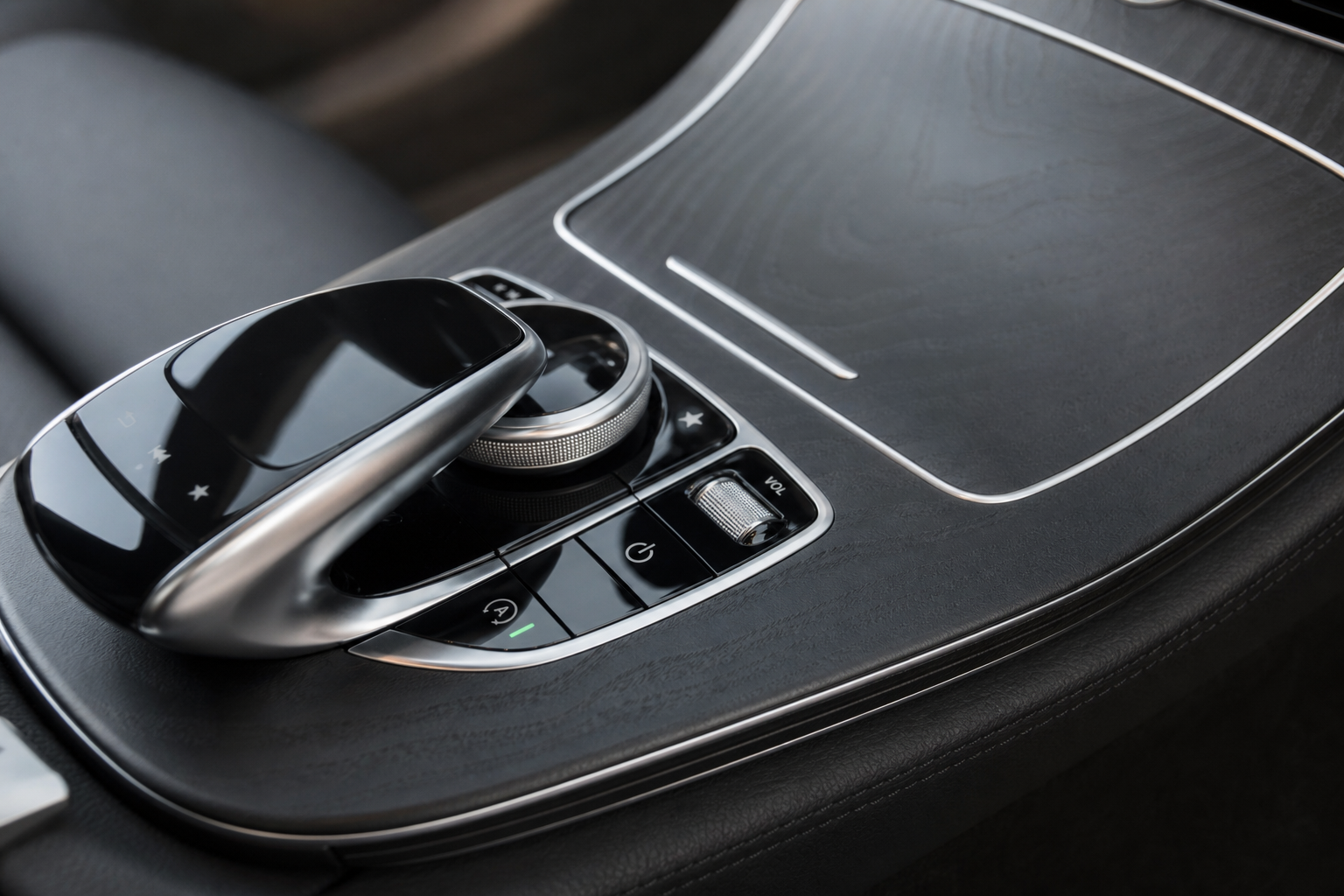
Every time you start your Mercedes-Benz E-Class, the engine stop/start system turns itself back on. You press the button to disable it, drive around town, park, come back later, and the whole cycle starts again. For a lot of E-Class owners, this becomes one of those small daily annoyances that adds up fast, especially if you’re doing a lot of city driving with frequent stops.
This guide covers exactly what’s happening with the auto start/stop system, how to disable it the manual way using the factory button, and how to permanently eliminate the reset problem with a plug-and-play module that keeps it off every single time you drive.
What the Auto Start/Stop System Actually Does
The engine stop/start system on the E-Class is designed to cut fuel consumption and reduce emissions by shutting off the engine whenever the car comes to a complete stop at a light or in traffic. When you lift your foot off the brake, the engine restarts automatically and you’re on your way.
Mercedes introduced this system across the E-Class lineup starting with the W212 generation and it became standard on the W213 (2017 and newer). The intent is good on paper, but many drivers find the restart creates a noticeable jolt, adds wear to the starter and battery, and simply feels unnatural in stop-and-go traffic.
There’s also a real concern about starter motor longevity. Traditional starters aren’t built for hundreds of cold restarts per day. Mercedes does use an enhanced starter on models equipped with stop/start, but it’s still a wear item. If you’ve ever noticed an unusual vibration when the engine kicks back on, you’re not alone. This kind of idle vibration is a common complaint worth paying attention to, similar to what some owners experience with other vehicles like the Acura MDX vibration at idle in drive.
Using the Factory Dashboard Button
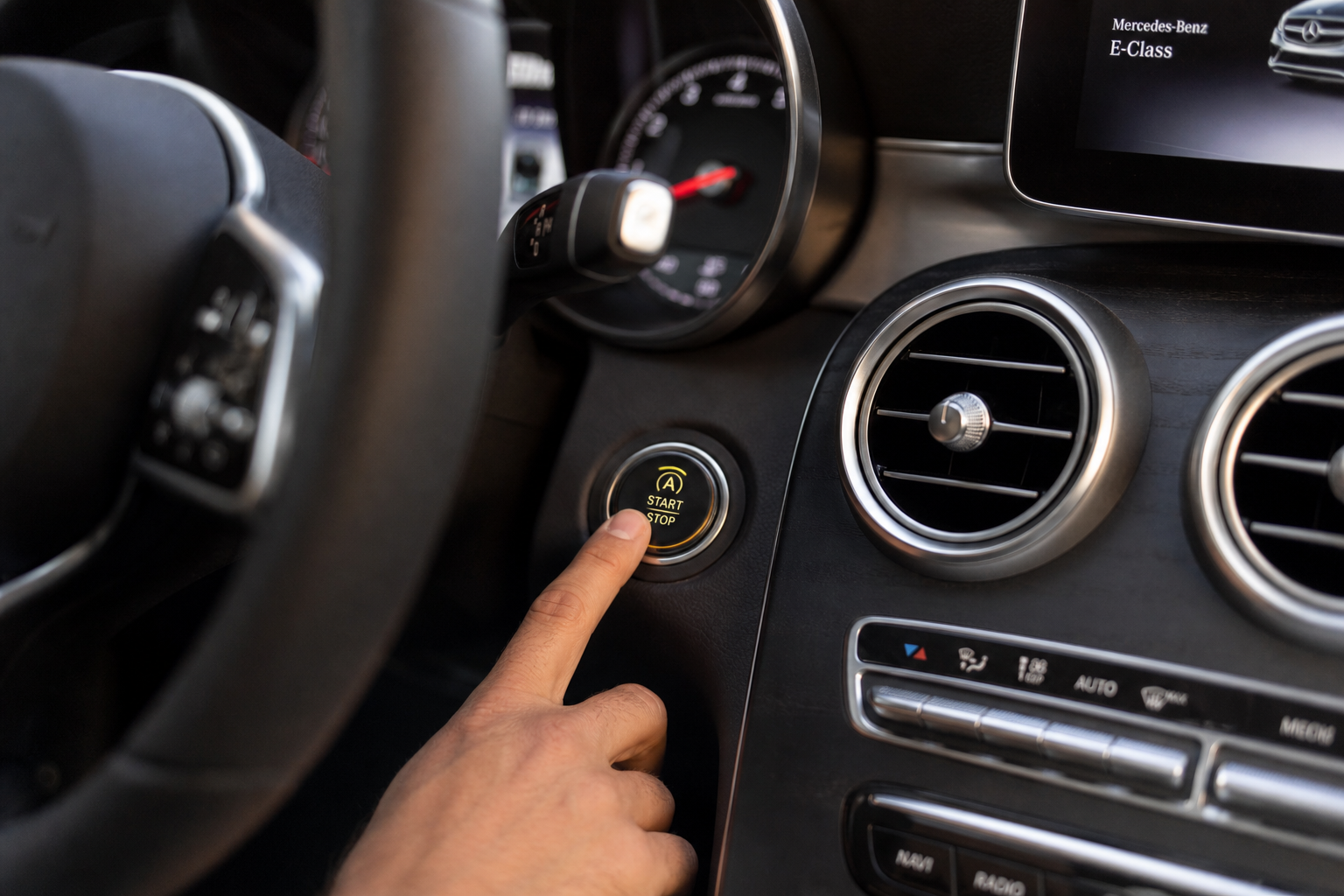
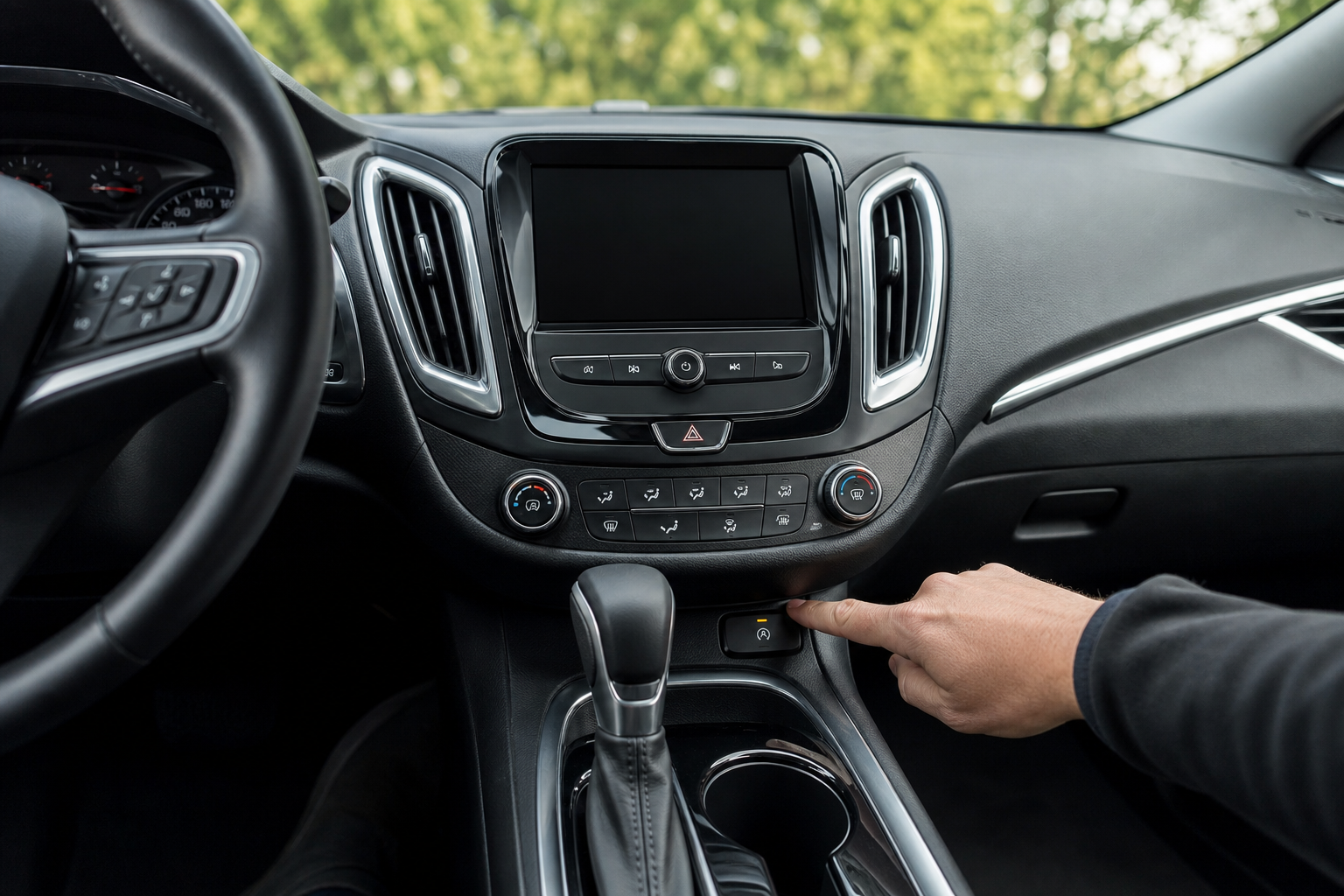
Every E-Class with stop/start has a dedicated button for disabling the system. It’s labeled with the letter “A” inside a circle with an arrow, and it sits in the center console button cluster. Pressing it once will turn off the auto stop/start for your current drive cycle.
Here’s the catch though: it only stays off until you turn the car off. The moment you start the engine again, the system resets to its default “on” state. Mercedes coded it this way intentionally, and there’s no menu option in COMAND or the MBUX infotainment system to make your preference stick permanently on most E-Class configurations.
So the manual button is fine if you remember to press it every single time. But for most people, that gets old quickly, and occasionally you’ll forget and end up dealing with the stop/start behavior when you’d rather not.
Model Year Notes: Which E-Class Variants Are Affected
The stop/start system is present across a wide range of E-Class trims and years, but there are a few things worth knowing before you go shopping for a solution.
- W212 (2010-2016): Stop/start was offered on certain trim levels and markets, particularly the diesel variants. Not universal across all configurations.
- W213 (2017-2023): Stop/start is standard on virtually all powertrain configurations sold in the US. This includes the E300, E350, E400, E450, E53 AMG, and E63 AMG variants.
- S213 Wagon and C238/A238 Coupe/Cabriolet: Same system, same reset behavior.
- Plug-in Hybrid (E350e): The stop/start behavior works differently due to the electric motor. Eliminator modules are generally not recommended for PHEV variants.
If you have a W213 with the 2.0L turbocharged four-cylinder or the 3.0L inline-six, you’re dealing with the same stop/start setup and the same daily reset frustration.
The Permanent Fix: A Stop/Start Eliminator Module
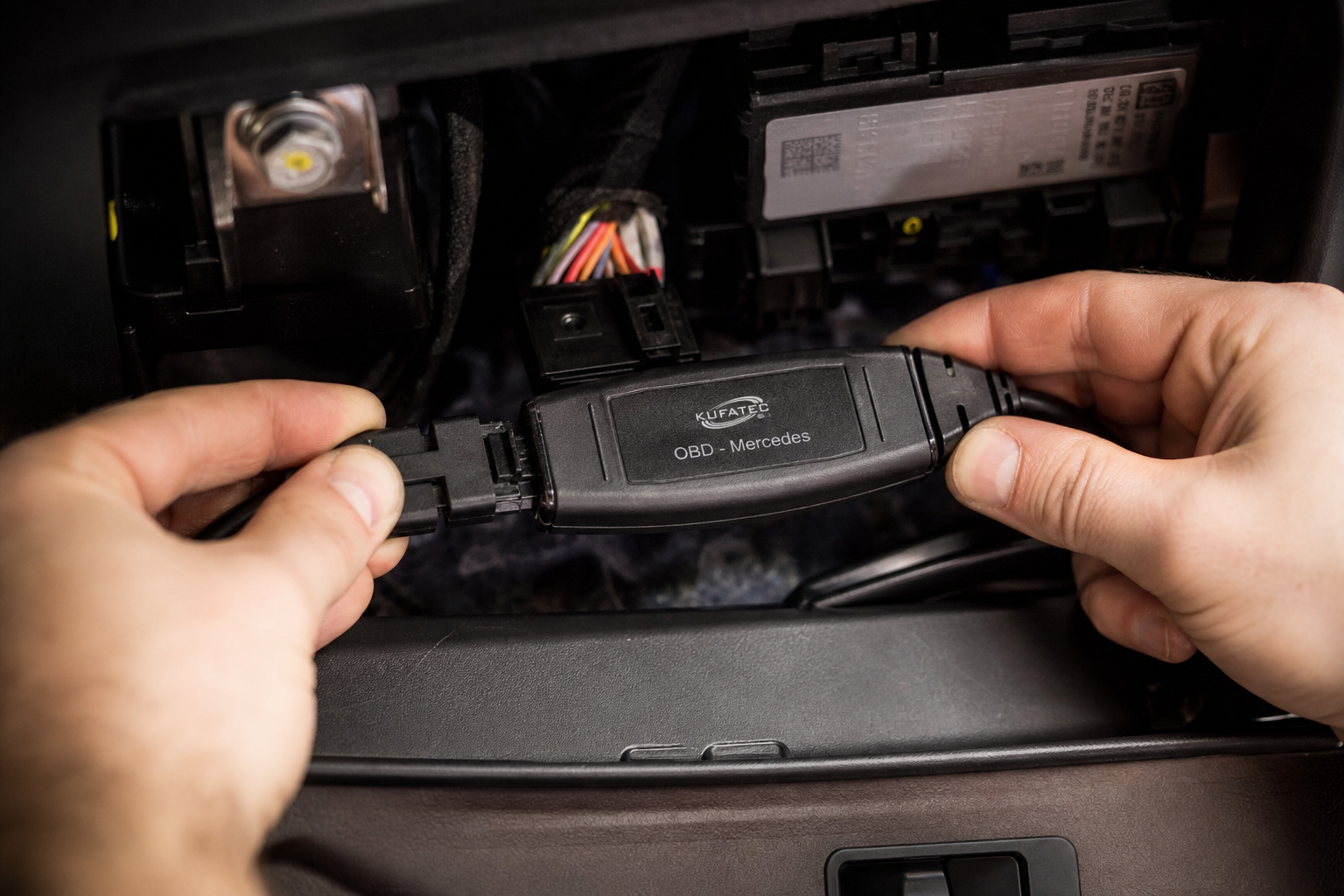
The cleanest solution is a plug-and-play stop/start eliminator module. These small devices connect to your car’s OBD2 port or tap into a specific connector under the dash, and they emulate the button press automatically every time you start the engine. No coding, no dealer visit, no permanent modification to your vehicle’s wiring.
The module intercepts the start/stop signal and tells the car’s ECU that you’ve manually disabled the system, exactly as if you’d pressed the button yourself. The car sees it as a driver preference rather than a system fault, so you won’t get warning lights or trigger any error codes.
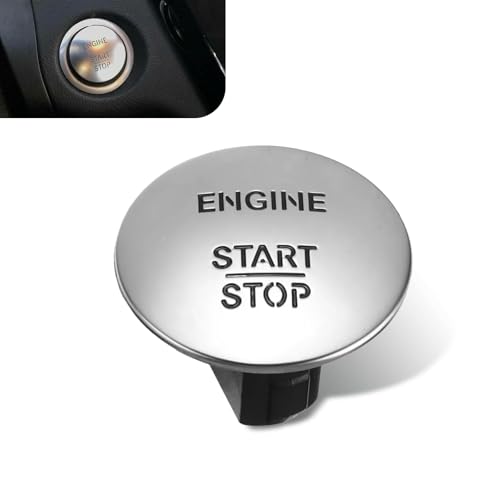
Mercedes-Benz E-Class Start Stop Eliminator
A plug-and-play module that automatically disables stop/start every time you start your E-Class, with no coding or permanent wiring changes required.
Installation takes about five minutes. Most E-Class compatible modules plug directly into the OBD2 port located under the left side of the dashboard, near the steering column. Some newer variants connect via a specific body control module connector, but the included instructions walk you through it clearly. Once installed, you don’t touch it again. Start the car, and stop/start is already off before you’ve even put it in drive.
These modules are designed to be completely reversible. If you sell the car, or if you decide you want the stop/start system back for whatever reason, you simply unplug the module and everything returns to factory behavior. There’s no trace left behind, which is also good to know if you’re leasing.
Is It Safe for Your E-Class?
Yes, with the caveat that you should buy a module specifically listed as compatible with your E-Class generation and powertrain. A generic OBD2 device that just cuts power to the stop/start system isn’t the right approach. The better modules work by mimicking a legitimate button press signal, keeping everything within normal operating parameters.
If you ever want to verify your car is running correctly after installing any new module or accessory, a quality OBD2 scanner is worth having on hand. A good scanner lets you check for any logged fault codes and confirm your vehicle is happy. Check out this guide to the best OBD2 scanners for DIY auto repair if you don’t already have one in the garage.
One thing to be aware of: some E-Class vehicles with advanced driver assistance features use the stop/start integration to coordinate with the traffic jam assist system. Disabling stop/start won’t affect your adaptive cruise control or lane keeping, but if you’re interested in how those systems work on similar vehicles, the guide on traffic jam assist on the Volkswagen Atlas gives a good comparison of how these features function across brands.

Auto Start Stop Eliminator OBD2 Module
A well-reviewed OBD2-based eliminator compatible with multiple Mercedes-Benz models, offering simple plug-in installation and automatic activation on every drive.
Frequently Asked Questions
Will disabling stop/start void my E-Class warranty?
Using a plug-and-play module that mimics a factory button press is very unlikely to affect your warranty. The Magnuson-Moss Warranty Act protects consumers from having warranties voided simply for using aftermarket accessories, unless the dealer can prove the accessory directly caused a specific failure. That said, if you have an active factory or CPO warranty and you’re concerned, it’s worth having a quick conversation with your dealership before installing anything.
Does the stop/start eliminator affect fuel economy?
You’ll likely see a small reduction in official fuel economy numbers since the stop/start system is designed to save fuel at idle. In real-world city driving, the difference for most people is minimal, often a fraction of a mpg. Many drivers feel the trade-off in smoother driving and reduced mechanical cycling is worth it, especially given that the E-Class is not exactly purchased with fuel economy as the top priority.
My E-Class stop/start sometimes doesn’t activate even without the module. Is that normal?
Yes, completely normal. The factory stop/start system has several built-in conditions that prevent it from activating. If the engine hasn’t reached full operating temperature, if the battery charge is below a certain threshold, if the cabin temperature requires heavy A/C or heat output, or if your steering wheel is turned significantly, the system will stay inactive on its own. This is why stop/start behavior can feel inconsistent depending on the weather and driving conditions.
Bottom Line
The manual button on the E-Class dashboard works fine if you’re disciplined about pressing it every time. But if you’re tired of that routine, a stop/start eliminator module is the most practical solution available. It requires no tools, no dealer visit, and no permanent changes to your car. You install it once and forget about it.
Just make sure you’re buying a module that’s specifically listed for your E-Class generation and engine type. Look for one that uses the signal-emulation method rather than a blunt power cut, and check the reviews to confirm other W213 owners have had success with it. For most E-Class owners driving in traffic-heavy areas, it’s one of the best small upgrades you can make to the daily driving experience.
While you’re thinking about accessories and upgrades for your E-Class, it’s also worth having a solid car emergency kit in the trunk and maybe a dash cam mounted up front for added protection on the road.
This article contains affiliate links. We may earn a small commission at no extra cost to you.
Leave a Reply