
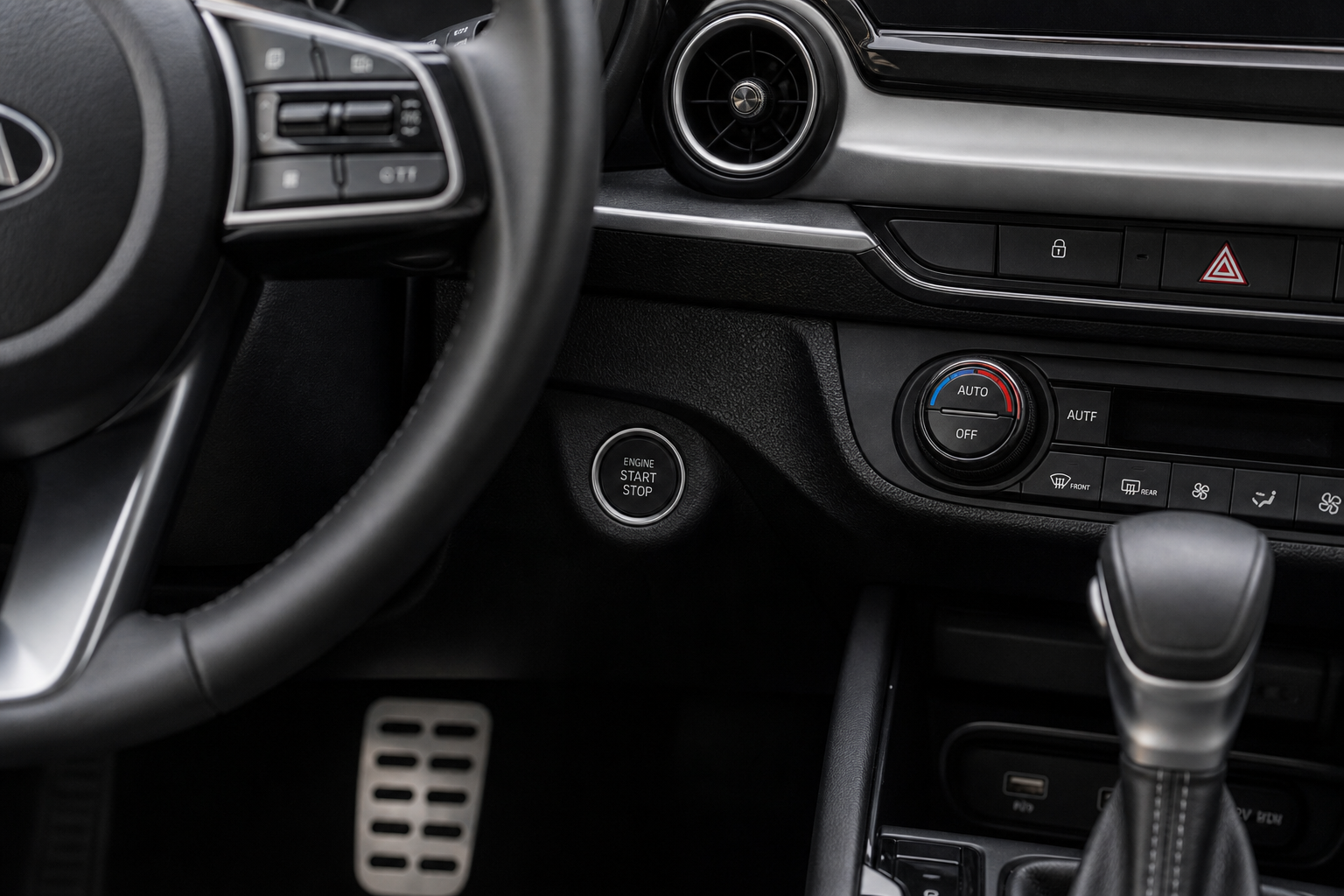
The auto start/stop feature on the Kia Forte is one of those things that sounds great on paper but quickly becomes annoying in real-world driving. Every time you pull up to a red light, the engine shuts off. You press the gas, it restarts with a slight shudder, and you’re on your way until the next stop. Kia built it in to help with fuel economy and emissions, but plenty of Forte owners would rather just drive without it.
There are two ways to deal with this: the built-in dashboard button that turns it off temporarily, and an ISG eliminator module that handles it automatically every time you start the car. This guide covers both options, explains why the button alone isn’t a permanent fix, and tells you which module to look for if you want a real set-it-and-forget-it solution.
Understanding the Kia Forte Auto Start/Stop System
Kia calls this feature ISG, which stands for Idle Stop and Go. It’s been standard on the Forte since the third-generation model launched for the 2019 model year. If you’re driving a 2019, 2020, 2021, 2022, 2023, or 2024 Forte with an automatic transmission, you have ISG.
The system works by monitoring your speed, battery charge, engine temperature, climate control demand, and brake pressure. When all conditions are right and you come to a complete stop, the engine cuts out. Release the brake and it fires back up. Kia says this can improve city fuel economy by a small percentage, but most owners report little to no noticeable difference in their real-world numbers.
What owners do notice is the vibration when the engine restarts, the slight delay before acceleration, and the general feeling that something is happening under the hood that they didn’t ask for. If you’re already aware of idle vibration issues on other vehicles, like the Acura MDX vibration at idle in drive, you’ll understand why repeated start/stop cycles can feel like more wear than it’s worth.
Using the Factory Dashboard Button
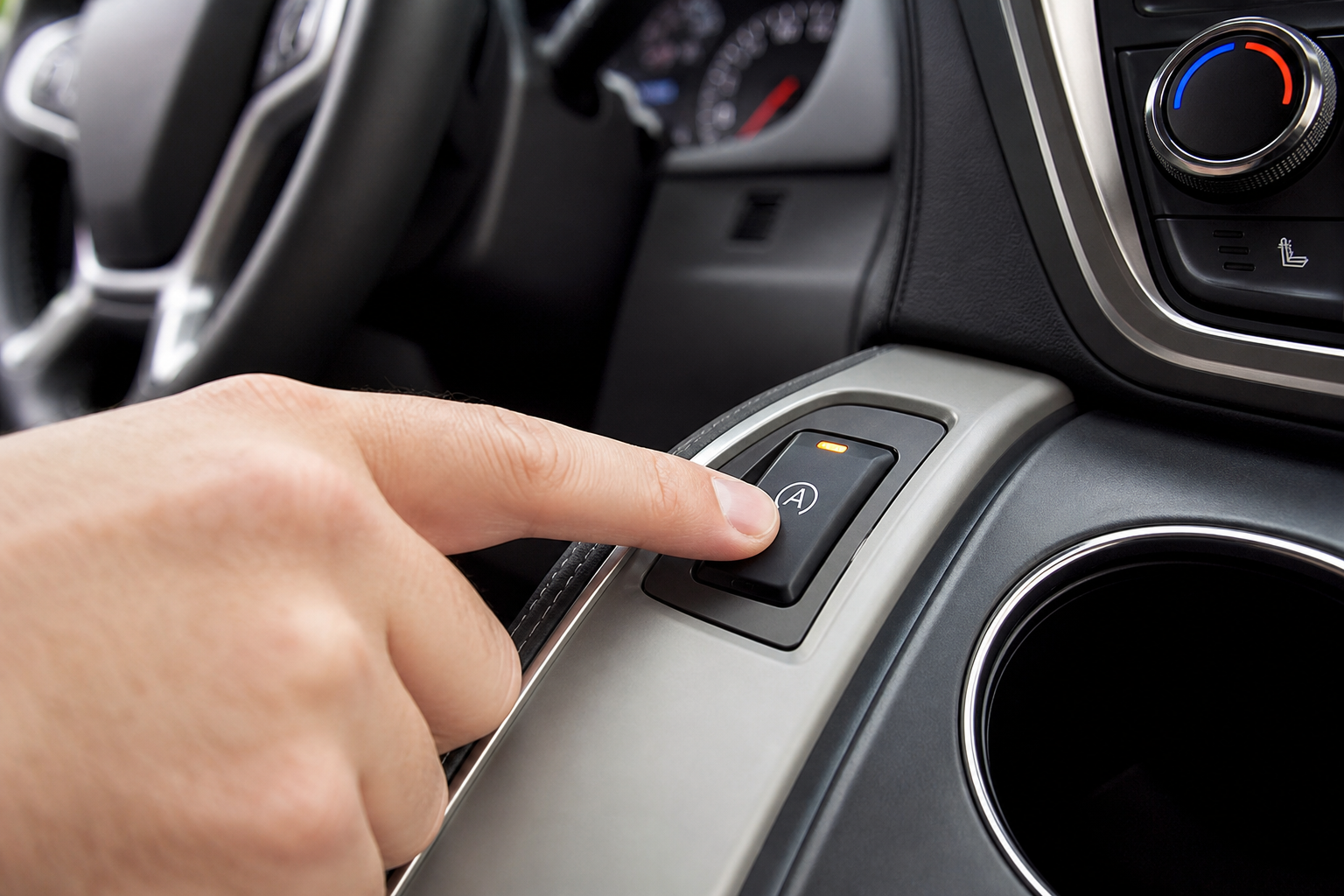
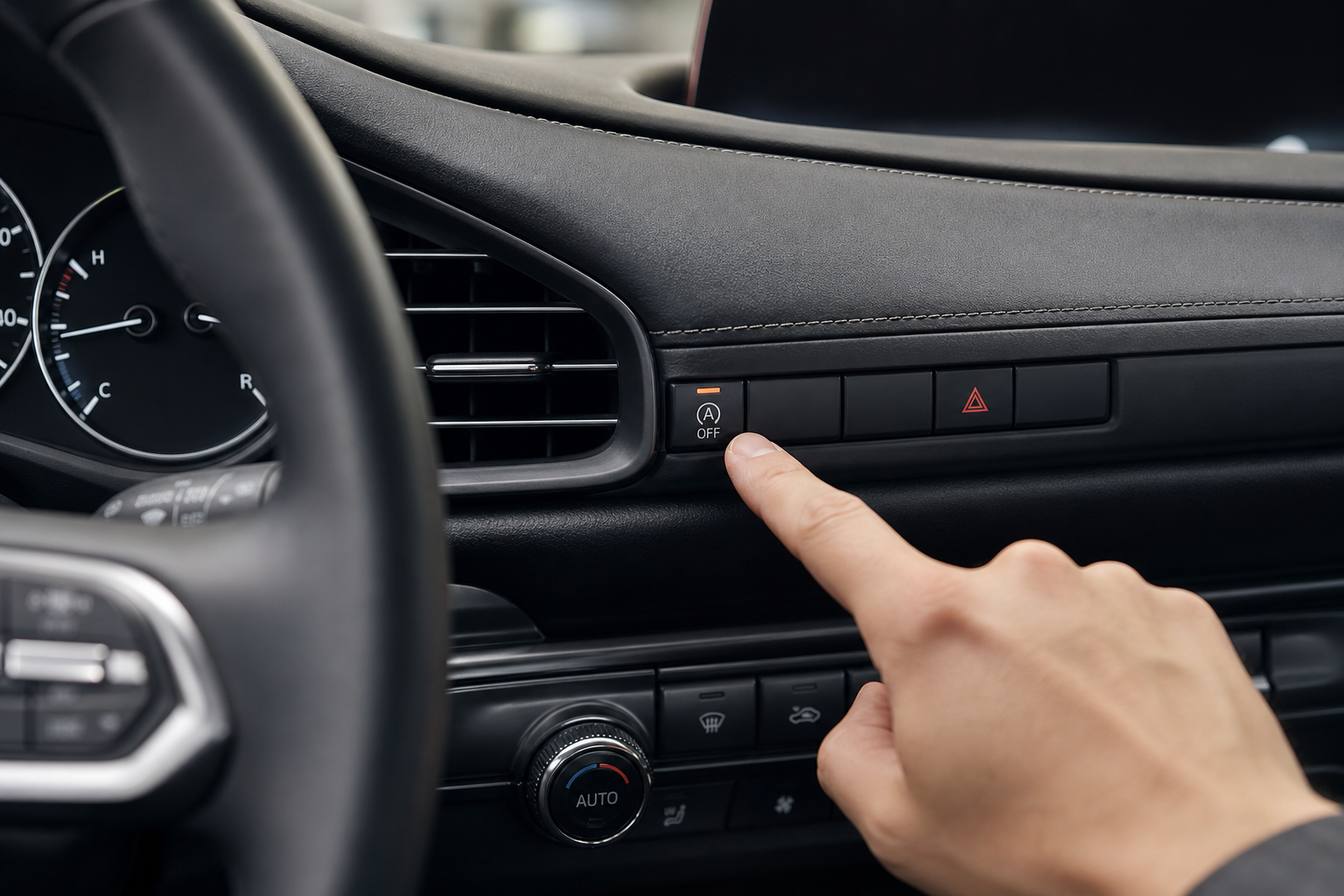
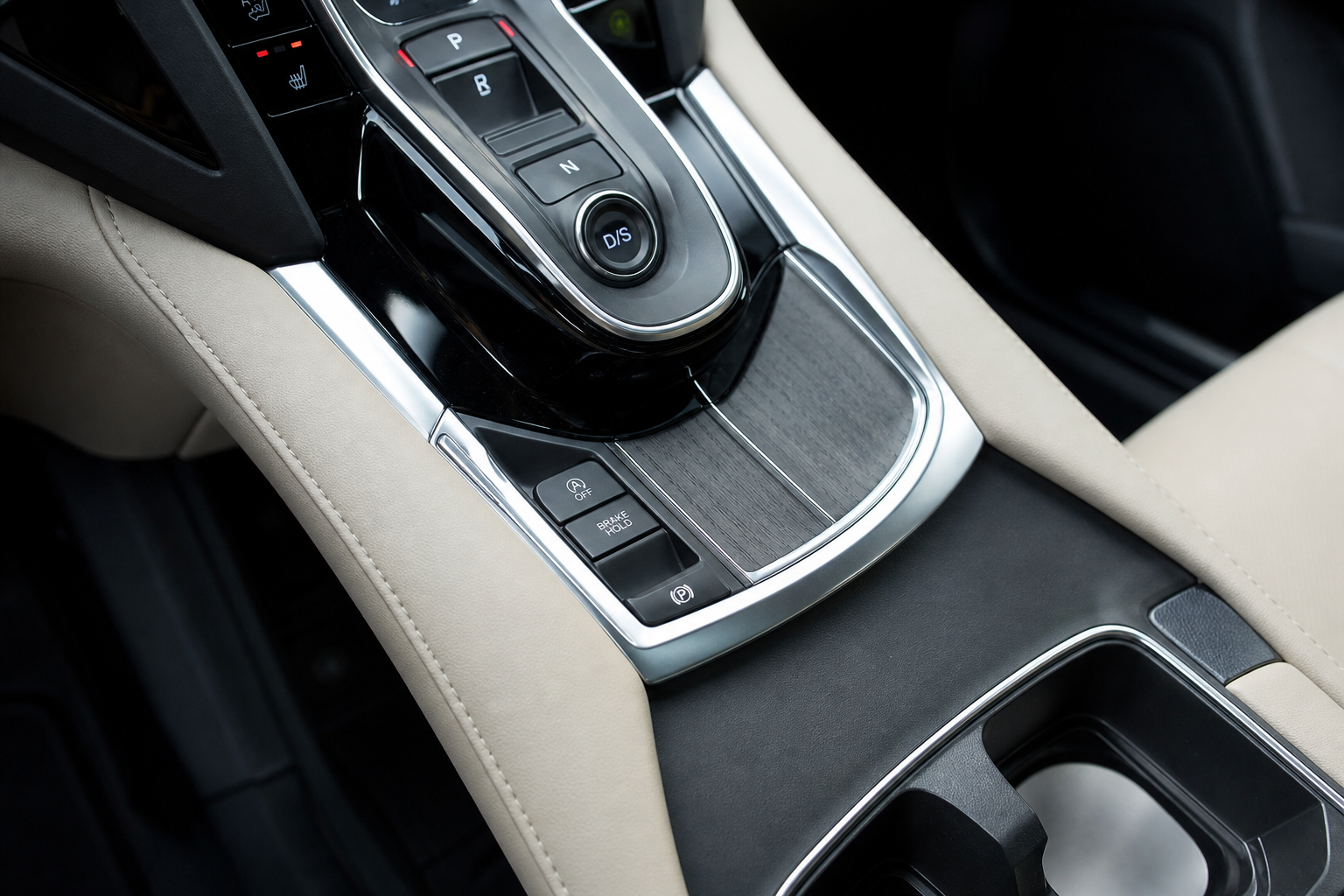
Every Forte equipped with ISG has a dedicated button to turn the system off. It’s located on the center console or lower dashboard area, usually near the drive mode selector or HVAC controls depending on trim level. The button has an “A” with a circular arrow icon and a line through it when active.
How to disable ISG using the button
- Start the engine and let it fully warm up.
- Locate the ISG off button on the center console panel.
- Press the button once. A light or indicator on the button will illuminate, confirming ISG is off.
- Drive normally. The engine will no longer shut off at stops.
This works fine for the current drive cycle. The system stays off until you turn the car off. When you restart the engine the next time, ISG reactivates automatically and you have to press the button again.
Why the button isn’t a permanent solution
Kia designed the ISG system to default back to “on” every time the ignition is cycled. This isn’t a bug, it’s intentional. Automakers are required to meet fuel economy and emissions standards, and ISG contributes to those numbers. Allowing a permanent software disable would mean those vehicles could technically fall out of compliance when operated in real-world conditions.
The result is that you either press the button every single drive, or you look for a hardware solution that remembers your preference. For most Forte owners who want ISG off all the time, pressing a button before every trip gets old fast.
The Permanent Fix: ISG Eliminator Module
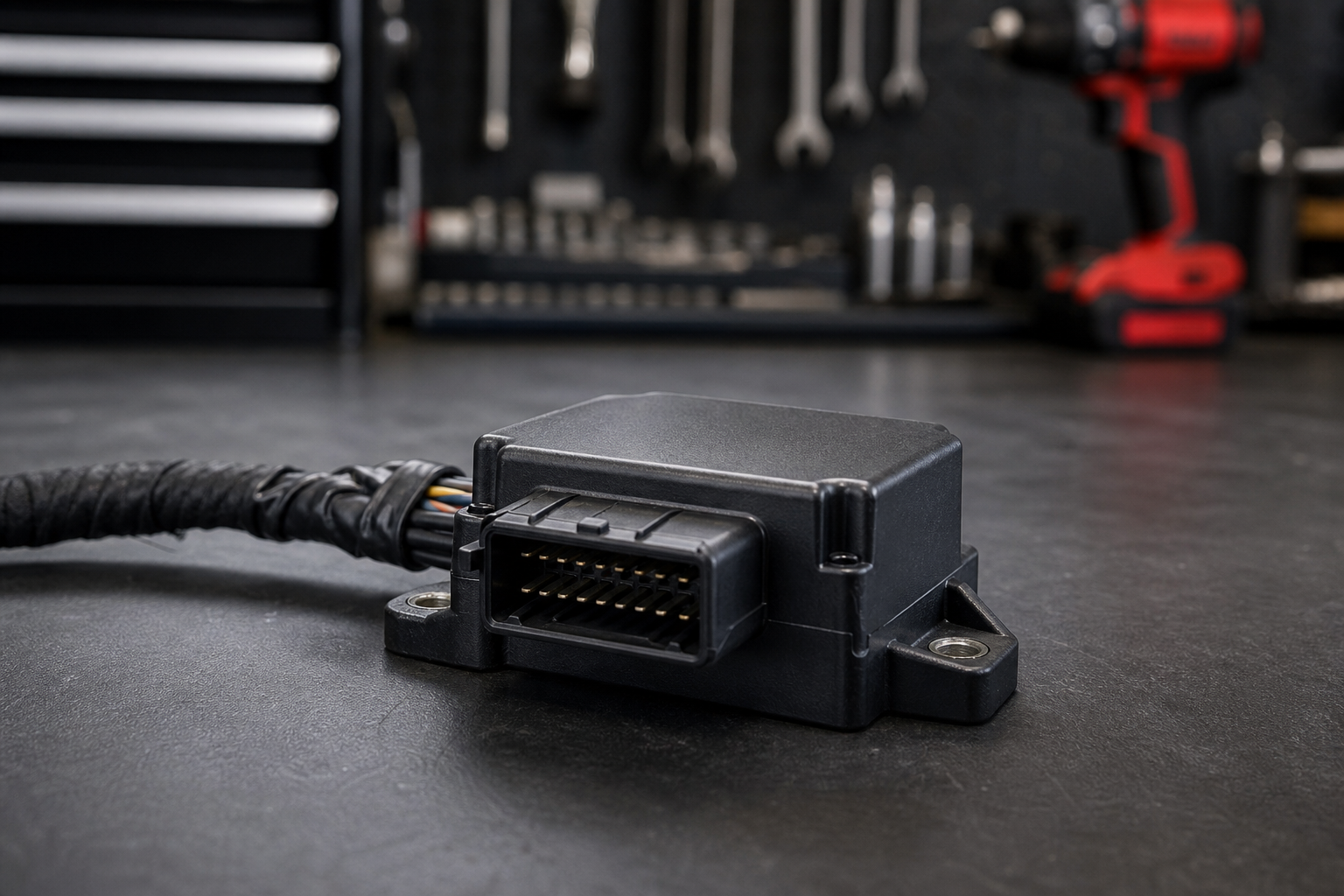
An ISG eliminator (also called a start/stop eliminator or auto start/stop bypass module) is a small plug-and-play device that connects to the ISG button circuit in your Forte. It automatically sends the same signal as pressing the button every time the car starts, so ISG is always disabled without you having to do anything.
These modules don’t reprogram the ECU, don’t require any wiring cuts, and don’t void your warranty under most interpretations of the Magnuson-Moss Warranty Act (since you’re not modifying the engine or drivetrain software). They simply automate what you would do manually with the button.
What to look for in a Forte-compatible module
Make sure any module you buy specifically lists compatibility with the Kia Forte and your model year. Some modules are designed for Hyundai vehicles (since Hyundai and Kia share platforms) and will work on the Forte, but confirm this before buying. The GN4 platform used in the 2019-2024 Forte is shared with the Hyundai Elantra, so modules that cover both are usually a good indicator of compatibility.
Look for a module that plugs directly into the ISG button connector, requires no cutting or splicing, and includes clear installation instructions. Installation typically takes about five minutes.

Kia Forte ISG Eliminator Module
A plug-and-play auto start/stop eliminator designed for Kia Forte automatically disables ISG every time you start the car so you never have to press the button again.
These modules are a popular aftermarket upgrade for Forte owners and there are several reputable options available. Check current pricing on Amazon and read the compatibility notes carefully before ordering to make sure the module matches your exact model year.
How to Install an ISG Eliminator on the Kia Forte
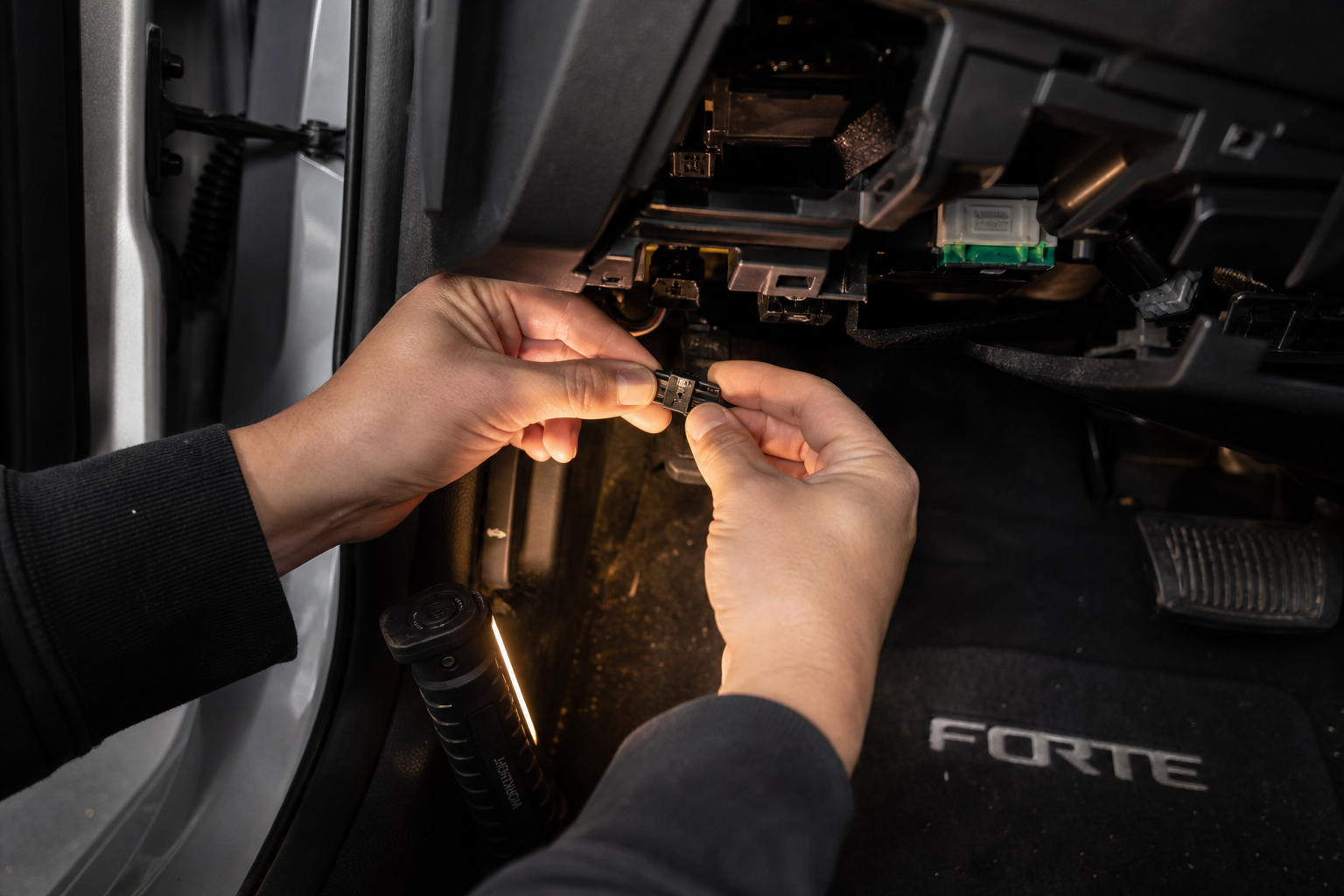
Installation is simple enough that you don’t need any mechanical experience. Here’s the general process, though specific steps may vary slightly by module brand.
- Turn off the vehicle and remove the key from the ignition.
- Locate the ISG button on the center console. On most Forte trims, it sits in the row of buttons near the gear selector.
- Carefully remove the button trim panel. Most panels on the 2019-2024 Forte are held by clips and can be popped out gently with a plastic trim tool. Avoid metal tools to prevent scratching.
- Unplug the connector from the back of the ISG button.
- Connect the eliminator module inline between the button and the harness connector. It should click into place on both ends.
- Tuck the module behind the panel and reinstall the trim piece.
- Start the car and confirm that ISG is disabled without pressing the button.
The whole job takes around five to ten minutes. If you’re comfortable doing minor interior work on your car, this is well within reach. If you’ve ever used an OBD2 scanner for basic diagnostics, you’re definitely capable of this install.
Model Year Notes for the Kia Forte
ISG was introduced on the third-generation Forte starting with the 2019 model year. The 2017 and 2018 Forte (second generation) did not have this system, so if you’re driving one of those, you don’t need any of this.
For the 2019-2024 Forte, the system is largely the same across the GT, LXS, FE, and GT-Line trims. Automatic transmission models all have ISG. The 6-speed manual transmission version of the Forte GT does not use ISG in the same way, though it does have a related idle-stop function that operates differently.
If you’re also a Kia Telluride owner and have been exploring tech features across the Kia lineup, you might find the guide on setting up Wireless Android Auto on the Kia Telluride useful for getting more out of your Kia’s connected features.
Frequently Asked Questions
Will disabling ISG affect my Forte’s fuel economy?
In theory, ISG can reduce fuel consumption during stop-and-go driving. In practice, the difference for most drivers is small enough that you won’t notice it at the pump. The constant restart cycles also add wear to the starter motor and battery over time, so some owners argue that disabling ISG may actually extend the life of those components.
Does installing an ISG eliminator void my Kia warranty?
Under the Magnuson-Moss Warranty Act, a dealer cannot void your warranty simply because you’ve installed an aftermarket accessory. They would have to prove that the accessory directly caused the problem you’re claiming. A plug-and-play eliminator that simply mimics pressing a factory button is unlikely to give any dealer grounds to deny a warranty claim. That said, if you’re concerned, you can always unplug the module before bringing the car in for service.
Can I use an OBD2 scanner or app to permanently disable ISG instead?
Some advanced OBD2 tuning tools and dealer-level diagnostic software (like GDS Mobile) can adjust ISG settings through coding. However, this typically requires software that’s not widely available to consumers, and making permanent ECU changes carries more risk than a plug-and-play module. For most Forte owners, the eliminator module is the more practical and reversible option.
Final Thoughts
If ISG on your Kia Forte bothers you even a little, the dashboard button is fine for occasional use, but pressing it before every single drive is tedious. An ISG eliminator module solves this with a one-time five-minute install and no recurring effort on your part. It’s reversible, affordable, and it doesn’t require touching anything in the engine bay or ECU.
Just make sure you buy a module listed as compatible with your specific Forte model year, and you’ll be done with the ISG problem for good.

Kia Forte Auto Start Stop Eliminator
This type of start/stop bypass module plugs directly into the ISG button connector on compatible Forte models and automatically keeps the system off every time you drive.

Leave a Reply