
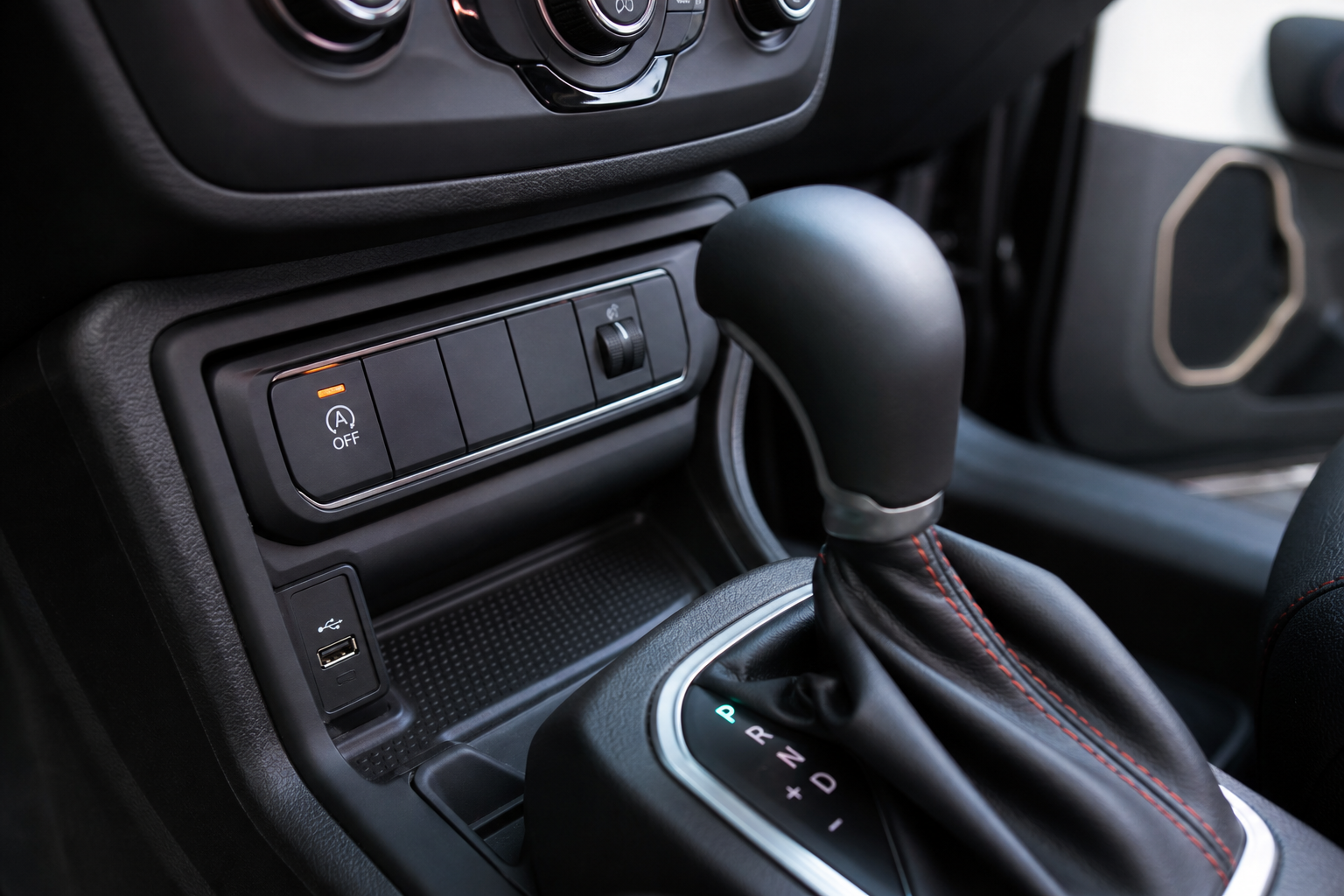
If you own a Jeep Renegade and the auto start/stop system drives you crazy, you’re not alone. Every time the engine shuts off at a red light, you get a little shudder, a brief pause, and that slightly anxious feeling while you wait for it to fire back up. It’s one of those features that looks good on an EPA fuel economy sheet but feels annoying in real-world driving.
The Bottom Line
A plug-and-play module can make your Jeep Renegade remember your preference to keep Auto Start/Stop off, so you don’t have to press the button every time you start the vehicle.
The bigger frustration is that Jeep didn’t give you a permanent way to turn it off. There’s a button on the dash, but it only works for the current drive. Shut the car off, start it again, and the system is back on. This guide will walk you through every option you have, from the factory button to a plug-and-play hardware fix that actually solves the problem for good.
What Is the Auto Start/Stop System on the Jeep Renegade?
The Renegade’s Auto Start/Stop system, also called ESS (Engine Stop/Start), is designed to cut the engine when the vehicle is stopped and restart it automatically when you lift your foot off the brake. FCA introduced it across most of their lineup to improve fuel efficiency numbers, and it became standard on the Renegade starting with the 2015 model year.
It works through a beefed-up starter motor and an absorbed glass mat (AGM) battery that can handle the extra cycling. The system is active on both the 1.4L turbocharged and 2.4L four-cylinder engines. If your Renegade has an automatic transmission, ESS is almost certainly part of your setup unless you’re in a base trim on a very early model.
Under the right conditions, which means a warm engine, a charged battery, climate control not in full blast mode, and a few other variables, the system shuts down every time you come to a full stop. Most drivers notice more wear-and-feel than actual fuel savings in everyday city driving.
Using the Factory A/OFF Button (And Why It Resets)
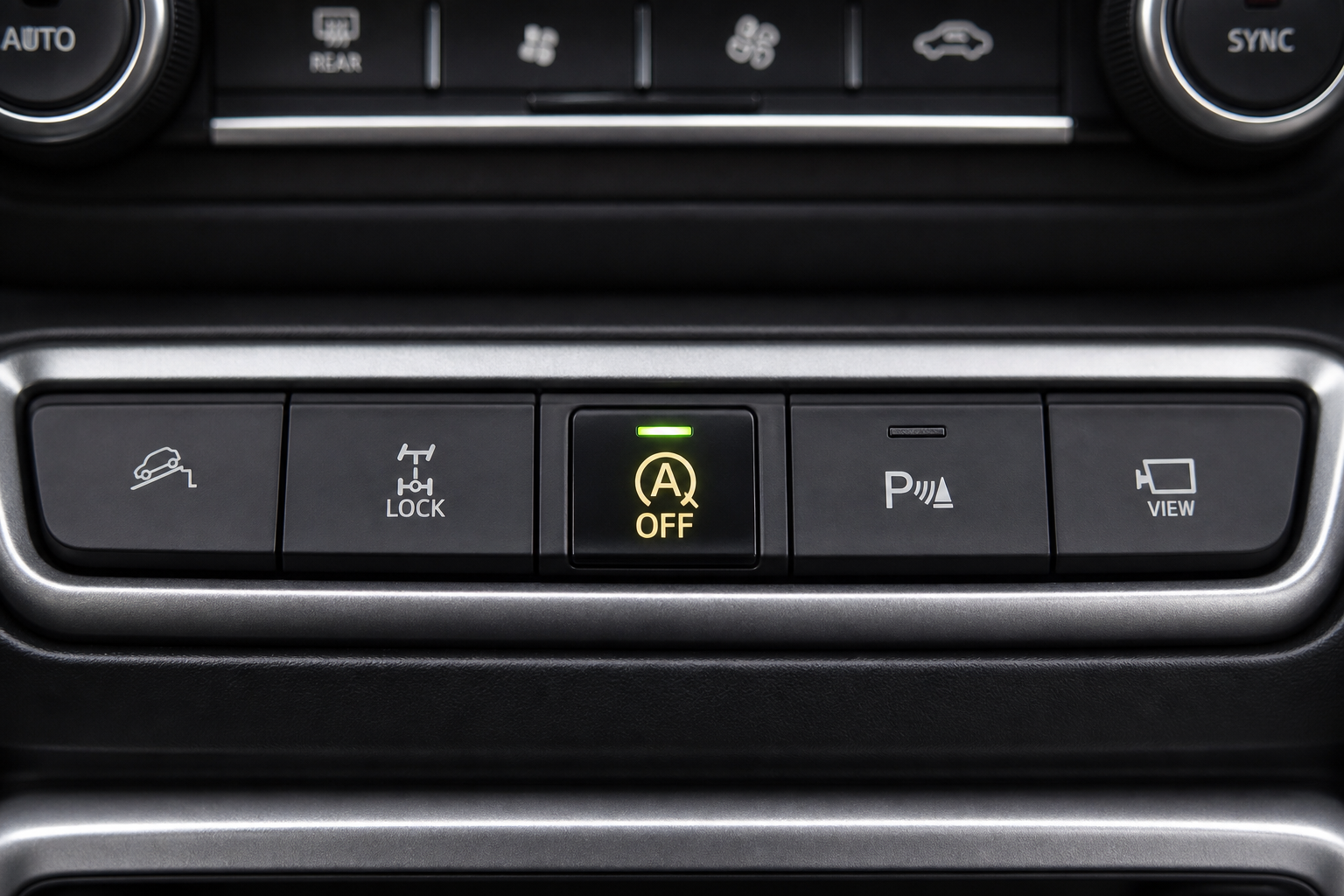
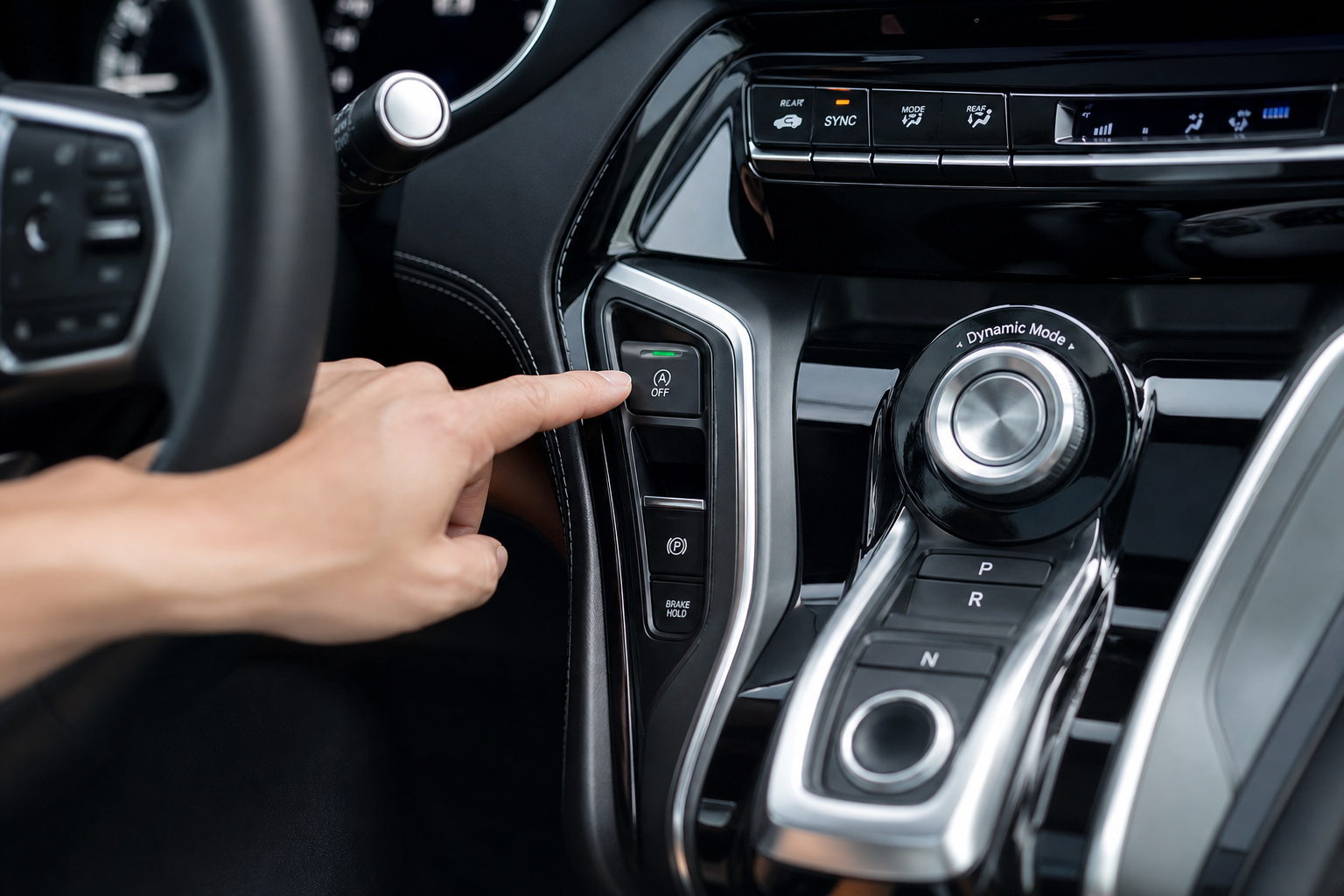
Every Renegade with ESS has a button on the center console or instrument cluster labeled “A/OFF” with a small circular arrow. Pressing it will disable the start/stop system for that drive cycle. You’ll see a notification on the instrument cluster confirming it’s off.
The catch is simple: Jeep programmed the system to default back to “on” every time you restart the vehicle. This isn’t a bug, it’s intentional. Automakers do it to meet CAFE fuel economy standards, and it means the factory button is more of a temporary override than a true disable.
If you only occasionally want ESS off, the button is fine. But if you want it off permanently without thinking about it every single drive, you need a different solution. Pressing that button every morning gets old fast.
Can You Disable It Through the Infotainment or a Scan Tool?
A lot of Renegade owners search for a software setting buried in the Uconnect system, but it doesn’t exist. There’s no menu option to make the ESS preference stick between drive cycles on the Renegade. Some Jeep models like the Grand Cherokee have dealer-accessible settings that can permanently disable it, but the Renegade wasn’t given that option at the software level.
Some shops have experimented with coding changes using dealer-level diagnostic tools, but results are inconsistent and there’s a real risk of throwing a fault code or affecting related systems. If you’re curious about what diagnostic tools can and can’t do with your vehicle’s modules, our guide to the best OBD2 scanners for DIY auto repair covers the difference between basic scan tools and more capable professional-grade units. For ESS disabling on the Renegade specifically, though, a physical eliminator module is the more reliable route.
The Plug-and-Play ESS Eliminator Module (The Real Fix)
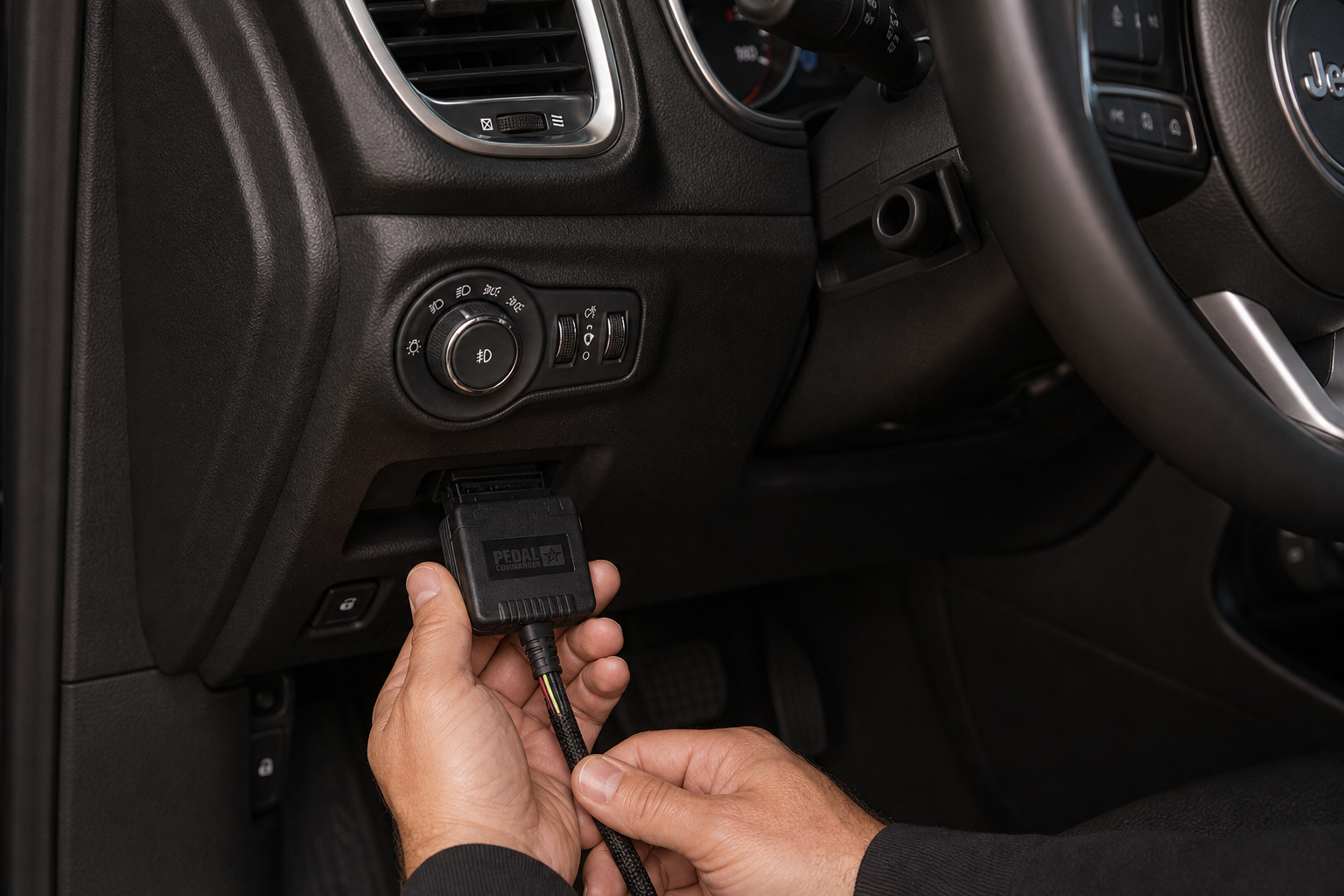
The most effective and reversible way to permanently disable auto start/stop on your Jeep Renegade is a dedicated ESS eliminator module. These small devices plug directly into the OBD2 port or into a connector near the ESS button and mimic the button press automatically every time you start the car.
Some modules use memory chips to store your preference so the system sees an “off” signal before you even touch the dash. Others tap into the vehicle’s CANbus and send a software command that disables ESS during the startup sequence. Either way, the result is the same: you get in, start the engine, and ESS is already off.
Installation typically takes under five minutes. There’s no wiring, no soldering, and nothing permanent. If you ever sell the vehicle or just want ESS back, you unplug the module and you’re back to factory behavior. It won’t affect your warranty in any way that can be detected, and it won’t throw a check engine light.

Jeep Renegade ESS Eliminator Module
A plug-and-play ESS eliminator designed for the Jeep Renegade that automatically disables auto start/stop every time you start the engine, with no permanent modifications required.
When you’re shopping for one, make sure the listing specifically mentions Jeep Renegade compatibility. Some generic ESS eliminators are designed for other FCA vehicles and may not work correctly with the Renegade’s specific module setup. Look for a unit that covers your model year, particularly if you have a 2019 or newer Renegade with the updated ESS controller.
Model Year Notes for the Jeep Renegade
Not every Renegade is set up exactly the same way. Here’s a quick breakdown by generation:
- 2015 to 2018: ESS is present on most automatic-equipped trims. The A/OFF button is on the center console. ESS eliminator modules are widely available for this range.
- 2019 to 2021: Jeep updated the ESS controller in this generation. Some earlier eliminators won’t work. Make sure your module is listed as compatible with 2019+ Renegades specifically.
- 2022 and newer: The system is functionally similar to the 2019 to 2021 range. Confirm compatibility with the seller before ordering, especially if you have the 1.3L turbocharged four-cylinder that replaced the older 1.4L.
If your Renegade has a manual transmission, you won’t have ESS at all. The system only applies to automatic-equipped models.
Is It Worth Disabling Auto Start/Stop?
From a practical standpoint, yes. The real-world fuel savings from ESS in a vehicle the size of the Renegade are minimal, often fractions of a percent in normal mixed driving. Meanwhile, the extra starter cycling does add wear over time, even with the upgraded components Jeep used to support it.
If you’re the kind of driver who does a lot of stop-and-go city commuting, you’ll feel the difference immediately with ESS off. The engine stays smooth, throttle response on pullaway feels more natural, and you eliminate that brief hesitation when the light turns green. It’s a legitimate quality-of-life improvement for daily driving.
Some drivers also notice that ESS can cause a faint vibration at idle during the restart cycle, which is a different problem from what you’d see in something like the Acura MDX vibration at idle issue, but the principle is the same: unnecessary engine cycling that passengers can feel. Keeping the engine running consistently is almost always smoother.
Frequently Asked Questions
Will disabling auto start/stop void my Jeep Renegade’s warranty?
Using a plug-and-play ESS eliminator module won’t void your warranty on its own. The Magnuson-Moss Warranty Act protects you from dealers voiding your warranty simply because you used an aftermarket accessory. The module doesn’t permanently alter any software or hardware, so there’s nothing for a dealer to detect during a service visit. If you want to be extra cautious, unplug the module before taking the vehicle in for service.
Does an ESS eliminator affect battery life or fuel economy?
Keeping the engine running at stops does use a small amount of additional fuel compared to having ESS active. However, the difference in real-world driving is minimal and most drivers won’t notice it at the pump. On the battery side, disabling ESS actually reduces cycling stress on the AGM battery, which could extend its lifespan over the long term since the repeated start cycles are what put the most strain on it.
My Renegade’s ESS button isn’t working at all. Is that a different problem?
If the A/OFF button doesn’t respond or the system activates ESS even after you press it, that’s likely either a faulty ESS button, a software glitch, or a battery condition issue. ESS won’t disable if the battery state of charge is too low or too high because the system monitors battery health as part of its operating logic. Try a full battery test first. If the battery is fine and the button still doesn’t work, it could be a wiring issue with the switch itself. An OBD2 scanner with live data capability can help you read the ESS module status and look for stored fault codes.
Final Thoughts
If you’re tired of pressing the A/OFF button every single time you start your Renegade, a plug-and-play ESS eliminator is the cleanest solution available. It’s reversible, takes minutes to install, and works automatically from the moment you start the engine. You won’t think about auto start/stop again.
Check your model year before ordering to make sure you get a compatible module, and look for one that specifically lists Jeep Renegade in the fitment guide. Once it’s in, you’ll wonder why you put up with the reset loop for as long as you did.
Jeep Renegade Auto Start Stop Eliminator
A simple, vehicle-specific plug-in module that permanently keeps ESS off on the Jeep Renegade without any programming or permanent modification.
And if you’re looking to make a few more practical upgrades to your Renegade, it’s worth checking out our picks for the best dash cams under competitively priced and our roundup of the best LED headlight bulb upgrades. Both are easy DIY installs that add real value to your daily driving experience.

Leave a Reply