
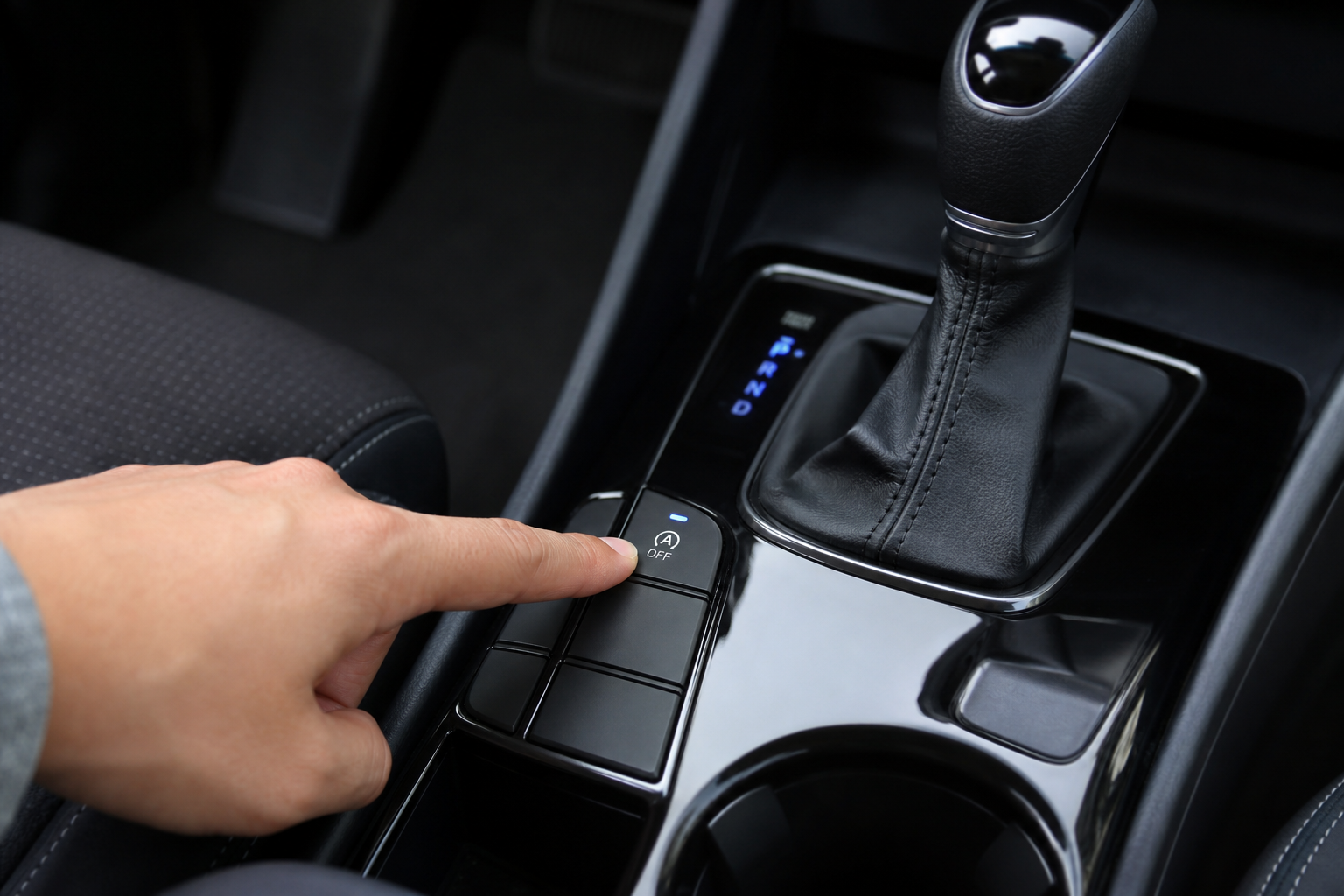
The auto start/stop system on the Hyundai Elantra is one of those features that sounds good on paper but drives plenty of owners up the wall in daily use. Every time you come to a red light, the engine cuts out. You lift your foot off the brake, and there’s that brief shudder and hesitation before it fires back up. For some drivers it’s barely noticeable, but for others it’s an ongoing annoyance that makes the car feel jerky and unpredictable in stop-and-go traffic.
The Bottom Line
A plug-and-play module can make your Hyundai Elantra remember your preference to keep Auto Start/Stop off, so you don’t have to press the button every time you start the vehicle.
The bigger frustration is that Hyundai designed the system to turn itself back on every single time you start the car. You can press the button to disable it, but that preference doesn’t stick. This guide covers exactly why that happens, how to use the factory button properly, and the permanent fix that most Elantra owners end up choosing once they discover it exists.
Understanding the Auto Start/Stop System on the Elantra
Hyundai calls this feature ISG, which stands for Idle Stop and Go. It was introduced across much of the Elantra lineup starting with the seventh generation (2021 model year), though some trim levels on earlier models had versions of it too. The system is tied to the car’s fuel economy and emissions targets, which is why Hyundai engineered it to default to the “on” state every time you start the engine.
The system uses a beefier starter motor and an absorbed glass mat (AGM) battery to handle the repeated start cycles. If your Elantra’s battery ever needs replacement, you’ll want to make sure the replacement is AGM-rated and properly registered, since a standard flooded battery won’t handle the cycling load the same way. If you ever suspect electrical or battery-related issues, running a scan with a quality OBD2 scanner can help you rule out stored fault codes before chasing a more expensive diagnosis.
The ISG system won’t engage if the cabin hasn’t reached a minimum temperature yet, if the battery charge is too low, or if the steering wheel is turned past a certain angle. These built-in conditions are why some drivers notice the system seems more aggressive on warm days than cold ones.
Using the Factory Dashboard Button
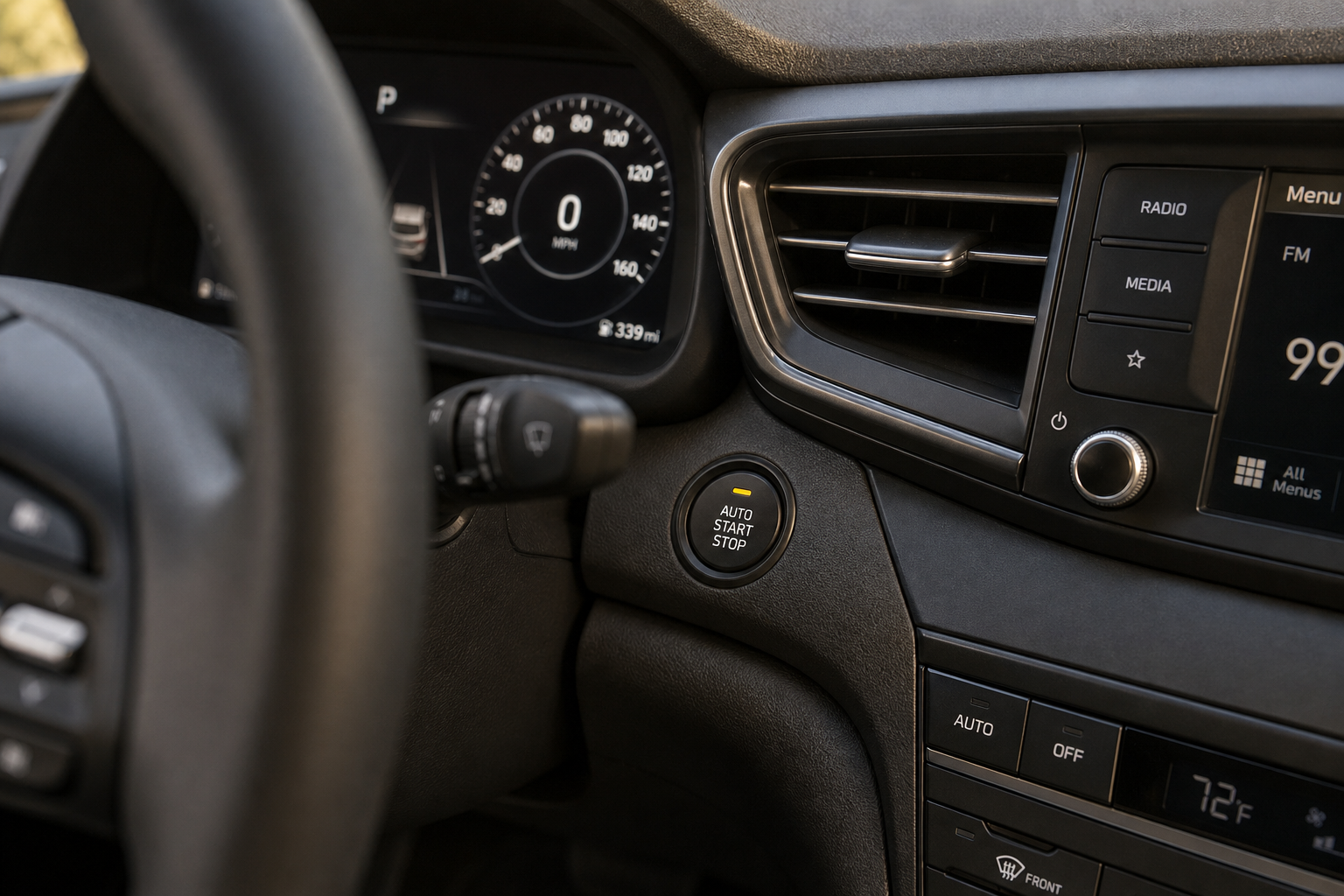
Every Elantra equipped with ISG has a dedicated button to disable it for your current drive. On the 2021 and newer models, you’ll find it on the center console or lower dashboard cluster, usually marked with an “A” inside a circular arrow with a line through it. Press it once and the indicator light turns off, confirming the system is deactivated.
This works fine for that session, but the setting resets to “on” the next time you start the car. It’s not a bug or a malfunction. Hyundai programmed it this way intentionally to meet fuel efficiency standards. Every drive, you’d need to manually press the button again if you want the system off.
For some drivers, pressing the button once as part of the startup routine is enough. If that works for you, great. But if you find yourself forgetting and getting caught off guard at intersections, or if you’re just tired of the extra step, there’s a better option.
The Permanent Fix: Start/Stop Eliminator Module
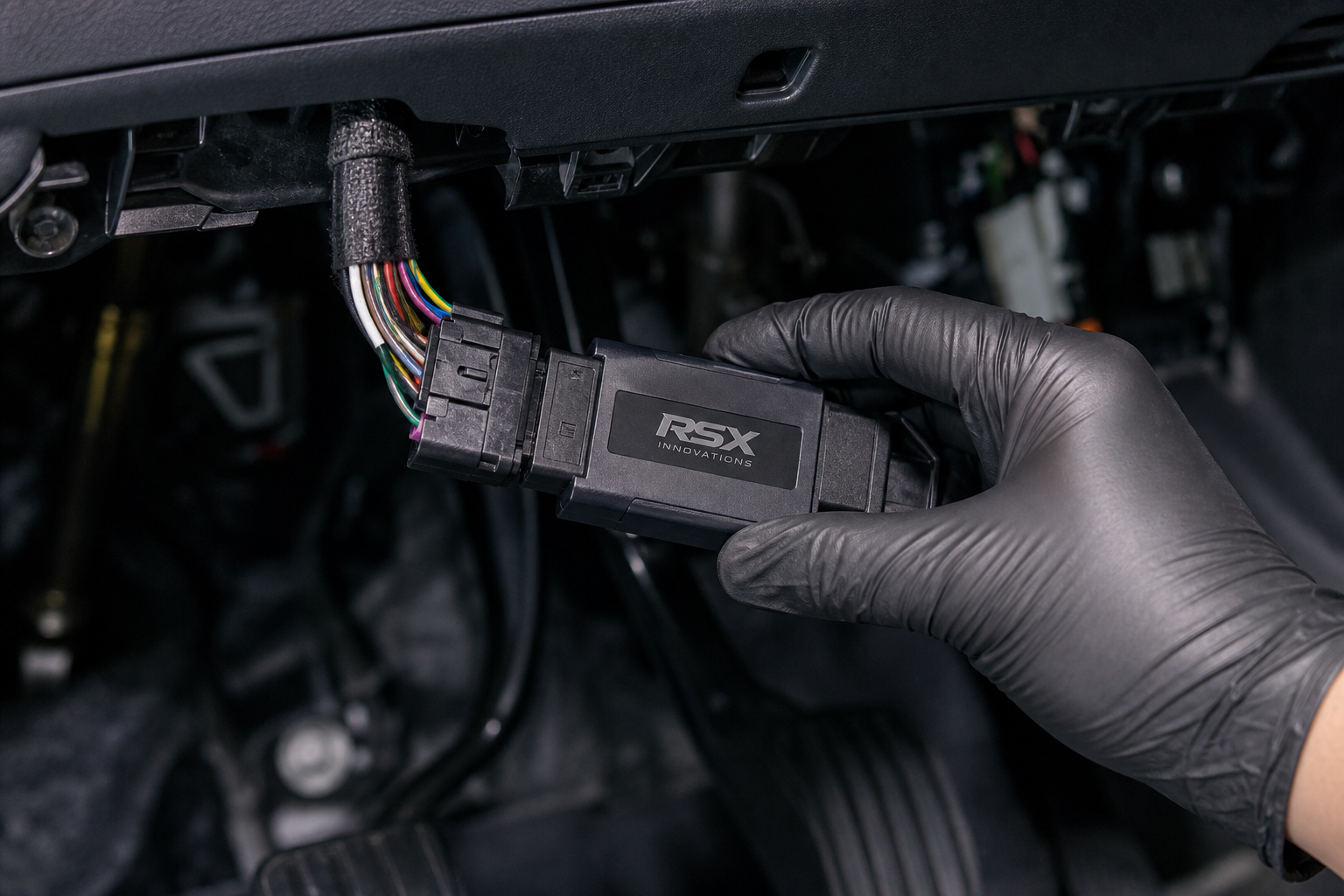
A start/stop eliminator is a small plug-and-play module that connects to your Elantra’s OBD2 port or directly into the vehicle’s wiring harness, depending on the design. Once installed, it automatically sends the disable signal to the ISG system every time you start the car, so you never have to press the button again. Your preference to keep the system off becomes the new default without any permanent modifications to the car’s software or wiring.
These modules don’t alter your ECU programming, don’t void your warranty in most cases, and are fully reversible. You can unplug the module anytime and the car returns to its factory behavior. That’s an important point for anyone who leases their Elantra or plans to sell it.

Hyundai Elantra ISG Start Stop Eliminator
A plug-and-play module that automatically disables the auto start/stop system on every drive without any permanent modifications.
When shopping for one, make sure the listing specifically mentions compatibility with your Elantra’s model year. The 2021 and newer seventh-generation Elantra uses different connectors than the sixth-generation (2017 to 2020) cars. Using an incompatible module at best won’t work and at worst could throw error codes. Most reputable listings will include a compatibility chart, so check it before purchasing.
Installation typically takes under five minutes. Most OBD2-style eliminators simply plug into the port located under the left side of the dashboard near the steering column. Harness-style modules connect to a specific plug near the brake pedal switch or the start/stop button itself, and usually come with detailed instructions. No tools required for either style.
Model Year Compatibility Notes
Here’s a quick breakdown to help you identify which generation you have and what to expect:
- 2017 to 2020 (6th Gen): ISG was not standard on all trims. Some SE and SEL grades came without it. Check your car’s center console for the button before purchasing an eliminator.
- 2021 to 2023 (7th Gen): ISG became more common across trim levels. The N Line and Limited trims are the most likely to have it. The eliminator market for these years is the most developed.
- 2024 and newer: Same 7th generation platform. Eliminators that work on 2021 to 2023 models generally work here too, but confirm compatibility with the seller before buying.
If you drive a Hyundai SUV and have been curious about similar tech features on other models in the lineup, we’ve also covered how to use the surround view camera on the Hyundai Palisade and how to set up the digital key on a Hyundai Tucson, which can give you a sense of how Hyundai handles its tech features across the family.
Is It Bad to Disable Auto Start/Stop?
This is the question that comes up constantly, and the short answer is no, not in any meaningful way. The wear argument against disabling it goes like this: the system reduces engine wear by limiting the number of cold start cycles. But the truth is, the starts generated by ISG are not cold starts. The engine is already at operating temperature. The greatest wear on internal components happens during true cold starts, and disabling ISG doesn’t affect those at all.
Some engineers and mechanics actually argue the opposite, that the repeated starter motor engagement and brief restarts create their own form of mechanical wear over time. Whether that wear is more or less than what you’d accumulate at idle is genuinely debated. What’s not debated is that the AGM battery on ISG-equipped Elantras tends to wear faster than a standard battery because of the cycling. Disabling ISG can extend battery life.
There’s also the issue of driving smoothness. If you’ve noticed any rough idle behavior or vibration after the engine restarts at a light, this can occasionally be tied to other mechanical issues rather than the ISG system itself. If that sounds familiar, it’s worth looking at our article on fixing vibration at idle in drive, which covers some of the common causes that apply across makes and models.
Frequently Asked Questions
Will disabling auto start/stop affect my fuel economy?
Technically yes, but the real-world difference is very small. EPA testing uses specific drive cycles that include ISG savings, so your official rating was calculated with the system on. In practice, most drivers see a negligible change in fuel economy when they disable it, especially if they’re driving in typical urban or suburban conditions. The savings from ISG are most significant in very slow, dense stop-and-go traffic like a gridlocked city commute.
Will the eliminator module throw a check engine light?
A quality Elantra-compatible eliminator module should not trigger a check engine light. These devices are designed to mimic the signal the driver sends by pressing the factory button, so the car’s computer sees it as an authorized input, not an error. If a check engine light does appear after installing one, the first step is to unplug the module and see if the light clears. You can use an OBD2 scanner to read any stored codes and confirm whether the module is the cause.
Can I use a start/stop eliminator if I lease my Elantra?
Yes, because the module is fully removable. Before returning a leased vehicle, simply unplug the eliminator and the car behaves exactly as it did from the factory. There’s no trace of it in the system, no modified settings, and no permanent changes to the wiring or software. Just make sure you keep the module stored somewhere safe so you don’t lose it before the lease return.
Final Thoughts
The factory button works, but having to press it every single drive gets old fast. A start/stop eliminator is the practical solution for anyone who has already decided they don’t want the ISG system running. It’s reversible, it installs in minutes, and it just works without you having to think about it again.
Hyundai Elantra Auto Start Stop Eliminator Module
Automatically keeps the ISG system disabled on every startup, compatible with multiple Elantra model years.
If you want to keep your Elantra in good shape over the long run, pairing this kind of small fix with regular maintenance awareness goes a long way. Keeping an eye on things like your emergency kit in the trunk and staying on top of any dashboard warnings will help you get the most out of the car. Small quality-of-life upgrades like disabling ISG make a real difference in how much you enjoy driving it every day.


Leave a Reply