

You’re backing out of a parking spot, glance at the mirror expecting that familiar amber triangle to warn you about the car in your blind spot, and nothing happens. Or maybe the multi-information display suddenly flashes “Blind Spot Monitor Unavailable” and stays that way no matter how many times you restart the RAV4. Before you assume the worst, it helps to know that most Blind Spot Monitor problems on the RAV4 trace back to something simple, not an expensive sensor replacement.
This guide walks through exactly how Toyota’s system works, what you can check yourself in the driveway, and when the problem actually requires a scan tool or a trip to the dealer.
What Toyota Calls It and How It Works

Toyota’s factory system is officially named Blind Spot Monitor (BSM), and on the RAV4 it’s almost always paired with Rear Cross Traffic Alert (RCTA), which uses the same hardware. The system relies on two radar sensors mounted behind the rear bumper cover, one on each corner, angled to scan the lanes beside and slightly behind the vehicle.
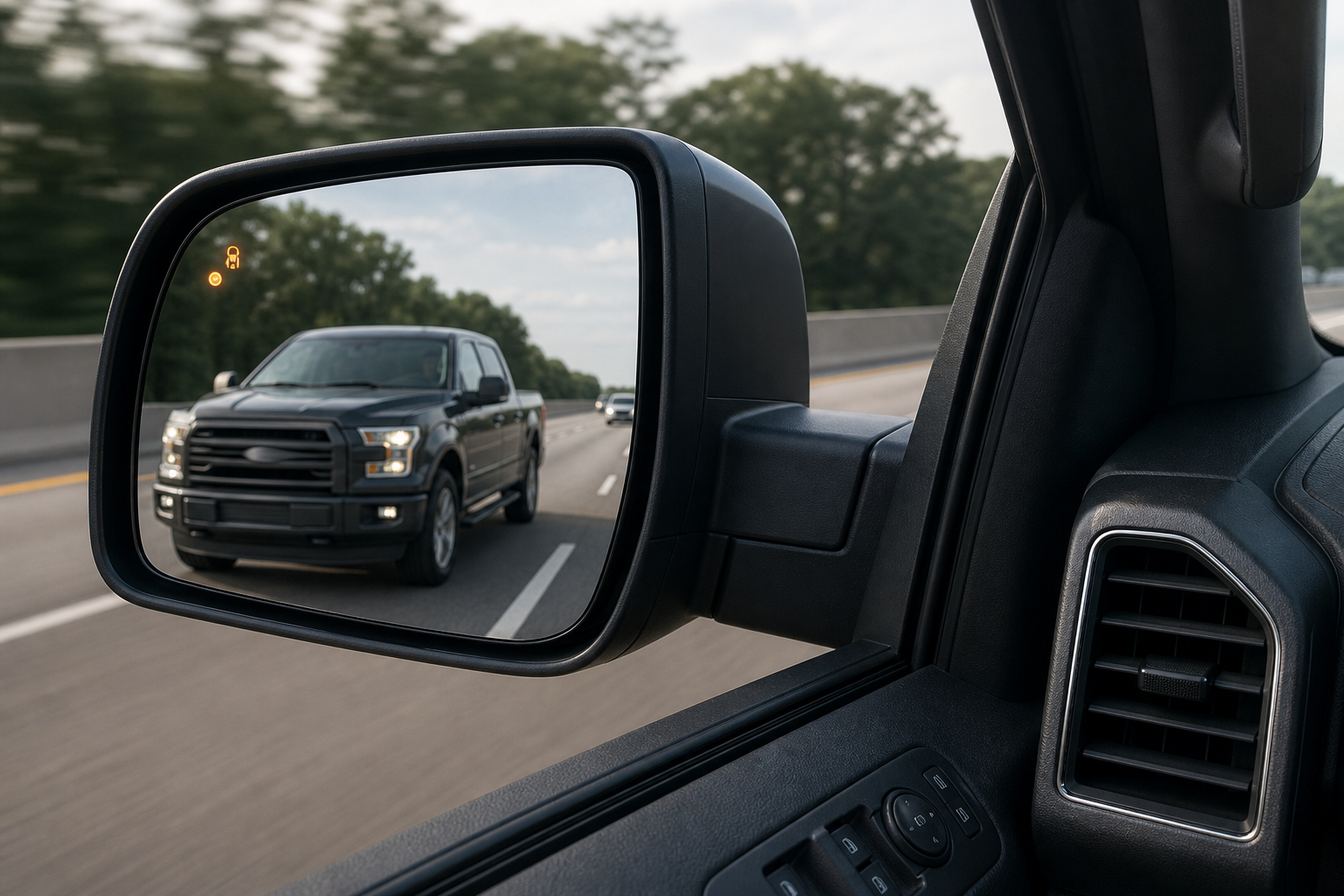
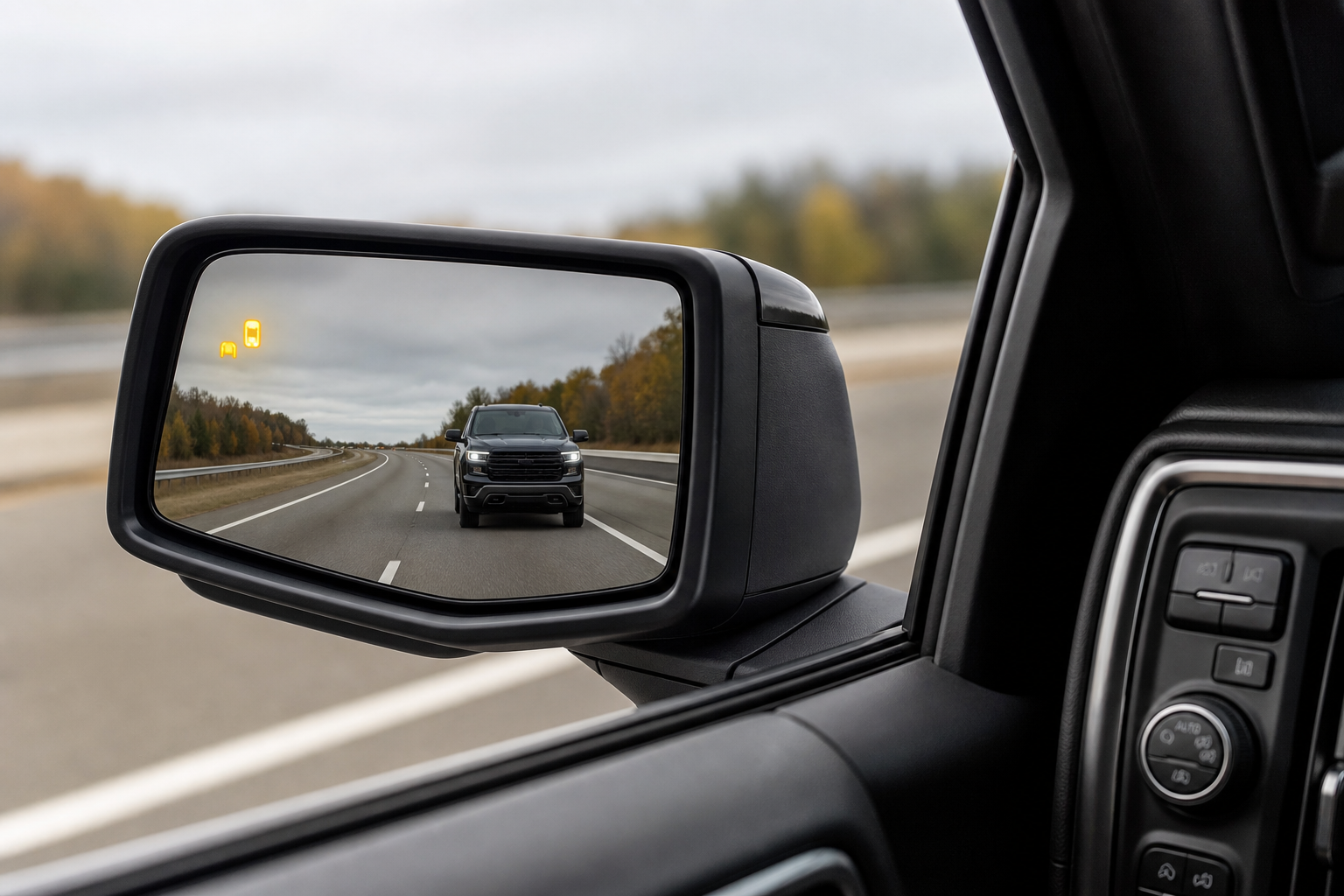
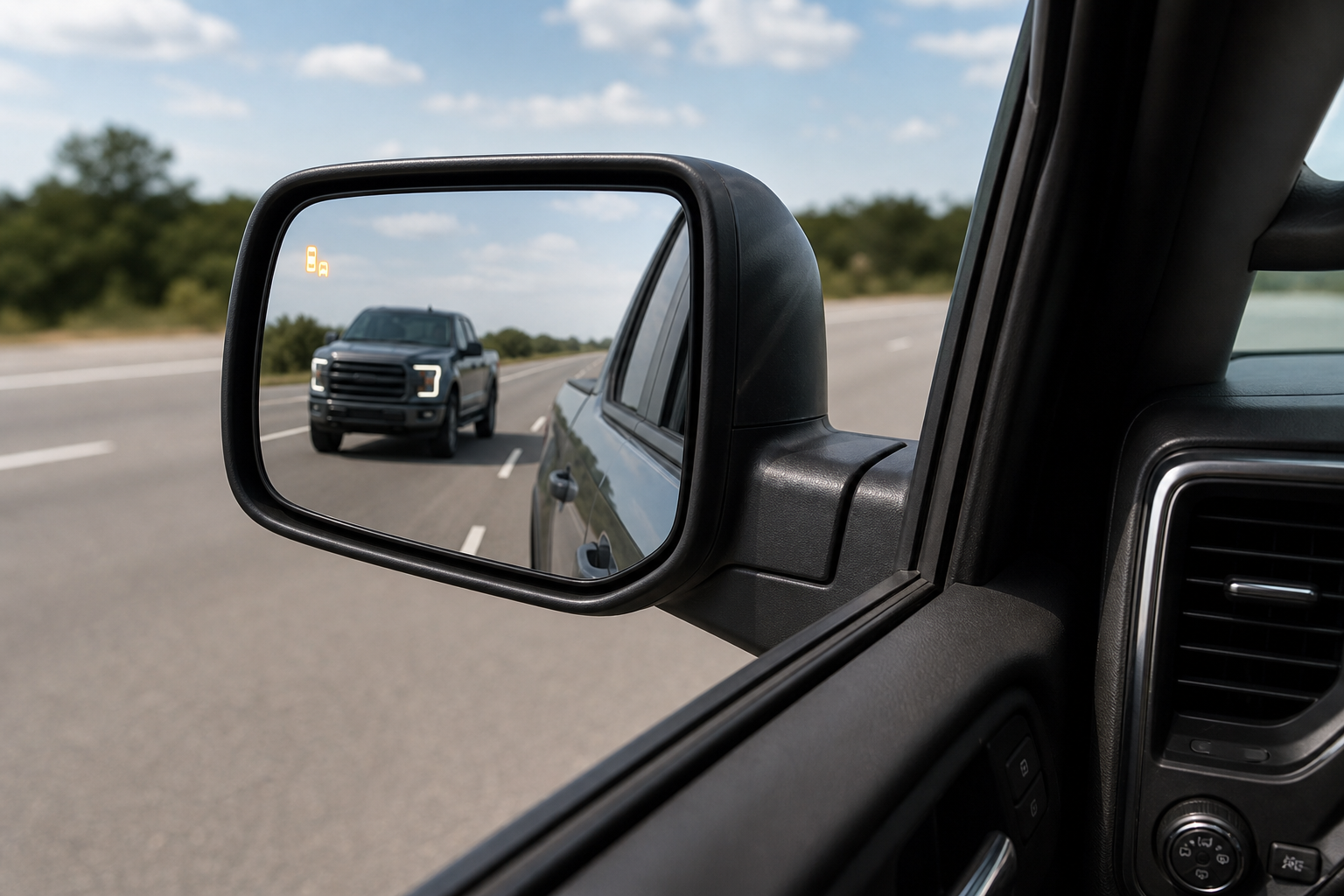
When a vehicle enters your blind spot, an amber warning light illuminates in the corresponding side mirror. If you signal toward that lane anyway, the light flashes and an audible chime sounds. Rear Cross Traffic Alert uses the same sensors to watch for crossing traffic when you’re backing out of a parking space.
Availability depends heavily on trim and model year. On the fourth-generation RAV4 (2013-2018), BSM showed up as standard equipment only on higher trims like the XLE Premium and Limited starting around the 2016 refresh, and it wasn’t available at all on base LE models. With the redesigned fifth-generation RAV4 (2019-present), Toyota made BSM standard across nearly the entire lineup, including the RAV4 Hybrid and Prime, though very base LE trims in early model years sometimes left it off. If you’re not sure whether your RAV4 even has the feature, check your window sticker or look for the small radar sensor covers on the rear bumper corners.
Start With These Owner-Safe Checks
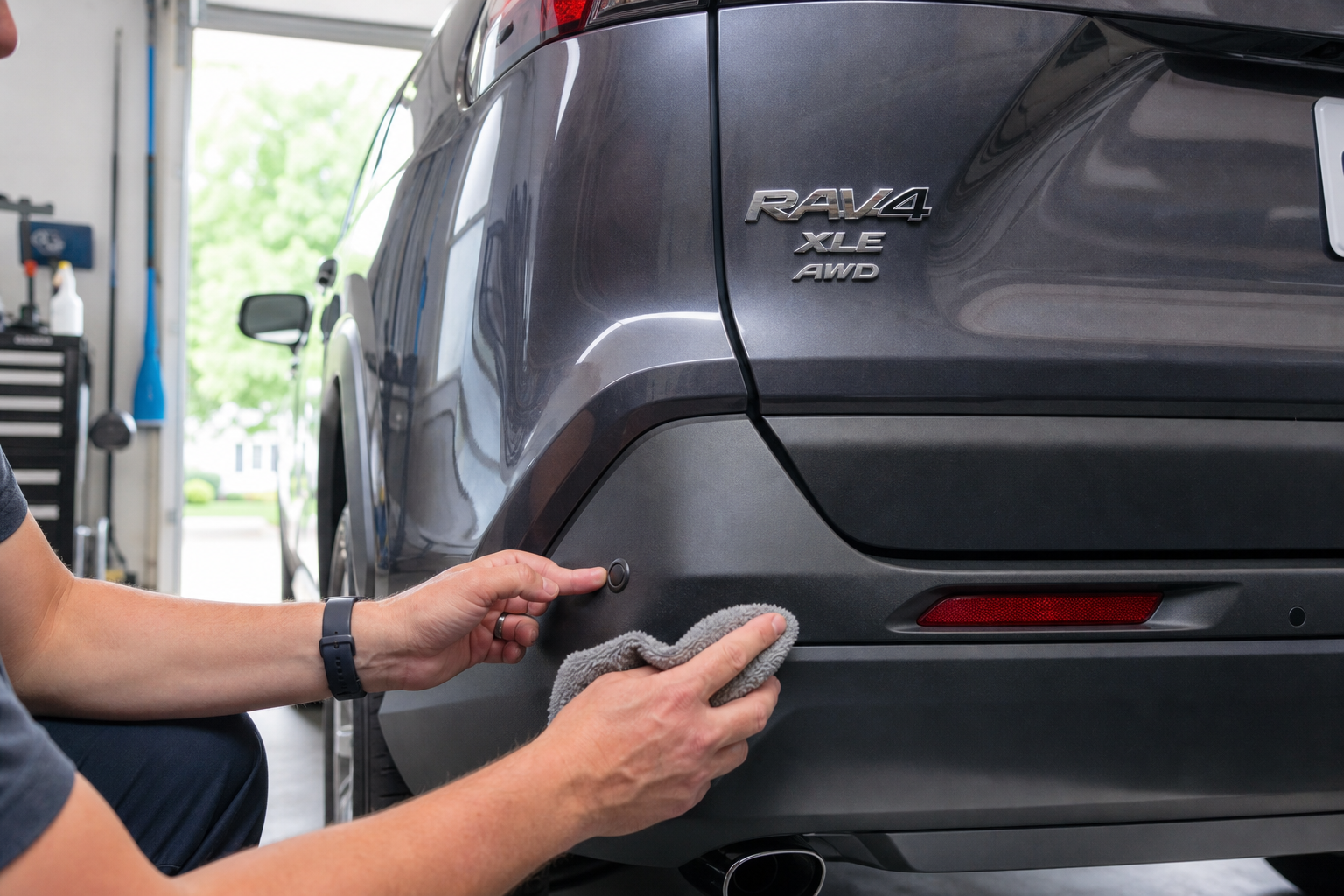
Before you assume a sensor is fried, run through these checks. All of them are safe for any owner to do without tools or technical training.
- Clean the rear bumper corners. Mud, road salt, ice, or a thick layer of dirt directly over the sensor housing is the single most common cause of BSM dropping out, especially in winter or after off-road driving. Wipe both rear corners down with a soft cloth and check again.
- Look for bumper damage. Even a minor parking lot bump that pushes the bumper cover slightly out of alignment can throw off the radar’s angle enough to trigger an error message. Look for cracks, gaps, or a cover that sits crooked compared to the other side.
- Check for aftermarket accessories. A trailer hitch, bike rack, mud flaps, or even a thick vinyl wrap applied over the sensor area can interfere with the radar signal. Trailer wiring harnesses in particular are known to cause BSM glitches on RAV4 models used for towing.
- Rule out low battery voltage. The RAV4’s driver assist systems, including BSM, can temporarily disable themselves if the 12V battery voltage drops too low, which is common with an aging battery or a battery that’s been drained by a slow parasitic draw. If you’ve noticed other electrical quirks lately, it’s worth reading through this breakdown on batteries dying overnight even with a healthy alternator before you spend money on sensor diagnostics.
- Confirm the feature is actually turned on. BSM can be toggled off through the settings menu on the touchscreen, and it’s easy to bump this accidentally or have it disabled by a previous owner. Cycle through Settings, then Driving Support, to confirm it’s enabled.
- Give it a moment after starting the car. BSM needs a few seconds after ignition to initialize. If you’re checking it immediately after starting the engine and it briefly shows unavailable, that’s usually normal.
Snow buildup deserves its own mention here because it’s so common in colder climates. A layer of packed snow or slush over the rear bumper, even one that looks thin, is enough to block the radar signal completely. Clearing it usually restores the system within a minute or two of driving.
When the Message Won’t Go Away
If you’ve cleaned the sensors, ruled out accessory interference, checked the battery, and confirmed the feature is switched on but the warning light or error message persists, you’re likely dealing with one of these deeper issues.
Sensor Misalignment After a Collision
Even a low-speed rear-end bump that doesn’t visibly crack the bumper can knock a radar sensor out of its calibrated position. Toyota’s BSM sensors are aimed at a precise angle during factory assembly, and any bodywork on the rear bumper, including bumper cover removal for detailing or a hitch install, can require re-calibration afterward.
Wiring or Connector Faults
The radar units connect through wiring harnesses routed through the rear bumper and quarter panels. Corrosion, a chafed wire, or a loose connector, often from a pinched harness after aftermarket work, can cause intermittent dropouts that come and go depending on temperature or vibration.
Actual Sensor Failure
Radar units do fail outright, though it’s less common than owners assume. A failed sensor typically throws a permanent fault code and the warning stays on regardless of cleaning or driving conditions.
Any of these three situations requires a scan tool capable of reading Toyota-specific body control module codes, and sensor replacement or bumper repair almost always needs a static or dynamic calibration afterward using Toyota’s Techstream software or an equivalent professional-grade scanner. This isn’t something to attempt in your driveway. A misaligned sensor that “sort of works” is arguably more dangerous than one that’s honestly disabled, because it can give you false confidence in a blind spot that isn’t actually being monitored correctly.
If you’re comfortable pulling codes yourself before deciding whether a shop visit is worth it, a mid-range OBD2 scanner that supports manufacturer-specific codes is a reasonable investment for any RAV4 owner who likes to DIY.
Autel MaxiCOM MK808 OBD2 Scanner
Reads manufacturer-specific fault codes, including blind spot and radar system codes on Toyota models, which cheaper generic scanners often miss.
If a technician confirms the sensor itself is bad rather than a wiring or bumper alignment issue, replacement units are available without needing to go through the dealer parts counter, though matching the correct side and connector type for your model year matters.
Toyota RAV4 Blind Spot Radar Sensor
A direct-fit replacement option worth comparing against dealer pricing once a shop confirms which side sensor has failed.
It’s also worth double-checking your tire pressure monitoring system while you’re troubleshooting driver assist features, since a TPMS fault sometimes gets triggered around the same time as other electronic warnings after a battery drop. Here’s a full walkthrough on resetting TPMS on the RAV4 across all generations if that light happens to pop up too.
Don’t Confuse BSM With Other RAV4 Driver Assist Warnings

Owners sometimes mix up a BSM fault with an unrelated system acting up at the same time. If your RAV4 is also nagging you about lane departure or steering assist, that’s a completely separate camera-based system, and you can find dedicated steps for turning off Lane Assist on the Toyota RAV4 if it’s more annoying than helpful for your driving style. Likewise, if you’re seeing a driver fatigue or attention icon rather than a blind spot warning, that’s the Driver Monitor camera, and this guide on disabling the Driver Monitor system on the RAV4 covers that separately.
Frequently Asked Questions
Why does my RAV4 say “Blind Spot Monitor Unavailable” only in bad weather?
Heavy rain, snow, or road spray can temporarily block the radar signal or cause the system to detect interference and disable itself as a precaution. This is normal behavior, and the system should return to normal once conditions clear and you’ve driven far enough for the radar to recalibrate its readings.
Can I drive safely with the Blind Spot Monitor showing an error?
Yes, but treat it exactly like a RAV4 without the feature at all. Check your mirrors manually and physically turn your head before changing lanes, since you can’t rely on the system to catch what it’s not currently detecting.
Does a dealer visit for BSM calibration always cost a lot?
Not necessarily. If the fault turns out to be a dirty sensor cover or a loose connector, the diagnostic itself is usually quick and inexpensive. Costs climb when a sensor needs replacement and full calibration, or when bumper repair work is involved, so getting an accurate diagnosis first prevents paying for parts you don’t actually need.

Leave a Reply