
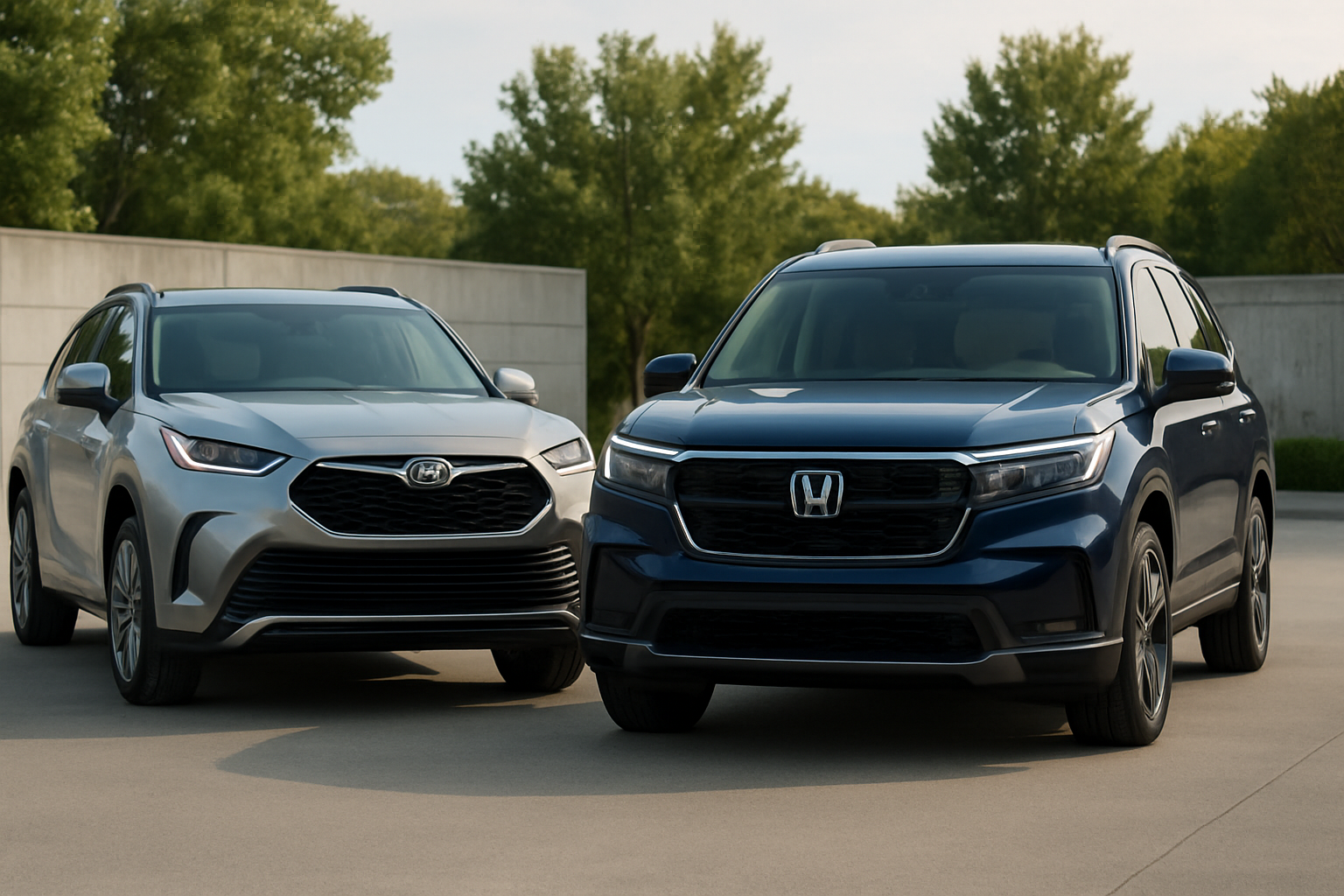
When you’re shopping for a three-row SUV, the Toyota Highlander and Honda Pilot consistently top most family-friendly lists. Both deliver solid reliability, decent fuel economy, and enough space for seven passengers, but they appeal to different types of buyers. Understanding these differences can save you from choosing the wrong vehicle for your needs.
Interior Space and Passenger Comfort
The 2025 Honda Pilot takes the lead when it comes to actual usable space. Its third row can accommodate real adults for more than short trips, with 31.9 inches of legroom compared to the Highlander’s 27.7 inches. You’ll notice this difference immediately when folding yourself into the back seats.
Honda redesigned the Pilot’s interior layout to maximize room without making the vehicle enormous. The second-row seats slide forward easily, and the path to the third row doesn’t require contortionist skills. Parents dealing with car seats will appreciate the wider door openings and lower step-in height.
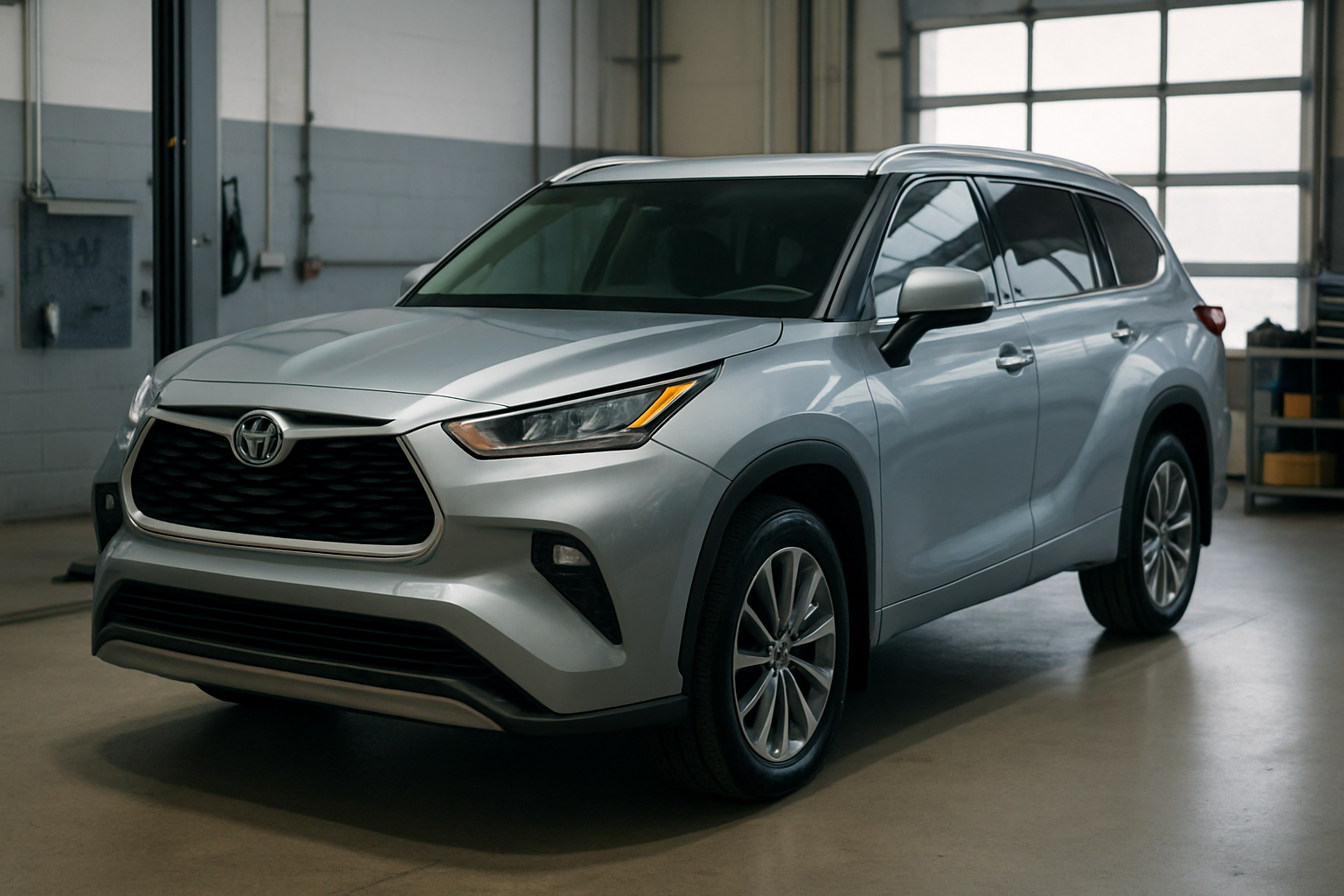
The Highlander offers respectable space for a vehicle in its class, but Toyota prioritized cargo room over maximum passenger space. Behind the third row, you get 16.0 cubic feet of storage versus the Pilot’s 12.9 cubic feet. This makes the Highlander better for families who regularly haul sports equipment or luggage while carrying seven people.
Both vehicles offer captain’s chairs in the second row on higher trim levels, but the Pilot’s chairs feel more substantial and offer better support for longer drives.
Performance and Towing Capability
The Honda Pilot delivers more grunt when you need it. Its 3.5-liter V6 produces 285 horsepower and can tow up to 5,000 pounds when properly equipped. The 10-speed automatic transmission feels responsive and doesn’t hunt for gears like some competitors.
Toyota’s approach focuses on efficiency over power. The Highlander’s 2.4-liter turbocharged four-cylinder generates 265 horsepower, which feels adequate for most driving situations. The hybrid version bumps total system output to 243 horsepower while delivering significantly better fuel economy.
For towing, the Highlander maxes out at 5,000 pounds with the gas engine but drops to 3,500 pounds with the hybrid system. If you regularly pull a boat or travel trailer over 4,000 pounds, the Pilot’s stronger torque curve makes highway merging and mountain passes less stressful.
The Pilot’s all-wheel-drive system includes terrain modes for light off-road situations, while the Highlander’s AWD focuses primarily on weather traction. Neither vehicle pretends to be a serious off-roader, but the Pilot handles dirt roads and camping trips with more confidence.
Fuel Economy and Real-World Efficiency
The Toyota Highlander Hybrid stands out as the clear efficiency winner, delivering EPA ratings of 36 mpg city and 35 mpg highway. In real-world driving, you can expect to average around 32-34 mpg, which translates to genuinely meaningful savings at the pump.
The standard Highlander with the turbocharged engine returns 22 mpg city and 29 mpg highway. These numbers fall slightly below the segment average but remain respectable for a three-row SUV.
Honda doesn’t offer a hybrid Pilot, which puts it at a disadvantage for fuel-conscious buyers. The Pilot’s V6 delivers 20 mpg city and 27 mpg highway, and real-world driving typically yields 23-25 mpg combined. The difference between the Pilot and Highlander Hybrid amounts to roughly $800-1,000 in annual fuel costs for average drivers.
The Pilot’s larger fuel tank partially offsets its lower efficiency, giving it a longer driving range between fill-ups. This matters if you take frequent road trips or live in areas with sparse gas stations.
Technology and User Experience
Both vehicles offer comprehensive infotainment systems, but they take different approaches to user interface design. The 2025 Highlander includes a 12.3-inch touchscreen with Toyota’s Audio Multimedia system, which has improved significantly from earlier versions. The wireless Apple CarPlay and Android Auto work reliably, and the system responds quickly to inputs.
Honda’s infotainment system centers around a 9-inch touchscreen that feels intuitive to most users. The physical volume knob and climate controls remain separate from the touchscreen, which many drivers prefer over touch-only interfaces. Honda’s voice recognition system works better than Toyota’s, especially for navigation commands.
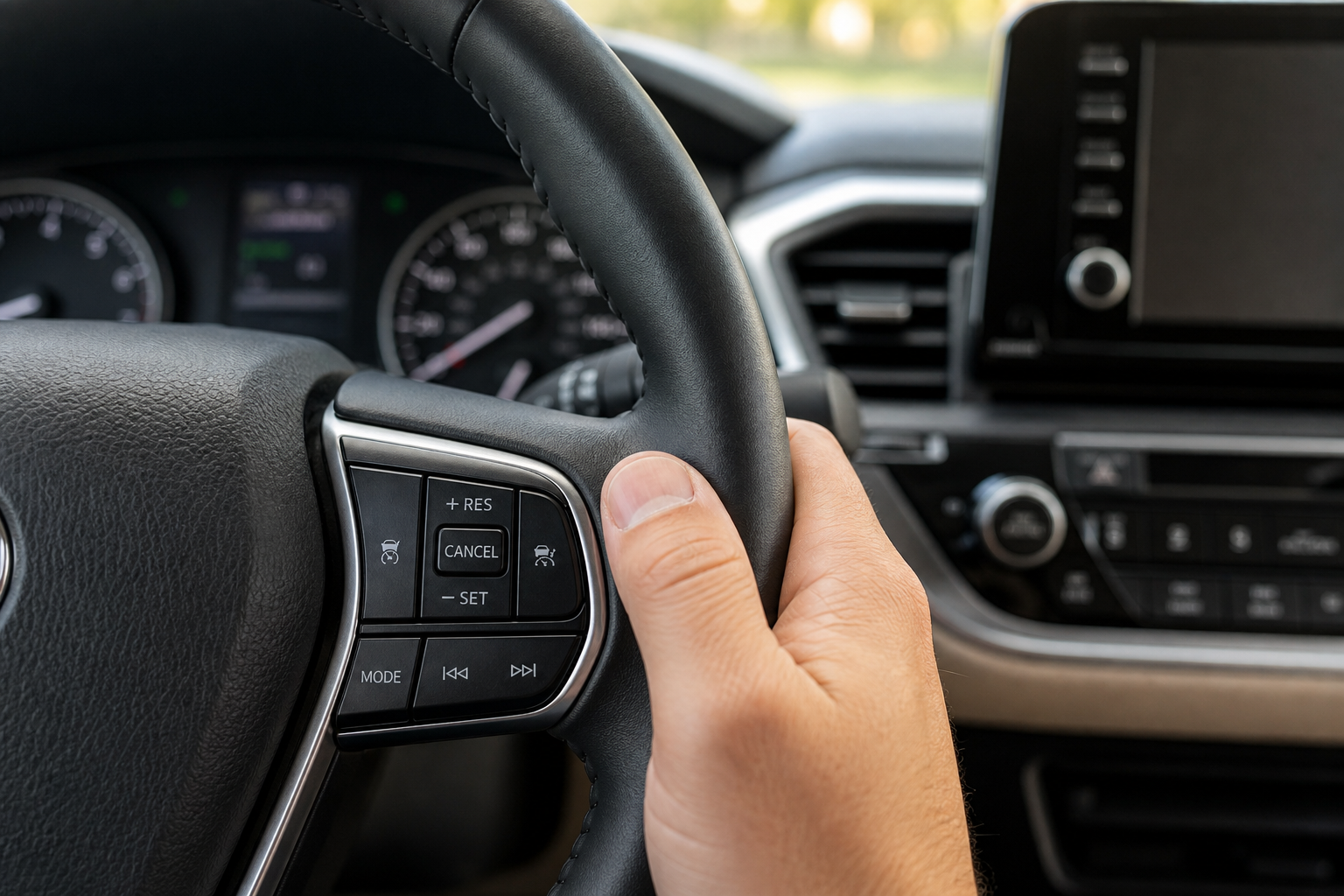
Toyota Safety Sense 2.0 comes standard on all Highlander models, including pre-collision braking, lane departure warning, and adaptive cruise control. The system works well but can feel overly intrusive in some situations. You can adjust most settings, but some warnings persist even when turned down.
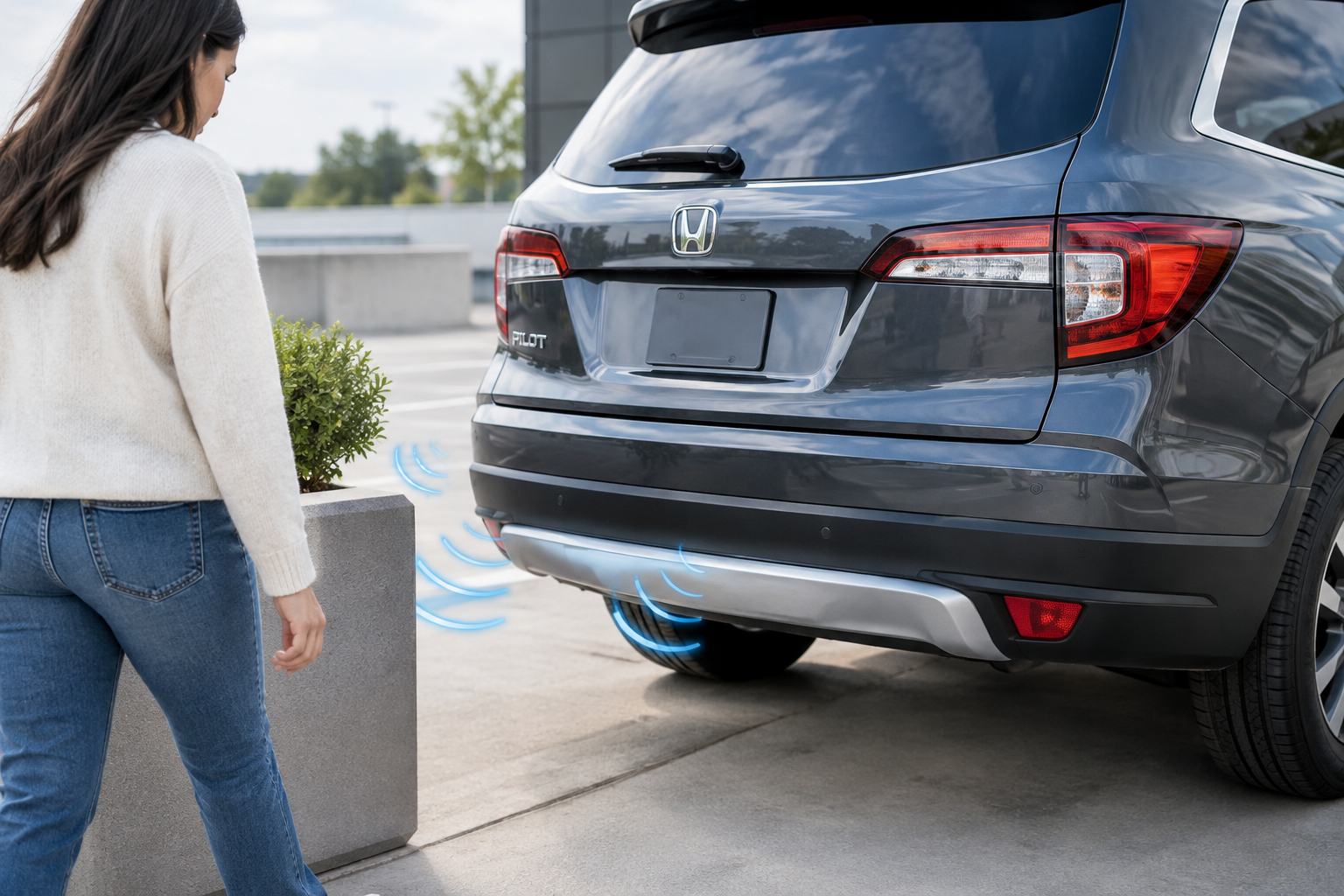
Honda Sensing provides similar features with slightly better calibration. The adaptive cruise control maintains smoother following distances, and the lane-keeping assist doesn’t ping-pong between lane markers like some systems. Both vehicles earn top safety ratings from IIHS and NHTSA.
Reliability and Long-Term Ownership
Both Toyota and Honda built their reputations on reliability, but their recent track records show some differences. The Highlander has experienced fewer significant issues over the past five model years, with most problems involving minor electrical glitches or software updates.
The previous-generation Pilot had some transmission problems that Honda addressed with extended warranties and software updates. The redesigned 2025 model uses Honda’s proven 10-speed automatic, which has performed well in other vehicles.
Toyota’s hybrid system adds complexity but uses proven technology from the Prius and Camry Hybrid. The battery warranty covers 10 years or 150,000 miles, and real-world experience shows these systems lasting well beyond warranty periods with minimal issues.
Maintenance costs favor the Highlander slightly, with Toyota’s scheduled service intervals running about $100-200 less per year than Honda’s. Both brands have extensive dealer networks, so finding qualified service shouldn’t be difficult in most areas.
Resale Value and Cost of Ownership
Toyota consistently leads resale value rankings, and the Highlander maintains this tradition. After five years, you can expect to retain approximately 55-60% of the original purchase price, assuming average mileage and condition.
The Pilot traditionally holds its value well but typically trails the Highlander by 3-5 percentage points in resale studies. However, Honda’s lower initial pricing can offset this difference, making the total cost of ownership quite similar between the two vehicles.
The Highlander Hybrid commands a premium when new but typically holds its value better than the standard gas model. If fuel prices increase significantly, hybrid models often see stronger resale demand.
Insurance costs run similar between both vehicles, though the Pilot’s slightly higher performance capability might result in marginally higher premiums depending on your insurer and driving record.
Pricing and Value Proposition
The 2025 Honda Pilot starts around $38,000 for the base LX model, while the Highlander begins near $36,000. However, comparing similarly equipped models reveals smaller price differences than the base prices suggest.
Mid-level trims represent the best value for most buyers. The Pilot EX-L and Highlander XLE offer the features most families want without excessive luxury markup. The Highlander Hybrid typically adds $3,000-4,000 to equivalent gas models but can pay for itself through fuel savings over 4-5 years.
Top trim levels push both vehicles above $50,000, where they compete against luxury three-row SUVs. The Pilot’s Elite trim includes premium audio and advanced safety features, while the Highlander Platinum adds leather and upgraded interior materials.
Which SUV Fits Your Needs?
Choose the Honda Pilot if you regularly carry adult passengers in the third row, need maximum towing capability, or prefer a more powerful engine. The Pilot works best for larger families who prioritize interior space and don’t mind slightly higher fuel costs.
The Toyota Highlander makes more sense if fuel economy ranks high on your priority list, especially the hybrid model. It’s also the better choice if you frequently carry cargo behind the third row or want the strongest resale value.
The Highlander Hybrid deserves serious consideration if you drive more than 15,000 miles annually or live in an area with expensive gas prices. The fuel savings can be substantial over the ownership period.
Both vehicles deliver the reliability and safety that families expect from Toyota and Honda. Your decision should focus on which better matches your specific usage patterns and priorities.
Frequently Asked Questions
Is the Highlander Hybrid worth the extra cost?
The hybrid pays for itself through fuel savings if you drive more than 12,000 miles annually or keep the vehicle longer than four years. The hybrid also offers smoother acceleration around town and typically holds its value better at resale time.
Can the Pilot’s third row really seat adults comfortably?
Adults up to about 6 feet tall can ride in the Pilot’s third row for trips longer than 30 minutes without major discomfort. The Highlander’s third row works better for children and shorter adults on longer trips.
Which vehicle has lower maintenance costs?
The Highlander typically costs $100-200 less per year in scheduled maintenance, but both vehicles have reasonable maintenance requirements. The hybrid system adds minimal maintenance costs beyond standard service intervals.
How do these compare to luxury three-row SUVs?
Both offer similar space and features to luxury models at lower prices, but luxury SUVs typically provide quieter cabins, more premium materials, and stronger engines. The reliability advantage still favors Toyota and Honda over most luxury brands.

Leave a Reply