
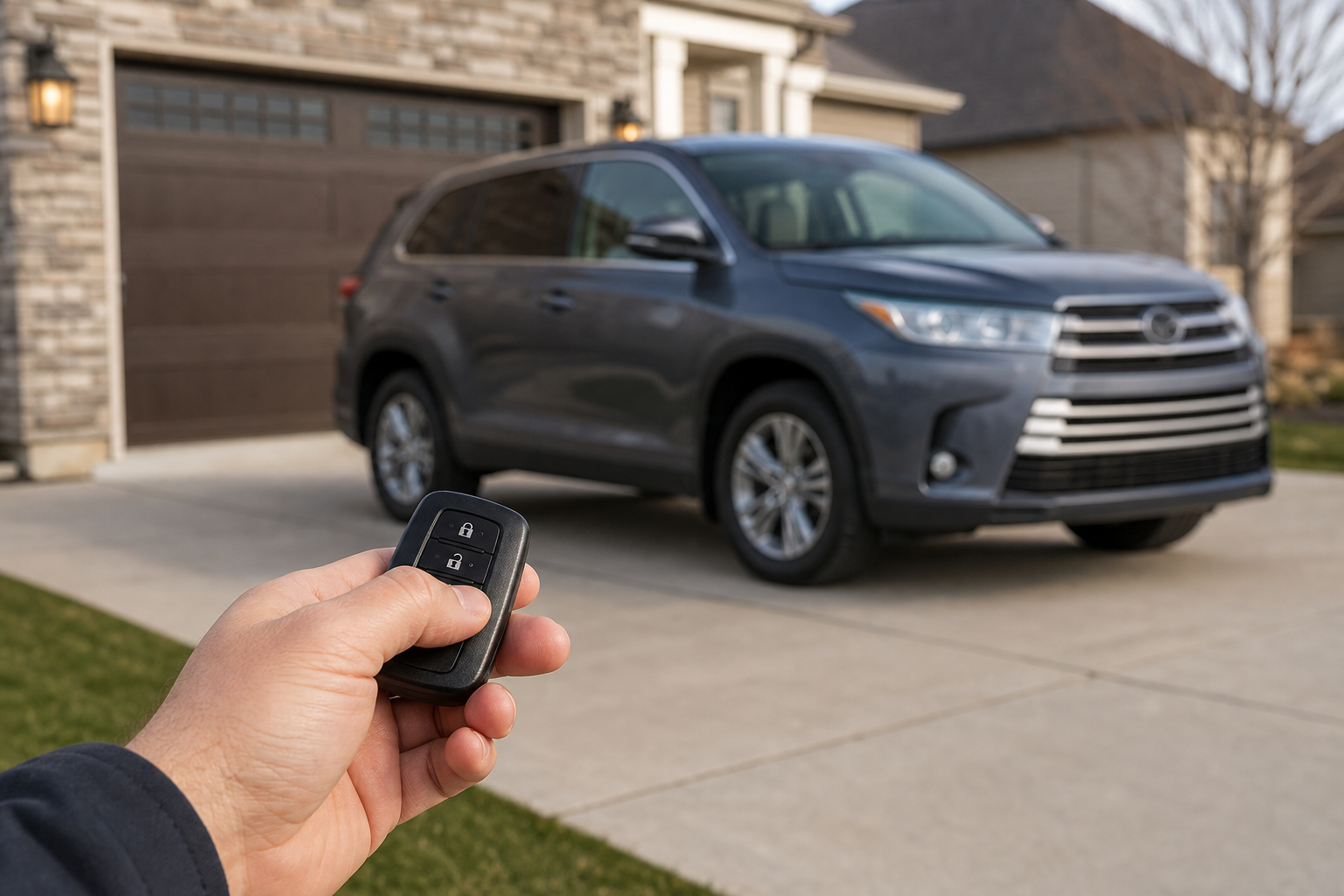
You’re standing in the driveway, pressing the remote start button on your Highlander’s key fob, and nothing happens. Maybe the horn doesn’t chirp, maybe it chirps but the engine never turns over, or maybe it starts and then shuts off after a few seconds. Before you assume something expensive is wrong, run through the quick checks below. Most remote start failures on the Highlander come down to a handful of repeatable causes, and you can rule most of them out in under five minutes.
Fast Checks Before You Assume the Worst
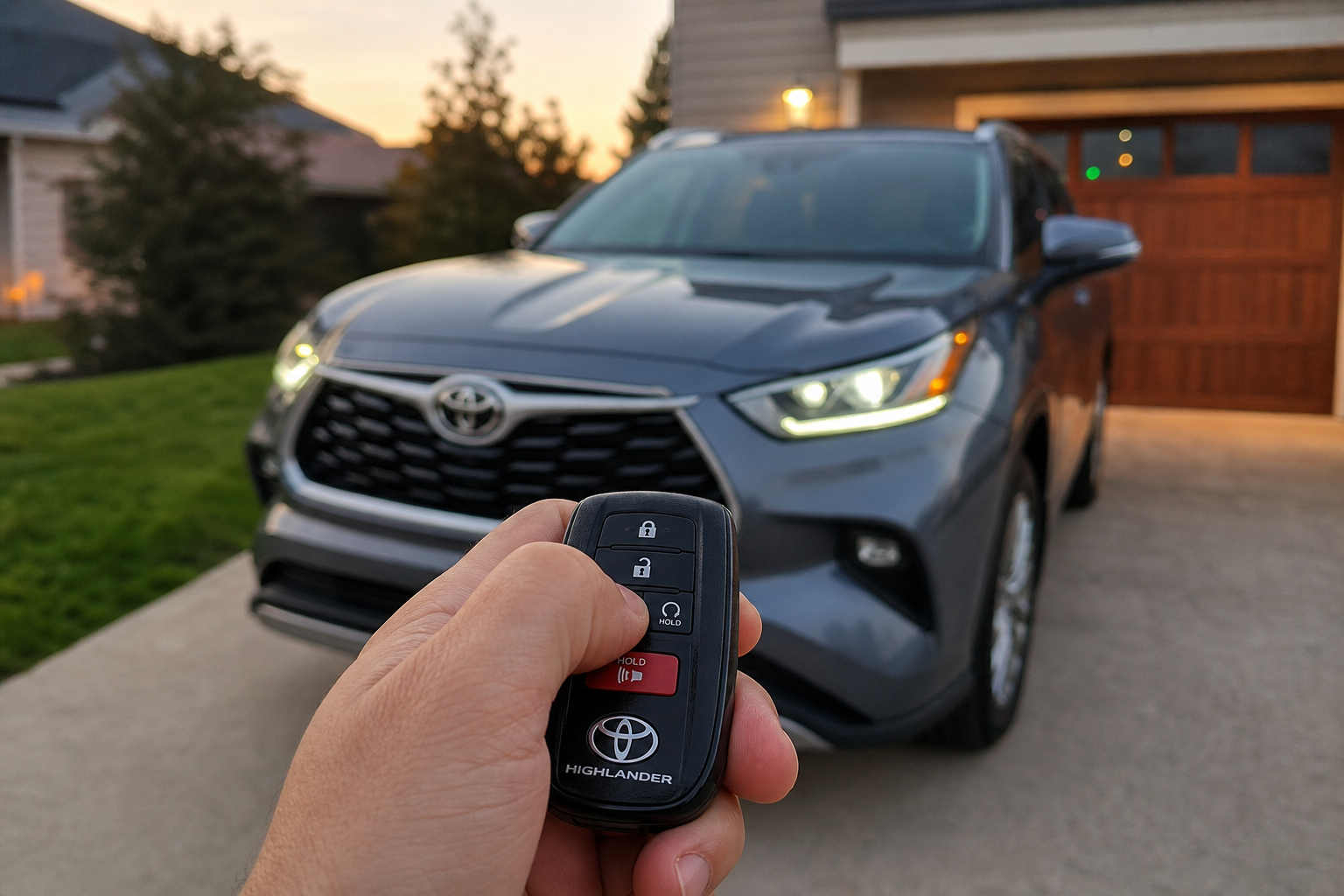
Start with the basics that trip up most owners. These take almost no time and solve the majority of remote start complaints.
- Key-fob button sequence: Toyota’s factory remote start requires a specific press pattern, usually lock, then lock and remote start together, held for a couple of seconds. Doing it too fast or in the wrong order won’t trigger the system.
- All doors, the hood, and the trunk must be fully closed and locked. The Highlander’s remote start will refuse to fire if any door is ajar or if the hood isn’t latched. This is one of the most common culprits.
- Fuel level: Some model years won’t remote start if the tank is very low, treating it as a safety cutoff.
- Warning lights: A check-engine light, an active airbag light, or certain other dashboard warnings can block remote start entirely until the issue is addressed.
- Key-fob battery: A weak fob battery is one of the sneakiest causes because the fob still works for unlocking doors up close, but doesn’t have enough range or power for the remote start signal.
- Vehicle battery voltage: If your 12-volt battery is weak, the Highlander’s computer may block remote start as a protective measure even though the battery has enough juice to run interior lights.
If your key fob is more than a couple of years old, replacing the battery is cheap insurance. Grab a Toyota Highlander key fob battery and swap it before you troubleshoot anything else. It takes two minutes and rules out one of the most common no-start complaints.
Toyota Highlander Key Fob Battery
A fresh fob battery fixes a surprising number of “remote start not working” complaints and costs almost nothing.
If the fob battery isn’t the issue, check your actual vehicle battery next. A battery that’s on its way out often shows symptoms like slow cranking or a car that dies overnight even when the alternator is fine, and that same weak charge is enough to disable remote start as a protective feature. Our guide on a car battery dies overnight but alternator is good walks through how to test voltage at home with a simple multimeter.
Factory Remote Start vs. Aftermarket Systems
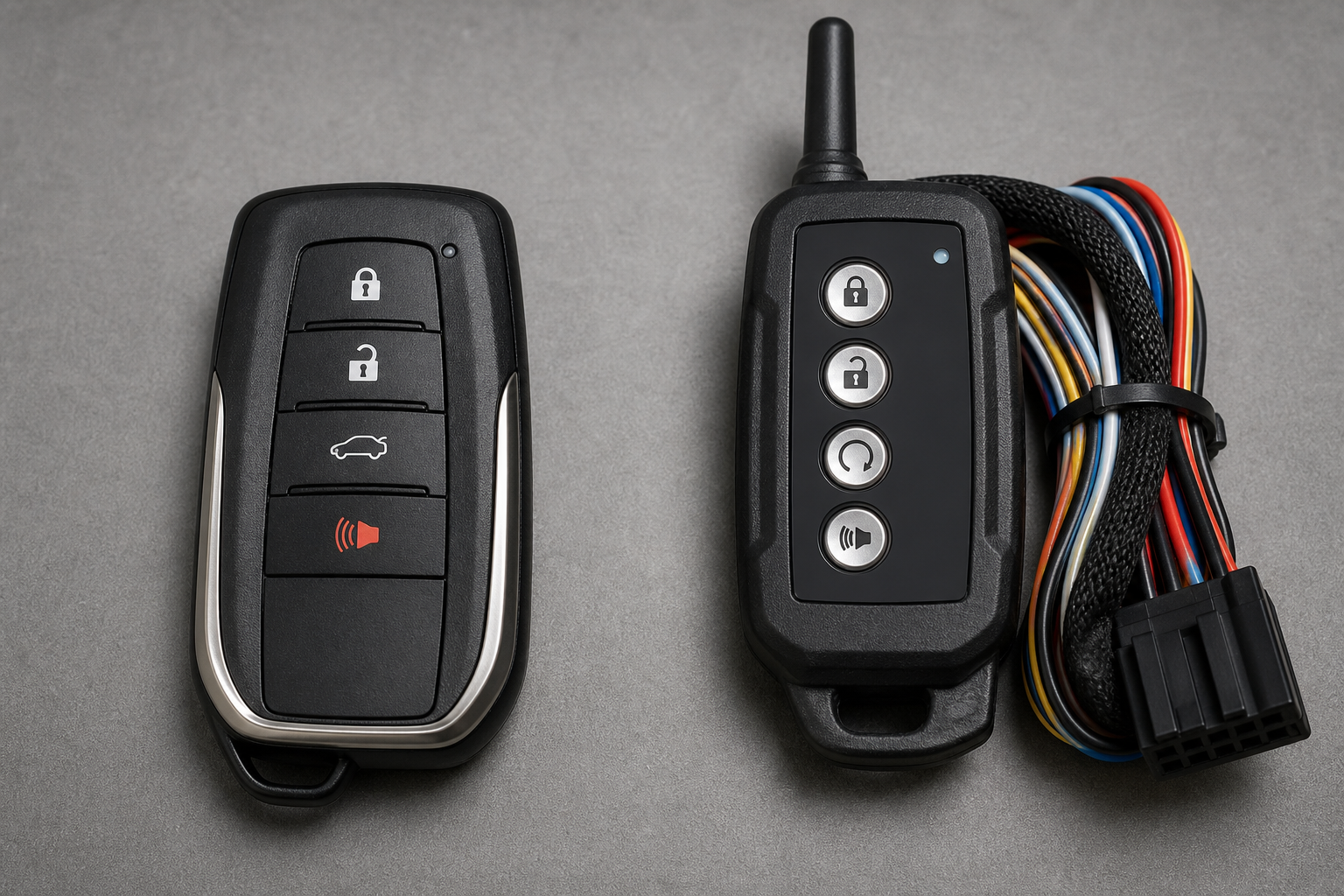
This distinction matters more than most owners realize, because the fixes are completely different depending on which system you have.
Factory Toyota Remote Start
If your Highlander came with remote start from the factory (common on XLE, Limited, and Platinum trims from around 2020 onward), it’s tied directly into the vehicle’s computer and immobilizer system. That means it respects strict lockout conditions: closed doors, closed hood, acceptable fuel level, no active safety warnings, and a fob with working battery. Toyota built these lockouts in on purpose, so if one of those conditions isn’t met, the system simply won’t engage no matter how many times you press the button.
On newer Highlanders, remote start may also route through the Toyota app rather than (or in addition to) the key fob. If you’re using the app, check that your Remote Connect subscription is active. Toyota includes a trial period with new vehicles, but it expires, and an expired subscription will silently disable app-based remote start even though everything else on the car works fine.
Aftermarket Remote Start Systems
If your Highlander is older or had remote start installed by a dealer or third-party shop (Compustar, Python, and Avital are common brands), you’re dealing with a separate module wired into the factory electronics. These systems have their own remote, their own battery, and their own diagnostic quirks, including LED status lights on the remote that blink in patterns to indicate specific fault codes.
Aftermarket units are also far more sensitive to a weak 12-volt battery than factory systems are, since they’re relying on a secondary computer to interpret signals correctly. If you’ve ruled out the basics and you have an aftermarket setup, check the module’s status light and cross-reference the blink pattern with the installer’s manual before assuming it’s broken. A shop that installed the system can usually reflash or reset the module in a few minutes.
If you’re shopping around for a reliable aftermarket unit or need a replacement remote, it’s worth looking at Compustar remote start systems, which tend to have better long-term reliability and clearer diagnostic feedback than budget alternatives.
Compustar Remote Start System
One of the more dependable aftermarket options with clear LED diagnostics when something goes wrong.
Model-Year Differences and Climate Settings
Toyota changed how remote start works more than once across Highlander generations, so a fix that works on a 2021 model might not apply to a 2015. Earlier Highlanders with factory remote start (2014 to 2019 in certain trims) used a simpler system with fewer lockouts, while 2020-plus models tie remote start more tightly into the touchscreen and app ecosystem.
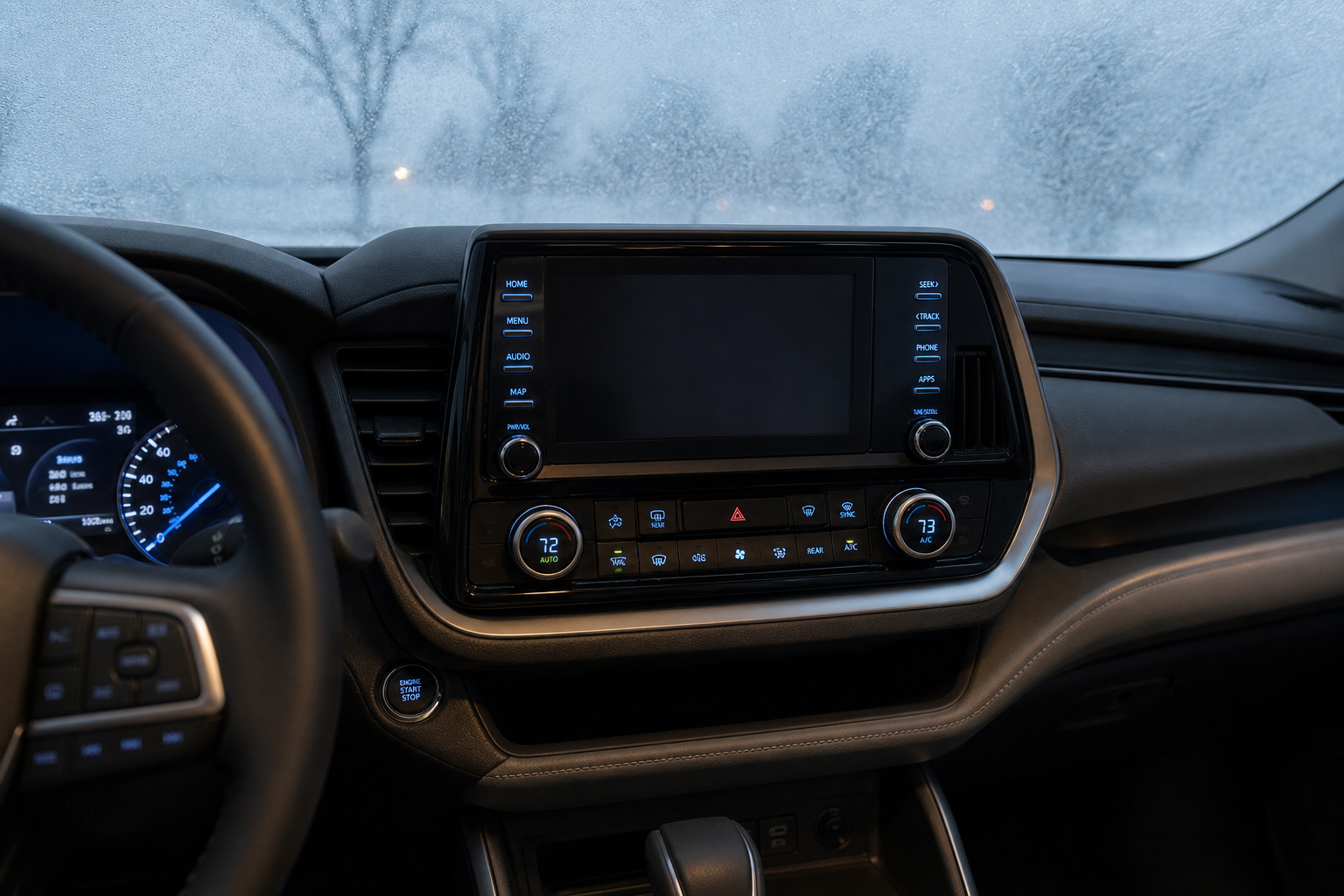
Climate settings can also cause confusion that looks like a remote start failure. If your climate control is set to a specific temperature and the system decides conditions don’t call for heating or cooling, some owners assume the remote start “didn’t work” when really the car started but the fan just isn’t blowing. Check your climate settings menu and make sure auto climate is enabled rather than manual fan control.
If you’re also dealing with unrelated warning lights around the same time, like a TPMS alert, it’s worth ruling those out separately rather than assuming they’re connected to the remote start issue. Our TPMS reset guide for Toyota vehicles covers the process, and while it’s written for the Camry, the steps are nearly identical across Toyota’s lineup.
Frequently Asked Questions
Why does my Highlander’s remote start work sometimes but not other times?
Inconsistent remote start almost always points to a marginal 12-volt battery or a fob battery that’s low but not dead. Both can produce intermittent behavior where the system works when conditions are ideal (warmer weather, fully charged battery) and fails when they’re not. Test your battery voltage with a multimeter; anything reading below 12.4 volts at rest is worth addressing.
Does remote start drain my Highlander’s battery faster?
Occasional use has minimal impact, but frequent remote starts in cold weather, where the engine runs longer to warm up and the battery works harder in the cold, can accelerate wear on an already aging battery. If you’re remote starting daily during winter and notice slower cranking afterward, it’s a sign your battery may need testing or replacement sooner rather than later.
This article contains affiliate links. We may earn a small commission at no extra cost to you.
Leave a Reply