
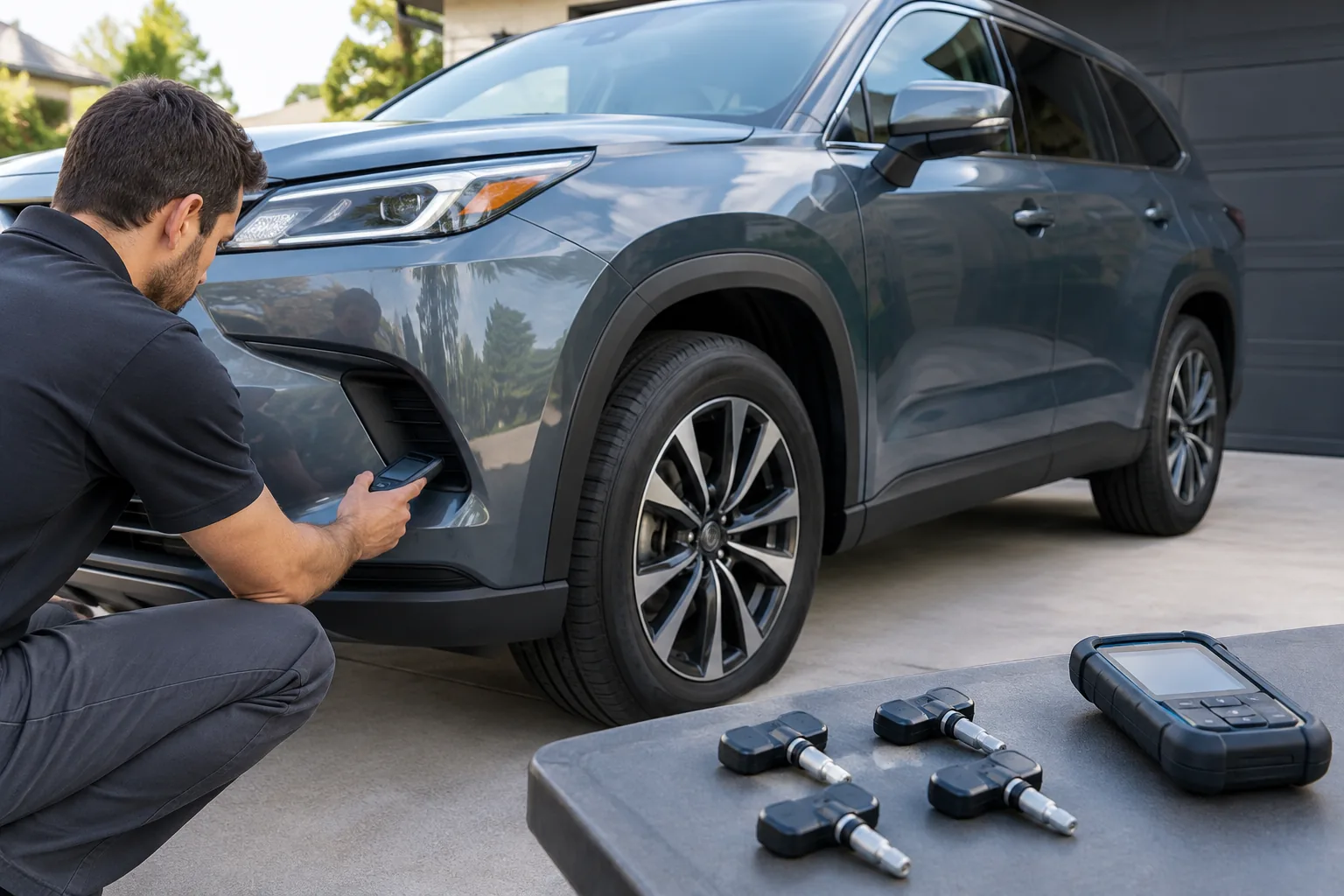
When the tire pressure light comes on in a Grand Highlander, the first move is to check the pressure in all four tires with a gauge, not to look for a reset. In most cases, setting each tire to the placard pressure is what the system is asking for. Initialization and sensor registration are separate jobs that only come up in specific situations.
This article covers what to do first, how the different TPMS terms differ, how to tell a low-pressure warning from a system fault, and which jobs you can handle yourself versus which belong at a tire shop. The exact menu names and steps vary by model year and trim, so I’ll point you to the right section of your owner’s manual instead of guessing.
Start With Cold Pressures, Not a Reset
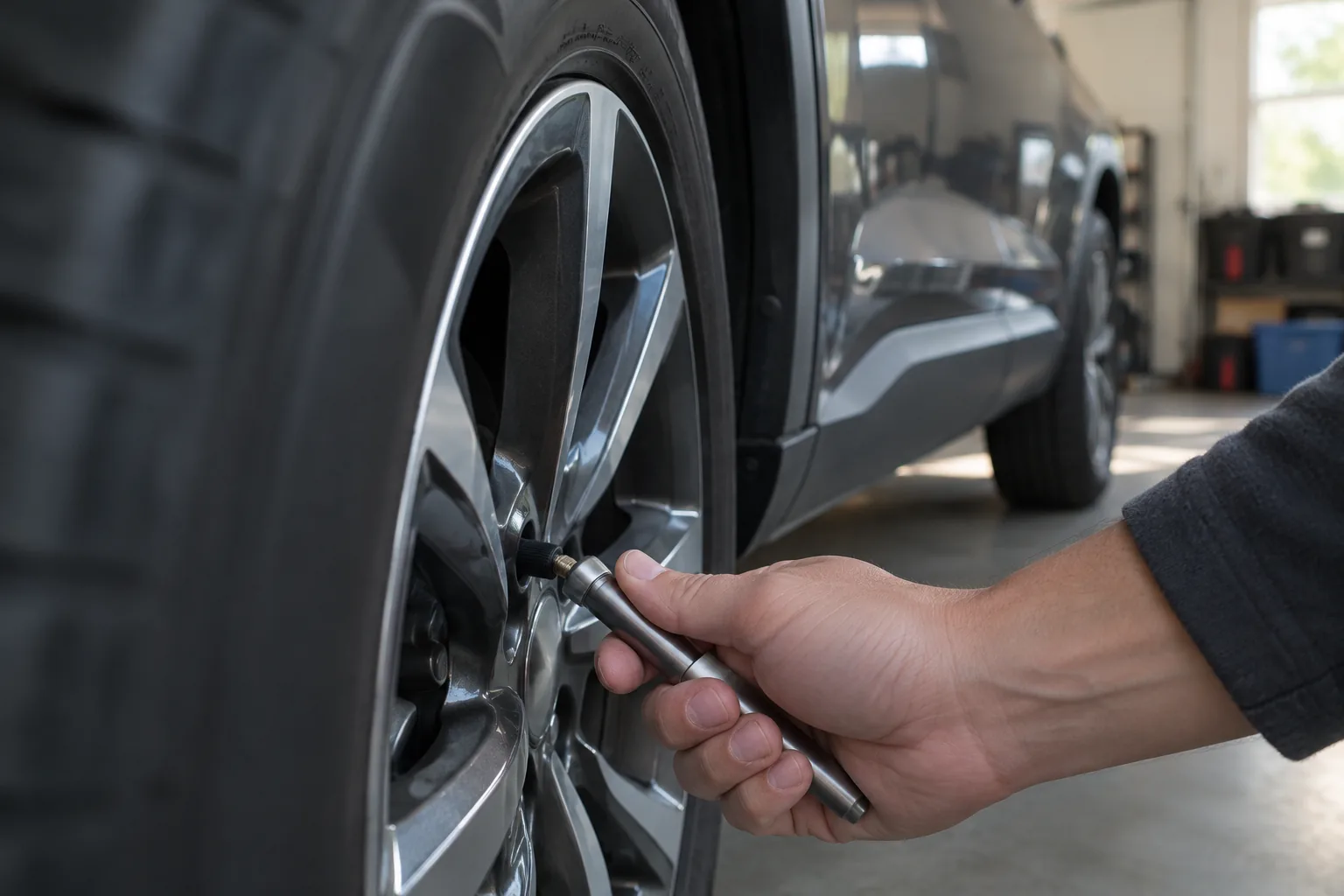
The Grand Highlander uses a direct tire pressure monitoring system, which means each wheel has its own pressure sensor. An indirect system estimates pressure from wheel speed, but that isn’t the setup here. Confirm this in the tire pressure warning section of your owner’s manual if you want to be certain for your build.
Before touching any setting, do this:
- Let the tires sit. Check them cold, meaning the vehicle has been parked for several hours or driven only a short distance. Warm tires read higher and can hide a real shortfall.
- Find the placard. It’s on the driver’s door jamb. Use that number, not the maximum pressure printed on the tire sidewall. Placard values can differ by tire size and trim, so don’t borrow a number from another Grand Highlander.
- Check all four tires with a reliable gauge, and inspect each one for nails, screws, a damaged sidewall, or a leaking valve stem.
- Inflate to the placard value and recheck. If a tire drops again within a day or two, that’s a leak, not a monitoring problem.
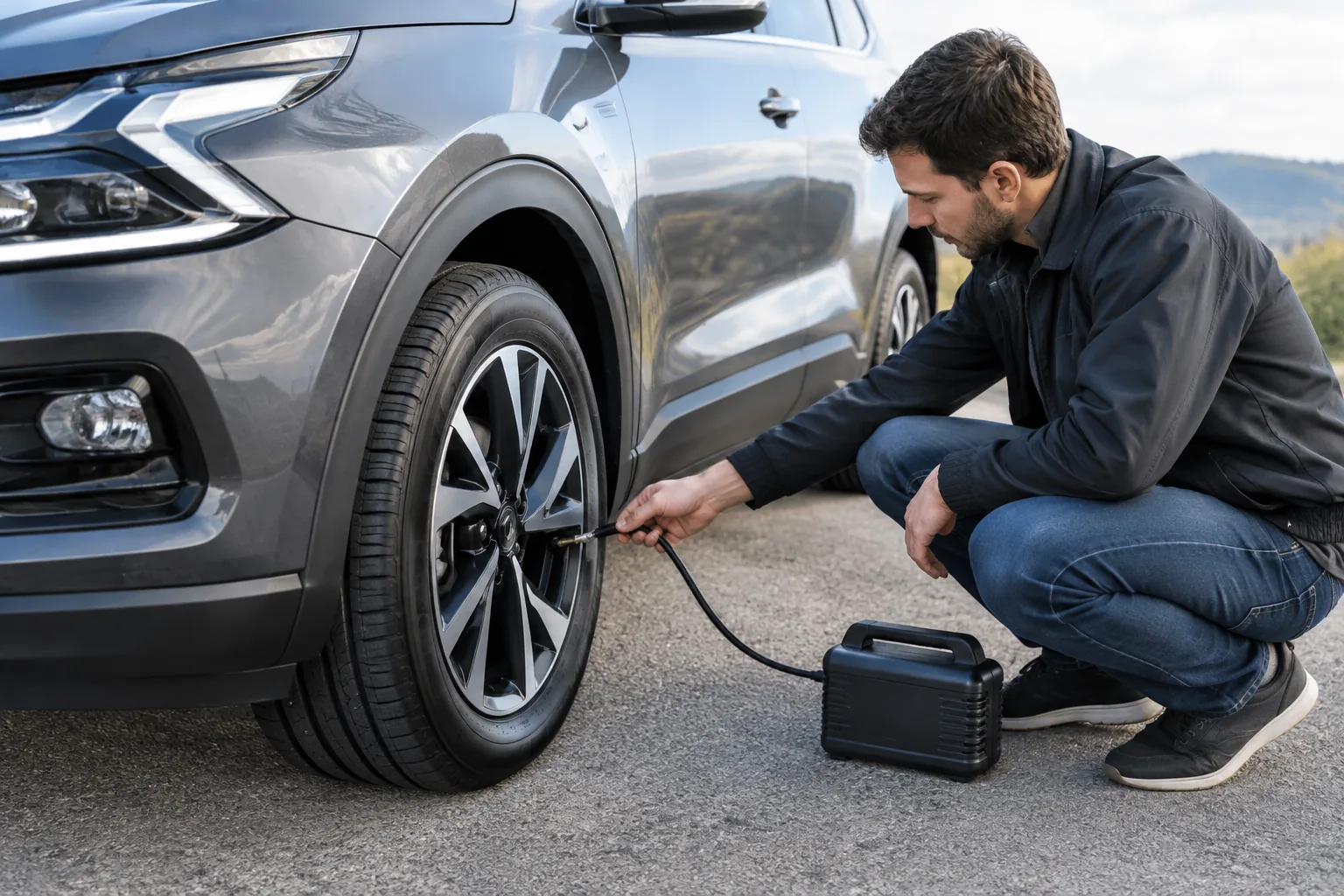
A portable inflator with a built-in gauge makes step four easy at home, and it saves you a trip to a gas station air machine with a questionable gauge. A portable tire inflator with a digital pressure gauge is purely for setting cold pressures. It has nothing to do with resetting or relearning sensors.

Portable Tire Inflator with Digital Pressure Gauge
Handy for topping off to the door-jamb placard pressure at home, and only for that purpose, not for TPMS resets or sensor work.
If you’re building out a home toolkit anyway, the must-have tools for every DIY car owner list is a reasonable place to start.
Five Terms That Get Mixed Up
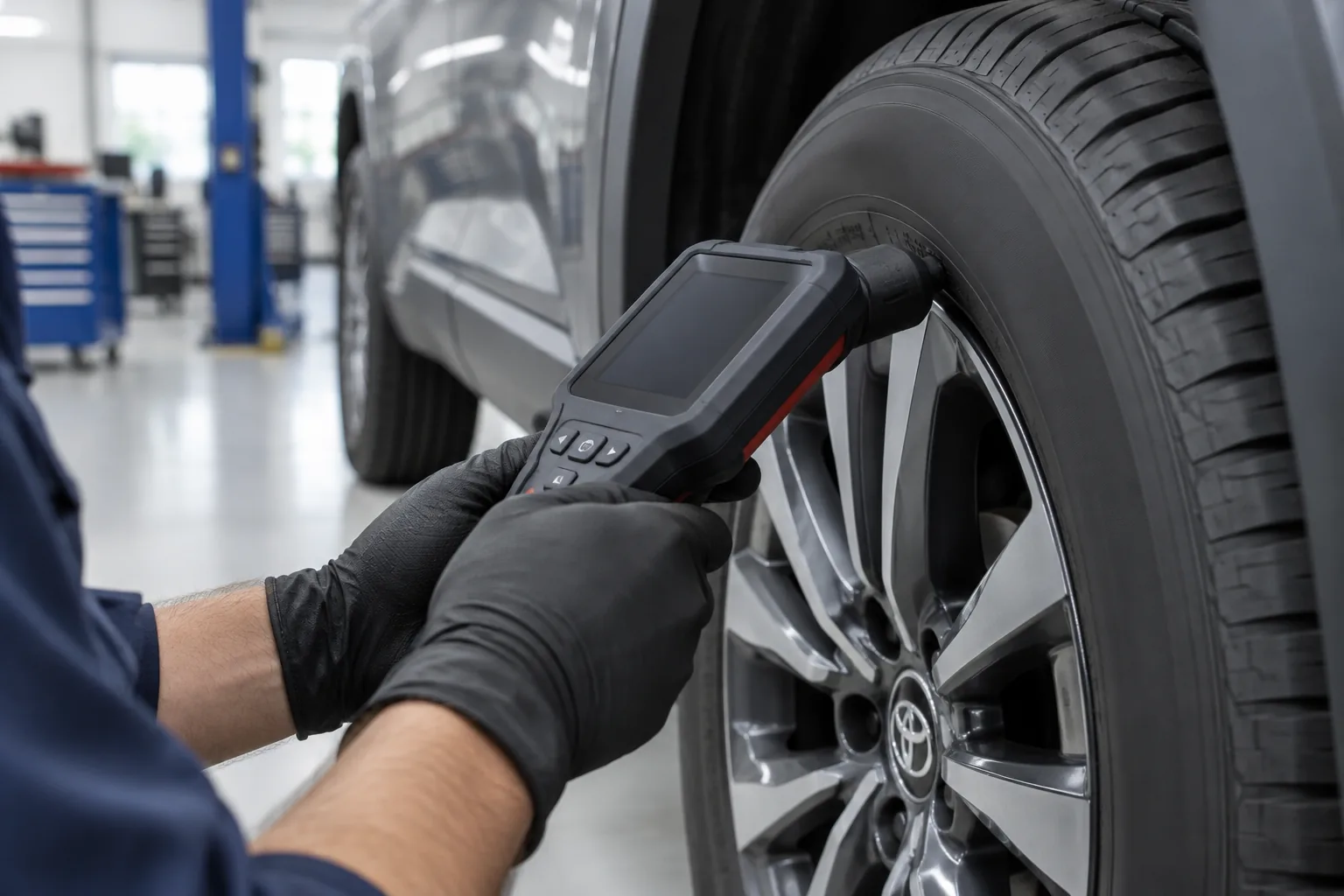
Most TPMS confusion comes from people using “reset” for five different things. Here’s how they separate:
- Pressure initialization: telling the system that the current pressures are the new baseline. Whether your Grand Highlander needs this, and how it’s done, depends on the manual for your model year.
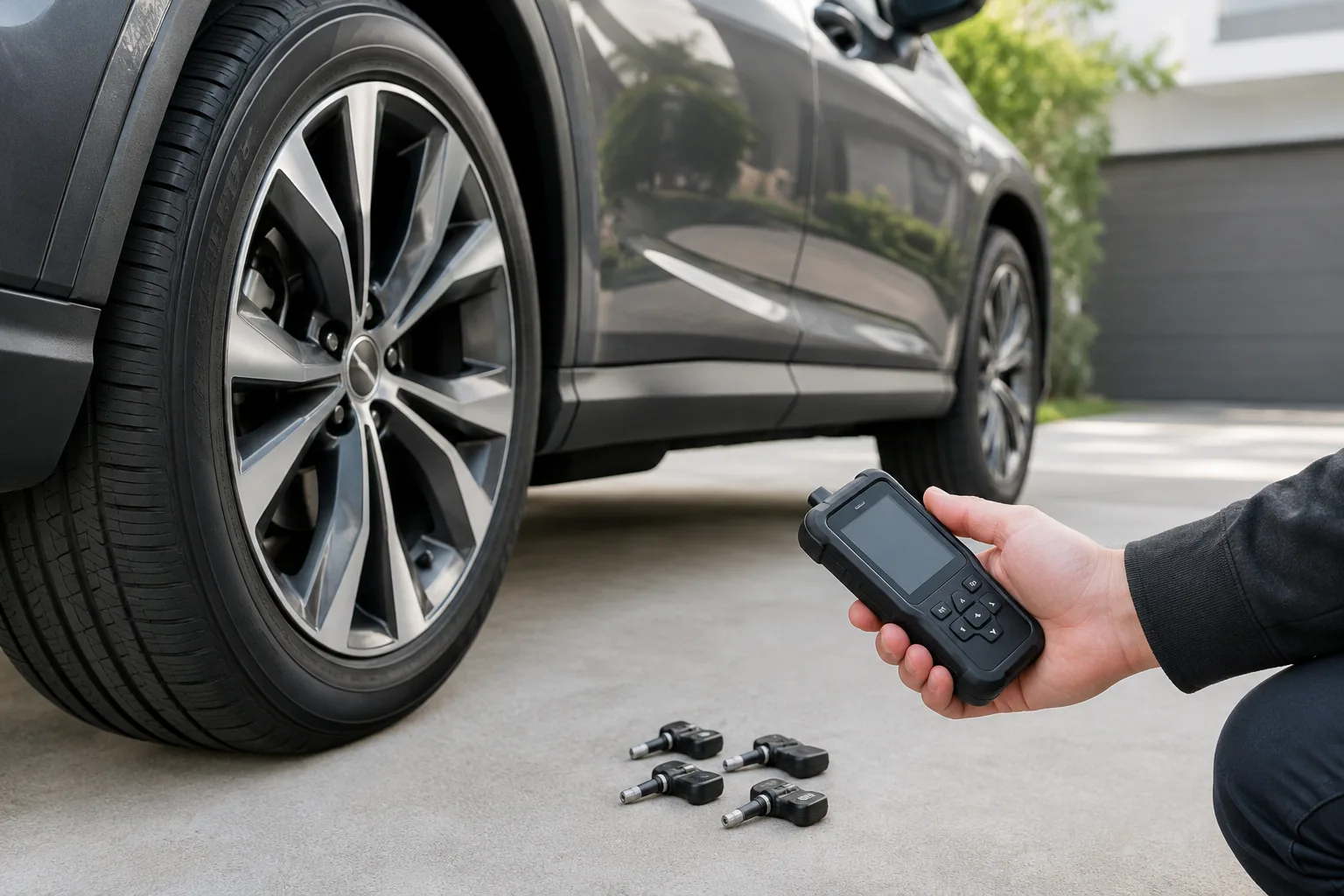
- Sensor activation: waking a sensor so it transmits. This is typically done with a TPMS tool, and it’s mainly relevant when sensors are new or being tested.
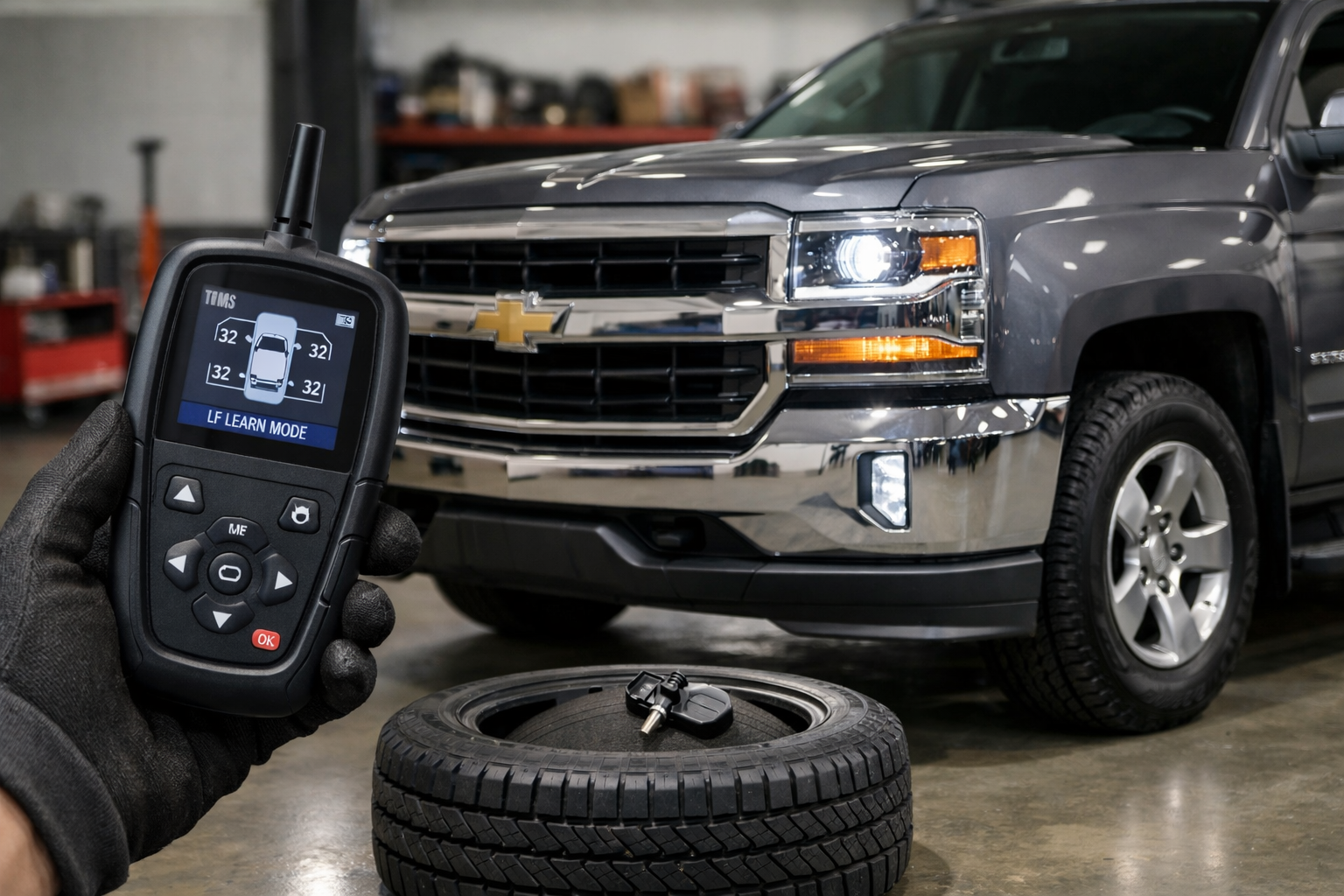
- Sensor-ID relearn or registration: getting the vehicle’s computer to recognize the unique ID of each sensor. This matters after sensor replacement or when you swap in a different wheel set with its own sensors.
- Sensor programming: writing an ID or protocol to a programmable aftermarket sensor. This needs compatible equipment.
- Fault diagnosis: finding out why the system reports a malfunction, such as a dead sensor battery, a missing sensor, or a communication issue.
Inflating a tire to the right pressure fixes none of the last four. And a basic OBD2 code reader can’t program or register TPMS sensors, so don’t expect a cheap scanner to handle any of this.
Low-Pressure Warning vs. Malfunction Indication
These two look similar on the dash but mean different things. A low-pressure warning means one or more tires have dropped below the threshold. A malfunction indication means the system itself can’t do its job properly.
On Toyota vehicles, the malfunction pattern is commonly a light that flashes for a period when you start the vehicle and then stays lit. A steady light with no flashing usually points to low pressure. Check the tire pressure warning section of your Grand Highlander owner’s manual for the exact behavior and any message that appears on the instrument cluster, since the details can vary with equipment and model year.
Cold weather can also trigger a low-pressure warning, because pressure falls as temperatures drop. That’s a legitimate warning, not a fault. Top off to the placard value and the situation usually resolves itself, though the manual will tell you whether the light needs anything else to go out.
Initialization and Sensor Registration: What You Can Do and What Needs a Shop
Don’t assume there’s a physical reset button, and don’t assume there’s a menu item either. Some Toyotas have had a button, others use a setting in the instrument cluster or infotainment menus, and the names change. Look in the tire pressure section of your manual for the specific procedure on your vehicle, if it lists one at all. I won’t give you a button location or menu path because I can’t confirm it for every trim and model year.
The same goes for any drive-cycle advice you’ll see on forums. A generic “drive for 10 minutes and it’ll clear” tip isn’t a substitute for what your manual says, so use the manual’s wording on timing and conditions.
Jobs You Can Reasonably Do Yourself
- Checking and adjusting cold pressures to the placard.
- Inspecting tires and valve stems for obvious damage or leaks.
- Running any initialization procedure the owner’s manual describes for owners.
Jobs for a Tire Shop or Dealer
- Sensor replacement: the sensor has to be compatible, and the new ID generally has to be registered with the vehicle.
- Swapping to a second wheel set (for example, winter wheels with their own sensors): whether the vehicle needs the IDs registered depends on how it’s set up, so confirm with the shop and your manual.
- Persistent malfunction indications: these call for a TPMS-capable scan tool to read sensor data and find the failing component.
- Tire rotation: check whether your manual calls for any TPMS step afterward. Don’t assume one is or isn’t needed. If it is, that step may require compatible equipment.
Tell the shop you drive a Grand Highlander and ask them to confirm that their tool supports your model year. Sensor compatibility and registration requirements are the kind of detail worth confirming before the work starts, not after.
FAQ
Why is my TPMS light on after I filled the tires?
Possible reasons include a tire you didn’t check (including a spare, if your manual says it’s monitored), pressures that were measured warm instead of cold, a slow leak, or a system malfunction. Recheck all tires cold against the door-jamb placard, then see what your manual says about how long the light takes to clear or whether initialization is needed.
Do I need to reset TPMS after a tire rotation?
Not necessarily, and it depends on the vehicle’s system and model year. Read the tire section of your owner’s manual for rotation guidance, and ask the shop that does the work. If your manual doesn’t call for a step, don’t invent one.
Can I register new TPMS sensors myself?
Usually not without the right equipment. Registration or programming typically requires a TPMS-capable tool, and a basic OBD2 reader won’t do it. A tire shop or Toyota dealer can handle replacement and registration, and they can also diagnose a sensor that isn’t reporting.
Leave a Reply