
The right tonneau cover is the one whose opening method suits what you carry. A low closed surface can make several designs look similar, but the differences become obvious when you load a tall item, reach equipment beside the cab or try to add a rack. Choose the movement and space requirements first; compare finishes afterward.
This guide compares three common designs rather than ranking untested products. Construction, latches, seals and applications vary within each type. Use the Amazon searches as a starting point, then select your exact truck year, generation and measured bed length. The illustrations show generic mechanisms, not an installation or a particular product.
Soft roll-up: a compact way to uncover the bed
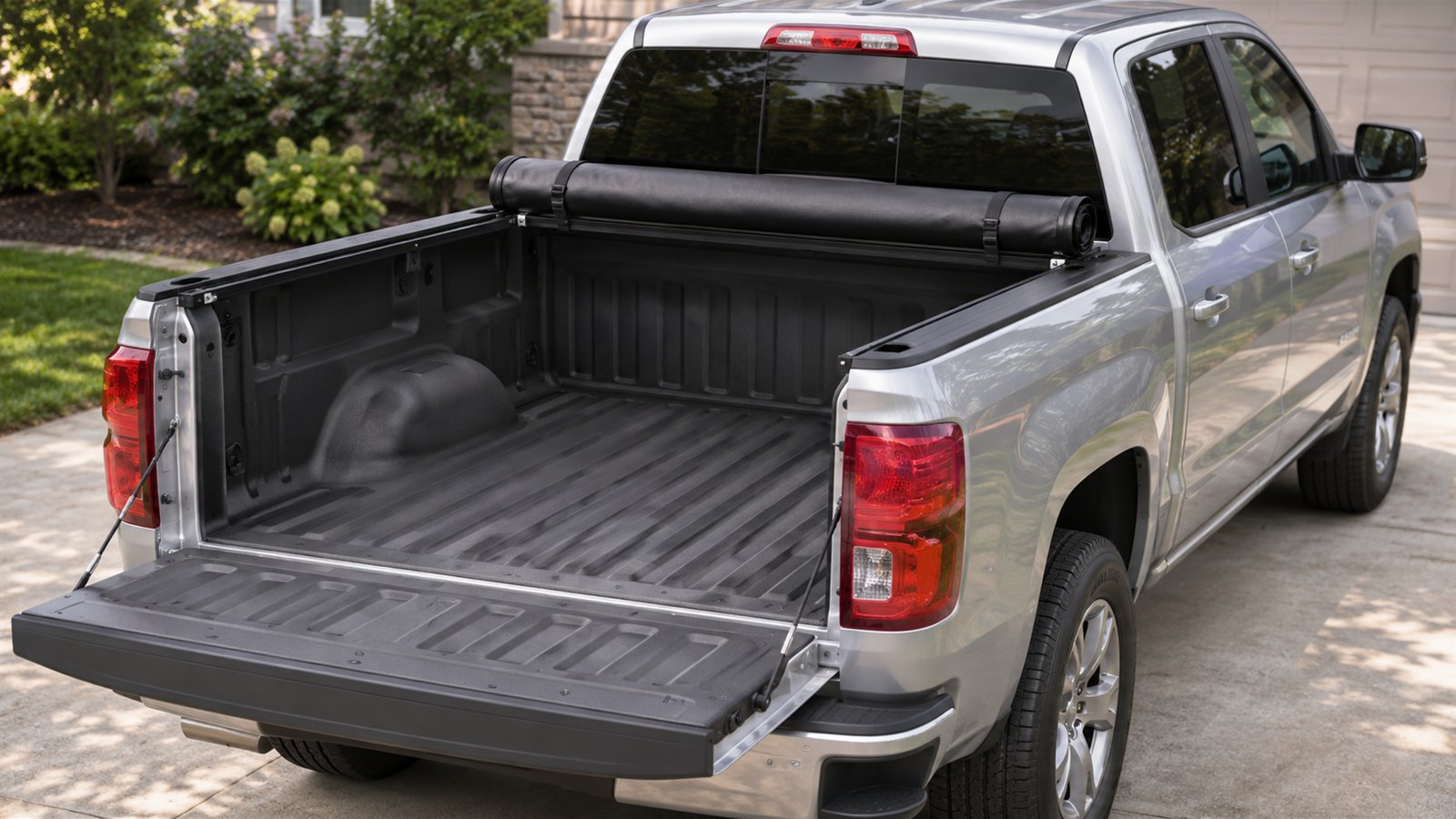
A soft roll-up cover uses a flexible top that rolls toward the cab. The rolled material usually occupies a relatively small area at the front compared with a retractable cover’s fixed canister. Side rails and cross supports still deserve attention: an apparently open bed is not necessarily clear of all cover hardware.
This is worth considering if you often switch between a covered bed and tall cargo. Compare how the rolled cover is secured, how much access remains behind it and whether removal is straightforward when you need the space. Some systems require you to adjust fabric tension; check the actual instructions rather than assuming every soft cover operates identically.
The flexible surface should not be treated as a load deck. Closing a cover can conceal cargo, but concealment is different from a proven theft barrier. Examine the closure, tailgate interaction and material limitations before deciding what you would leave inside.
Compare options on Amazon: Browse soft roll-up covers for your truck
Hard folding: panels that move in stages
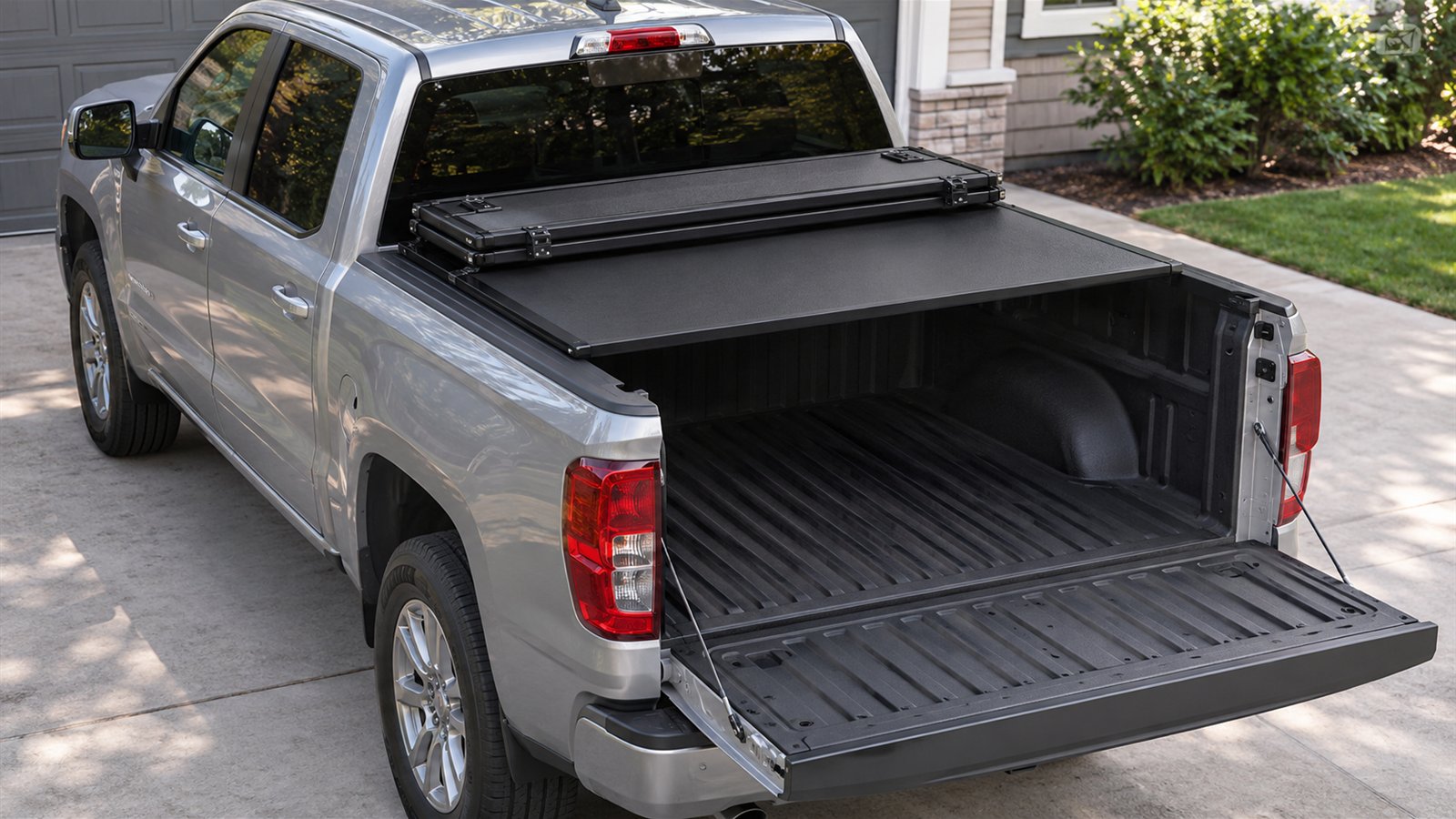
A hard folding cover divides the top into panels. You can usually expose part of the bed without rolling fabric, although the number of panels and the final open position depend on the design. Some arrangements leave a stack near the cab; others have an upright position that requires its own supports and driving instructions.
Think through the largest thing you regularly load. If the cover is folded forward, can you still see what you need through the rear window? Does the panel stack reduce clearance for a toolbox, rack or tall load? Ask whether the cover must be removed for full access, and how heavy or awkward that operation would be.
Hard panels alone do not establish a carrying rating. A maker may specify a distributed surface load for a particular model, but that figure is not permission to stand on the cover, attach a rack to it or concentrate weight in one small area. Use the exact product specification.
Compare options on Amazon: Browse hard folding covers for your truck
Retractable: check the canister before the finish
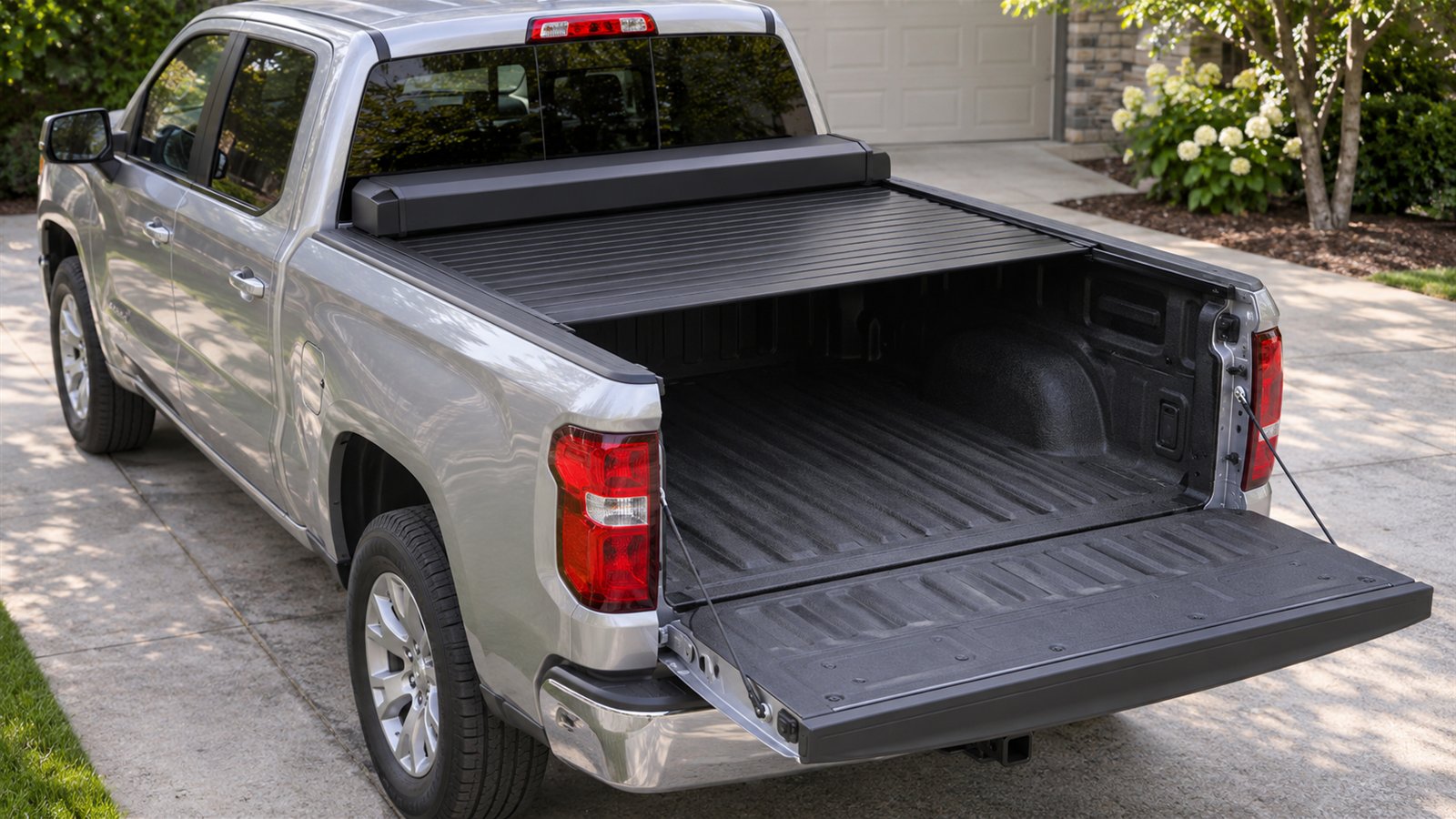
A retractable cover draws its slats into a housing near the cab. That can make partial opening convenient, but the canister remains part of the bed layout. Its width, depth and height matter if you carry a cooler, toolbox or long equipment along the bed floor.
Compare the opening controls, stopping positions and drain arrangement. Manual and powered versions add different requirements; a powered cover also needs its specified electrical installation. Check how maintenance access works when another accessory sits nearby.
Some retractable systems offer accessory tracks, but that does not make every rack compatible. Track shape, mounting hardware, the exact vehicle application and the rated complete combination must agree. Buy a documented system rather than assuming any two pieces with a slot will work together.
Compare options on Amazon: Browse retractable covers for your truck
Compare the space you lose, not just the space you gain
| Your priority | Questions to ask |
|---|---|
| Frequent tall cargo | How is the cover secured open, and which rails or stacks remain? |
| A toolbox behind the cab | Can both lids or mechanisms move through their full range? |
| A future bed rack | Is the exact rack/cover/application combination documented? |
| Weather-sensitive cargo | What does the maker actually promise, and do you need separate sealed containers? |
| Easy removal | What tools, lifting and storage space does removal require? |
| Everyday access | Can you reach the part of the bed you use most without moving everything? |
Measure the available space with the cover open and closed. Include handles, latches and moving panels, not just the main surface. Factory bed-rail systems, rail caps and drop-in liners can affect how clamps and brackets fit. A nominal bed name such as ‘short bed’ is not enough to place an order.
A low-looking cover is not necessarily better for your use. A slightly more visible design that clears your toolbox and is easy to open may be the more sensible choice. Choose the practical combination before trying to make the closed truck look perfectly flush.
Keep weather protection and security claims specific
Do not read ‘covered’ as ‘waterproof.’ RealTruck distinguishes water resistance from waterproofing in its roll-up-cover guidance. Seals, tailgate gaps, drainage and installation all affect what happens in actual weather. Electronics, clothing and paperwork may still need suitable closed containers.
Similarly, a lockable tailgate, a cover latch and a cut-resistant surface are different features. None justifies a blanket promise that the whole bed is secure. Read the maker’s stated limitations and decide what belongs in the bed when the truck is unattended.
Our 2016–2023 Tacoma styling gallery shows how low hard covers and soft covers change the appearance of the same truck generation. The pictures explain the look, not a product application or operating method. Use the cover maker’s instructions for opening, closing and securing the equipment for travel.
A short buying checklist
- Confirm model year, body generation, bed measurement and installed rail equipment.
- Check the open position against your largest regular load.
- Account for canister, panel stack, clamps, drains and tailgate movement.
- Get written compatibility for a toolbox or rack combination.
- Review maintenance, removal and warranty terms for the exact cover.
If you are choosing your first cover, photograph the empty bed and list the loads you carry in an ordinary month. That gives you a useful way to compare products without being distracted by a long list of features you may never use.
Leave a Reply