
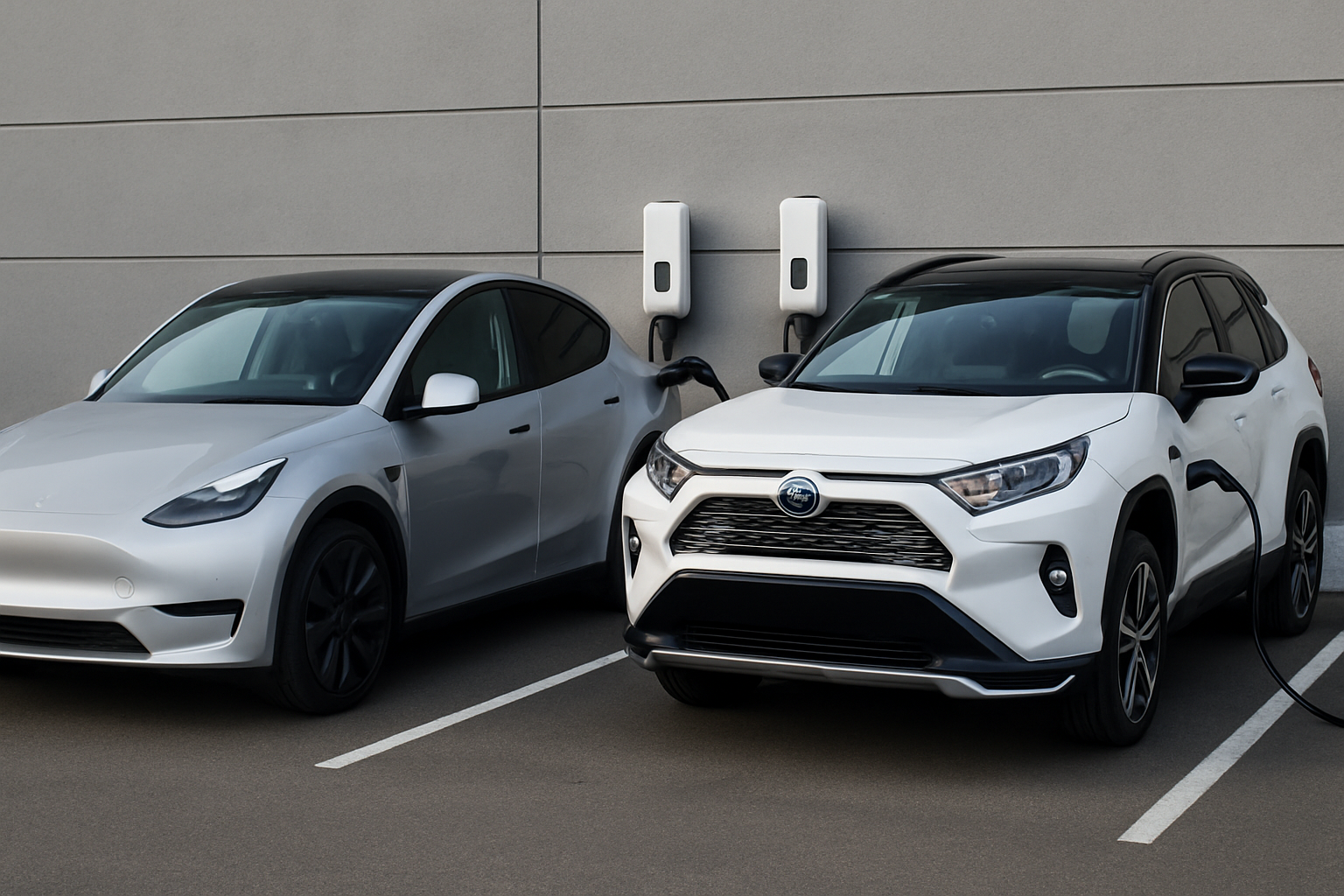
When you’re shopping for a new vehicle in 2024, the choice between electric and plug-in hybrid powertrains has never been more compelling. The Tesla Model Y and Toyota RAV4 Prime represent two of the most popular approaches to reducing fuel costs and emissions, but which one actually saves you more money over five years of ownership?
I’ve crunched the real-world numbers on both vehicles, factoring in purchase price, fuel costs, insurance, maintenance, and depreciation to give you the complete financial picture. The results might surprise you.
Purchase Price Comparison
The 2024 Tesla Model Y starts at $47,740 for the base Long Range version, while the 2024 Toyota RAV4 Prime XSE begins at $44,270. That gives Toyota a $3,470 advantage upfront.
However, federal tax credits change this calculation significantly. The Model Y qualifies for the full $7,500 federal EV tax credit, bringing your effective price down to $40,240. The RAV4 Prime also qualifies for federal incentives, but only $2,500 as a plug-in hybrid.
After federal incentives, you’re looking at $40,240 for the Model Y versus $41,770 for the RAV4 Prime. Tesla takes a $1,530 lead once tax credits are applied.
Energy Costs: Electricity vs Gas and Electric
This is where the comparison gets interesting. The Model Y uses only electricity, while the RAV4 Prime runs on both electric power and gasoline depending on your driving habits.
Tesla Model Y Energy Costs
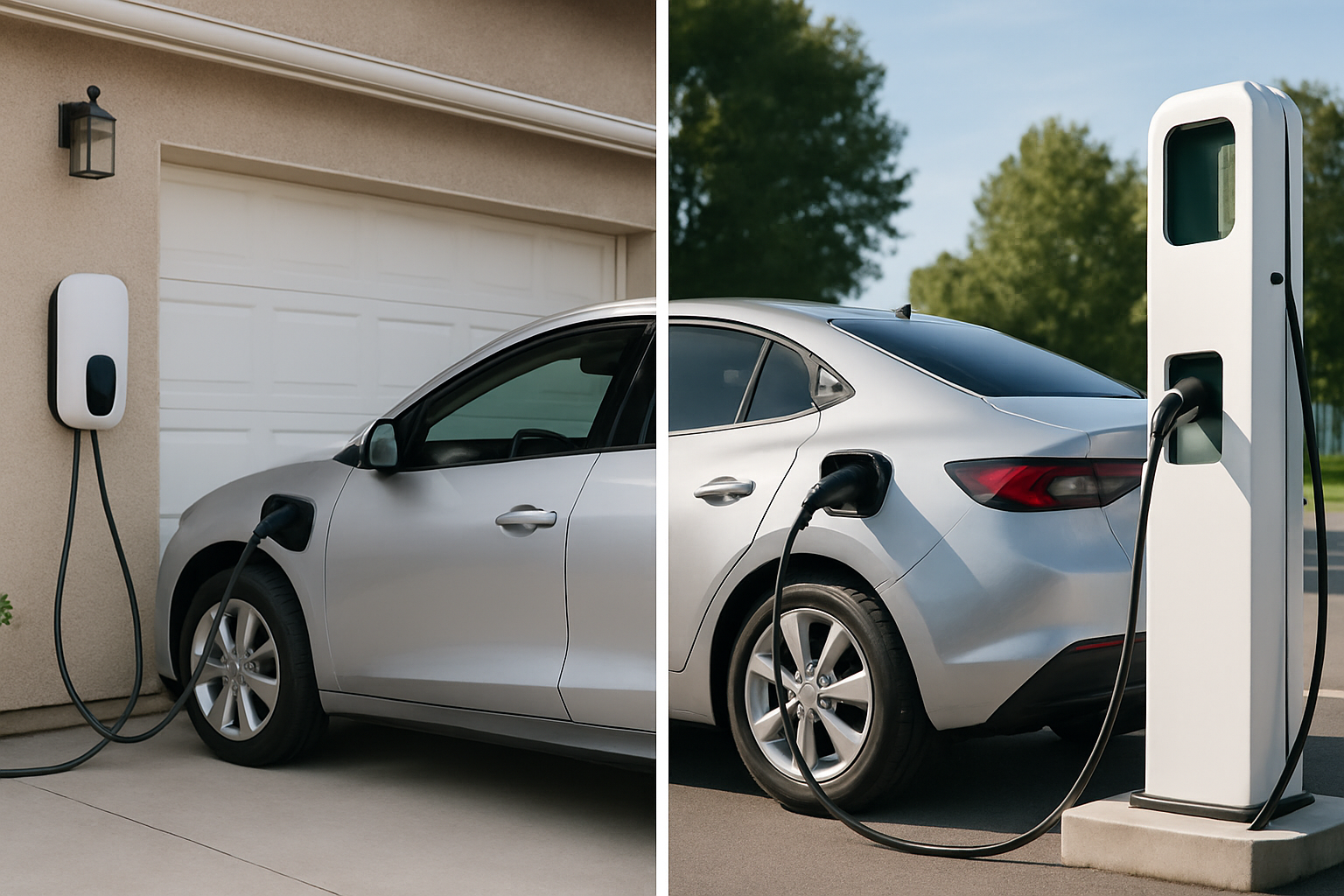
The Model Y achieves about 125 MPGe combined according to EPA ratings. Using the national average of $0.16 per kWh for home charging, you’ll spend roughly $1,280 per year on electricity for 12,000 miles of driving.
If you rely heavily on public fast charging, your costs increase significantly. DC fast charging averages $0.35 per kWh nationally, which would push your annual energy costs to around $2,688 for the same mileage.
RAV4 Prime Energy Costs
The RAV4 Prime’s costs depend entirely on how much you drive in electric mode versus gas mode. With 42 miles of EPA-rated electric range, many drivers can handle daily commutes on electric power alone.
If you drive 50% electric and 50% gas, you’ll spend about $960 annually on electricity and $1,200 on gasoline (at $3.50/gallon), totaling $2,160 per year. Drive mostly on gas power, and your annual fuel costs jump to around $2,400.
The key advantage goes to Toyota if you can maximize electric driving, or to Tesla if you primarily charge at home.
Insurance Costs Reality Check
Insurance costs often surprise new EV buyers. Tesla vehicles consistently rank among the most expensive to insure due to high repair costs and parts availability issues.
The Model Y averages $2,200 annually for full coverage insurance. The RAV4 Prime comes in significantly lower at about $1,650 per year. Over five years, you’ll spend approximately $2,750 more insuring the Tesla.
These numbers vary by location and driving record, but the gap between the two remains consistent across most insurance providers.
Maintenance: Where Each Vehicle Excels
Pure electric vehicles like the Model Y require minimal scheduled maintenance. You’ll spend roughly $400 annually on tire rotations, cabin air filters, and brake fluid changes. Tesla’s regenerative braking means brake pads last significantly longer than traditional vehicles.
The RAV4 Prime requires traditional maintenance for its gasoline engine plus electric system service. Annual maintenance costs average around $650, including oil changes, filter replacements, and hybrid system inspections.
Over five years, the Model Y saves you approximately $1,250 in maintenance costs compared to the RAV4 Prime.
Depreciation: The Big Unknown
Depreciation represents the largest cost of vehicle ownership, and it’s where predictions get tricky. Tesla vehicles have shown strong resale values historically, but the EV market is evolving rapidly.
Current data suggests the Model Y retains about 65% of its value after three years. The RAV4 Prime, benefiting from Toyota’s reputation for reliability and limited supply, holds approximately 70% of its value over the same period.
For five-year projections, expect the Model Y to retain around 50% of its original value, while the RAV4 Prime should hold closer to 55%. This gives the Toyota a $2,500 advantage in resale value based on post-incentive purchase prices.
Five-Year Total Cost Breakdown
Here’s how the numbers stack up for five years of ownership with 12,000 miles driven annually:
Tesla Model Y Long Range
- Purchase price after incentives: $40,240
- Energy costs (home charging): $6,400
- Insurance: $11,000
- Maintenance: $2,000
- Depreciation: $20,120
- Total five-year cost: $79,760
Toyota RAV4 Prime XSE
- Purchase price after incentives: $41,770
- Energy costs (50% electric driving): $10,800
- Insurance: $8,250
- Maintenance: $3,250
- Depreciation: $18,797
- Total five-year cost: $82,867
The Model Y comes out ahead by $3,107 over five years, assuming optimal charging habits and typical driving patterns.
Real-World Factors That Change Everything
These calculations assume ideal conditions, but real-world usage can shift the advantage significantly.
If you can’t charge at home and rely on public fast charging, the Model Y’s energy costs nearly double, making the RAV4 Prime the clear winner. Conversely, if you have solar panels or very cheap electricity rates, Tesla’s advantage grows.
Long-distance drivers favor the RAV4 Prime due to its 600+ mile total range and quick gas station stops. The Model Y requires more planning for road trips, though Tesla’s Supercharger network continues expanding.
Climate affects both vehicles differently. Cold weather reduces the Model Y’s range by 20-30%, while the RAV4 Prime’s gas engine provides consistent performance regardless of temperature.
State Incentives Can Tip the Scale
Several states offer additional rebates that can dramatically change these calculations. California provides up to $7,000 in additional EV rebates, while states like Colorado offer $5,000 for electric vehicles and $2,500 for plug-in hybrids.
Check your state’s current incentive programs before making a final decision, as these can easily shift the five-year cost advantage by $5,000 or more.
Which Vehicle Wins for Your Situation
The Model Y makes financial sense if you can charge at home, drive mostly local miles, and value the latest technology. Its lower maintenance costs and energy efficiency shine in suburban and urban environments.
Choose the RAV4 Prime if you frequently drive long distances, lack reliable home charging, or prioritize fuel flexibility. Its lower insurance costs and proven reliability make it the safer financial choice for many buyers.
Both vehicles offer compelling ownership experiences, but your driving patterns and local infrastructure determine which one actually saves you money over five years.
Frequently Asked Questions
Does the Tesla Model Y qualify for HOV lane access?
Most states allow single-occupant HOV lane access for the Model Y since it’s fully electric. The RAV4 Prime typically doesn’t qualify for HOV access as a plug-in hybrid. Check your local regulations, as rules vary by state.
What happens if I mostly drive on gas in the RAV4 Prime?
If you rarely plug in the RAV4 Prime, your fuel costs increase to around $2,400 annually, and you lose most of the financial advantage over conventional vehicles. The Prime works best when you maximize electric driving for daily use.
Are there hidden costs I should consider?
Both vehicles may require home charging equipment installation, costing $500-2,000 depending on your electrical setup. The Model Y might need more frequent tire replacements due to its weight and performance, adding $200-400 annually.
How reliable are these cost projections long-term?
Energy costs and depreciation can vary significantly based on market changes, new model releases, and infrastructure development. These projections reflect current conditions but should be revisited as the EV market evolves.
Leave a Reply