
A useful fishing setup should be easy to put in on Friday and take out afterward. Start with the gear you actually carry: rods in suitable transport cases, a manageable tackle bag, drinking water and a cooler if the trip requires one. You do not need to turn the truck into a permanent outdoor display.
This guide uses a 2018 SR5 Double Cab short-bed Tacoma as its starting point. Other cabs, long beds, factory bed equipment and later special editions change the available space. The illustrations show generic parked arrangements, not approved tie-down installations or exact accessory products.
Measure the packed rods first
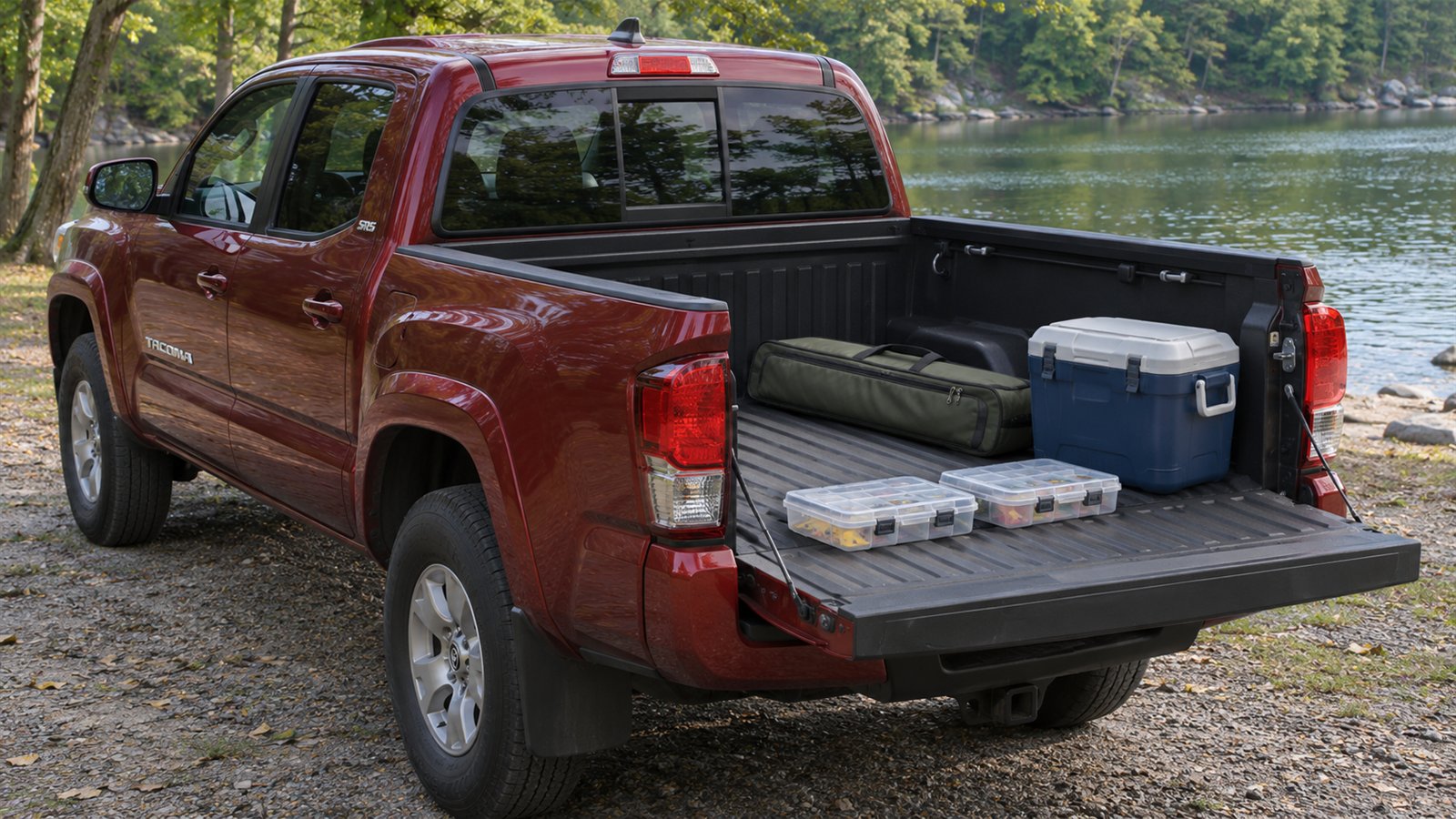
The transport length of your actual rods determines more of the layout than the size of a tackle box. Measure the longest closed case or tube, including handles and end caps. Compare it with the usable bed and cab spaces without blocking the driver’s view or passenger areas.
Do not assume a nominal five-foot bed fits a five-foot object in every practical orientation. A cooler, wheel housing, toolbox or cover mechanism may occupy part of the route. If your gear needs a purpose-built external carrier, choose a documented vehicle/rack/carrier combination rather than improvising a holder on the side of the bed.
Keep hooks, lures and rod tips contained during transport. A padded case can organize and protect equipment, but it still needs appropriate restraint. The tailgate arrangement in the picture is for sorting equipment while parked.
Compare options on Amazon: Compare padded rod transport cases · Browse protective rod tubes
Build a small tackle kit you can carry in one trip
Choose the boxes that match the tackle you use rather than filling a large bag because there is space. A few shallow closed boxes are easy to sort at home and move to a bank or picnic area. Put small tools in their own closed compartment so they are not loose among lures.
Check the outside dimensions of the complete bag, with pockets loaded. Handles and zips take up space too. A box described as water-resistant does not justify leaving it exposed to every condition; read its own specification and inspect seals and latches periodically.
Separate wet equipment after use. A dedicated washable container or bag for damp items helps keep clothing and clean gear apart until you can dry them properly at home.
Compare options on Amazon: Browse compact tackle bags · Compare shallow tackle organizers
Give the cooler a position with a clear loading path
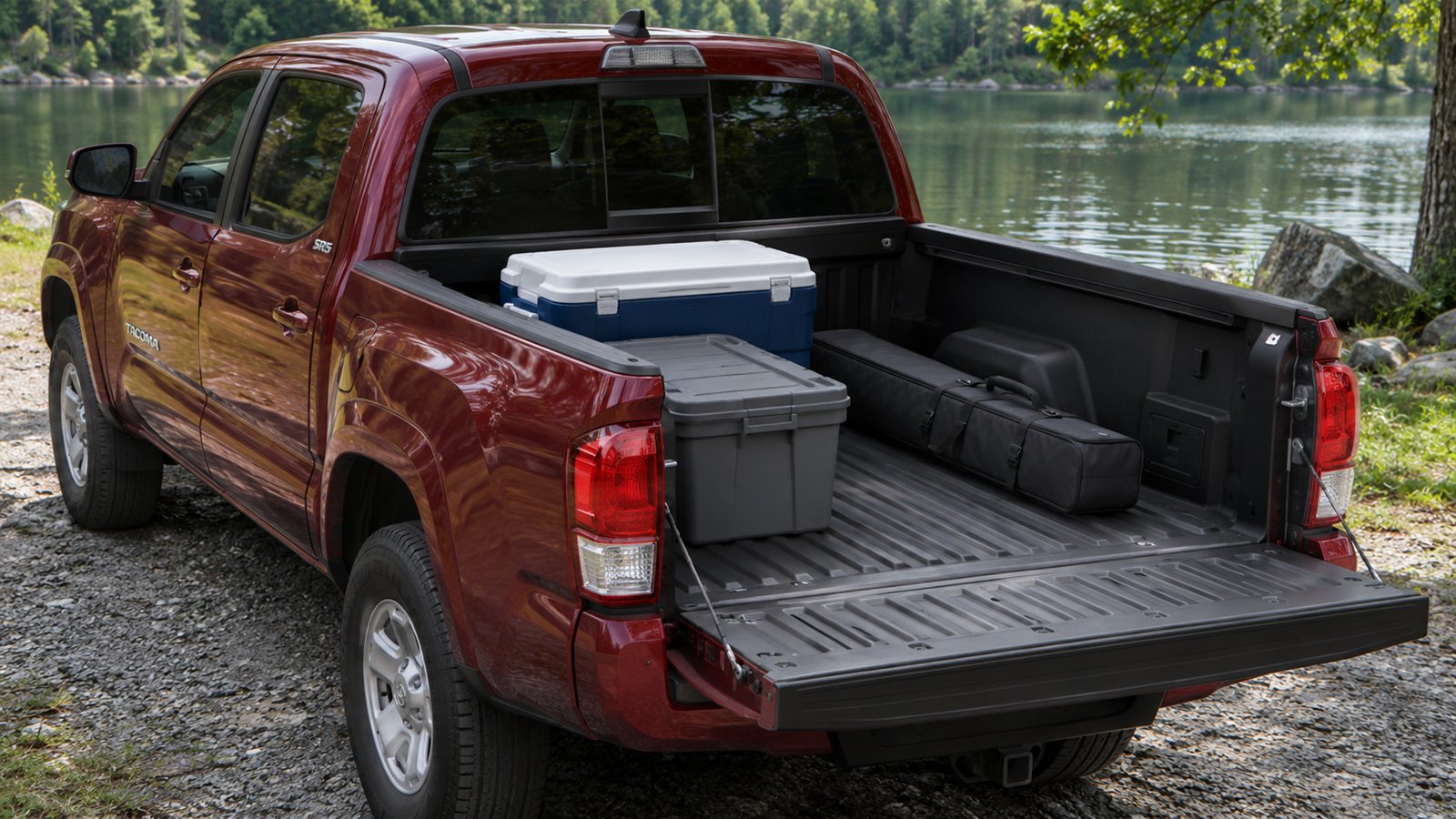
Choose a cooler you can manage when loaded, not just when it is empty in a shop. Decide where its lid opens and how it will be lifted out without dragging it across other equipment. Keep routine access to the tailgate and approved cargo attachment points.
Use the vehicle manual and suitable restraint equipment for travel. A rubber mat or a tight-looking gap is not a substitute for securement. The cooler, fishing gear, accessories, passengers and other cargo all contribute to the truck’s actual load.
Food, bait, caught fish and waste may need separate containers and handling. For sites with wildlife requirements, follow the destination’s rules; a cooler in a pickup bed should not be assumed to be approved food storage. Remove scented items from the layout whenever the rules require another location.
Compare options on Amazon: Compare compact portable coolers · Browse washable gear totes
Work with the Tacoma’s actual bed equipment
Toyota’s third-generation bed uses a composite inner surface and a deck-rail arrangement. Those details matter when selecting a rail-mounted organizer or clamp system. Use hardware specifically approved for your equipment instead of treating the bed as a generic steel box.
Check installed cleats, any factory boxes, a bed outlet if fitted and the space consumed by a cover. Later Trail editions can have bed equipment that changes the layout. A product listing that spans the entire generation still needs an exact application check.
A soft case and removable totes may be enough for a simple weekend. Buy permanent mounts only when your transport needs justify them, and keep their mounting instructions with your truck records.
Keep the waterside setup simple
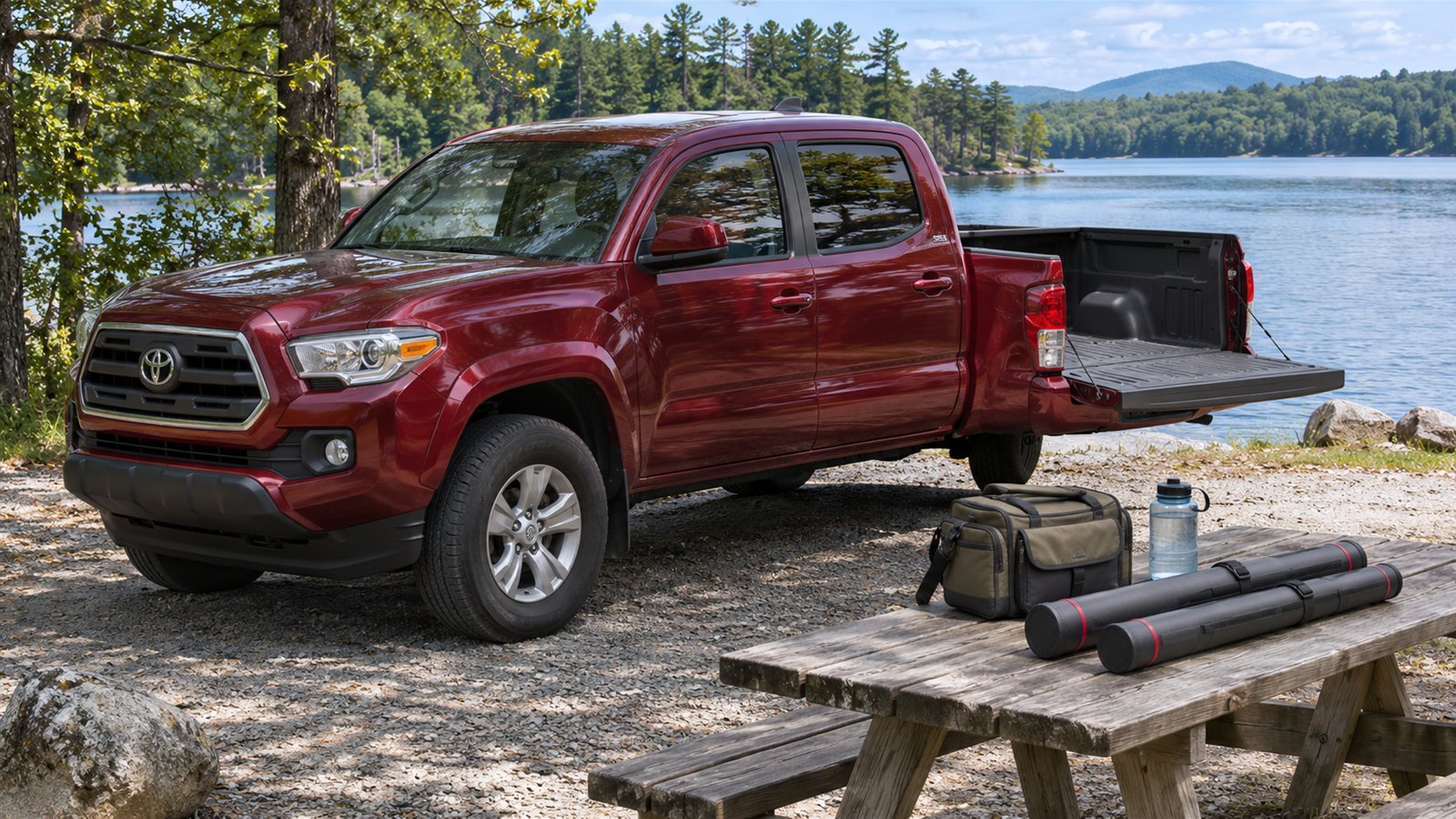
At a permitted stopping area, make a small sorting space that does not block other visitors or access routes. Take only the kit you need from the truck, close the remaining containers and keep loose hooks out of shared areas.
Check the current fishing license, access and species rules for the place you are visiting. Clean and dispose of line, hooks, bait packaging and other waste appropriately, and follow local guidance for preventing the transfer of aquatic organisms between waters. A tidy truck setup does not replace those responsibilities.
Pack drinking water and suitable personal supplies for the conditions. Keep the plan within an ordinary day trip until you know what you actually need; adding camping, boat towing and long off-road travel creates separate planning requirements.
Compare options on Amazon: Browse reusable drinking-water jugs · Compare compact reusable litter bags
Preserve the weekday truck
- Use manageable cases and totes that can be removed individually.
- Keep a clear path for normal loading and tailgate movement.
- Secure equipment for travel with the proper attachment arrangement.
- Dry and clean wet gear after the trip rather than storing it indefinitely.
- Check the destination’s current fishing, access, food and waste rules.
If appearance is part of the project too, our 2016–2023 Tacoma styling gallery gives the same generation several restrained exterior directions. The open-bed adventure example is a visual reference; it does not prove rod-carrier, rack or cover compatibility.
After a few outings, write down the one thing that was awkward. Solve that specific problem before adding another large accessory. A small removable system that you use consistently is usually the more practical starting point.
Leave a Reply