
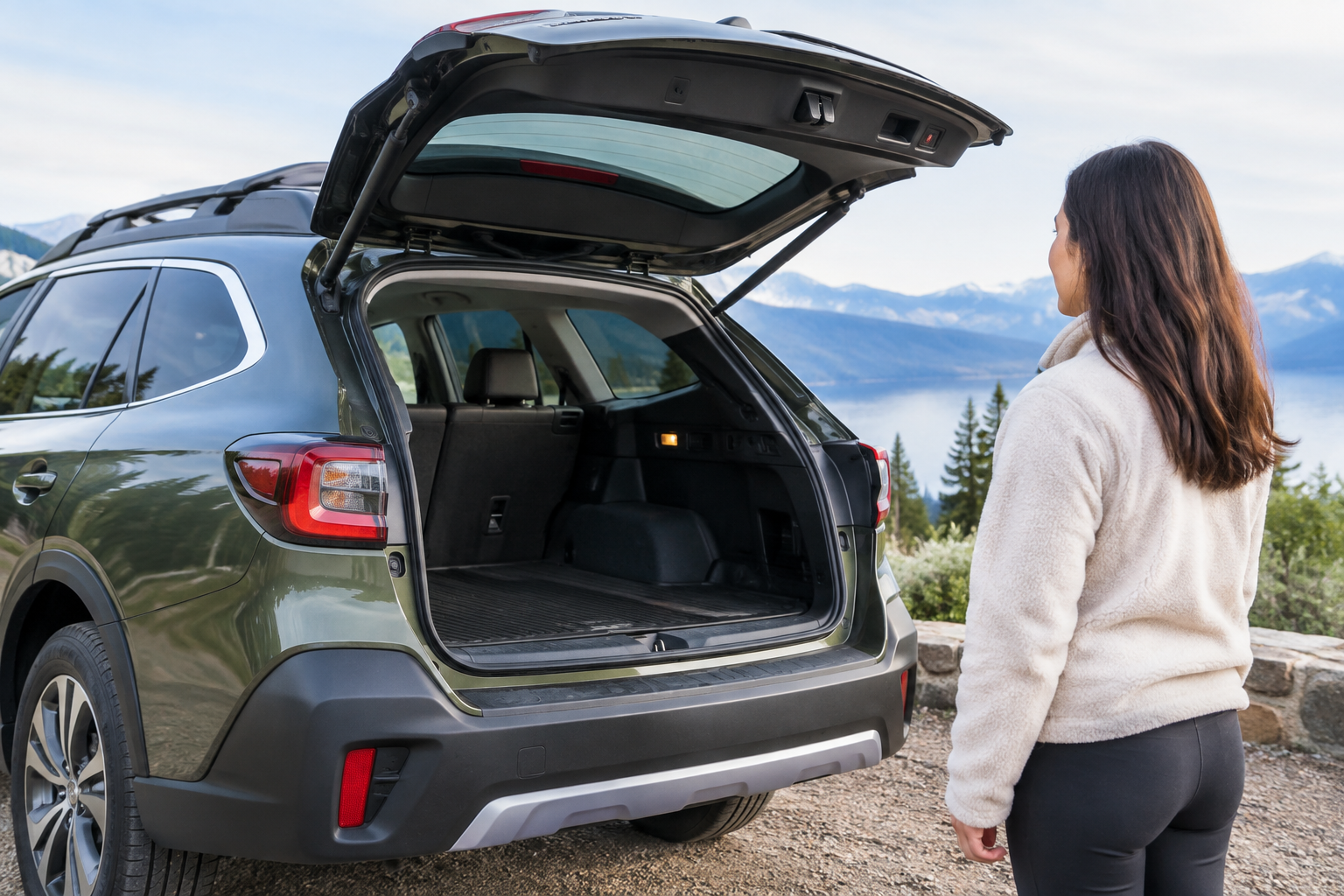
A power liftgate that suddenly refuses to open, stalls halfway, or slams shut on its own is one of the most annoying electrical quirks a Subaru Outback owner can run into. It’s usually not a sign that your whole tailgate assembly is dying. Most of the time it’s a sensor, a fuse, a weak battery, or a worn strut that’s throwing the system into a defensive mode. This guide walks through the most common causes on the Outback, how to tell them apart, and what actually fixes each one.
Which Outback Years and Trims Have the Power Liftgate
Subaru introduced the power rear gate on the Outback with the 2015 redesign, and it’s been standard on Limited and Touring trims since, with availability trickling down to Premium trims in later model years. The hands-free foot-kick sensor showed up as an option starting around the 2018 refresh and became more common on 2020 and newer Touring models.
If your Outback is a base trim from 2015 to 2019, there’s a good chance you don’t have a power liftgate at all, just a manual one with a standard latch. Before you troubleshoot electronics, confirm your trim actually has the motorized system by checking the owner’s manual or looking for the liftgate open/close buttons on the driver’s door panel and on the gate itself.
Newer Outbacks (2020 and later on the current generation) also added more refined pinch sensors and smoother height-memory logic, so some of the quirks owners report on 2015-2019 models were partially addressed in software updates from Subaru dealers.
Liftgate Won’t Open at All
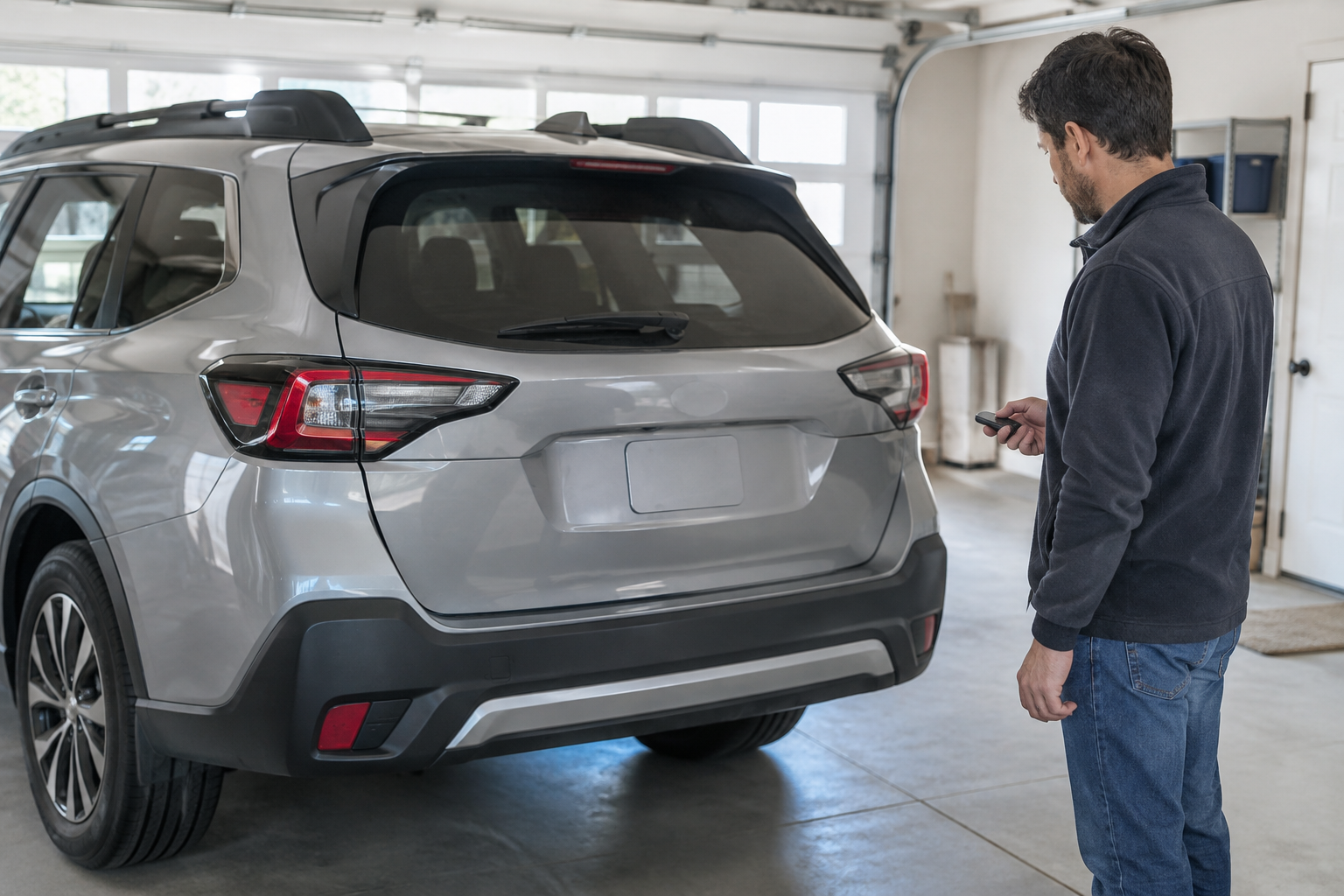
When the gate doesn’t respond to the button, the fob, or the interior switch, start with the simplest explanation: the system might be locked out because the vehicle isn’t in park, a door is ajar, or the parking brake isn’t engaged on some model years. The Outback’s body control module blocks power liftgate operation under certain safety conditions, so double check those basics first.
If the basics check out, move to the fuse box. The power liftgate motor typically pulls from a specific fuse in the engine bay fuse panel, and a blown fuse will kill the whole system instantly. Your owner’s manual has the fuse diagram, and a quick visual inspection (or a test with a multimeter) will tell you if that’s the culprit.
Low battery voltage is another frequent cause. The liftgate motor needs a decent amount of current to operate, and if your 12-volt battery is weak or the alternator isn’t charging properly, the body control module may disable non-essential power functions like the liftgate to protect the rest of the electrical system. If your Outback has been sitting for a while, or you’ve noticed slow cranking, that’s your first suspect.
If you suspect the battery is on its way out, it’s worth testing it with a simple voltage tester before you spend money chasing electronic gremlins that don’t exist.
NOCO Boost Plus GB40 Jump Starter
A compact jump starter that also reads battery voltage, useful for quickly ruling out a weak battery as the cause of liftgate problems.
Liftgate Won’t Close or Stops Partway
This is the complaint that frustrates owners the most, because the gate will start closing, then reverse itself back open for no obvious reason. In almost every case, this is the pinch/obstruction sensor doing exactly what it’s designed to do.
The Outback’s power liftgate uses force sensors built into the drive mechanism, and in some years, an additional pinch sensor strip along the edge of the gate. If anything interferes with smooth travel, even something as minor as ice buildup, a stuck weatherstrip, or debris in the latch striker, the system assumes it’s hit an obstruction and reverses for safety.
Start by cleaning the latch striker and the surrounding area on the rear body panel. Road grime and salt buildup here is extremely common, especially in winter climates, and it’s often the single biggest cause of a liftgate that won’t latch. Wipe down the striker, the latch mechanism, and the rubber seals around the opening, then try closing it again.
Cold weather itself can also be the problem. Below a certain temperature, the liftgate motor moves slower and the force curve it expects doesn’t match what it’s actually sensing, which triggers a false pinch detection. If this only happens on frigid mornings, that’s a strong clue you’re dealing with a temperature-related sensitivity rather than a mechanical failure.
If cleaning doesn’t help, check the liftgate’s height-memory setting. The Outback lets you set a maximum opening height for garages with low ceilings, and if that setting somehow got corrupted or set incorrectly, it can cause odd behavior on both opening and closing. Resetting the height memory (covered below) often clears this up.
Liftgate Reverses Unexpectedly or Behaves Erratically
If the gate seems to have a mind of its own, reversing at random points rather than consistently at the same spot, you’re likely looking at a sensor or wiring issue rather than a mechanical obstruction. The wiring harness that runs from the body into the liftgate itself flexes every single time the gate opens and closes, and over years of use those wires can develop hairline fractures inside the insulation.
A damaged harness wire will cause intermittent signal loss to the pinch sensor or motor, which the system interprets as an obstruction even though nothing is actually in the way. This is more common on higher-mileage Outbacks, especially ones that see a lot of open/close cycles from daily hauling of groceries or gear.
A Subaru technician or an experienced independent shop can wiggle-test the harness while watching live data on a scan tool to pinpoint exactly where the wire is failing. This isn’t usually a DIY fix unless you’re comfortable with wiring repairs, but it’s good to know what you’re dealing with before you pay for a diagnosis.
Failing struts (also called liftgate supports or gas struts) can mimic sensor problems too. If the struts have lost their gas charge, the motor has to work harder to hold the gate open or push it closed, and the extra strain can trigger false pinch readings. Struts typically wear out around the 6 to 10 year mark, and replacing them is one of the more affordable fixes on this list.
Subaru Outback Power Liftgate Strut Set
A direct-fit strut set is one of the cheapest ways to eliminate sagging or slow liftgate movement that often gets mistaken for a sensor fault.
Hands-Free Foot Sensor Not Working
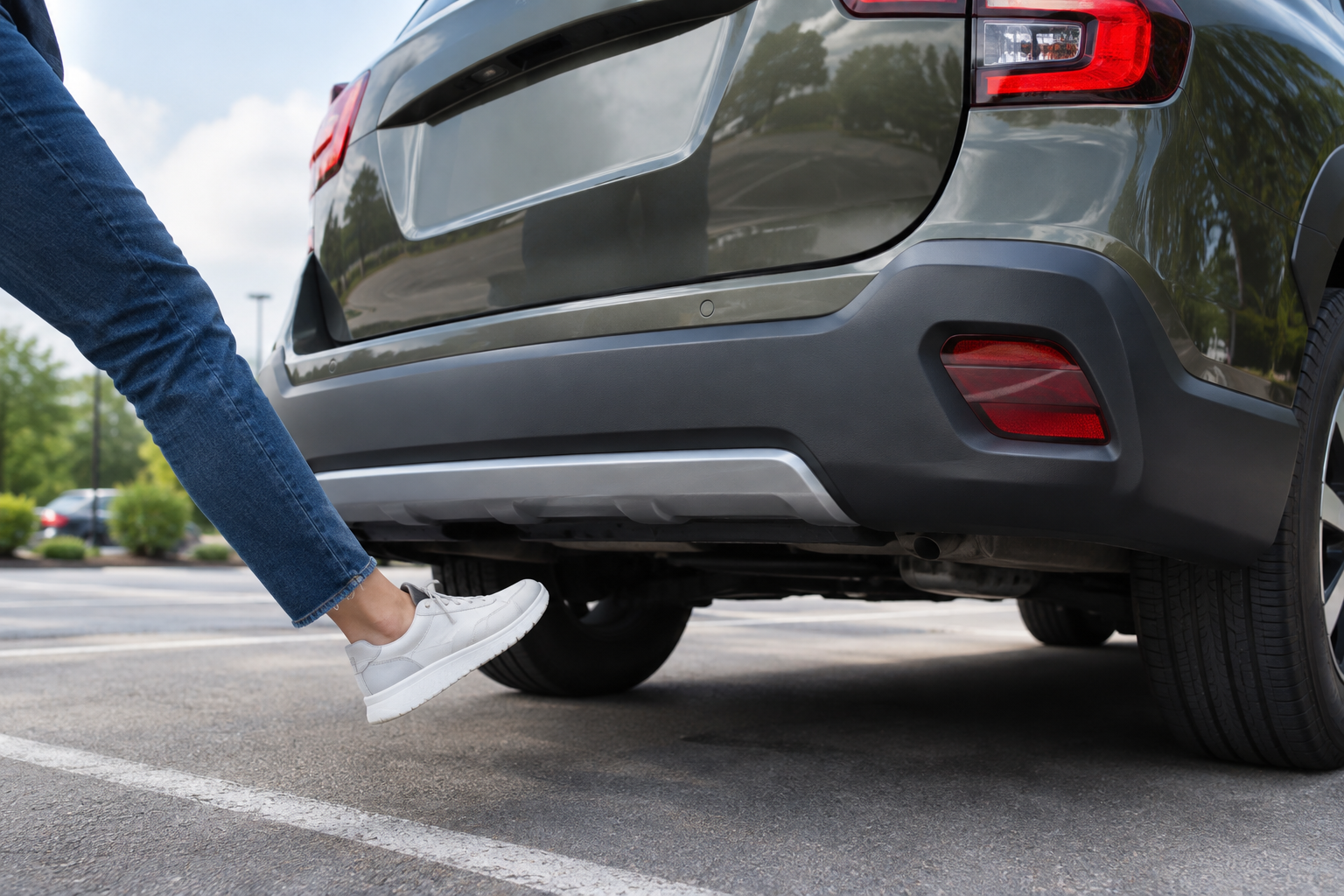
On Outbacks equipped with the hands-free kick sensor under the rear bumper, this feature has its own set of quirks separate from the button-operated liftgate. The sensor looks for a specific foot motion under the bumper while the key fob is within a few feet of the vehicle, and it’s notoriously sensitive to a few things.
Mud, snow, and road salt buildup on the sensor housing is the number one cause of a non-responsive kick sensor. It’s tucked under the rear bumper where it takes constant abuse from spray off the tires, so give it a wipe down before assuming it’s broken.
The fob’s battery matters here too. A weak coin cell battery inside the key fob can still unlock doors from close range but fail to trigger the hands-free liftgate sensor, since that function often requires slightly stronger signal strength. If your fob has felt sluggish lately or you’ve had to press the button harder than usual, swap the battery before troubleshooting further.
Some 2018-2022 Outbacks with this feature also require you to stand in a fairly specific spot for the kick gesture to register, closer to the bumper than most people expect. Check your owner’s manual for the exact positioning shown for your model year, since Subaru adjusted the sensor sensitivity across different production runs.
Resetting the Power Liftgate System
Subaru built in a reinitialization procedure for the power liftgate because these small glitches are common enough to expect them. The general process works on most 2015-2024 Outbacks, though button placement varies slightly by year:
- Turn the ignition to the on position without starting the engine.
- Close the liftgate completely using the manual close button on the gate itself, not the remote.
- Open the liftgate fully using the interior switch or driver’s door button.
- Close it again, holding the close button until the gate fully latches and the motor stops.
- Repeat the open and close cycle two or three times, letting the gate complete each cycle without interruption.
This cycle lets the body control module relearn the full range of travel, the force required at each point, and the correct closed position. It’s the same basic idea as reprogramming a garage door opener, and it solves a surprising number of “phantom obstruction” complaints without touching a single part.
To reset the height-memory setting specifically, most Outback trims let you hold the liftgate close button for several seconds after the gate reaches your desired maximum height, which reprograms that ceiling limit. If you recently had the gate serviced or a battery disconnected, always redo this height calibration since it commonly resets to the factory default.
Latch and Motor Failures
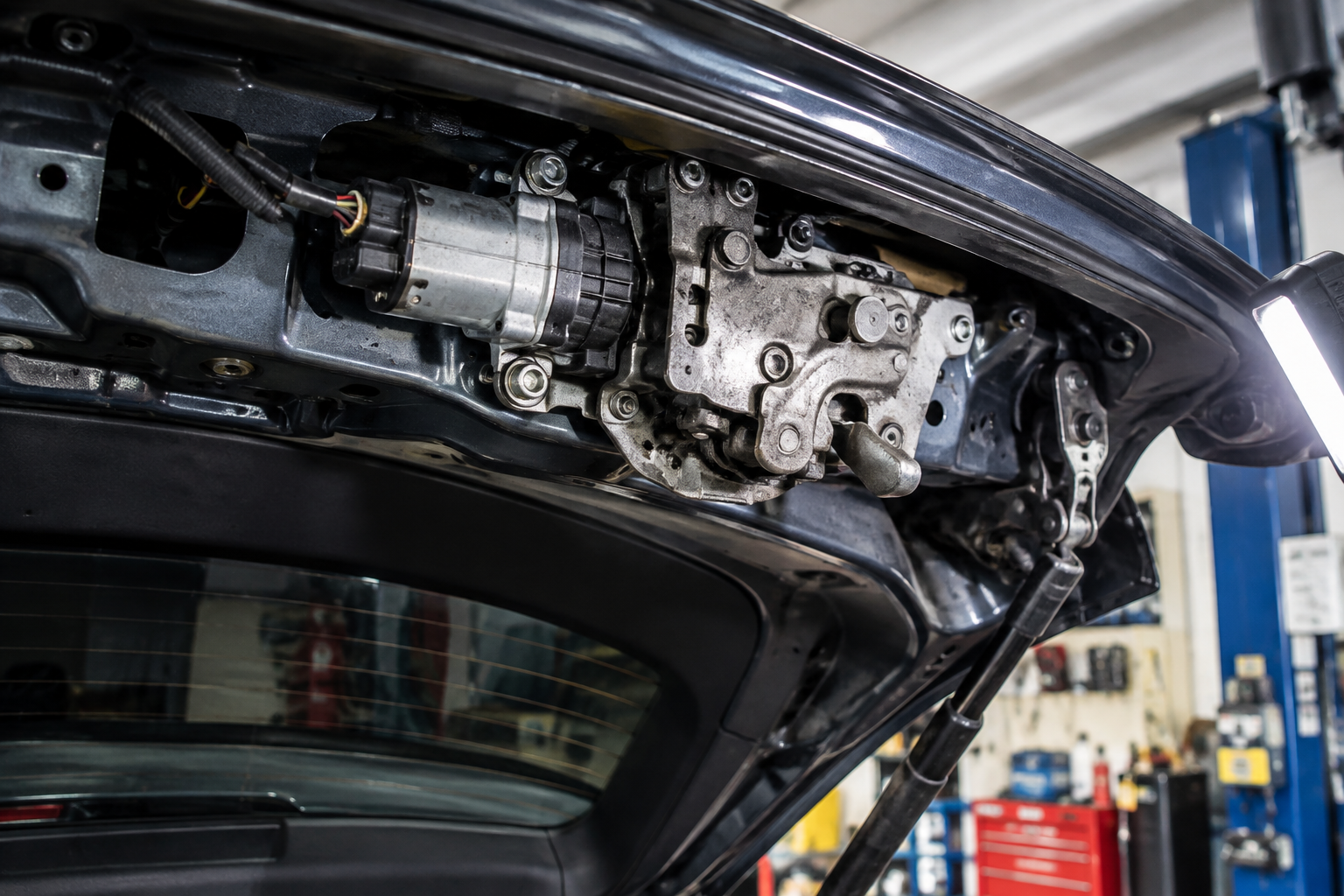
If cleaning the striker, resetting the system, and checking the fuses hasn’t fixed anything, you might be looking at an actual mechanical failure inside the latch assembly or the drive motor itself. These parts do wear out eventually, especially on Outbacks that get used hard for road trips and cargo hauling.
A failing latch often shows up as a gate that closes most of the way but won’t fully seat, sometimes accompanied by a grinding or clicking noise instead of the normal smooth motor hum. A failing drive motor tends to sound noticeably weaker or slower than it used to, or it may stop moving entirely partway through a cycle even with no obstruction present.
Both parts are replaceable, and independent shops familiar with Subaru electrical systems can usually source OEM or quality aftermarket replacements without an excessive wait. If your Outback is getting up in years and you’re weighing repair costs against the vehicle’s overall condition, it’s worth reading through Subaru Outback years to avoid for head gasket and reliability issues to get a sense of whether this generation of Outback is generally worth investing in longer term.
In the meantime, every power liftgate on the Outback has a manual override. You can open and close the gate by hand just like a traditional tailgate, though on some model years you’ll need to switch the system to manual mode first using a small switch inside the liftgate’s interior trim panel, otherwise the motor may fight against your manual movement. Check your manual for the exact location, since Subaru moved this switch around slightly between generations.
Frequently Asked Questions
Why does my Subaru Outback liftgate open on its own?
This is usually caused by a stuck button on the key fob, a fob that’s been sat on or pressed accidentally in a bag or pocket, or in rarer cases a failing switch inside the liftgate button itself. Try a different fob if you have a spare, and if the problem follows the vehicle rather than the fob, have the switch inspected.
Can I disable the power liftgate and just use it manually?
Yes. Every Outback with a power liftgate has a manual mode switch, typically located on the inside trim panel near the latch. Flipping this lets you push the gate open and closed by hand without fighting the motor.
Does a dead 12-volt battery affect the power liftgate?
Absolutely. The liftgate motor and its sensors need stable voltage to operate correctly, and a weak battery is one of the most common reasons the system stops responding or behaves erratically. Testing and, if needed, replacing the battery solves more liftgate complaints than people expect.
How much does it cost to fix a Subaru Outback power liftgate?
It depends entirely on the cause. A blown fuse or dirty sensor costs you nothing but time, replacement struts are relatively affordable and often a DIY job, while a failed latch assembly or drive motor runs higher, especially with dealer labor rates. Diagnosing the actual cause before ordering parts will save you the most money.

Leave a Reply