
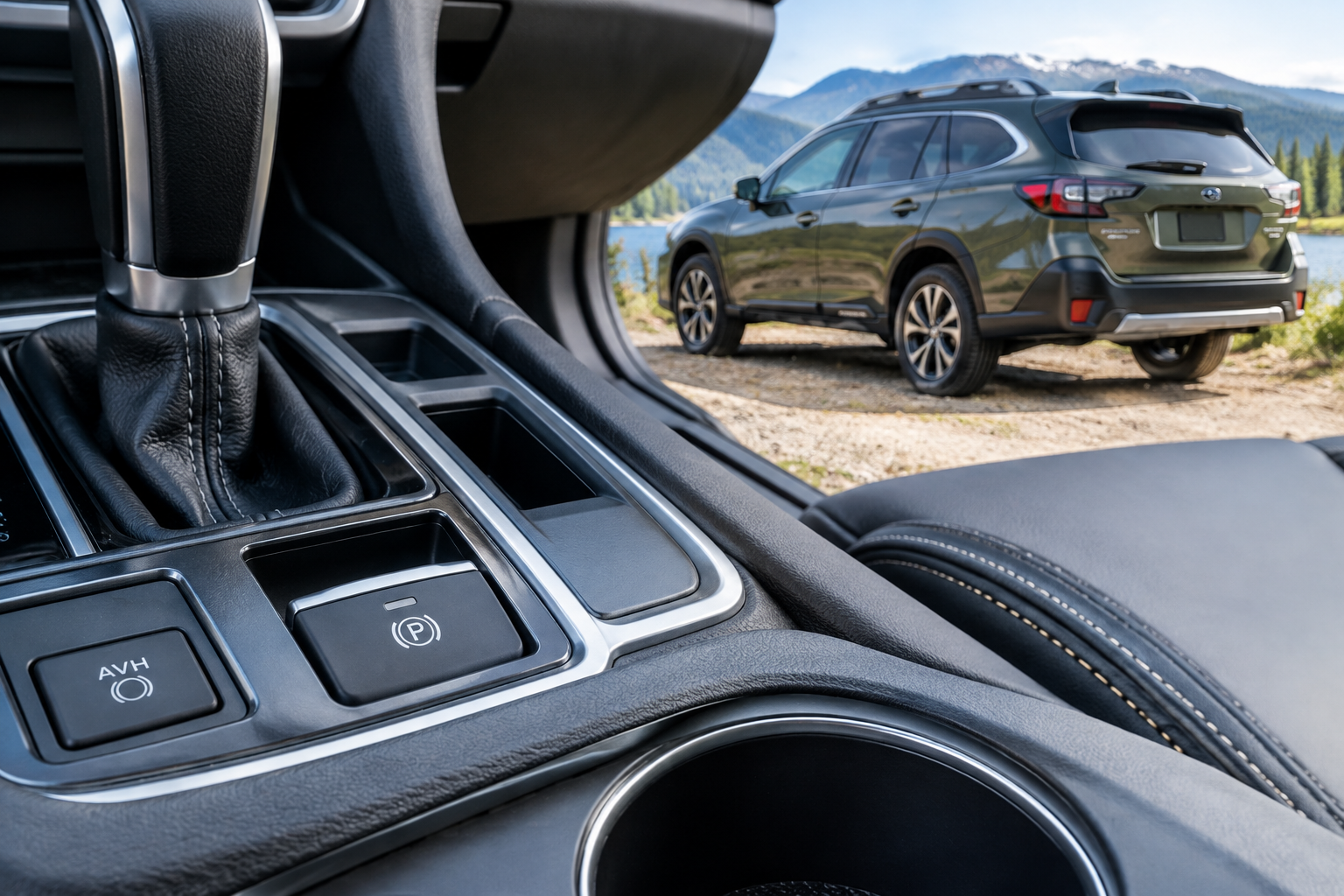
Nothing quite ruins your morning like climbing into your Subaru Outback, pressing the parking brake switch, and watching that little warning light just sit there mocking you instead of turning off. Your Outback’s electronic parking brake (EPB) is a convenience feature until the moment it isn’t, and when it refuses to release, you’re stuck in your driveway wondering if this is a simple fix or the start of an expensive repair bill.
The good part is that most EPB release failures on the Outback trace back to a handful of common culprits, and several of them you can check yourself in minutes without any tools. Before you assume the worst, work through the safe diagnostic steps below. We’ll also cover when this becomes a job for a shop instead of a driveway project.
Start With the Basics Before You Panic
Subaru’s EPB system, used across most Outback model years from 2020 onward (and on some 2019 Limited/Touring trims), relies on a switch, a control module, and small electric actuators mounted right on the rear calipers. It’s a fairly reliable setup, but it depends on a clean chain of inputs to work correctly. If any link in that chain is interrupted, the system will refuse to release as a safety measure rather than risk letting go of a brake it can’t confirm is safe to release.
That “fail safe, not fail open” design is actually good news for you. It means a stuck brake is usually the system protecting itself, not necessarily a sign that your calipers or actuators are damaged.
Check Your Brake Pedal Input First
On most Outback model years, you need to press the brake pedal firmly before the EPB switch will release the parking brake. This isn’t optional, and it’s the single most overlooked step. If your brake lights aren’t working, or if there’s an issue with the brake pedal position sensor, the module may never see the pedal signal it needs.
Sit in the driver’s seat, press the brake pedal all the way down, and hold it for a couple of seconds before pulling up on the EPB switch. Have someone stand behind the car to confirm your brake lights actually illuminate when you press the pedal. If they don’t light up, that’s your answer, and it’s likely a blown fuse or a bad brake light switch rather than anything wrong with the parking brake itself.
Confirm the Ignition Is Fully On
The EPB won’t release with the ignition in accessory mode on most Outback trims. You need the vehicle in the “on” or running position for the switch to function. This sounds obvious, but push-button start systems can sometimes leave you in an ambiguous state if you didn’t press the button firmly or hold the brake while starting.
Check Battery Voltage and Low-Voltage Faults
This is the number one cause of EPB release failures on Subaru Outbacks, and it’s not close. The EPB actuators need a stable voltage supply to drive the small motors that pull the calipers open. If your battery voltage drops below the threshold the module expects (typically in the 11.5 to 12 volt range or lower at rest), the system will lock out release entirely and throw a warning light.
This happens more often than people expect, especially with:
- An aging battery that’s lost capacity but still starts the car most of the time
- A battery that was recently disconnected or jump-started
- Corroded or loose battery terminals
- A parasitic drain from an aftermarket accessory
- Cold weather, which reduces effective battery output
If your Outback has sat for a while, or you notice slower engine cranking, or your dash lights flickered recently, check your battery voltage with a simple multimeter before assuming the EPB module or actuators are at fault. A healthy battery at rest should read around 12.6 volts, and it should hold above 10 volts while cranking.
If you’re comfortable pulling diagnostic codes yourself, a code reader that supports Subaru-specific modules (not just generic OBD2) will show you exactly what the EPB control unit is complaining about. A basic generic scanner might not even see the parking brake module at all, so it’s worth having one built for this.
Subaru Outback OBD2 Scanner
A scanner with manufacturer-specific coverage will actually read EPB and body control codes instead of just generic engine codes.
Once you’ve confirmed voltage is solid and stable, and the battery holds a charge under load, you can rule out the low-voltage cause and move on to other possibilities.
Inspect the EPB Switch Itself
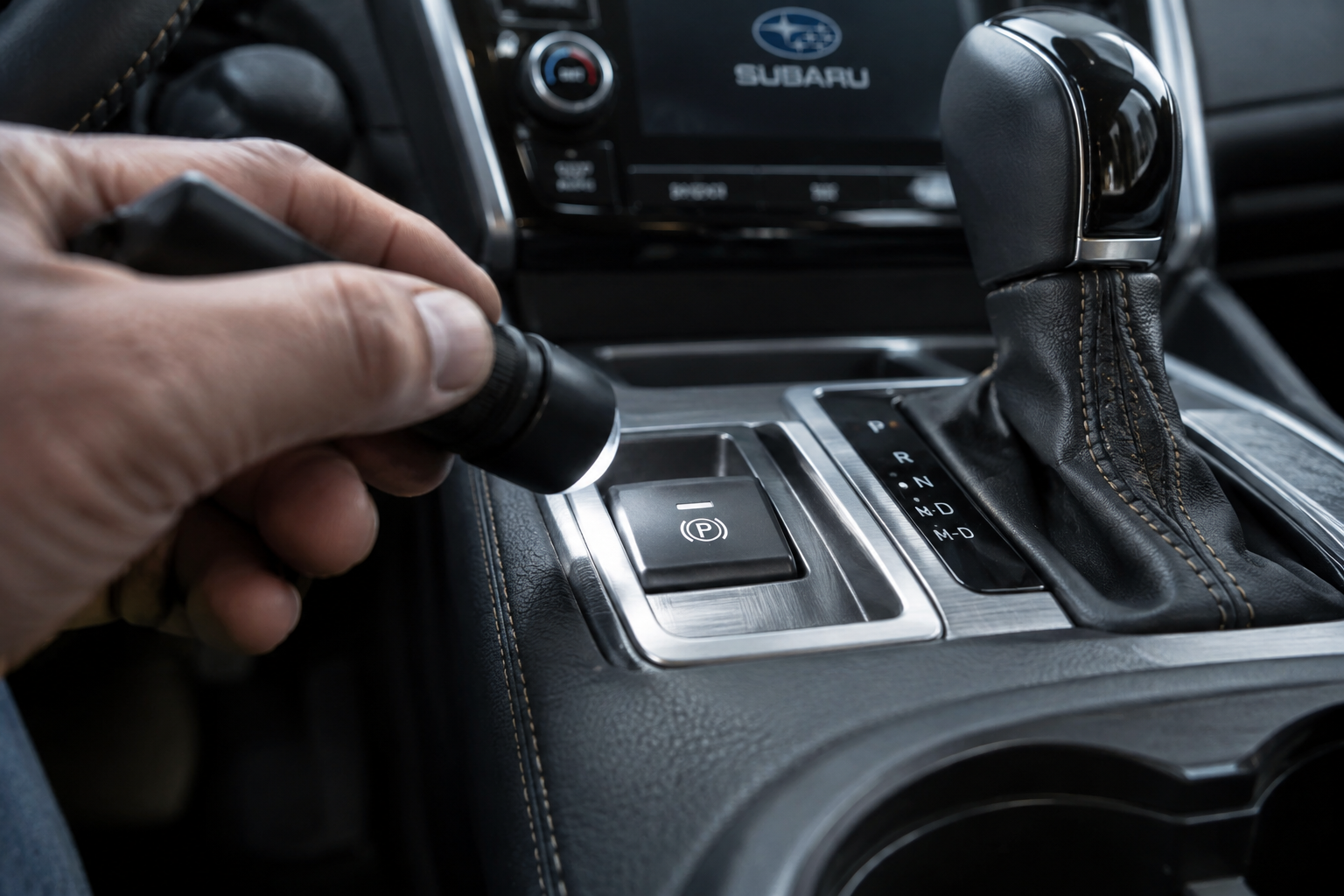
The switch on the center console is a simple mechanical part, but it takes a lot of daily use and it can fail. A worn or sticking switch may not send a clean release signal even when you’re pulling it correctly.
Common switch symptoms include:
- The switch feels loose, spongy, or doesn’t spring back the way it used to
- You hear no motor sound at all when you try to release, even briefly
- The dash warning flashes rather than staying solid, suggesting an intermittent signal
- The brake released fine yesterday but is completely unresponsive today with no other symptoms
If you suspect the switch, try releasing the brake several times in a row with firm, deliberate pulls, and listen closely for any actuator motor noise from the rear of the car. No sound at all when you engage the switch points toward the switch or wiring, while motor noise that stops partway through suggests a caliper or actuator problem instead.
Actuator and Caliper Faults
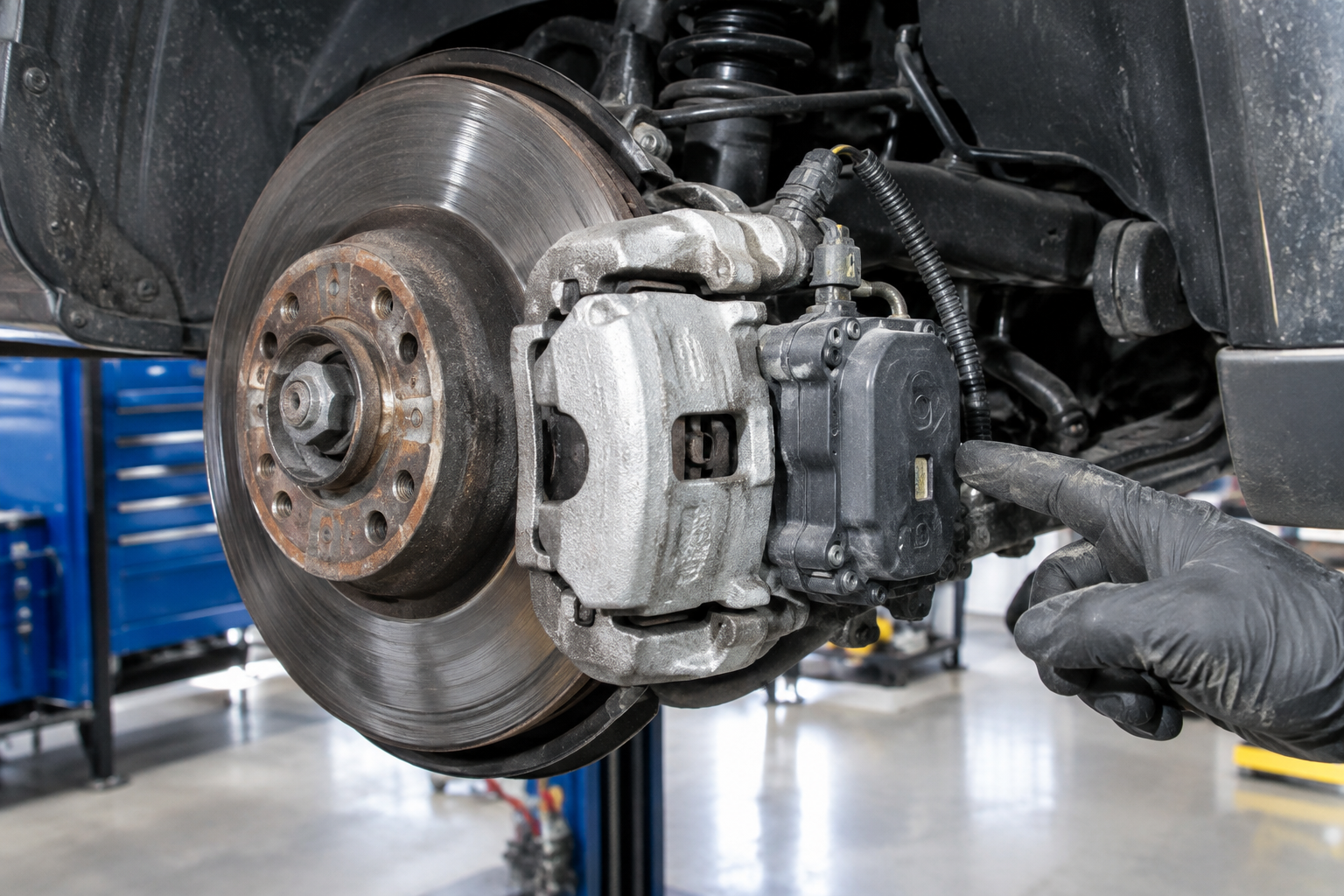
Each rear caliper on EPB-equipped Outbacks has its own small electric actuator that threads the caliper piston in and out. These actuators can fail from age, moisture intrusion, or mechanical binding in the caliper itself, especially on vehicles that see a lot of wet weather or road salt.
Signs pointing to an actuator or caliper fault rather than an electrical issue include:
- One rear wheel stays locked while the other releases normally
- Grinding, clicking, or straining motor noise from one specific corner
- The warning light comes on with a specific EPB fault code rather than a generic voltage warning
- The brake released fine until you did a brake pad or rotor service recently
If a caliper piston has seized due to corrosion, or if a shop recently serviced the brakes and didn’t fully cycle the actuator with the correct procedure, you can end up with a caliper that physically can’t retract even though the electrical signal is getting through fine. This is a mechanical problem, and it usually means a trip to a shop with Subaru Select Monitor or an equivalent diagnostic tool that can command each actuator individually.
This is also a good moment to mention that if your Outback’s brakes have felt off in other ways, like a pedal that sinks slowly after the car sits overnight, that’s a separate hydraulic issue worth reading up on separately from the EPB problem covered here.
Service Mode and Maintenance Mode Complications
Here’s a detail that catches a lot of DIY brake jobs off guard. Subaru’s EPB system has a “maintenance mode” or “service mode” that retracts the actuators fully so you can safely change brake pads without fighting the motor. If a shop or a previous owner put the system into this mode and didn’t exit it correctly, the EPB can behave strangely, refusing to fully release or re-engage, or showing warning lights that don’t match any obvious fault.
If you or a shop recently did rear brake work on your Outback, this should be the very first thing you check.
Exiting service mode correctly requires following Subaru’s specific procedure for your model year, which typically involves cycling the ignition and the EPB switch in a particular sequence, sometimes through the infotainment system’s hidden diagnostic menu on newer Outbacks. This procedure has changed across model years, so check your specific owner’s manual or a factory service reference rather than assuming a generic YouTube walkthrough for a different year will apply cleanly.
The Owner’s Manual Emergency Release Procedure
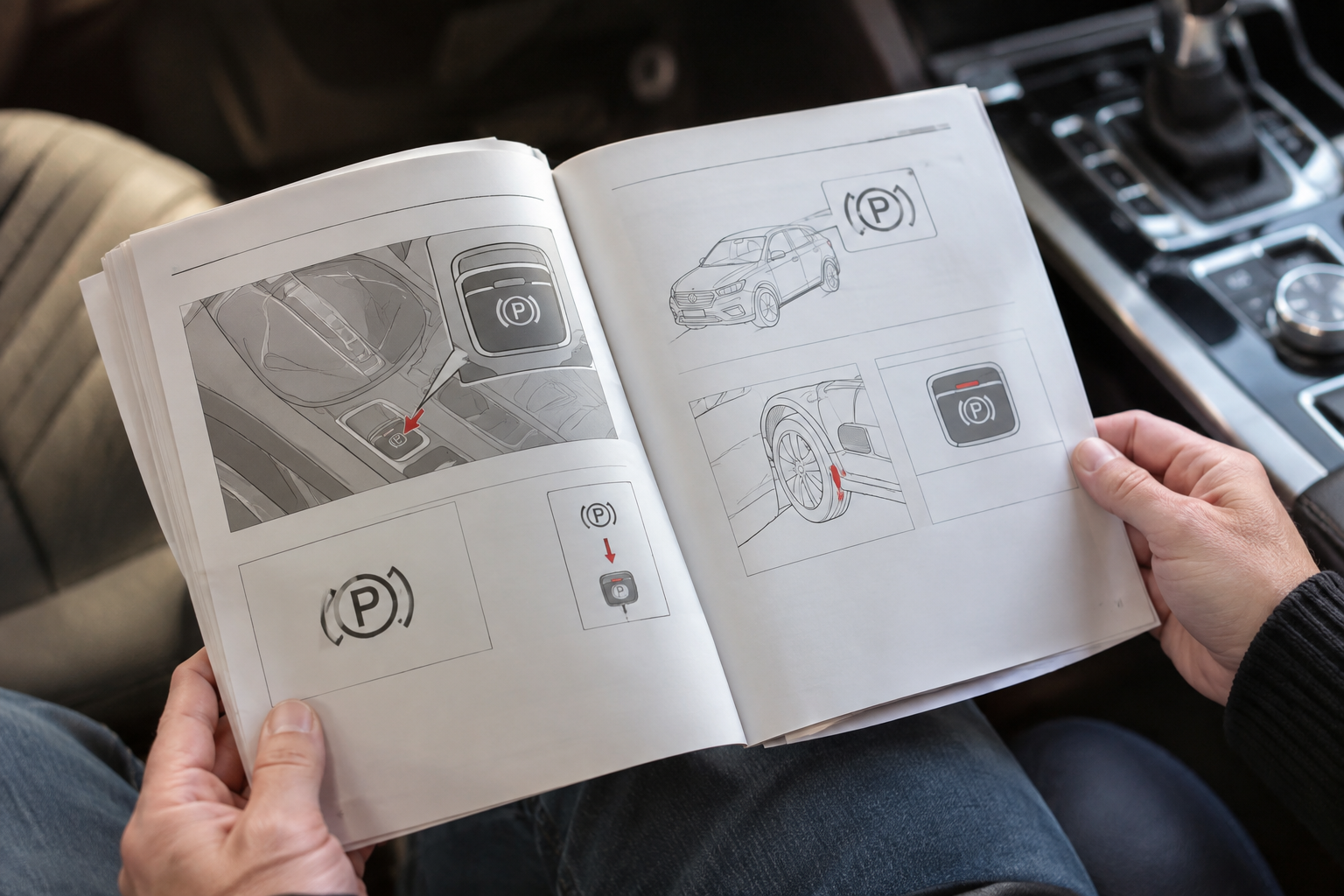
Subaru builds in a manual, mechanical emergency release procedure specifically for situations where the electronic system won’t respond, usually due to a dead battery or a failed module. This typically involves accessing a release cable or manual lever, often located near the parking brake actuator assembly or under a trim panel, but the exact location and steps vary by model year and trim.
Do not skip checking your owner’s manual for this exact procedure. Using the wrong method, forcing a mechanism that isn’t the actual release point, or trying to tow or drive the car with the brake still engaged can damage the actuator, the caliper, or the rear brake components entirely. If you don’t have a paper manual handy, Subaru’s digital owner’s manual portal has model-year specific PDFs, and it takes just a few minutes to confirm you’re looking at the right procedure for your exact Outback.
If your emergency release procedure isn’t obvious, or if you’re not confident performing it correctly, this is a legitimate reason to call for a flatbed tow rather than experiment. A locked rear caliper being dragged, even briefly, can generate enough heat to warp a rotor or damage the actuator beyond a simple fix.
When to Call a Subaru Dealer or Trusted Shop
Some EPB faults are genuinely beyond safe DIY territory. If you’ve confirmed good battery voltage, verified the brake pedal signal works, and ruled out an obvious service mode issue but the brake still won’t release, it’s time for professional diagnosis. A Subaru dealer or an independent shop with Subaru-specific scan tools can individually command each actuator, read detailed fault codes from the EPB control module, and check for internal module faults that a basic scanner simply can’t see.
This is especially true if the warning light is accompanied by other unrelated warnings, like ABS or stability control lights, since that combination often points to a wiring or module-level issue rather than something isolated to one caliper.
If your Outback shows an EPB warning alongside ABS or traction control lights, treat it as a combined electrical fault and get it scanned properly rather than troubleshooting the parking brake in isolation.
For everyday troubleshooting on the road, keeping a compact scanner in your glovebox isn’t a bad idea if you own an older Outback that’s starting to show its age. Owners dealing with recurring electrical quirks might also want to check out our breakdown of Subaru Outback years to avoid for other known reliability patterns worth watching for.
Subaru Select Monitor Compatible Scanner
Look for a scanner that specifically lists EPB or parking brake bidirectional control support for Subaru if you plan on doing your own diagnostics regularly.
Frequently Asked Questions
Can a dead or weak battery really cause the EPB to get stuck?
Yes, and it’s the most common cause by far. The EPB module requires stable voltage to safely drive the actuator motors, and if voltage drops too low, it will refuse to release rather than risk an incomplete retraction. Check your battery’s voltage and terminal connections before assuming a mechanical failure.
Is it safe to drive my Outback with the parking brake stuck on?
No. Driving with the rear brakes engaged can quickly overheat the caliper, warp the rotor, and cause permanent damage to the actuator. If the brake won’t release safely through the normal switch or the documented emergency procedure, have the car towed rather than attempting to drive it.
Why does my Outback’s parking brake release fine most days but occasionally stick?
Intermittent sticking often points to a marginal battery, a failing switch with an inconsistent connection, or cold weather affecting battery output temporarily. Track when it happens (cold mornings, after sitting for days, etc.) since that pattern usually narrows down the cause quickly.
Did my recent brake pad replacement cause this EPB issue?
It’s possible, especially if the shop didn’t properly exit the system’s maintenance or service mode after retracting the actuators for the pad swap. This is one of the most common causes of post-service EPB complaints, and it’s worth calling the shop back to confirm they followed the correct procedure for your model year.
Related posts:
 Honda CR-V Electronic Parking Brake Won’t Release: Causes and Safe Checks
  Honda Pilot Electronic Parking Brake Won’t Release: Causes and Safe Checks
  Toyota RAV4 Electronic Parking Brake Won’t Release: Causes and Safe Checks
  Toyota Highlander Electronic Parking Brake Won’t Release: Causes and Safe Checks
Leave a Reply