
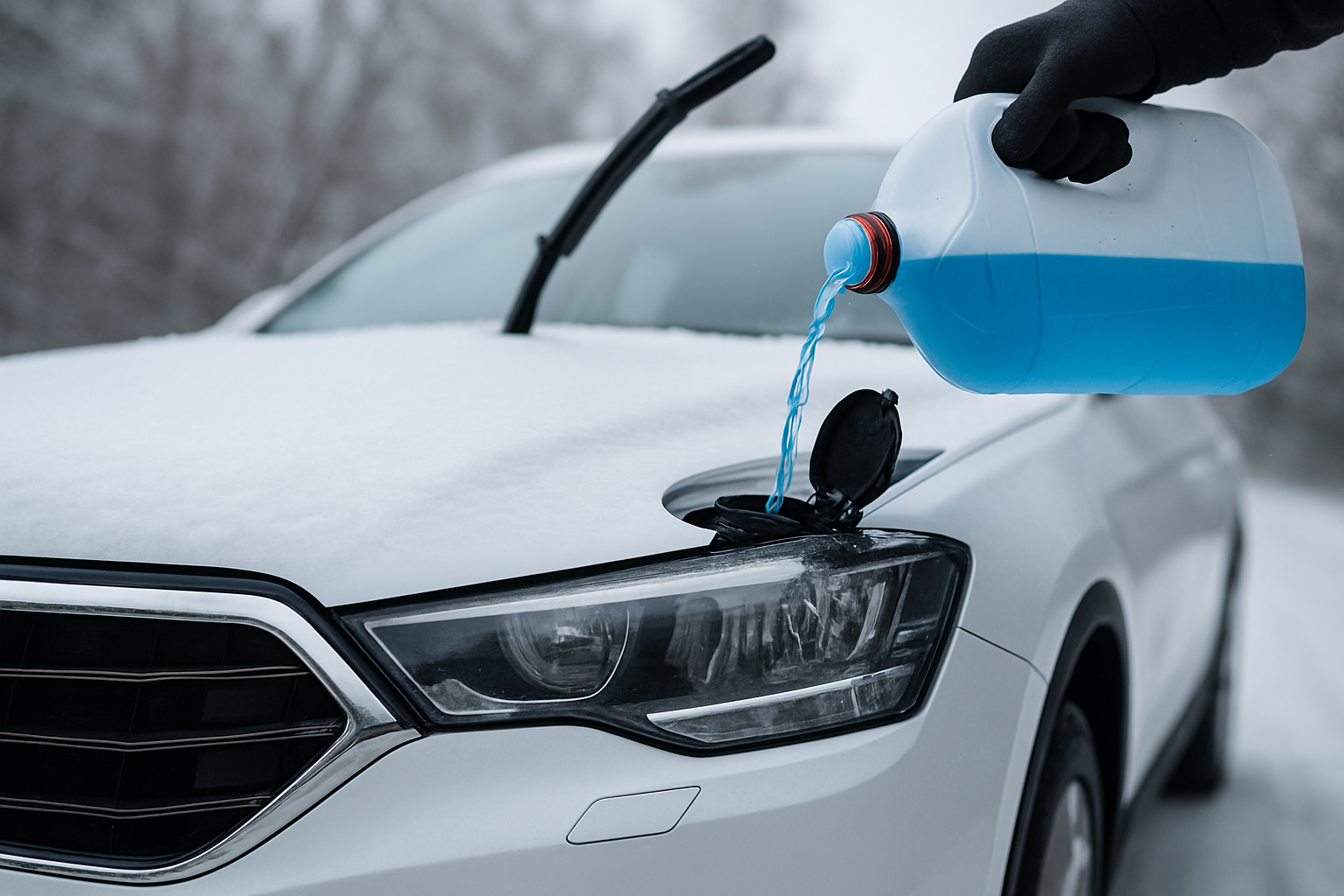
Frozen windshield washer fluid can leave you driving blind when winter weather hits. When you need to clear road salt, slush, or snow from your windshield, discovering your washer system is frozen solid creates a dangerous situation that’s completely preventable.
Why Windshield Washer Fluid Freezes and Why It Matters
Most drivers don’t realize that regular windshield washer fluid only protects down to about 32°F. When temperatures drop below freezing, the fluid in your reservoir, lines, and nozzles turns to ice. This doesn’t just mean you can’t spray your windshield. The expanding ice can crack your reservoir, split your washer lines, and damage your pump.
Beyond the mechanical damage, you’re left without a crucial safety feature. Winter driving throws more debris at your windshield than any other season. Road salt, slush, mud, and spray from other vehicles can quickly make your windshield opaque. Without working washer fluid, you’ll find yourself pulling over constantly to manually clean your windshield.
The solution involves more than just buying different fluid. You need to understand what temperature rating you need, how to properly transition your system, and what to do if your fluid has already frozen.
Choose the Right Winter-Rated Fluid
Winter windshield washer fluid contains methanol or other antifreeze agents that prevent freezing at much lower temperatures. You’ll see ratings like -20°F, -25°F, or even -40°F on the bottles. Don’t guess at what you need based on typical winter temperatures in your area.
Check the lowest temperature your region has hit in the past five years and choose fluid rated at least 10 degrees lower. Weather patterns change, and you don’t want to discover your -20°F fluid froze during an unexpected cold snap. For most northern climates, -25°F or -30°F rated fluid provides adequate protection.
Look for quality brands like winter windshield washer fluid rated for -20°F or lower. Rain-X, Prestone, and Zerex all make reliable winter formulations. Avoid generic or store brands for winter use since antifreeze concentration can vary.
Never dilute winter washer fluid with water, even if you’re trying to stretch your supply. Water raises the freezing point and can cause the entire mixture to freeze. If you need to save money, use less fluid per fill-up rather than diluting what you have.
Never Use Plain Water in Winter
Some drivers use plain water in their washer reservoirs during summer months to save money. This practice becomes dangerous once temperatures start dropping toward freezing. Water freezes at 32°F and expands as it freezes, creating enough pressure to crack plastic reservoirs and split rubber lines.
Even mixing water with summer washer fluid won’t provide adequate freeze protection. Summer fluid typically contains little to no antifreeze, so adding water makes the situation worse. The mixture will freeze at nearly the same temperature as plain water.
If you’ve been using water or summer fluid, don’t wait for the first freeze warning to switch. Make the change when nighttime temperatures consistently drop below 40°F. This gives you a safety margin and ensures your system is protected before that first unexpected cold snap.
How to Properly Transition Your System
Simply pouring winter fluid into a reservoir that contains summer fluid or water won’t give you proper protection. The fluids mix, diluting the antifreeze concentration. You need to flush the old fluid from your entire system, including the lines and nozzles.
Start by using up as much existing fluid as possible. Spray your windshield until the reservoir runs low, but don’t run the pump completely dry since this can damage it. Once you’ve used most of the old fluid, fill the reservoir with winter-rated fluid.
Spray the system several times to push winter fluid through all the lines and nozzles. This flushes out the remaining summer fluid and ensures winter protection throughout the system. Check your owner’s manual for reservoir capacity so you know how much fluid the system holds total.
Some vehicles have heated washer nozzles that help prevent freezing at the spray points. These systems still need winter fluid since the heating elements only warm the nozzles themselves, not the entire system. The reservoir, pump, and lines remain unprotected without proper antifreeze.
What to Do If Your System Is Already Frozen
If your washer fluid has already frozen, don’t try to force the system by repeatedly pressing the washer button. Running the pump when the system is frozen can burn out the motor. You’ll hear the pump straining or making unusual noises if ice is blocking the lines.
Move your vehicle to a heated garage if possible and let the system thaw naturally. This is the safest method and prevents damage from rapid temperature changes. If you don’t have access to heated space, you’ll need to thaw the system manually.
For manual thawing, remove the reservoir cap and pour warm (not hot) water into the reservoir. Hot water can crack a cold plastic reservoir, so use water that’s warm to the touch but not steaming. The warm water will start melting the ice in the reservoir and lines.
Once the reservoir ice melts, pump the system gently to see if fluid flows. You may need to repeat the warm water process several times to clear all the lines. After the system thaws completely, flush it with winter-rated fluid following the process described above.
Additional Winter Preparation Tips
Keep a spare bottle of winter washer fluid in your vehicle for emergencies. Cold weather increases your fluid usage since you’ll clean your windshield more frequently. Running out of fluid during a winter storm can be dangerous.
Check your wiper blades when you switch to winter fluid. Old or damaged blades don’t work well with washer fluid and can streak your windshield instead of cleaning it. Winter wiper blades have rubber boots that prevent ice buildup on the blade frame.
Inspect your washer nozzles for proper aim and spray pattern. Clogged or misaimed nozzles waste fluid and don’t clean effectively. Most nozzles can be adjusted with a thin wire or needle to change the spray direction.
Consider carrying windshield cleaning supplies as backup. A squeegee, paper towels, and spray bottle with winter fluid can help if your washer system fails completely. Store these items where they won’t freeze solid.
Understanding Heated Washer Systems
Some vehicles come equipped with heated windshield washer nozzles or even heated reservoirs. These systems use electrical heating elements to prevent freezing at critical points. While helpful, heated systems still require winter-rated fluid for complete protection.
Heated nozzles warm the spray points where ice commonly builds up and blocks fluid flow. They don’t heat the fluid itself, so you still need antifreeze protection in the reservoir and lines. The heating elements also draw electrical power and may not work if your battery is weak.
If your vehicle has heated washer components, test them before winter arrives. Turn on the system and check that the heating elements warm up properly. Faulty heating elements should be repaired before cold weather since they’re difficult to access once ice forms.
Heated washer systems may have separate fuses or relays that can fail. Check your owner’s manual for the location of these components and keep spare fuses in your vehicle. A blown fuse can disable the heating function without affecting the washer pump itself.
Cost-Effective Winter Washer Strategies
Winter washer fluid costs more than summer varieties, but the expense is minimal compared to repairing freeze damage. A cracked reservoir can cost several hundred dollars to replace, especially on vehicles where the reservoir is difficult to access.
Buy winter fluid in larger containers during fall sales when retailers stock up for winter. Concentrate formulations that you mix yourself can offer savings, but make sure you follow mixing directions exactly. Incorrect ratios reduce freeze protection.
Don’t switch back to cheaper fluid too early in spring. Late season freezes can catch you unprepared if you change fluids based on daytime temperatures. Wait until nighttime temperatures consistently stay above 40°F before switching to summer fluid.
Quality winter fluids often include additional cleaning agents that work better in cold weather. These formulations help remove road salt and winter grime more effectively than basic antifreeze mixtures, providing better value despite higher initial cost.
Frequently Asked Questions
Can I make my own winter washer fluid?
While recipes exist online mixing rubbing alcohol with water and dish soap, commercial winter fluids are safer and more effective. Homemade mixtures often don’t provide consistent freeze protection and may damage rubber seals or paint. The small cost savings aren’t worth the risk of system damage.
How often should I check my washer fluid in winter?
Check your washer fluid level weekly during winter months. Cold weather increases usage, and you’ll go through fluid faster than in summer. Most reservoirs have level markings, but it’s better to check too often than run empty during a storm.
Will winter washer fluid damage my car’s paint?
Quality winter washer fluids won’t damage automotive paint when used properly. However, don’t let the fluid sit on painted surfaces for extended periods. The methanol and other chemicals can potentially affect clear coat over time. Rinse any spills immediately with water.
What temperature rating do I need for my area?
Choose fluid rated at least 10-15 degrees below the coldest temperature your area typically experiences. For most northern climates, -25°F to -30°F provides adequate protection. Southern regions that occasionally freeze can usually get by with -20°F fluid, but check your local weather history to be sure.
This article contains affiliate links. If you purchase through these links, we may earn a small commission at no extra cost to you.




Leave a Reply