
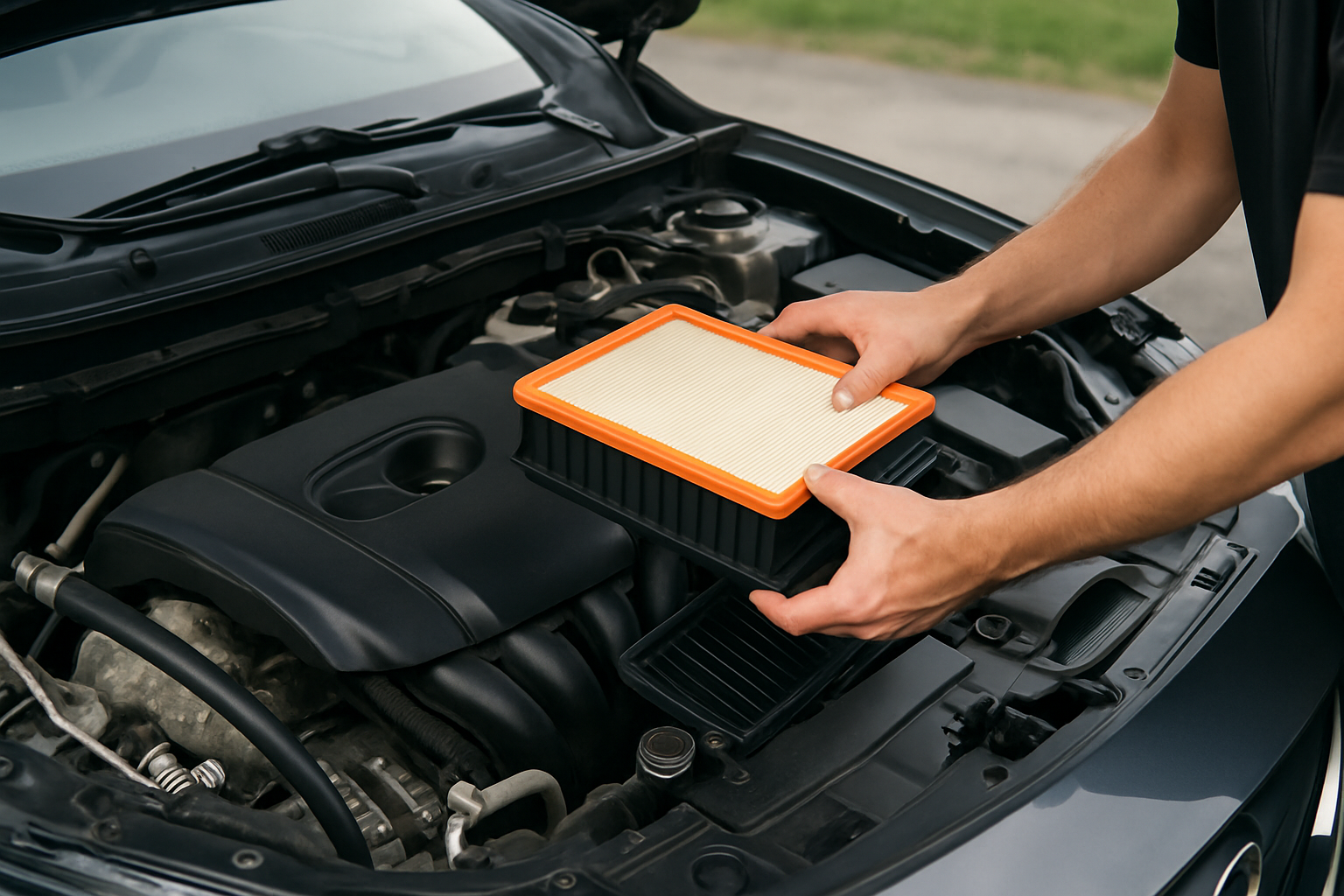
Replacing your engine air filter is one of the simplest car maintenance tasks that delivers real results. A clean air filter helps your engine breathe better, which can improve gas mileage by up to 10% in some vehicles. Plus, it takes about 10 minutes and costs less than $20 in most cases.
What Your Engine Air Filter Actually Does
Your engine air filter sits between the outside air and your engine’s intake system. It traps dirt, dust, leaves, and other debris before they can enter your engine’s cylinders. When the filter gets clogged, your engine has to work harder to pull in the air it needs for combustion.
Think of it like trying to breathe through a dirty cloth. The dirtier it gets, the harder you have to work to get enough air. Your engine faces the same struggle with a dirty air filter, which forces it to burn more fuel to maintain the same performance.
Most manufacturers recommend replacing the air filter every 15,000 to 30,000 miles, but this varies based on your driving conditions. If you drive on dusty roads or in heavy traffic frequently, you might need to replace it more often.
Signs Your Air Filter Needs Replacement
You don’t need to wait for your next oil change to check your air filter. A few clear signs indicate when it’s time for a replacement.
A dirty air filter often looks gray or black instead of white or off-white. Hold it up to a light source. If you can’t see light coming through, it’s definitely time for a new one.
Your fuel economy might also suffer noticeably. If you’ve been tracking your gas mileage and notice a gradual decline without any other explanation, check your air filter first.
Reduced acceleration or engine performance can also point to a clogged filter. Your engine might feel sluggish during acceleration or struggle more than usual on hills.
Finding Your Air Filter Housing
Most modern vehicles have their air filter housed in a rectangular or round plastic box near the engine. This airbox typically sits on top of or beside the engine bay, connected to the throttle body by a large rubber or plastic tube.
Look for a black plastic housing that’s about the size of a shoebox. It usually has metal clips, plastic tabs, or screws holding the top and bottom halves together. The air intake tube connects to one side of this box.
In some vehicles, you might find the air filter housing closer to the front of the engine bay, near the grille area where it can draw in cooler outside air. Your owner’s manual will show the exact location if you’re having trouble finding it.
Step-by-Step Air Filter Replacement
Replacing an air filter requires no special tools in most vehicles. You’ll typically just need your hands and maybe a screwdriver.
Start by locating the airbox and identifying how it opens. Most modern cars use plastic clips that you can release by hand. Some older vehicles might have metal clips that require a bit more force, or screws that need a Phillips head screwdriver.
Open the airbox carefully. The top half usually lifts straight up, but sometimes it’s connected by a hinge on one side. Take note of how the old filter sits inside the housing, including which direction the pleated side faces.
Remove the old filter and check inside the airbox for any debris. Use a damp cloth to wipe out leaves, dirt, or other particles that might have accumulated. Avoid using compressed air, which can blow debris further into the intake system.
Install the new filter exactly as the old one was positioned. The rubber gasket around the edge should seal completely against the housing. Make sure no part of the filter is folded or pinched.
Close the airbox and secure all clips or screws. Double-check that everything is tight and properly seated. A loose connection can allow unfiltered air to bypass the filter entirely.
Paper vs Cotton Air Filters: Which Works Better?
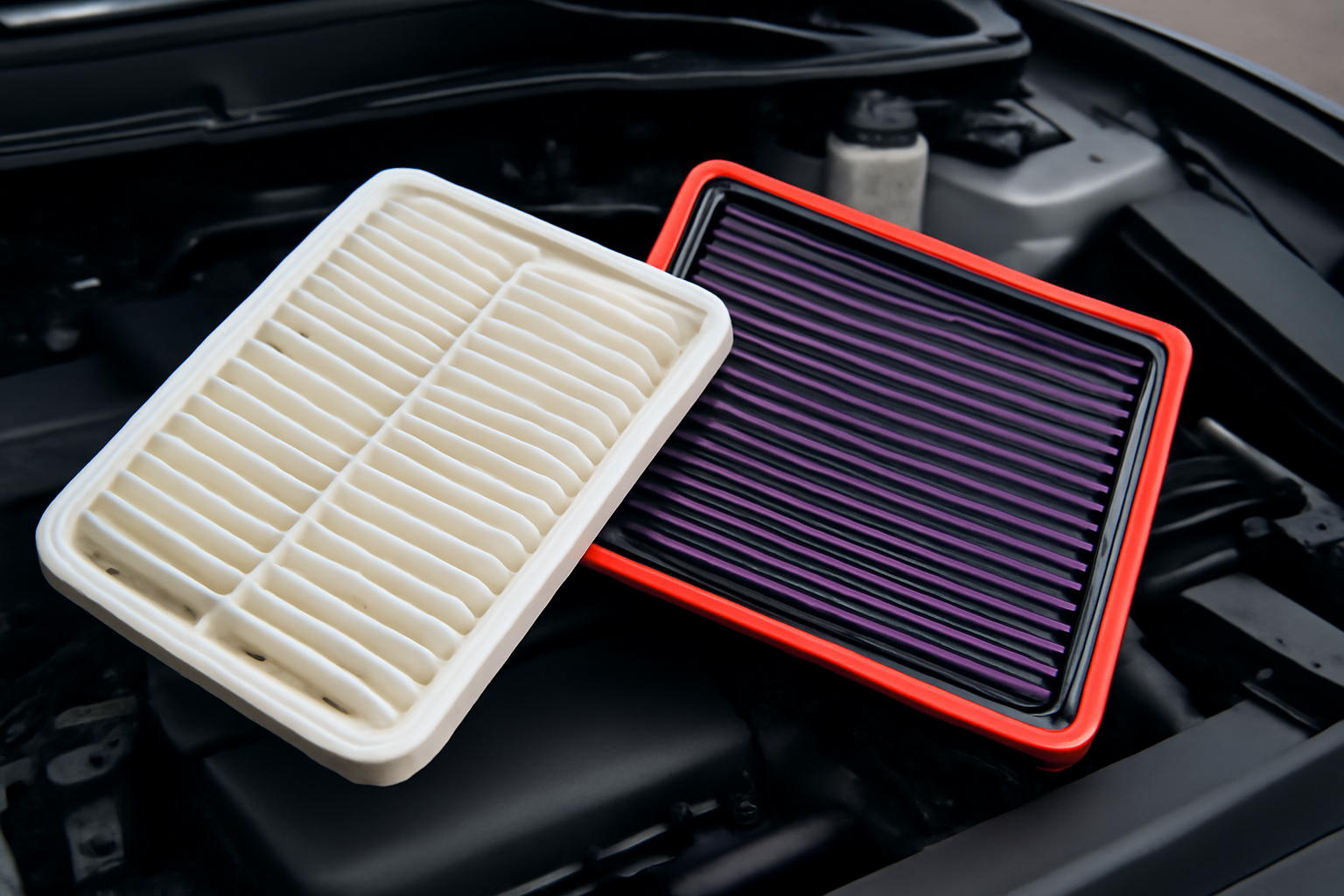
You’ll encounter two main types of air filters when shopping for replacements: standard paper filters and high-performance cotton filters like those made by K&N.
Paper filters are the most common and affordable option. They typically cost $10-20 and provide excellent filtration for normal driving conditions. These disposable filters should be replaced according to your maintenance schedule.
Cotton filters like K&N cost more upfront, usually $40-60, but they’re designed to be cleaned and reused for the life of your vehicle. They also claim to provide better airflow, which could translate to slight performance gains.
The performance difference between paper and cotton filters is minimal for most drivers. Independent testing shows that cotton filters do flow slightly more air, but the real-world impact on fuel economy or power is usually negligible.
Cotton filters require maintenance every 25,000-50,000 miles using special cleaning kits that cost about $15. You’ll need to factor this ongoing cost into your decision.
Choosing the Right Replacement Filter
When shopping for a replacement air filter, you’ll need your vehicle’s year, make, model, and engine size. This information determines the exact filter shape and size you need.
Quality engine air filters are available from numerous manufacturers including Fram, Bosch, WIX, and K&N. Each brand offers different features and price points to match your needs and budget.
Avoid the cheapest generic filters, which might not seal properly or provide adequate filtration. Stick with recognized automotive brands that meet or exceed OEM specifications.
Check your current filter for part numbers before shopping. This ensures you get exactly the right replacement without any guesswork about compatibility.
How Much Fuel Economy Improvement to Expect
Replacing a severely clogged air filter can improve fuel economy by 6-11% in older carbureted engines, according to government testing. However, most modern fuel-injected engines see smaller improvements, typically 1-3%.
Your actual results depend on several factors including how dirty your old filter was, your driving style, and your vehicle’s age and condition. Vehicles with larger engines or those used for towing might see more noticeable improvements.
Don’t expect dramatic changes overnight. Fuel economy improvements from a new air filter are usually gradual and become apparent over several fill-ups.
Track your gas mileage for a few weeks after the replacement to measure the real impact. Keep driving habits consistent during this period for accurate comparison.
When to Check Your Air Filter More Frequently
Certain driving conditions accelerate air filter contamination and require more frequent inspections. If you regularly drive on unpaved roads, in dusty conditions, or during construction season, check your filter every 10,000 miles.
Urban drivers who sit in heavy traffic should also inspect their filters more often. Stop-and-go driving in polluted conditions can clog filters faster than highway driving.
If you live in an area with frequent wildfire smoke or high pollen counts, your air filter works overtime to keep contaminants out of your engine. Visual inspection every few months helps catch problems early.
Desert climates and areas with frequent dust storms require the most frequent filter changes. Some drivers in these conditions replace their air filter every 10,000-15,000 miles regardless of appearance.
Common Air Filter Replacement Mistakes
Installing the filter backwards is probably the most common mistake. The pleated side typically faces the engine side of the airbox, but check your old filter’s orientation before removing it.
Forcing clips or screws can crack the plastic airbox housing. If something doesn’t move easily, double-check that you’re releasing it correctly. Replacement airbox parts can cost $100-200.
Leaving debris in the airbox defeats the purpose of installing a clean filter. Always wipe out the housing before installing the new filter, but avoid pushing dirt toward the engine side of the box.
Forgetting to reconnect vacuum lines or sensors attached to the airbox can trigger check engine lights. Take a photo before disassembly if you’re unsure about reassembly.
FAQ: Common Air Filter Questions
How often should I replace my air filter?
Most manufacturers recommend replacement every 15,000-30,000 miles under normal conditions. However, inspect your filter every 12,000 miles or during oil changes. Severe driving conditions like dusty roads or heavy traffic may require more frequent replacement.
Can I clean my paper air filter instead of replacing it?
Paper filters are designed to be disposable and shouldn’t be cleaned. Washing or blowing out a paper filter can damage the filtering media and allow dirt to pass through. Only cotton filters like K&N are designed for cleaning and reuse.
Will a dirty air filter damage my engine?
A moderately dirty filter won’t cause immediate damage, but an extremely clogged filter can allow dirt to bypass the filtering element. Over time, this contamination can wear engine components and reduce lifespan. Replace filters before they become completely clogged.
Do expensive air filters really work better than cheap ones?
Higher-quality filters typically offer better construction and more consistent filtration, but the most expensive option isn’t always necessary. Choose filters from reputable automotive brands that meet OEM specifications. The key is proper fit and adequate filtration rather than maximum price.


Leave a Reply