

The RAM 1500’s TPMS system is more forgiving than Ford’s or GM’s because it auto-relearns sensor positions after driving without requiring a specific tool-based activation sequence. In most cases, correctly inflating your tires and driving for 15 to 20 minutes at 25+ mph is all you need.
A TPMS activation tool is only required when replacing sensors or when the auto-relearn fails to clear the light.
5th Gen RAM 1500 (2019+): Uconnect 5 Method
Inflate all four tires to the correct pressure listed on the driver’s door jamb sticker. On the Uconnect 5 touchscreen, navigate to Vehicle > Tire Pressure > Reset or Vehicle Settings > Safety & Driving Assistance > TPMS (the exact path varies by software version).
Select “Reset” and confirm. Drive normally for 15 to 20 minutes at 25+ mph. The sensors transmit their readings during this drive, and the system maps each sensor ID to its current wheel position.
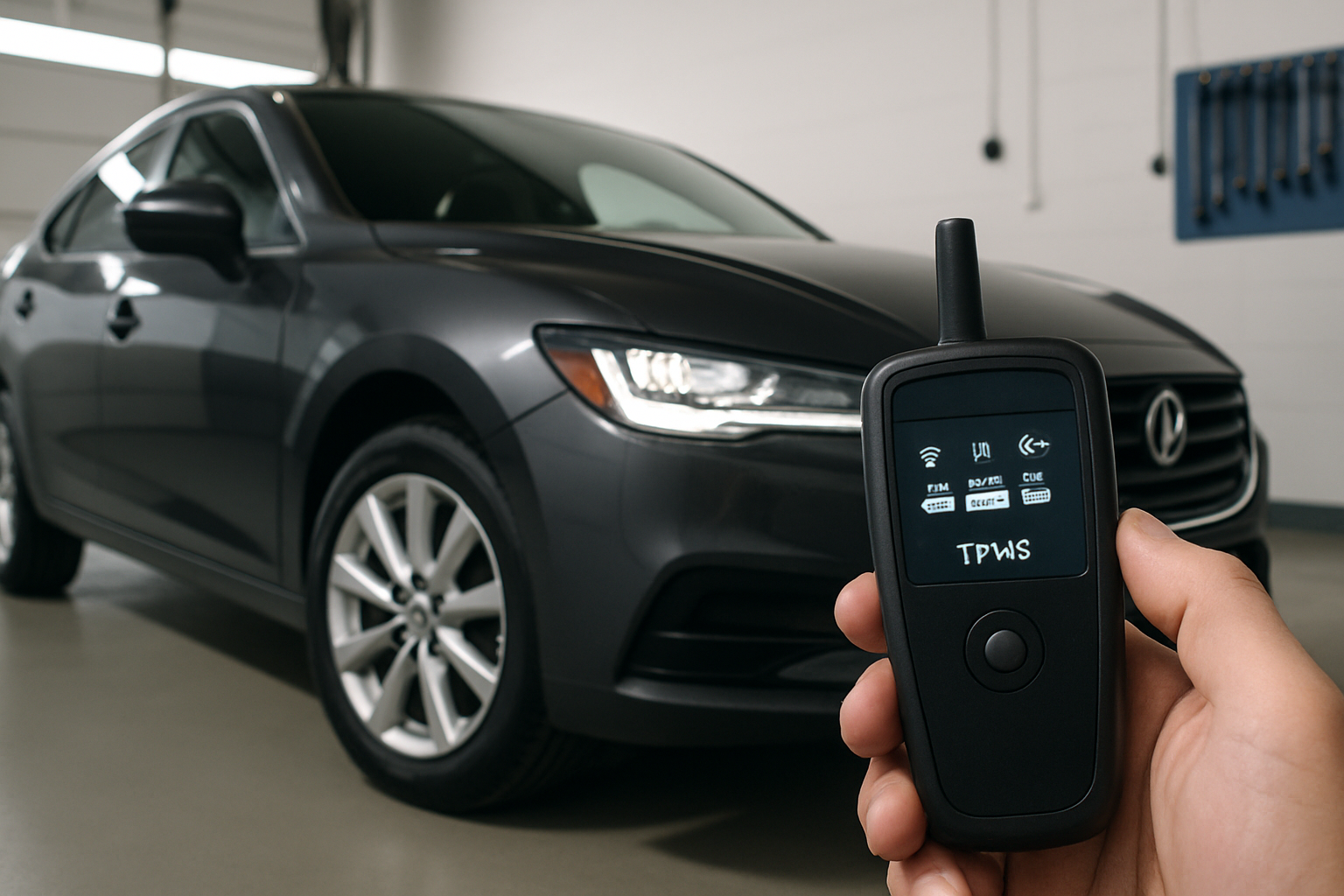
If the auto-relearn doesn’t complete (the light persists after 20+ minutes), a TPMS activation tool can force each sensor to transmit in the LF-RF-RR-LR sequence for a manual relearn.
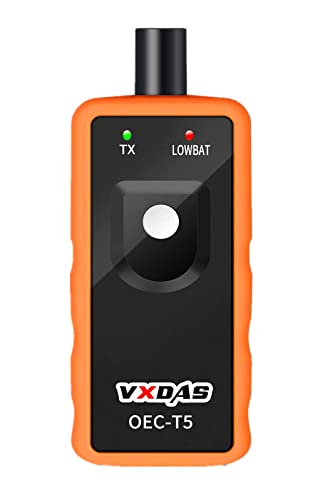
TPMS Activation Tool for RAM
Force sensor relearn when the auto-relearn process fails
4th Gen RAM 1500 (2009-2018): Auto-Relearn
Inflate all tires to the correct pressure and drive for 15 to 20 minutes at 25+ mph. The 4th gen RAM auto-relearns sensor positions during driving.
If the light persists, some model years have a TPMS reset accessible through the EVIC (Electronic Vehicle Information Center) menu on the instrument cluster. Scroll through the menu options using the steering wheel controls to find the TPMS option.
Spare Tire TPMS Sensor
Some RAM 1500 trims include a TPMS sensor in the full-size spare tire mounted underneath the bed. This is an often-overlooked cause of persistent TPMS warnings.
The spare hangs underneath the truck and is rarely checked, so it can lose significant pressure over months or years without the owner noticing. When the spare’s pressure drops below the warning threshold, the TPMS light illuminates even though all four mounted tires are properly inflated.
To check, lower the spare using the jack mechanism (usually accessed through a hole in the rear bumper or through the bed) and check its pressure with a gauge. Inflate it to the spec on the door jamb sticker, raise it back into position, and the TPMS warning should clear after driving.
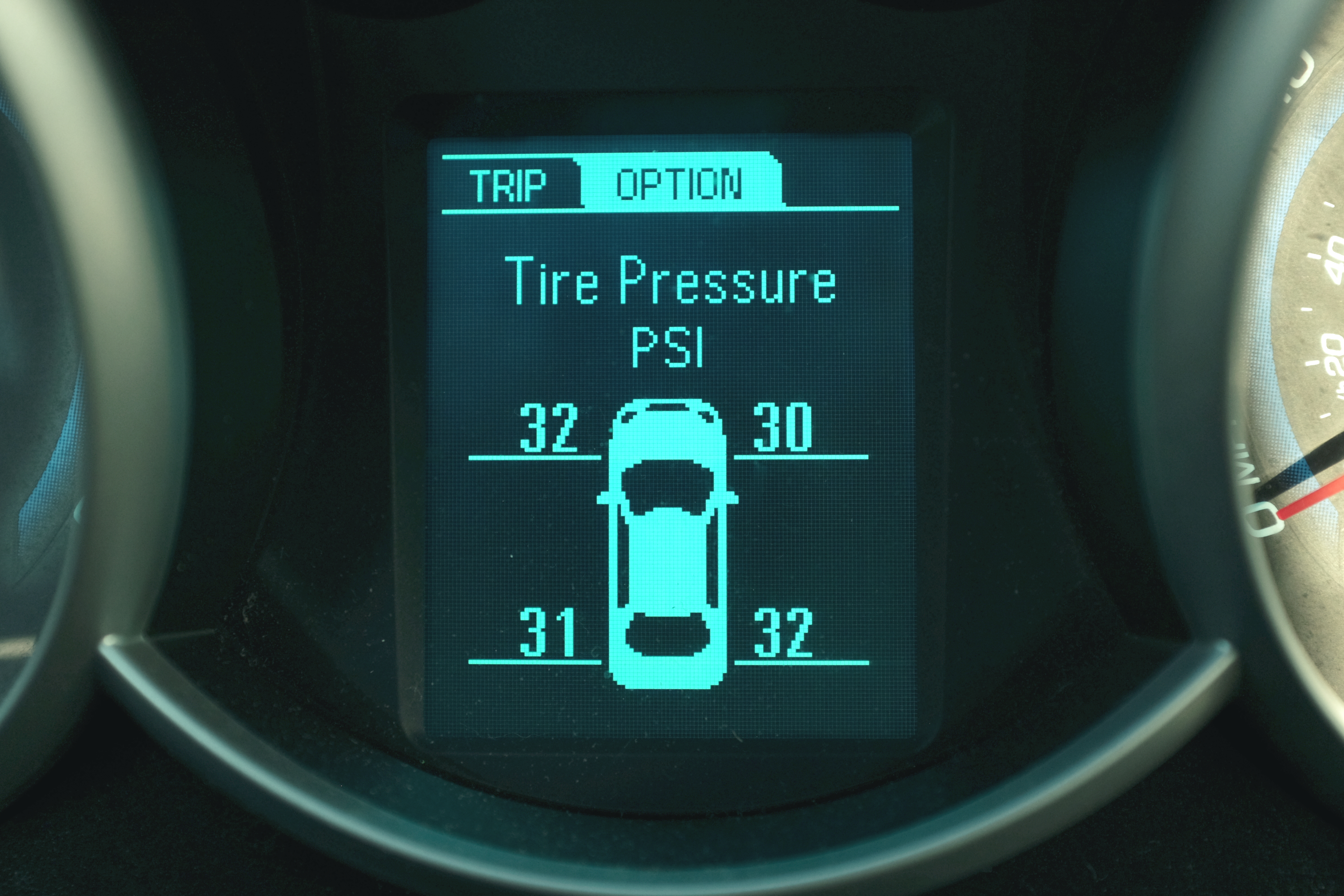
If you’re not sure whether your RAM has a spare tire sensor, check the TPMS pressure display on the Uconnect screen or instrument cluster. If it shows a fifth tire reading, your spare has a sensor.
Cold Weather Troubleshooting
The RAM’s TPMS light frequently appears on cold mornings as temperatures drop overnight. Tire pressure decreases approximately 1 PSI for every 10-degree Fahrenheit temperature drop.
During seasonal transitions (fall to winter, especially), tires that were properly inflated during warm afternoon temperatures can drop below the TPMS threshold by morning. Similar to how cold weather affects electric car range, temperature changes have measurable effects on vehicle systems.
Check tire pressure during the cold morning hours before driving, inflate to the door jamb specification, and the light should clear after 15 to 20 minutes of driving. During periods of wide temperature swings, you may need to top off tires multiple times until temperatures stabilize.
Aftermarket vs. OEM Sensors
OEM sensors from Mopar guarantee perfect compatibility but carry a premium price. Quality aftermarket sensors are available at significantly lower cost and work reliably when properly programmed for your specific RAM model year.
The key is ensuring the aftermarket sensor uses the correct frequency and communication protocol for your generation. The 4th gen and 5th gen RAMs use different sensor specifications, so confirm compatibility before purchasing.
When You Actually Need a TPMS Activation Tool
Most tire rotations and pressure adjustments won’t require any special equipment. The auto-relearn function handles sensor position mapping during normal driving after a rotation.
A TPMS activation tool is only needed when installing new sensors or when the auto-relearn repeatedly fails despite extended driving. If you’re doing your own tire work or sensor replacement, having one on hand saves a trip to the dealer or tire shop.

Replacement TPMS Sensors for RAM 1500
Aftermarket sensors work well when properly programmed for your model year
Maintenance Tips to Avoid TPMS Issues
Check your tire pressure monthly, not just when the TPMS light appears. Regular checks prevent the light from coming on in the first place and extend tire life. Much like the fuel efficiency benefits of proper tire inflation, maintaining correct pressure improves your RAM’s performance.
Replace sensor batteries proactively. TPMS sensors have internal batteries that typically last 7 to 10 years. When sensors start failing due to dead batteries, replace all four at once rather than one at a time.
Don’t forget the spare. Add the spare tire to your monthly pressure check routine, especially if your RAM has a sensor-equipped spare.
Frequently Asked Questions
Does the RAM need a TPMS tool after tire rotation?
Usually not. The auto-relearn function handles sensor position mapping during normal driving after a rotation. A tool is only needed when installing new sensors or when the auto-relearn repeatedly fails despite extended driving.
How do I know if my spare has a sensor?
Check the TPMS pressure display on the instrument cluster or Uconnect screen. If it shows a fifth tire reading (or a “Spare” position), your RAM has a spare tire sensor. If it only shows four tire positions, the spare doesn’t have a sensor.
Can I use aftermarket TPMS sensors on the RAM?
Yes. Aftermarket sensors work well when properly programmed for your specific model year and generation. They cost significantly less than OEM Mopar sensors and provide identical monitoring functionality.
Why does my TPMS light come on every morning in winter?
Tire pressure drops about 1 PSI for every 10-degree temperature drop. Cold morning temperatures cause tire pressure to fall below the warning threshold even if tires were properly inflated during warmer afternoon hours. Check and adjust pressure during cold mornings to prevent this.
This article contains affiliate links. We may earn a small commission at no extra cost to you.
Leave a Reply