
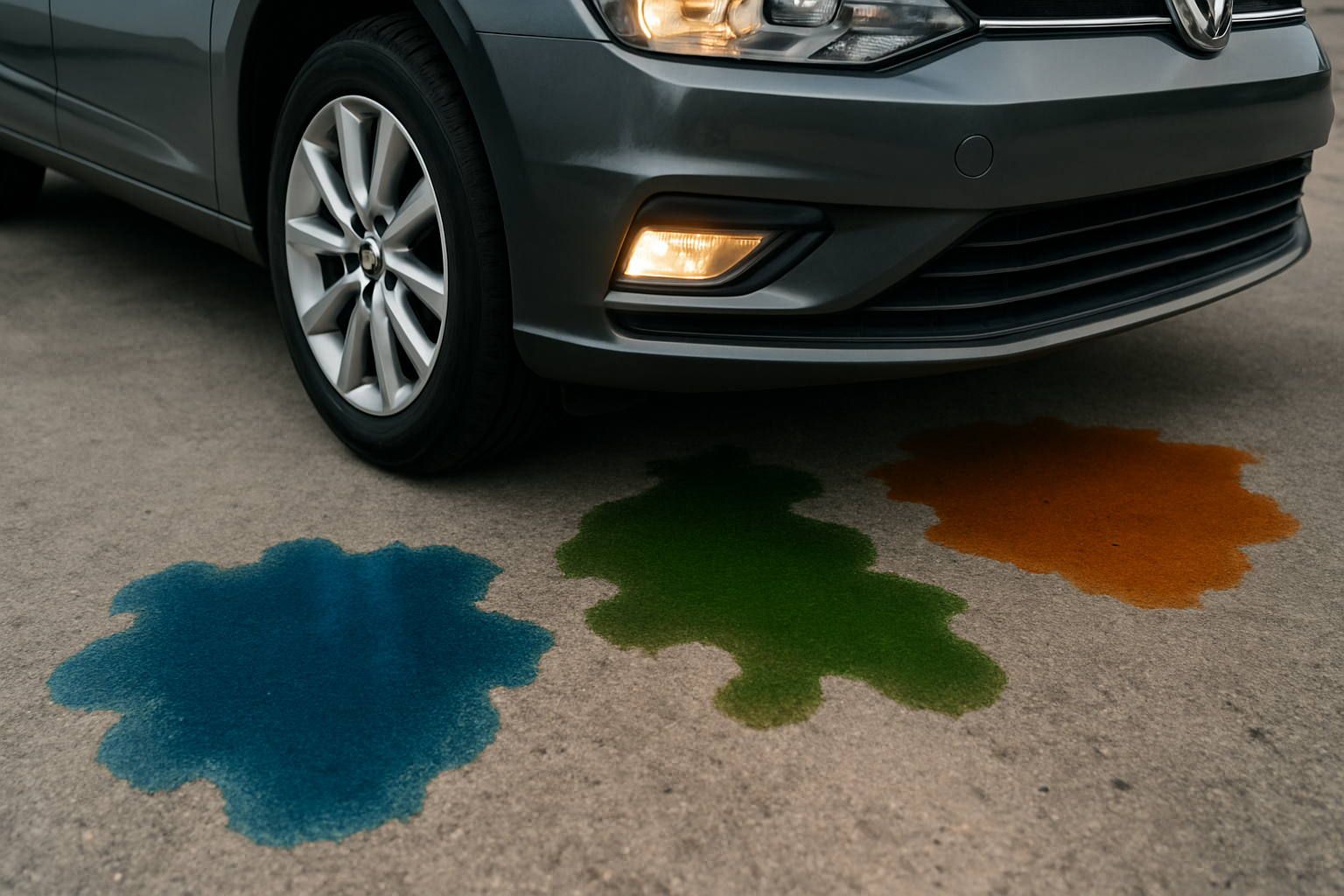
Finding mysterious puddles under your car can trigger that sinking feeling in your stomach. While some fluids are completely normal, others signal expensive repairs lurking around the corner. Understanding what each color means helps you separate minor maintenance from major problems.
Your car contains multiple fluid systems, each with distinct colors, textures, and locations where they typically leak. Learning to identify these characteristics lets you diagnose issues quickly and decide whether you need immediate attention or can wait for your next service appointment.
Green and Orange Puddles: Coolant Leaks
Green or orange puddles almost always indicate coolant, also called antifreeze. This fluid circulates through your engine and radiator to prevent overheating and freezing. Modern coolants come in various colors depending on the manufacturer and chemical composition.
Coolant has a distinctly sweet smell that some people compare to maple syrup. It feels slippery between your fingers, similar to dish soap. You’ll typically find coolant leaks near the front of your vehicle, under the radiator, water pump, or engine block.
Small coolant leaks might appear as dried residue rather than fresh puddles. Look for crusty, colored deposits around hose connections, the radiator cap, or overflow reservoir. Even minor coolant loss requires attention because overheating can destroy your engine within minutes.
Common Coolant Leak Sources
Radiator hoses represent the most frequent culprit for coolant leaks. These rubber hoses deteriorate over time, developing cracks or loose connections at the clamps. You can often spot failing hoses by their swollen appearance or visible cracks.
Water pump failures create coolant puddles directly under the engine’s center. The water pump circulates coolant through the system, and when its internal seals fail, coolant drips from the weep hole. This type of leak requires immediate professional attention.
Radiator problems produce puddles toward the front of your vehicle. Small rocks, road debris, or corrosion can puncture the radiator fins. These leaks often worsen gradually, starting as minor seepage before becoming steady drips.
Blue Puddles: Windshield Washer Fluid
Blue puddles typically indicate windshield washer fluid, though some brands use other colors like purple or yellow. This fluid smells strongly of alcohol or ammonia and feels thin, similar to water mixed with soap.
Washer fluid leaks usually occur near the windshield washer reservoir, located in the engine compartment. The reservoir is often mounted on the driver’s side and has a cap marked with a windshield symbol. Cracks in the plastic tank or loose connections at the pump cause most leaks.
Unlike coolant or oil leaks, washer fluid problems won’t damage your engine or transmission. However, you’ll lose the ability to clean your windshield, which creates a safety hazard during bad weather or dusty conditions.
Fixing Washer Fluid Leaks
Check the reservoir for obvious cracks, especially around the mounting points where vibration causes stress fractures. The plastic becomes brittle over time, particularly in cold climates where freezing and thawing cycles occur.
Examine the rubber lines connecting the reservoir to the spray nozzles. These thin tubes can develop holes from engine heat or become disconnected at the fittings. Replacement tubes are inexpensive and available at most auto parts stores.
The washer pump itself might develop internal leaks. You’ll hear the pump running when you activate the washers, but no fluid reaches the windshield. Pump replacement requires draining the reservoir and disconnecting electrical connections.
Brown and Black Puddles: Oil Leaks
Dark brown or black puddles indicate engine oil, one of the most serious fluid leaks. Fresh oil appears amber or honey-colored, but darkens with age and contamination. Oil has a distinctive petroleum smell and feels greasy between your fingers.
Oil leaks typically appear under the engine compartment’s center or toward the transmission. The exact location helps identify the source, whether it’s the oil pan gasket, valve covers, or main seals. Even small oil leaks can lead to expensive engine damage if ignored.
Monitor oil leaks carefully because losing significant amounts can cause catastrophic engine failure. Check your oil level weekly using the dipstick, and add oil as needed to maintain proper levels. Driving with insufficient oil will destroy internal engine components within minutes.
Identifying Oil Leak Sources
Oil pan gaskets create puddles directly under the engine’s lowest point. These rubber seals deteriorate over time, allowing oil to seep out around the pan’s perimeter. You’ll often see oil coating the pan’s bottom surface before it drips to the ground.
Valve cover gaskets produce leaks on the engine’s top sides. Oil seeps down the engine block, creating streaks before pooling underneath. These leaks often worsen gradually and may cause burning oil smells when oil drips onto hot exhaust components.
Rear main seals leak where the engine connects to the transmission. These internal seals require significant disassembly to replace, making them expensive repairs. Rear main seal leaks create puddles toward the vehicle’s center, between the engine and transmission.
Red and Pink Puddles: Transmission Fluid
Red or pink puddles indicate transmission fluid, essential for automatic transmission operation. This fluid lubricates internal components and provides hydraulic pressure for gear changes. Transmission fluid has a distinct sweet or burning smell, depending on its condition.
Fresh transmission fluid appears bright red and feels slick but thinner than engine oil. Old or burned fluid turns dark brown or black and develops a acrid, burnt smell. Transmission fluid leaks typically occur under the vehicle’s center, where the transmission is located.
Transmission leaks require immediate attention because these systems operate under high pressure and precise tolerances. Low fluid levels cause harsh shifting, slipping, or complete transmission failure. Rebuilding or replacing a transmission costs thousands of dollars.
Common Transmission Leak Points
Pan gaskets represent the most common source of transmission leaks. The transmission pan bolts to the case’s bottom with a rubber gasket creating the seal. Over-tightening the bolts or age-related gasket deterioration allows fluid to seep out.
Input and output shaft seals develop leaks where rotating components enter and exit the transmission case. These seals experience constant movement and pressure, eventually wearing out. Seal replacement requires partial transmission disassembly.
Cooler lines carry transmission fluid to and from the radiator for temperature control. These metal lines can develop leaks at the fittings or crack from vibration and road salt corrosion. Cooler line leaks often spray fluid over a wide area rather than creating neat puddles.
Clear Puddles: Air Conditioning Condensation
Clear, odorless puddles under your car’s passenger side usually indicate normal air conditioning condensation. When the AC runs, moisture from the air condenses on the evaporator coils and drains outside through a dedicated tube.
AC condensation appears as pure water with no smell or color. It typically drips from a rubber drain tube located behind the engine, on the firewall’s passenger side. You’ll notice more condensation during humid weather or when running the AC continuously.
This type of “leak” is completely normal and requires no repair. However, if the drain tube becomes clogged with debris, water might back up and leak inside the passenger compartment instead. Clearing the drain requires accessing the tube and blowing out any obstructions.
How to Identify Fluid Leaks
Start by noting exactly where puddles appear under your vehicle. Park in the same spot overnight, then check for new fluid accumulation in the morning. The puddle’s location relative to your car’s components helps narrow down the source.
Use a clean rag or paper towel to collect a sample of the leaked fluid. Examine the color under good lighting, and smell the sample carefully. Different fluids have distinct odors that experienced mechanics recognize immediately.
Feel the fluid’s consistency between your fingers. Oil feels greasy and thick, coolant feels slippery like soap, transmission fluid feels thinner than oil, and washer fluid feels similar to soapy water. These tactile differences help confirm your visual identification.
When to Seek Professional Help
Any fluid leak other than AC condensation deserves professional attention. However, some situations require immediate action while others can wait for your next scheduled service appointment.
Stop driving immediately if you discover large amounts of coolant, oil, or transmission fluid. These systems require adequate fluid levels to prevent catastrophic damage. Check fluid levels using the appropriate dipsticks or sight gauges before continuing.
Small, slow leaks allow time for proper diagnosis and repair scheduling. Monitor fluid levels regularly and top off as needed until you can arrange professional service. Keep appropriate replacement fluids in your garage for emergency top-offs.
Prevention and Maintenance Tips
Regular inspections help catch leaks before they become expensive problems. Walk around your parked vehicle weekly, looking for new puddles or stains. Many leaks start as minor seepage before developing into steady drips.
Check fluid levels monthly using the dipsticks and reservoirs. Sudden drops in any fluid level indicate leaks, even if you haven’t noticed puddles. Parking on different surfaces might hide evidence of leaking fluids.
Replace aging rubber hoses and gaskets during routine maintenance. These components deteriorate over time, especially in extreme temperatures. Preventive replacement costs far less than repairing damage caused by sudden failures.
Frequently Asked Questions
Can I drive with a small fluid leak?
Small leaks allow continued driving if you monitor fluid levels closely and top off as needed. However, any leak can worsen suddenly, leaving you stranded. Coolant and oil leaks pose the greatest risk of immediate engine damage.
How much does it cost to fix common fluid leaks?
Simple gasket replacements like valve covers or oil pans typically cost $200-500 in labor and parts. More complex repairs like water pumps or transmission seals can range from $500-1500. Early detection and repair prevents more expensive secondary damage.
Will fluid leaks affect my vehicle’s resale value?
Active fluid leaks significantly reduce resale value because buyers assume additional hidden problems exist. Fixing leaks before selling demonstrates proper maintenance and helps justify your asking price. Even minor leaks create negative first impressions during buyer inspections.
Are fluid leak repairs covered under warranty?
Factory warranties typically cover defective components that cause leaks, but normal wear items like gaskets and seals may not qualify after certain mileage thresholds. Extended warranties often exclude seepage considered normal aging. Review your specific warranty terms for coverage details.
Leave a Reply