
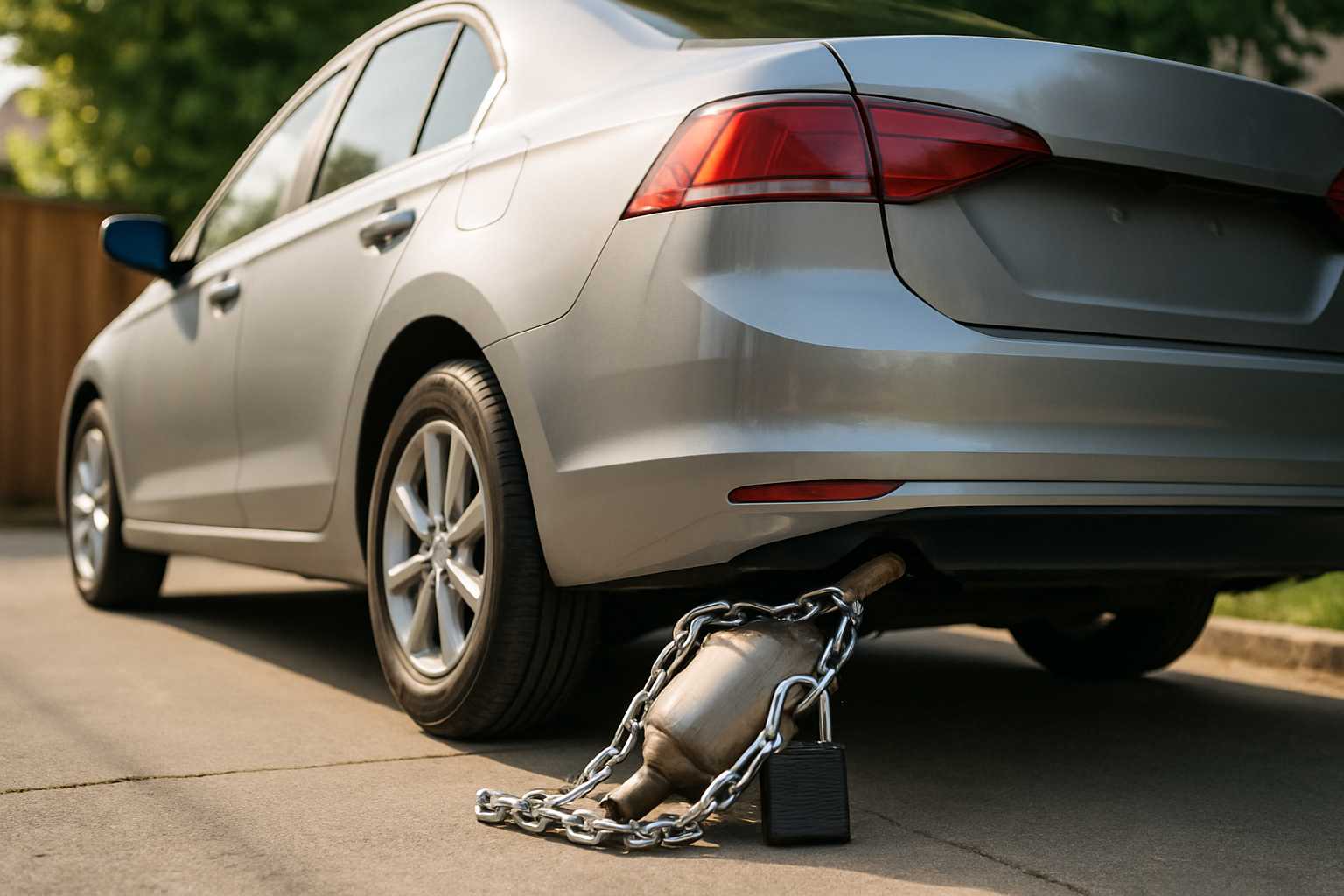
Catalytic converter theft has skyrocketed nationwide, with thieves targeting these valuable components that can be stolen in under two minutes. Your converter contains precious metals worth hundreds on the black market, but replacement costs you thousands.
Certain vehicles are prime targets due to their ground clearance, converter accessibility, and high precious metal content. Taking preventive action now can save you from the expensive headache and weeks without your vehicle.
Understanding Catalytic Converter Theft
Catalytic converters contain platinum, palladium, and rhodium, precious metals that make them extremely valuable to thieves. These components reduce harmful emissions by converting toxic gases into less harmful substances through chemical reactions.
Thieves can slide under your vehicle and cut out the converter using a battery-powered saw in 60-120 seconds. The theft is quick, relatively quiet, and requires minimal skill or tools.
The stolen converters end up at scrap yards or are sold online, where few questions are asked about their origin. Meanwhile, you’re left with a vehicle that sounds like a freight train and repair bills ranging from $1,000 to $3,000.
Most Targeted Vehicles
Four vehicle models consistently top the theft statistics: the Toyota Prius, Toyota Tacoma, Honda Accord, and Ford F-150. Each presents unique vulnerabilities that make them attractive targets.
Toyota Prius
The Prius remains the most targeted vehicle for catalytic converter theft. Hybrid vehicles like the Prius have converters with higher concentrations of precious metals because the converter doesn’t get as hot during normal operation.
Prius models from 2004-2009 are especially vulnerable because they have adequate ground clearance for thieves to work underneath, and the converter is easily accessible with minimal obstructions.
Toyota Tacoma
The Tacoma’s higher ground clearance makes it an easy target for thieves who don’t even need to jack up the vehicle. The converter location provides clear access from underneath.
Tacoma trucks from 2016-2021 are frequently targeted, with thieves able to complete the theft without lying completely flat on the ground.
Honda Accord
Honda Accord models, particularly those from 2019-2020, have converters positioned in easily accessible locations. The vehicle’s popularity also means there’s strong demand for replacement parts in both legitimate and illegitimate markets.
Ford F-150
The F-150’s size and ground clearance provide thieves with comfortable working space underneath the vehicle. These trucks often have multiple catalytic converters, making them even more attractive targets.
Fleet vehicles and work trucks are especially vulnerable because they’re often parked in the same locations regularly, allowing thieves to scout and plan their approach.
Physical Protection Methods
Installing physical barriers represents your most effective defense against catalytic converter theft. These solutions make your converter significantly harder to steal, causing most thieves to move on to easier targets.
Catalytic Converter Shields
Cat shields are metal plates that bolt to your vehicle’s undercarriage, covering the catalytic converter with a protective barrier. Quality shields use aircraft-grade aluminum or steel construction with tamper-resistant bolts.
Professional installation typically costs $200-400 in labor, but many shields can be installed by mechanically-inclined owners with basic tools. The shield makes cutting out the converter nearly impossible without specialized equipment and significantly more time.
Vehicle-specific shields offer the best protection because they’re engineered to fit your exact model’s undercarriage contours. Universal shields may leave gaps or fit poorly, reducing their effectiveness.
Here are some highly-rated catalytic converter shields designed for the most targeted vehicle models. Brands like MillerCAT and CatClamp offer vehicle-specific options that provide excellent protection.
Catalytic Converter Clamps and Cages
Clamp systems like the CatClamp wrap steel cables around the converter and exhaust pipes, making it extremely difficult to remove the converter cleanly. The cables must be cut in multiple locations, dramatically increasing theft time and tool requirements.
Cage systems surround the converter with a steel framework that prevents saw access from multiple angles. These systems work well but can be more complex to install than shield-style protectors.
Vehicle Identification and Marking
Marking your catalytic converter with identifying information makes it harder for thieves to sell and easier for law enforcement to trace if stolen.
VIN Etching
Many auto shops and police departments offer VIN etching services, where your vehicle identification number is permanently marked onto the converter housing. This marking makes the part traceable and less appealing to scrap dealers.
Some shops also offer bright orange or red paint marking that makes modified converters obvious to potential buyers. The visual deterrent combined with identification numbers can discourage both theft and resale.
Serial Number Documentation
Photograph your catalytic converter’s serial numbers and location before any theft occurs. These images can help law enforcement identify your specific converter if recovered and support insurance claims.
Keep these photos in your vehicle documentation along with purchase receipts and maintenance records.
Smart Parking Strategies
Where and how you park significantly impacts your theft risk. Thieves prefer locations where they can work undisturbed for several minutes.
Lighting and Visibility
Park in well-lit areas whenever possible, especially overnight parking. Thieves avoid locations where they’ll be clearly visible to passersby or security cameras.
If you have a garage, use it consistently. Even a carport provides some deterrent effect compared to open parking areas.
Surface Considerations
Parking close to walls, curbs, or other vehicles can limit access to your vehicle’s undercarriage. Thieves need space to maneuver their cutting tools and position themselves under the vehicle.
Gravel or rough surfaces make it less comfortable for thieves to lie underneath your vehicle, while smooth pavement provides an ideal working environment.
Security Systems
Motion-activated alarms specifically designed for catalytic converter theft can detect vibrations and movement under your vehicle. These systems are more sensitive than standard car alarms to the specific motions involved in converter theft.
Some systems connect to your smartphone and can alert you immediately when suspicious activity is detected near your vehicle.
Insurance Considerations
Understanding your insurance coverage before theft occurs can prevent unpleasant surprises when filing a claim.
Comprehensive Coverage Requirements
Catalytic converter theft falls under comprehensive coverage, not collision or liability insurance. If you only carry basic liability insurance, you won’t have coverage for converter theft.
Review your comprehensive deductible amount, as you’ll pay this cost out-of-pocket before insurance covers the remaining replacement expense. High deductibles can make small claims uneconomical to file.
Replacement Cost Reality
Replacement costs vary significantly by vehicle model and local labor rates. Prius owners often face bills between $2,500-$3,500, while truck owners may pay $1,500-$2,500.
Some vehicles require multiple converters or have complex exhaust configurations that increase labor time and parts costs. Get estimates from multiple shops, as prices can vary substantially.
Rental Car Coverage
Catalytic converter replacement often requires several days to complete due to parts availability and shop scheduling. Verify whether your comprehensive coverage includes rental car benefits during repairs.
Without rental coverage, you’ll pay daily rental costs while waiting for your vehicle repair to complete.
What to Do If Your Converter Is Stolen
If you discover your catalytic converter has been stolen, don’t drive the vehicle. The exhaust will be extremely loud, and driving without a converter can damage other engine components.
File a police report immediately, even if recovery is unlikely. Insurance companies require police reports for theft claims, and the report helps law enforcement track theft patterns in your area.
Contact your insurance company as soon as possible to begin the claims process. Take photos of the damage and get written repair estimates from certified shops.
Frequently Asked Questions
How can I tell if my catalytic converter was stolen?
You’ll know immediately when starting your vehicle. The engine will be extremely loud, similar to a race car or motorcycle, due to the missing exhaust component. You may also notice reduced acceleration and poor engine performance.
Can I drive without a catalytic converter?
While the vehicle may run, driving without a catalytic converter is illegal in most areas and can damage other engine components. The exhaust will be extremely loud and produce higher emissions. Avoid driving until repairs are completed.
Will insurance cover catalytic converter theft?
Comprehensive insurance coverage typically covers catalytic converter theft, minus your deductible. Liability-only policies won’t cover the theft. Contact your insurance provider to verify your specific coverage details.
How long does catalytic converter replacement take?
Replacement typically takes 1-3 days, depending on parts availability and shop workload. Some vehicle models require special-order parts that may extend the timeline to a week or more.


Leave a Reply