
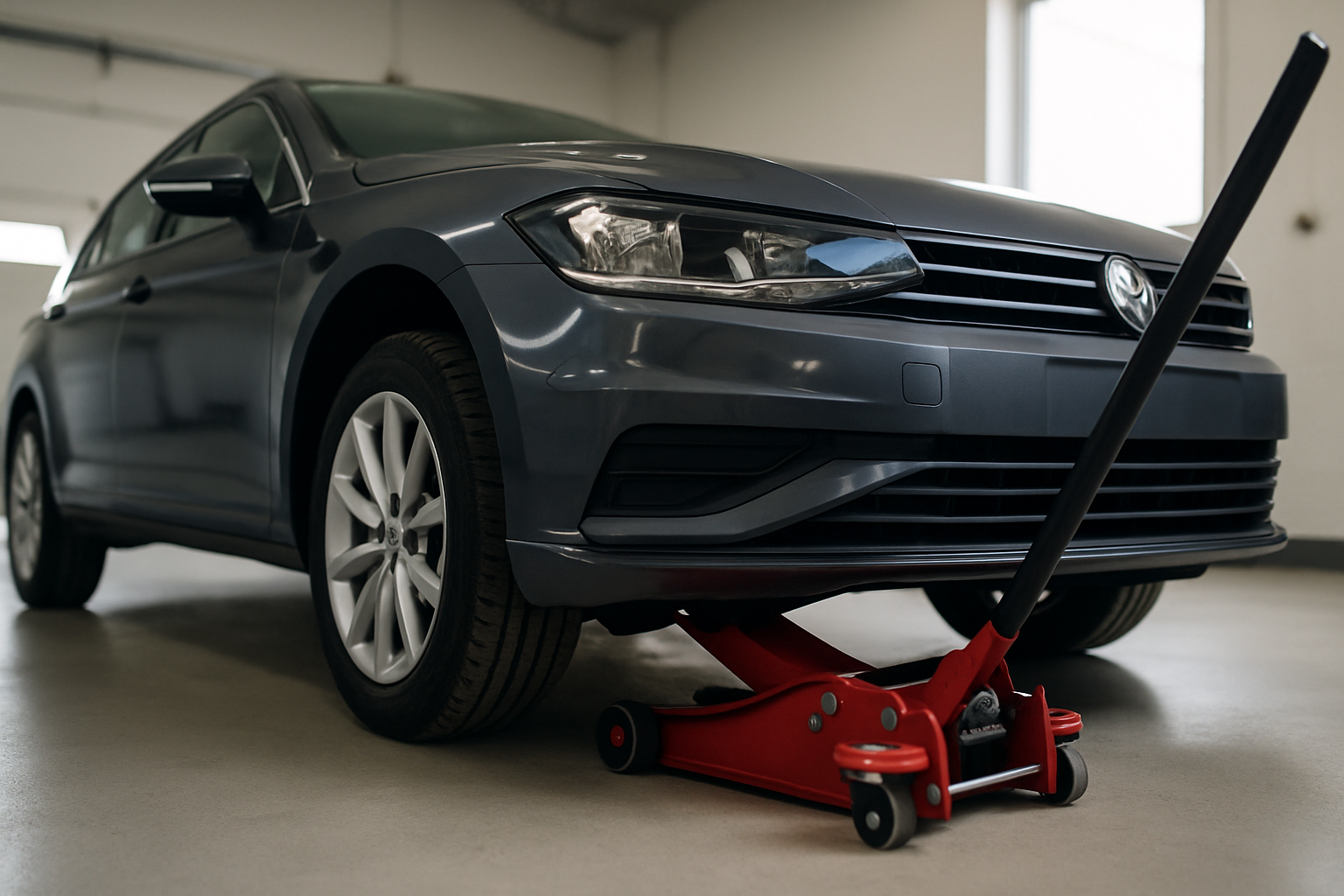
Nothing ruins your day faster than trying to change a tire or perform routine maintenance, only to discover you’ve bent or cracked your car’s frame because you didn’t jack it up properly. Learning the correct jack points for your vehicle isn’t just about avoiding expensive damage, it’s about keeping yourself safe while working under your car.
The difference between a quick tire change and a costly repair bill often comes down to knowing exactly where to place your jack and how to properly support your vehicle with jack stands.
Understanding Your Vehicle’s Frame Structure
Before you even touch your jack, you need to understand what type of frame your car has. This determines where you can safely lift your vehicle without causing structural damage.
Most modern cars use unibody construction, where the frame and body are integrated into one structure. These vehicles have specific reinforced jack points designed to handle lifting loads. Older trucks and some SUVs use body-on-frame construction, where a separate steel frame supports the vehicle body.
You can usually tell which type you have by looking underneath your car. Unibody vehicles will have pinch welds (seamed metal edges) running along the sides, while body-on-frame vehicles have thick steel rails running front to back.
Locating the Correct Jack Points
Your owner’s manual contains a diagram showing the exact jack points for your vehicle, but these locations follow predictable patterns based on your car’s construction type.
Unibody Vehicle Jack Points
On unibody cars, you’ll find reinforced jack points along the pinch weld seams on both sides of the vehicle. These spots are typically marked with small notches or arrows molded into the plastic side skirts. The metal is doubled up at these locations specifically to handle the stress of lifting.
Most unibody vehicles have four jack points: two behind the front wheels and two in front of the rear wheels. Some cars also have a central front jack point near the engine cradle and a rear point near the differential.
Never attempt to lift a unibody car by grabbing random spots along the pinch weld. The metal is thin everywhere except the designated jack points, and you’ll create expensive dents or creases.
Body-on-Frame Vehicle Jack Points
Body-on-frame vehicles give you more options since the steel frame rails are built to handle heavy loads. You can typically jack up these vehicles anywhere along the main frame rails, but avoid the body mounting points where the frame connects to the body panels.
Look for solid steel sections of the frame, avoiding any areas with brackets, wiring, or fuel lines. The axles themselves are also safe jack points on most trucks and SUVs, particularly the rear axle housing.
Essential Equipment for Safe Vehicle Lifting
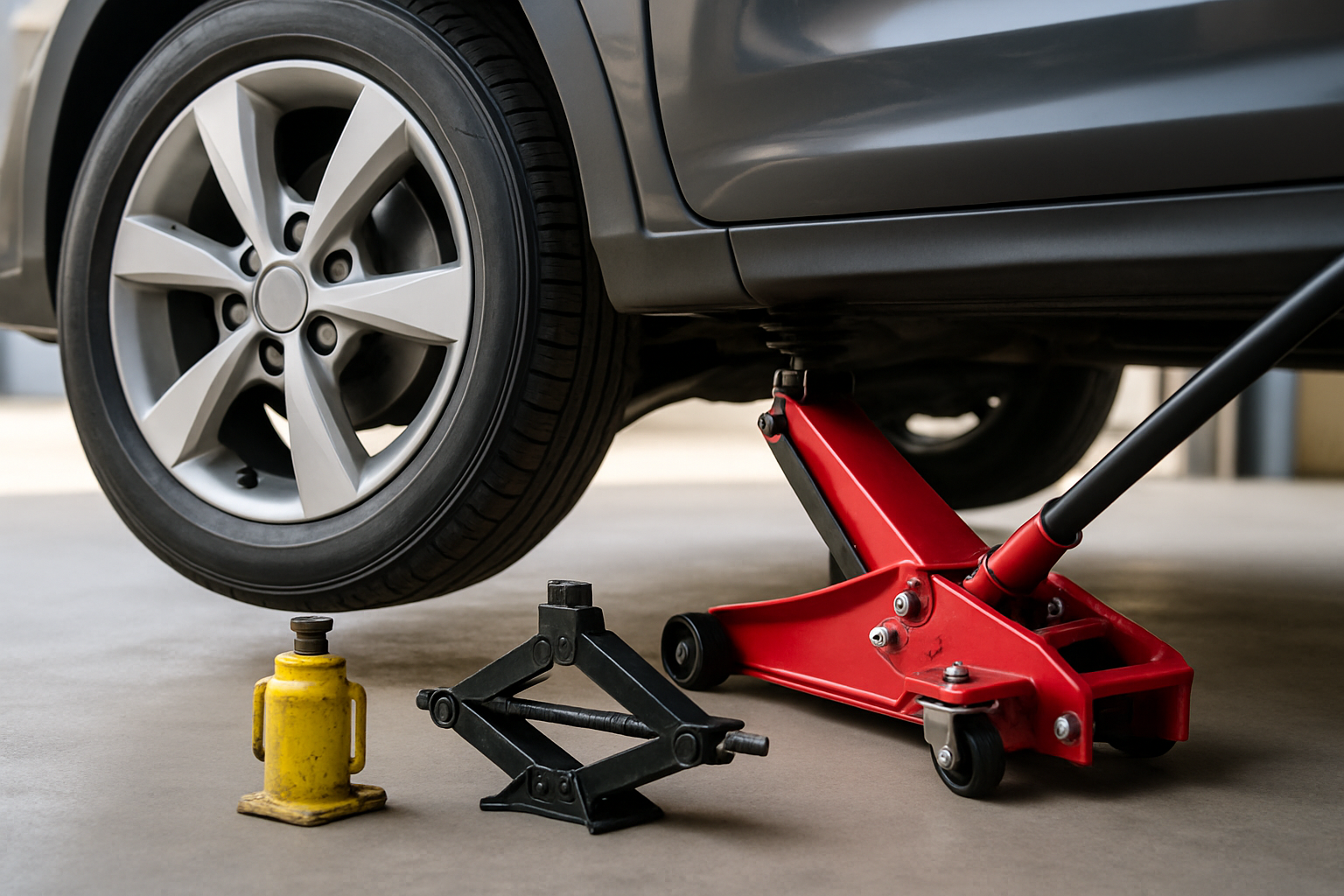
Your car’s emergency jack is designed for temporary tire changes only. For any work that requires you to spend time under the vehicle, you need proper equipment.
A quality floor jack provides much more stability than the scissor jack in your trunk. Look for one rated for at least 1.5 times your vehicle’s weight. Most passenger cars weigh between 3,000 and 4,500 pounds, making a 3-ton jack suitable for most situations.
Jack stands are absolutely critical for safety. These adjustable steel supports lock at various heights and provide a stable base that won’t fail like a hydraulic jack can. You’ll need at least two stands, but four stands allow you to lift the entire car safely.
Here are some quality floor jack and jack stands sets that provide reliable lifting capacity for most vehicles. Brands like Torin, Pittsburgh Automotive, and Arcan offer complete kits that include both the floor jack and matching stands with proper weight ratings.
Step-by-Step Safe Jacking Procedure
Proper jacking technique starts before you even get your equipment out. Park on level, solid ground away from traffic. Concrete or asphalt works best, while gravel or dirt can shift under load.
Engage your parking brake and place wheel chocks behind the wheels that will remain on the ground. This prevents the car from rolling once you start lifting. For extra security on manual transmissions, leave the car in gear.
Positioning Your Floor Jack
Slide your floor jack under the vehicle until the saddle (the lifting pad) sits directly under the designated jack point. Double-check that you’re hitting solid metal, not plastic trim pieces or thin body panels.
If you’re lifting at a pinch weld, consider using a pinch weld adapter or a piece of wood to distribute the load across more surface area. This prevents the jack from concentrating all the force on a small section of metal.
Pump the jack handle slowly and watch the saddle as it makes contact. Stop immediately if the metal starts to bend or if the jack slips sideways.
Raising the Vehicle
Once the jack makes solid contact, continue pumping until the wheel just clears the ground. Don’t lift higher than necessary, as this increases the risk of the vehicle becoming unstable.
Check that the jack remains perpendicular to the ground as you lift. If it starts leaning, lower the vehicle and reposition the jack.
Installing Jack Stands
This step is where many people make critical safety mistakes. Position your jack stands on solid jack points near where you’re lifting. The stands should sit on the same reinforced areas you’d use for jacking.
Raise the stands until they just touch the vehicle’s frame, then raise them slightly more to take the weight. Slowly lower your floor jack until the jack stands are supporting the full weight of the car.
Give the car a gentle push to make sure it’s stable on the stands before crawling underneath. The vehicle shouldn’t rock or shift when properly supported.
Critical Safety Rules You Must Follow
Never, under any circumstances, work under a vehicle supported only by a hydraulic jack. Jacks can fail without warning due to seal leaks, mechanical problems, or simple operator error. Even a small leak can cause a catastrophic failure that could crush you.
Always keep your floor jack in place as a backup even after installing jack stands. This provides a secondary support system in case a stand fails or shifts.
Avoid placing any part of your body under the vehicle until you’ve tested the stability of your setup. Use the floor jack to make small adjustments to height rather than trying to reposition the jack stands under load.
Common Mistakes That Damage Vehicles
Using the wrong jack points causes more damage than any other mistake. Lifting by the oil pan, transmission case, or suspension components can crack expensive parts or cause them to shift out of alignment.
Placing the jack on plastic undertray panels or thin sheet metal body panels will create permanent damage. These components can’t support the weight of the entire vehicle concentrated at a single point.
Rushing the process leads to sloppy jack placement and unstable setups. Take your time to verify you’re hitting the correct points before applying full lifting force.
Special Considerations for Different Vehicle Types
Low-profile sports cars often require special low-profile jacks to fit under the front air dam. Standard floor jacks may not slide under these vehicles without first driving onto ramps or using a different approach angle.
Lifted trucks and SUVs present the opposite problem, where standard jacks don’t extend high enough. You may need a high-lift jack or taller jack stands to work on these vehicles safely.
Electric and hybrid vehicles have high-voltage batteries and cables that you must avoid when jacking. Check your owner’s manual for any special precautions or modified jack points on these vehicles.
When to Call for Professional Help
If you can’t clearly identify the proper jack points for your vehicle, don’t guess. A quick call to your dealer’s service department or a trusted mechanic can save you from expensive mistakes.
Damaged or rusted jack points require professional assessment. Attempting to lift a vehicle with compromised jack points can cause the lifting point to fail catastrophically.
Any situation where you need to lift the entire vehicle or work extensively underneath should be done with professional equipment or at least with an experienced person supervising your setup.
Frequently Asked Questions
Can I use a hydraulic jack without jack stands for quick jobs?
Absolutely not. Even changing a tire should be done with jack stands if you plan to spend more than a few minutes under the vehicle. Hydraulic jacks can fail without warning, and no repair job is worth risking your life.
How do I know if I’m damaging the pinch weld?
You’ll see the metal starting to bend or crease before serious damage occurs. If the jack point starts to deform, lower the vehicle immediately and reposition the jack. Using a pinch weld adapter helps distribute the load and prevents this type of damage.
Is it safe to lift both sides of my car at once?
Yes, but only if you use the proper center jack points (front and rear) and place jack stands at the appropriate side jack points. Never lift from side jack points and expect the car to remain stable without additional support.
What should I do if my jack starts to lean while lifting?
Stop lifting immediately and lower the vehicle. Reposition the jack to ensure it’s sitting level and perpendicular to the ground before attempting to lift again. A leaning jack can slip and cause the vehicle to fall unexpectedly.



Leave a Reply