
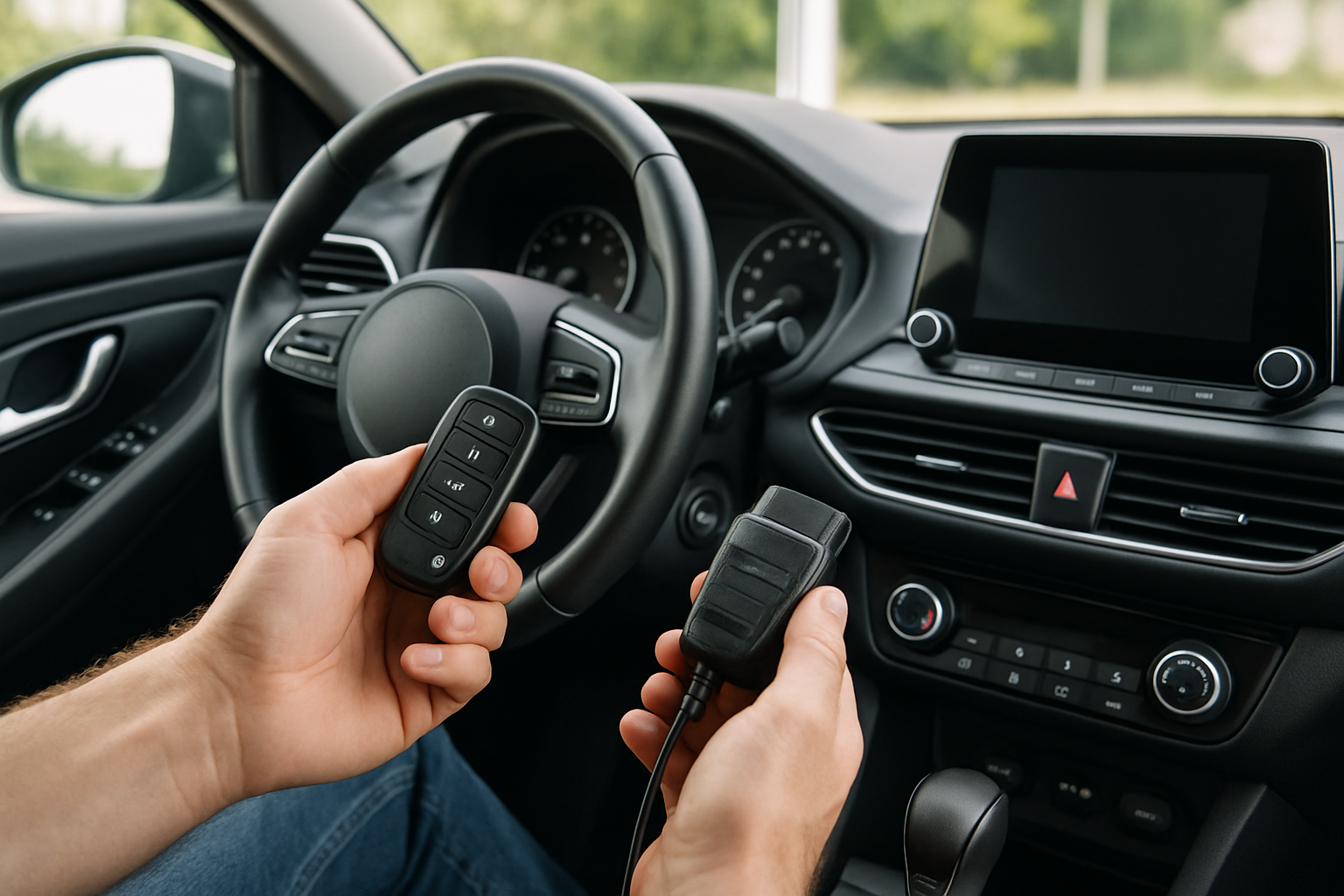
Getting locked out of your car with a dead key fob is expensive and frustrating. Most dealerships charge $300-500 to replace and program a new key fob, while locksmiths typically charge $150-250. You can cut those costs significantly by programming a replacement key fob yourself for many vehicles.
The key word here is “replacement.” If you still have at least one working key fob, you can often program additional fobs using your car’s built-in self-programming procedure.
Understanding Key Fob Programming Costs
Before diving into the DIY approach, you should understand what you’re saving money on. Dealerships charge premium prices because they handle everything from ordering the correct fob to cutting the physical key and programming both the remote functions and the immobilizer chip.
Here’s how the costs typically break down:
Dealership: $300-500 total (includes parts, labor, and programming)
Locksmith: $150-250 total (competitive pricing, same service)
DIY: $50-150 for the fob, plus your time
The savings are substantial, but DIY programming only works if you meet specific conditions.
When You Can Program a Key Fob Yourself
Most vehicles from 2000 onwards have some form of self-programming capability, but there are important limitations. You can typically program a new fob yourself if you have at least one working key fob and your car supports the owner programming procedure.
This method works for adding additional fobs to your existing set. If you’ve lost all your keys, you’ll need professional help because the car’s security system requires a master reset that only special equipment can perform.
Vehicles that commonly support owner programming include most Ford, GM, Chrysler, Honda, Toyota, and Nissan models. Luxury brands like BMW, Mercedes, and Audi usually require dealer programming equipment.
Finding the Right Replacement Key Fob
Your first step is identifying the exact key fob your vehicle needs. Check your owner’s manual for the FCC ID number, or look on your existing fob for this information. The FCC ID is usually printed on the back of the fob and looks something like “CWTWB1U345” or similar.
You can buy replacement fobs from several sources. Amazon offers a wide selection of replacement key fobs for most vehicle makes and models. Online auto parts retailers, eBay, and even some local auto parts stores carry them.
Make sure you’re buying the correct frequency (315MHz or 433MHz in most cases) and that the button configuration matches your original. Some fobs look identical but have different internal programming that won’t work with your car.
The General Programming Procedure
While specific steps vary by manufacturer, most self-programming procedures follow a similar pattern involving turning the ignition on and off in a specific sequence while pressing buttons on both your working fob and the new one.
Here’s the typical process structure:
First, you’ll enter programming mode by performing a specific ignition sequence. This usually involves turning the key to the “ON” position (not starting the engine) and back to “OFF” several times within a certain timeframe.
Most cars will give you a signal when they enter programming mode. You might hear the door locks cycle, see the hazard lights flash, or hear a chime. This confirms the car is ready to learn new fobs.
Next, you’ll press specific buttons on your working fob to put the system in learning mode, then press buttons on the new fob to program it. The exact button sequence varies by manufacturer.
Ford Programming Example
Ford vehicles often use one of the simpler programming procedures. For most Ford models from 2000-2010, you can program up to four fobs using this method:
Turn the ignition from OFF to ON eight times within 10 seconds, ending in the ON position. The door locks will cycle to indicate programming mode.
Within 20 seconds, press any button on your first key fob. The locks will cycle again. Press any button on your second fob (the new one) within 10 seconds. The locks will cycle a third time.
Turn the ignition to OFF to exit programming mode. Test both fobs to make sure they work properly.
GM Programming Example
General Motors vehicles typically use a different approach. For most Chevrolet, Buick, GMC, and Cadillac models, the procedure involves:
Sit in the driver’s seat with all doors closed. Hold the UNLOCK and LOCK buttons on your working fob simultaneously until the door locks cycle (about 15 seconds).
Within 30 seconds, hold the UNLOCK and LOCK buttons on the new fob until the locks cycle again. This programs the new fob.
Test both fobs to ensure proper operation. The system can typically store up to four fobs.
Troubleshooting Common Programming Issues
If your programming attempt doesn’t work, several factors could be the culprit. Timing is critical in most procedures, and being even a few seconds off can cause failure.
Battery issues in either the car or the fob can interfere with programming. Make sure your car’s battery is fully charged and replace the batteries in both fobs before attempting programming.
Some vehicles require all existing fobs to be present during programming, or they’ll be erased from memory. If you have multiple working fobs, keep them handy during the procedure.
Aftermarket fobs sometimes require multiple programming attempts to work properly. The first attempt might partially program the fob, requiring you to repeat the procedure.
When DIY Programming Won’t Work
Several situations require professional programming equipment. If you’ve lost all your keys, the car’s security system typically goes into lockdown mode that only dealer-level equipment can reset.
Many luxury vehicles don’t support owner programming at all. BMW, Mercedes-Benz, Audi, and Lexus often require specialized tools and software that only dealers and some locksmiths have.
Newer vehicles with advanced security features may require professional programming even if older models from the same manufacturer supported DIY methods.
If your car has a push-button start system, programming usually requires professional equipment to sync the proximity sensors and immobilizer systems.
Physical Key Cutting Considerations
Don’t forget about the physical key blade if your fob includes one. Even if you successfully program the remote functions, you’ll need the metal key cut to match your car’s locks.
Most hardware stores, auto parts stores, and locksmiths can cut keys from your existing key or the vehicle’s key code. This usually costs $5-15 and takes just a few minutes.
Some newer vehicles use laser-cut keys or special high-security blanks that require specialized equipment. These typically need to be cut at a dealership or locksmith shop.
Testing Your Programmed Fob
After programming, test all functions of your new fob. Check that lock, unlock, panic (if equipped), and trunk release buttons work properly from various distances around your car.
Make sure your original fob still works correctly. If the programming procedure erased your old fob, you’ll need to reprogram it using the same steps.
Test the physical key in all locks, including the driver’s door, passenger door, and trunk or rear hatch if your vehicle has traditional key locks.
Frequently Asked Questions
Can I program a used key fob from another car?
Generally no. Key fobs are typically locked to specific vehicles and can’t be reprogrammed for different cars. You need a blank fob that’s compatible with your vehicle’s make, model, and year.
How many key fobs can I program to my car?
Most vehicles accept 2-8 key fobs, with four being the most common limit. Check your owner’s manual for your specific vehicle’s capacity. When you reach the limit, programming a new fob will erase the oldest one from memory.
Will programming a new fob void my warranty?
Programming additional key fobs using the manufacturer’s intended procedure shouldn’t void your warranty. However, using incorrect procedures or damaging electrical components during attempts could potentially cause warranty issues.
What if I can’t find programming instructions for my specific vehicle?
Check your owner’s manual first, as many manufacturers include programming instructions there. Online forums specific to your vehicle make and model often have detailed procedures. If you can’t find reliable instructions, consult a professional rather than guessing.



Leave a Reply