

Heavy steering can transform a simple drive to the grocery store into an arm workout you didn’t sign up for. When your steering wheel suddenly requires more muscle to turn, multiple systems could be failing, and identifying the root cause quickly can save you from expensive repairs and potentially dangerous situations.
Understanding Your Power Steering System
Modern vehicles use two main types of power steering systems, and knowing which one you have makes all the difference in diagnosing problems. Hydraulic power steering relies on pressurized fluid pumped through hoses and valves to assist your steering input. Electric power steering uses an electric motor to provide assistance, controlled by sensors and computer modules.
Most vehicles built before 2010 use hydraulic systems, while newer cars increasingly feature electric power steering for better fuel economy and easier manufacturing. You can usually tell which system you have by popping the hood and looking for a power steering fluid reservoir near the engine.
Both systems can fail in distinct ways, but hydraulic systems typically give more warning signs before complete failure. Electric systems can sometimes fail suddenly, leaving you with no assistance at all.
Hydraulic Power Steering Problems
Low Fluid Levels and Leaks
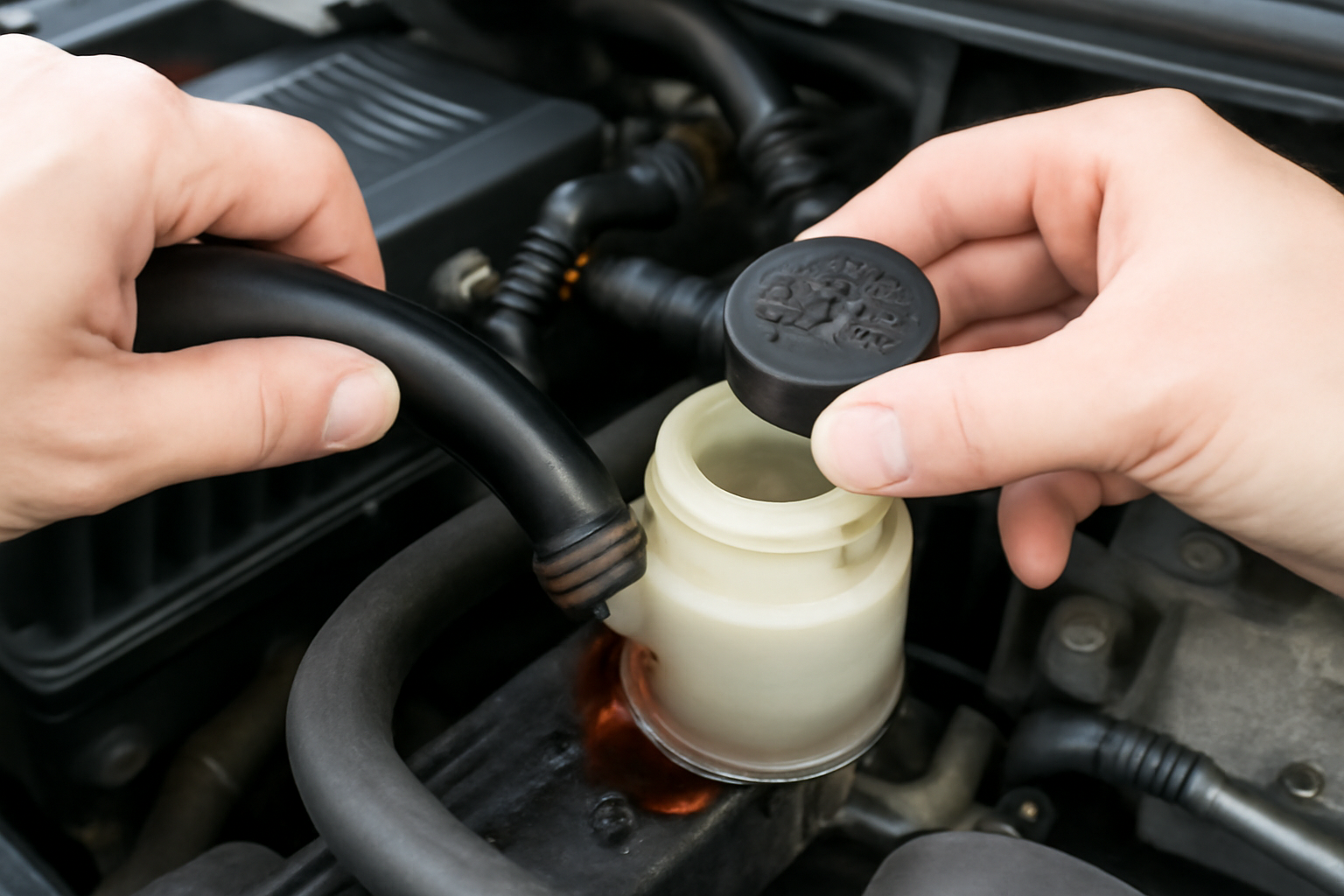
Low power steering fluid is the most common cause of heavy steering in hydraulic systems. Check your fluid level first by locating the reservoir, usually a translucent plastic container with “MIN” and “MAX” lines marked on the side. The fluid should appear clear to light amber when fresh, turning darker brown or black when contaminated.
If your fluid level is low, you’ve got a leak somewhere in the system. Common leak points include the power steering pump seals, rack and pinion seals, high-pressure hoses, and return lines. You might notice drops of fluid on your garage floor, typically appearing as small puddles under the front of your vehicle after parking.
Adding fluid provides only temporary relief if you have a leak. The steering will become heavy again as fluid levels drop, and running the system dry can destroy the expensive power steering pump.
Failing Power Steering Pump
A failing power steering pump often announces itself with a distinctive whining noise, especially when turning the wheel while parked or moving slowly. This whining typically gets louder as the pump deteriorates and may be accompanied by groaning sounds when making tight turns.
The pump contains internal vanes and seals that wear out over time, reducing the system’s ability to generate sufficient pressure. You might notice the steering feels fine at highway speeds but becomes noticeably heavy in parking lots or during low-speed maneuvers.
Power steering pumps can also develop intermittent problems, working fine when cold but struggling when the engine gets hot. This happens because worn internal components expand with heat, creating larger gaps that reduce pressure.
Contaminated or Wrong Fluid Type
Power steering systems are sensitive to fluid condition and type. Old, contaminated fluid can clog internal passages and damage seals, while using the wrong fluid specification can cause similar problems. Some vehicles require specific ATF (automatic transmission fluid) formulations, while others need dedicated power steering fluid.
Dark, thick fluid with a burnt smell indicates contamination and should be flushed immediately. Metal particles in the fluid suggest internal component wear, typically in the pump or steering rack.
Electric Power Steering Failures
Electric Motor Problems
Electric power steering systems use an electric motor mounted either on the steering column or integrated into the steering rack. When this motor fails, you’ll typically get a warning light on your dashboard along with immediately heavy steering.
Unlike hydraulic systems that fail gradually, electric power steering motors often quit working suddenly. You might be driving normally when the system shuts down completely, usually accompanied by a warning message on your instrument cluster.
Motor failures can be partial, where the system provides some assistance but not full power. This creates inconsistent steering feel that might vary depending on temperature, electrical load, or steering angle.
Sensor and Module Issues
Electric power steering systems rely on multiple sensors to function properly, including steering angle sensors, vehicle speed sensors, and torque sensors. When these sensors provide incorrect information to the power steering module, the system may reduce assistance or shut down entirely as a safety measure.
A faulty steering angle sensor might cause the system to think you’re turning when driving straight, creating strange steering behavior or complete system shutdown. These sensors can be damaged by wheel alignment procedures or electrical issues.
The power steering control module itself can also fail, though this is less common than sensor problems. Module failures typically require programming and calibration after replacement, making them expensive repairs.
Other Causes of Heavy Steering
Mechanical Steering Components
Heavy steering isn’t always caused by power steering system failures. Worn ball joints, tie rod ends, or steering rack bushings can create additional resistance that makes steering feel heavy even with a functioning power assist system.
Binding in the steering column or intermediate shaft can also cause heavy steering, particularly noticeable when the vehicle is stationary. This binding might be intermittent and related to steering wheel position or ambient temperature.
Tire and Alignment Issues
Underinflated tires dramatically increase steering effort, especially at low speeds. Check your tire pressures regularly, as even a 5-10 PSI difference can make steering noticeably heavier.
Severe wheel alignment problems can also cause heavy steering, particularly if there’s excessive negative camber or incorrect caster angles. These alignment issues often accompany uneven tire wear and vehicle pulling to one side.
Diagnosing Your Heavy Steering Problem
Quick Checks You Can Do
Start by checking your tire pressures with an accurate gauge. Inflate to the specifications found on your door jamb sticker, not the maximum pressure shown on the tire sidewall.
If you have hydraulic power steering, check the fluid level and condition. Look under your vehicle for signs of leaking fluid, paying attention to the area around the steering rack and power steering pump.
Listen for unusual noises when turning the steering wheel, both while parked and driving. Whining, groaning, or grinding sounds can help pinpoint the problem area.
When Steering Becomes Heavy
Pay attention to when your steering feels heaviest. Heavy steering only when parked or at very low speeds suggests a power steering system problem. Heavy steering at all speeds might indicate mechanical issues or severely low tire pressure.
Note whether the problem is consistent or intermittent. Intermittent heavy steering often points to electrical issues in electric power steering systems or temperature-related problems in hydraulic systems.
Repair Costs and Considerations
Hydraulic System Repairs
Power steering fluid and minor leak repairs are relatively inexpensive, typically costing $50-150 depending on the leak location. Power steering pump replacement costs $300-800 depending on your vehicle, with luxury cars commanding higher prices.
Steering rack replacement represents the most expensive hydraulic power steering repair, often ranging from $800-2000 including labor. Some steering racks can be rebuilt or resealed for less money, though this isn’t always possible.
Electric Power Steering Repairs
Electric power steering repairs tend to be more expensive due to the complexity of the systems and the need for computer programming. Steering angle sensor replacement typically costs $200-400, while power steering motors can cost $500-1500 to replace.
Control module replacement and programming can exceed $1000 at the dealership, though independent shops with the proper equipment may charge less.
Prevention and Maintenance
For hydraulic systems, regular fluid changes every 50,000-75,000 miles help prevent contamination and extend component life. Check fluid levels monthly and address leaks promptly to avoid pump damage.
Electric power steering systems require less maintenance but benefit from keeping electrical connections clean and dry. Avoid aftermarket electrical accessories that might interfere with the sensitive sensors and control modules.
Regular wheel alignments and proper tire maintenance reduce stress on all power steering components, regardless of system type.
Frequently Asked Questions
Can I drive with heavy steering?
You can drive short distances with heavy steering, but extended driving becomes tiring and potentially dangerous. Complete power steering failure requires significant effort to turn the wheel, especially at low speeds or when parking.
Why does my steering feel heavy only sometimes?
Intermittent heavy steering often indicates electrical problems in electric power steering systems or temperature-related issues in hydraulic systems. Low fluid levels can also cause intermittent problems as the pump struggles to maintain pressure during demanding maneuvers.
Will heavy steering cause other problems?
Continuing to drive with heavy steering can accelerate wear on steering components and tire edges. The additional effort required can also strain other parts of the steering system, potentially leading to more expensive repairs.
How can I tell if I need a new power steering pump?
Whining noises during steering, especially when cold, combined with heavy steering effort typically indicate pump problems. If the fluid level is correct and the fluid appears clean, a failing pump is likely the culprit.

Leave a Reply