
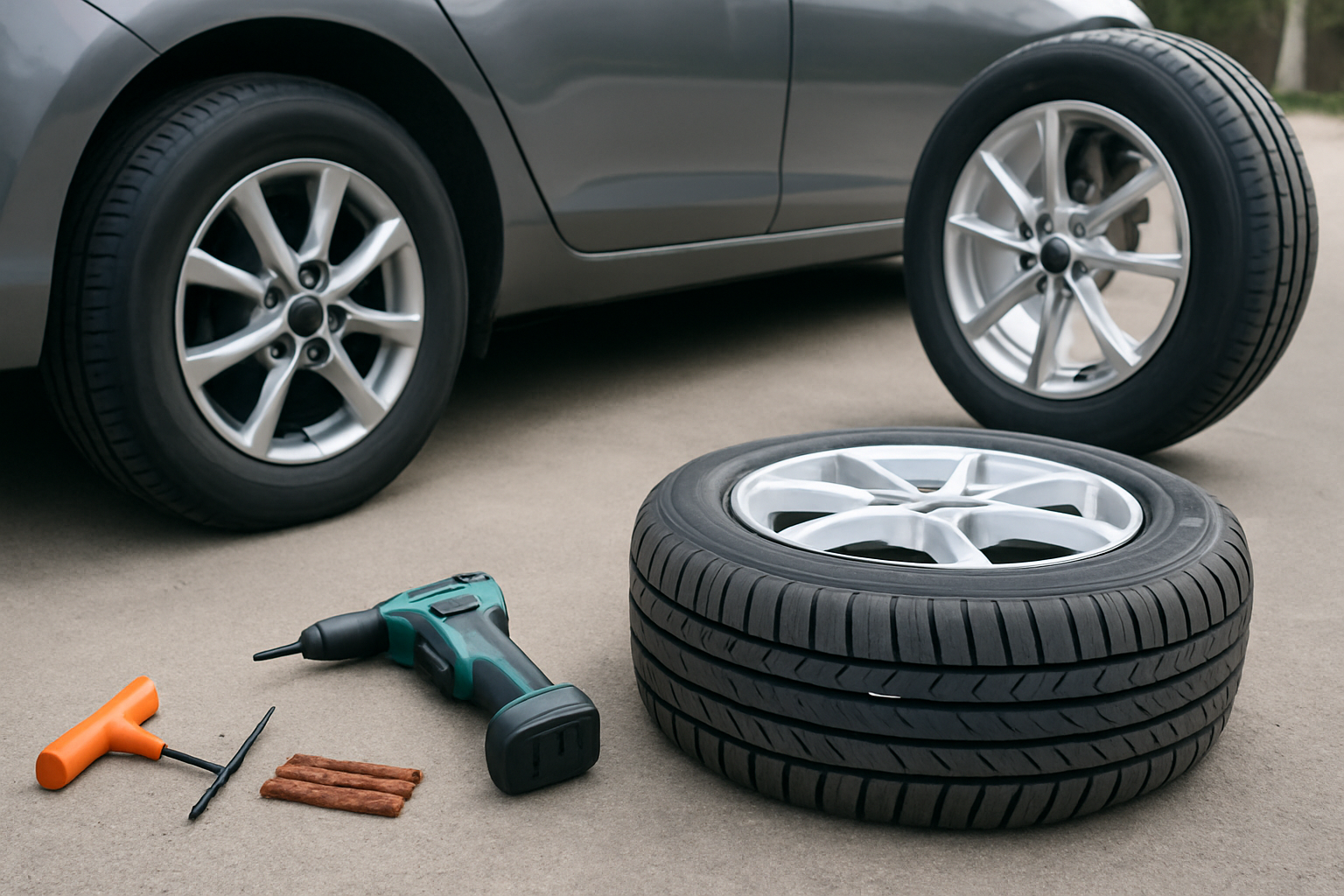
Getting a nail or screw in your tire ranks among the most frustrating car problems you’ll face. You’re standing there wondering if you can patch it up for twenty bucks or if you need to shell out check current prices for a brand new tire.
The decision between patching a tire puncture and buying a replacement depends on several key factors: where the damage occurred, how big the hole is, and what type of repair method works best for your situation.
Understanding Tire Puncture Repair Basics
Not every tire puncture requires a full replacement. Most tire shops can handle small punctures in the tread area for check current prices, which beats spending ten times that amount on a new tire.
The key distinction lies between repairable damage and damage that compromises your tire’s structural integrity. Punctures in the tread area, where your tire meets the road, can often be repaired safely. Damage to the sidewall, shoulder, or any area outside the main tread zone typically means you need a new tire.
Professional tire repairs involve three main methods: plugs, patches, and combination plug-patch repairs. Each method works differently and offers varying levels of durability and safety.
When You Can Patch a Tire Puncture
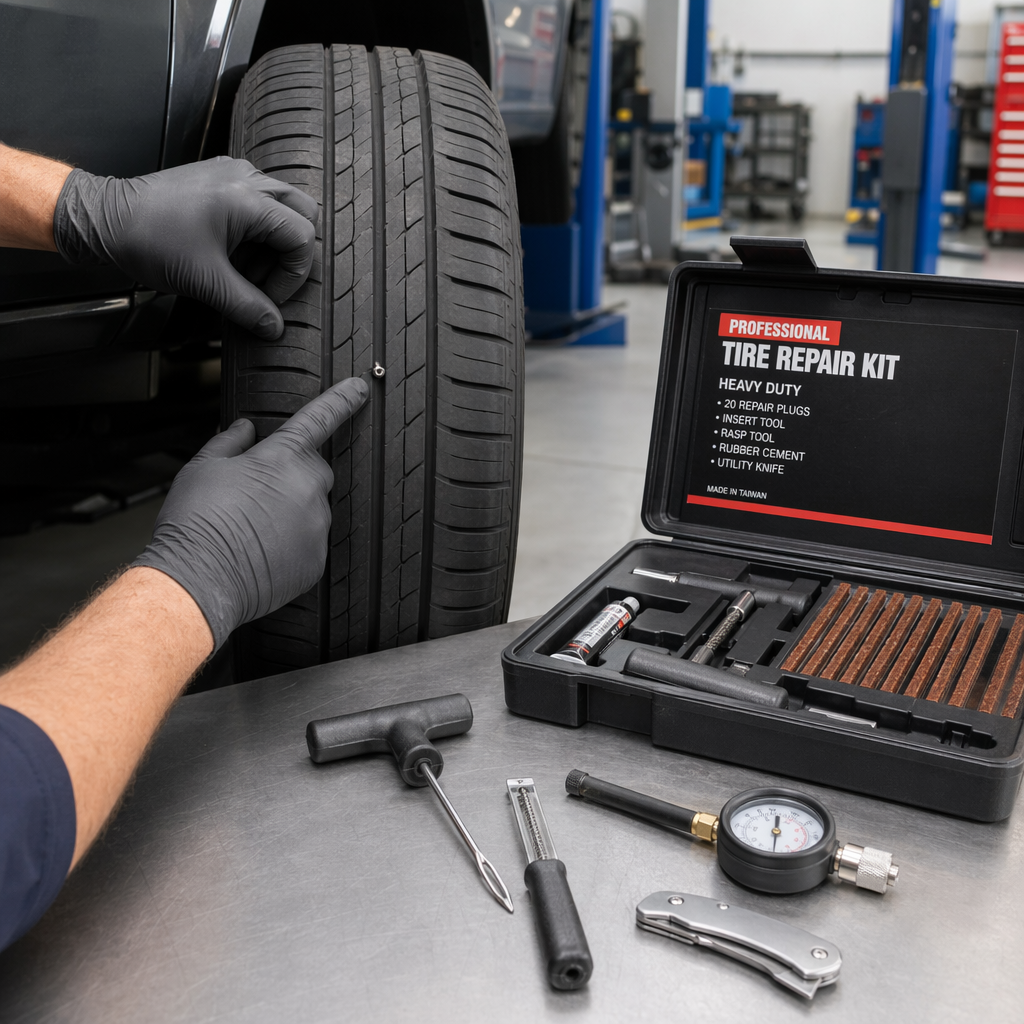
Your tire qualifies for repair when the puncture meets specific criteria. The damage must be located in the tread area only, not extending into the sidewall or shoulder regions.
Size matters significantly for tire repairs. Punctures smaller than 1/4 inch in diameter can typically be repaired safely. Anything larger than a quarter-inch creates too much structural weakness for a reliable patch job.
The puncture angle also affects repairability. Straight punctures from nails or screws work best for repairs. Angled damage or tears from road debris often require tire replacement because they create irregular holes that don’t seal properly.
Your tire’s overall condition plays a role too. Tires with good remaining tread depth and no other damage make better candidates for repair than worn tires approaching replacement time anyway.
Tire Repair Methods Explained
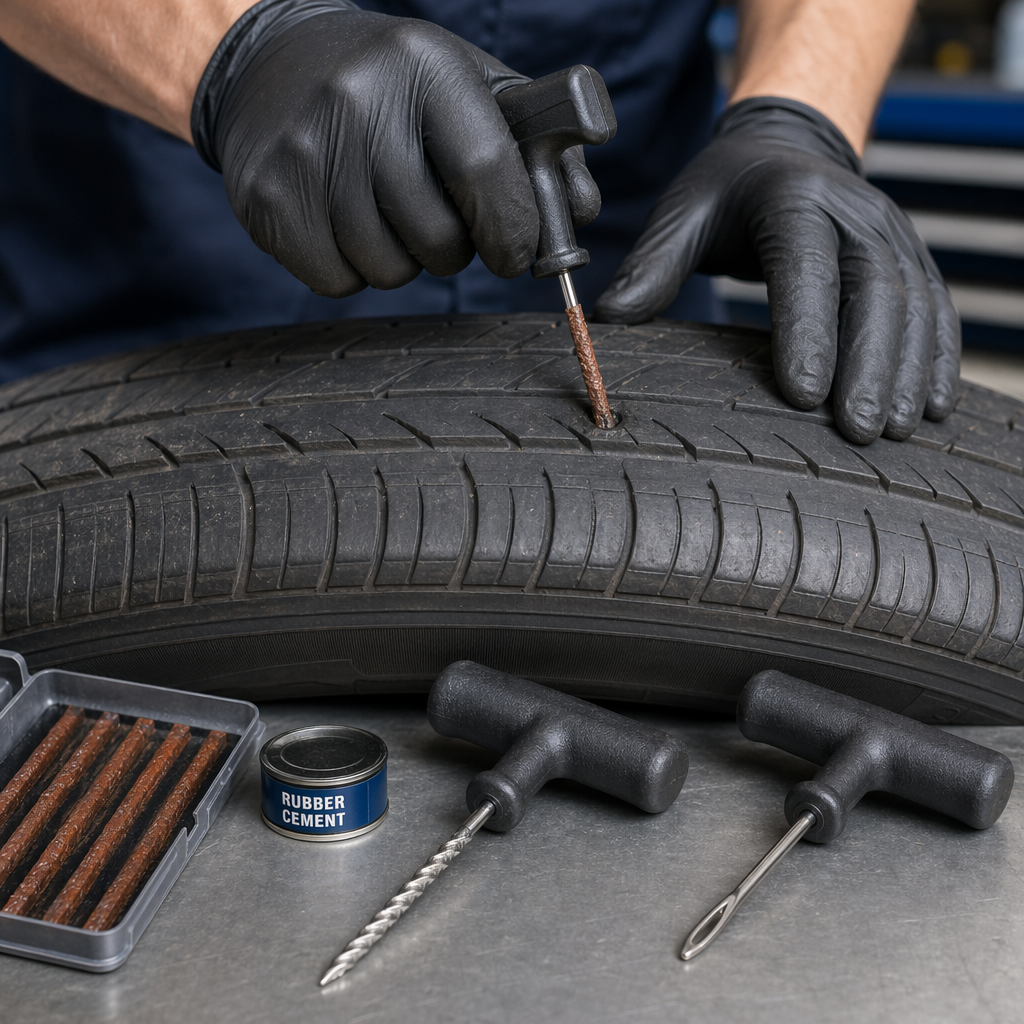
Tire Plugs
Plugs involve inserting a rubber strip into the puncture hole from the outside of the tire. The plug material expands to fill the hole and create a seal against air loss.
This method works quickly and costs less, but it only seals the hole without addressing any internal damage to the tire’s steel belts or fabric layers. Many tire professionals consider plugs a temporary solution rather than a permanent repair.
Tire Patches
Patches require removing the tire from the rim to access the inner surface. The technician applies a rubber patch with special cement over the puncture hole from inside the tire.
Patching provides a more reliable seal because it covers a larger area and bonds to the tire’s inner liner. However, patches don’t fill the puncture hole itself, which can allow moisture to reach the tire’s internal components.
Plug-Patch Combination
The combination method uses a single piece that plugs the hole and patches the inner surface simultaneously. This approach addresses both the puncture opening and any internal damage.
Most tire professionals recommend the plug-patch combination as the gold standard for tire repairs. It costs slightly more than individual plugs or patches but provides the most durable and safe repair.
When You Need a New Tire
Sidewall damage automatically disqualifies your tire from repair consideration. The sidewall flexes constantly as you drive, and any repair in this area will eventually fail under the stress.
Punctures larger than 1/4 inch require tire replacement because no repair method can safely seal holes this size. Large punctures often indicate damage from road debris that may have torn or stretched the tire beyond repair.
Multiple punctures close together create another replacement scenario. Even if each individual puncture could be repaired, having several holes in proximity weakens the tire structure too much for safe operation.
Tires with low remaining tread depth don’t justify repair costs. If your tire measures 4/32 inch or less remaining tread, you’ll need replacement soon anyway, making repair an uneconomical choice.
Professional vs DIY Tire Repair
Professional tire shops offer proper equipment and expertise for safe, lasting repairs. They can remove the tire from the rim, inspect for internal damage, and apply the appropriate repair method.
DIY plug kits from auto parts stores provide emergency solutions for getting home or to a tire shop. These temporary fixes shouldn’t replace professional repair, especially for long-term driving.
If you choose DIY repair for an emergency situation, you’ll find several tire repair plug patch kits that include the basic tools and materials needed. However, professional repair remains the safest option for permanent fixes.
Professional repairs also come with warranties that cover the work if problems develop. DIY repairs offer no such protection and may void your tire’s warranty if done incorrectly.
Cost Considerations
Tire repair typically runs check current prices at most shops, making it an attractive option when your tire qualifies for the service. Some shops charge slightly more for plug-patch combination repairs, but the extra durability justifies the cost.
New tire costs vary dramatically based on your vehicle and tire quality preferences. Budget tires might cost check current prices, while premium tires can exceed check current prices each.
Consider your tire’s remaining lifespan when deciding between repair and replacement. Repairing a tire with 50% tread remaining makes financial sense, but patching a tire with 10% tread left wastes money you could put toward a new tire.
Factor in mounting and balancing costs for new tires, which typically add check current prices per tire to your total expense. Repairs don’t require these additional services.
Safety and Performance Impact
Properly executed tire repairs maintain the tire’s safety and performance characteristics. The plug-patch combination method provides reliability comparable to an undamaged tire when performed correctly.
Repaired tires can handle normal driving conditions, highway speeds, and typical load requirements. However, avoid using repaired tires for high-performance driving, track use, or maximum load situations.
Monitor repaired tires more closely than undamaged ones. Check air pressure weekly and inspect the repair area for signs of air loss, bulging, or other problems.
Keep repair documentation for warranty purposes and future reference. Some tire manufacturers offer prorated warranties that factor in repairs when determining replacement value.
Making the Right Decision
Start by assessing the puncture location and size. Tread area punctures smaller than 1/4 inch typically qualify for repair, while sidewall damage or large holes require replacement.
Evaluate your tire’s remaining useful life. Tires with substantial tread depth and no other issues make good repair candidates. Worn tires approaching replacement time don’t justify repair costs.
Consider your budget and driving needs. Repair costs significantly less than replacement, but new tires offer longer service life and often better performance.
Get professional assessment when in doubt. Experienced tire technicians can evaluate damage you might miss and recommend the safest, most economical solution.
Frequently Asked Questions
How long do tire repairs last?
Professional plug-patch repairs can last the remaining life of the tire when done correctly. The repair creates a permanent seal that won’t deteriorate under normal driving conditions. However, the repaired tire should be monitored more closely than undamaged tires.
Can you repair a tire that’s been driven flat?
Driving on a flat tire usually damages the internal structure beyond repair. The weight of the vehicle crushes the tire’s sidewalls and can break the steel belts inside. Have the tire professionally inspected, but expect to need a replacement in most cases.
Should you replace just one tire or multiple tires?
Replace one tire if the others have similar tread depth and wear patterns. However, if tread depth differences exceed 2/32 inch, consider replacing in pairs or sets to maintain even traction and avoid drivetrain stress, especially on all-wheel-drive vehicles.
Is it safe to drive immediately after a tire repair?
Yes, properly repaired tires are safe for immediate driving. Professional repairs restore the tire’s structural integrity and air retention. However, drive conservatively for the first few miles and check the repair area periodically to ensure it’s holding properly.
Leave a Reply