
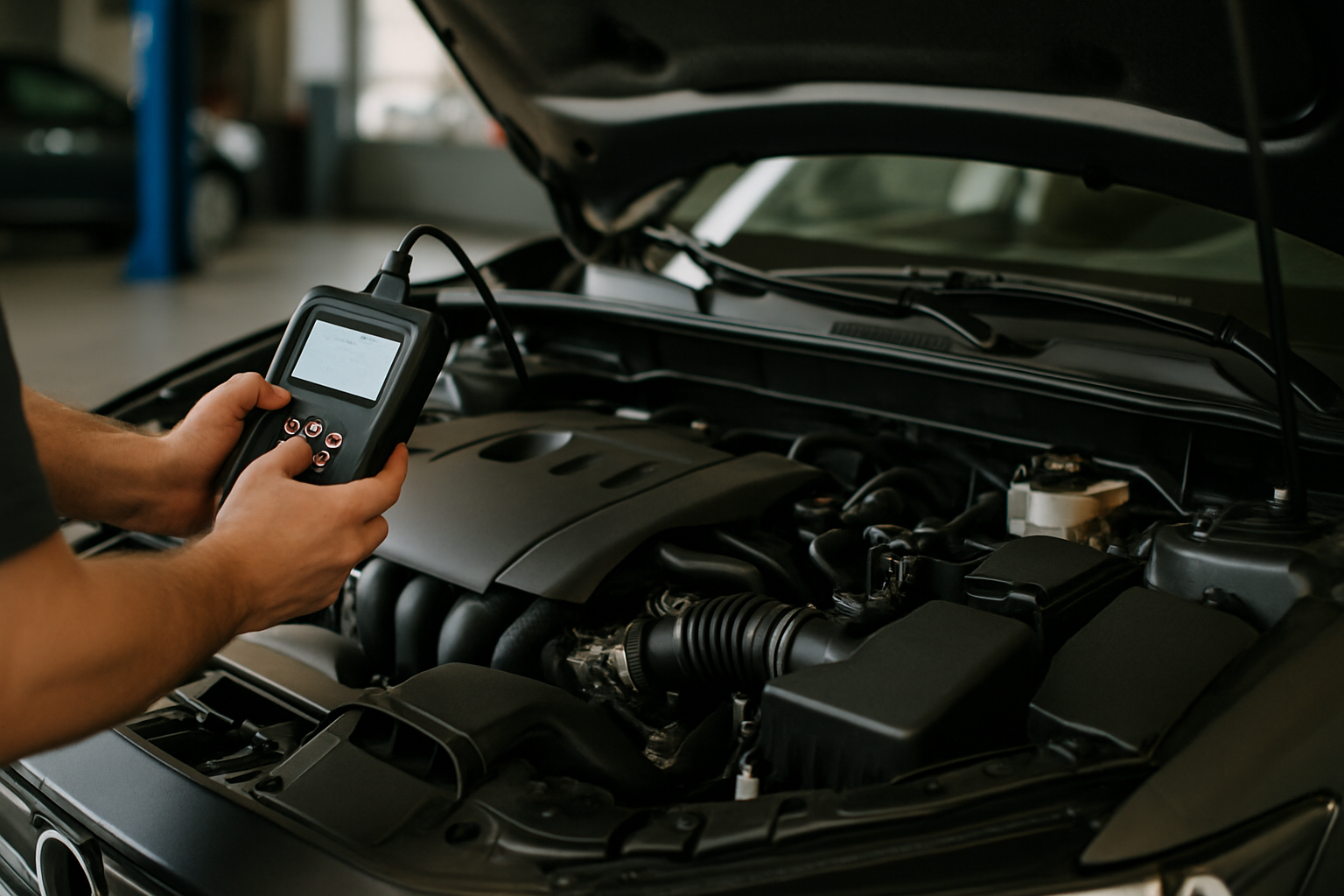
Getting P0171 and P0174 codes can be frustrating, especially when your car starts running rough or struggling at idle. These “system too lean” codes mean your engine isn’t getting the right fuel-to-air mixture, and while they might seem complicated, most causes are actually pretty common issues you can diagnose yourself.
What Do P0171 and P0174 Codes Actually Mean?
P0171 means “System Too Lean (Bank 1)” while P0174 indicates “System Too Lean (Bank 2).” Your engine’s computer monitors the air-fuel mixture through oxygen sensors, and when it detects too much air or not enough fuel, it throws these codes.
Bank 1 contains cylinder #1, while Bank 2 is the opposite side of the engine. On V6 and V8 engines, getting both codes together usually points to a problem affecting the entire engine rather than just one side.
When your engine runs lean, you’ll typically notice rough idling, hesitation during acceleration, and sometimes a slight metallic knocking sound. Your fuel economy might actually improve temporarily, but running lean long-term can damage your engine.
The Most Common Culprit: Vacuum Leaks
Vacuum leaks cause about 70% of lean condition codes. When extra air enters your intake system through cracked hoses, loose connections, or failed gaskets, your engine’s computer can’t compensate fast enough.
Check these common vacuum leak spots first:
- Intake manifold gaskets (especially on higher-mileage vehicles)
- Vacuum hoses around the throttle body and brake booster
- PCV valve and associated hoses
- Mass airflow sensor boot connections
- Carbon canister purge valve
You can often hear larger vacuum leaks as a hissing sound while the engine runs. For smaller leaks, you’ll need to perform a smoke test or use carburetor cleaner to spray around suspected areas while watching for RPM changes.
Performing a Smoke Test
A smoke test is the most reliable way to find vacuum leaks. You can rent or buy a smoke machine that pumps visible smoke into your intake system. With the engine off, the smoke will escape from any leaks, making them easy to spot.
Professional smoke machines cost around $300-500, but you can often rent them from auto parts stores for about $50 per day. The investment pays off quickly if you work on multiple vehicles.
Dirty or Faulty Mass Airflow Sensor
Your MAF sensor tells the engine computer how much air is entering the system. When it gets dirty or starts failing, it can underreport airflow, causing the computer to inject too little fuel.
MAF sensors collect oil residue, dirt, and debris over time. This buildup interferes with the sensor’s ability to accurately measure airflow. You’ll often see this problem on vehicles with oiled aftermarket air filters or those that haven’t had their air filter changed regularly.
Clean your MAF sensor with specialized MAF cleaner (never use brake cleaner or carburetor cleaner). Remove the sensor from the intake tube and spray the delicate sensing elements gently. Let it dry completely before reinstalling.
If cleaning doesn’t fix the problem, you’ll likely need a new MAF sensor. These typically cost $100-250 depending on your vehicle, and replacement usually takes about 15 minutes.
Weak Fuel Pump or Clogged Fuel Filter
When your fuel pump can’t deliver enough pressure or volume, your engine runs lean under load. This problem often starts gradually, with symptoms appearing during highway driving or acceleration before affecting idle conditions.
Test your fuel pressure with a gauge connected to the fuel rail test port. Most vehicles need 35-65 PSI depending on the system type. Check your service manual for the exact specification.
Fuel pumps typically last 100,000-150,000 miles, but contaminated fuel or running the tank nearly empty regularly can shorten their lifespan. If your pressure is low, replace both the fuel pump and fuel filter together.
On some vehicles, you can access the fuel pump through a panel under the rear seat. Others require dropping the entire fuel tank, which is definitely a job for a professional unless you have proper equipment.
Intake Manifold Gasket Problems
Intake manifold gaskets seal the connection between your intake manifold and cylinder heads. When these gaskets fail, they create vacuum leaks that affect multiple cylinders simultaneously.
This problem is especially common on certain GM V6 engines, Ford 4.6L V8s, and some Chrysler V6 motors. You might notice coolant loss without visible leaks, white exhaust smoke, or rough running that gets worse as the engine warms up.
Intake gasket replacement is a moderately complex job that typically costs $400-800 in labor plus parts. The manifold must be removed, and you’ll often need to replace other gaskets and seals while everything is apart.
Diagnostic Steps to Pinpoint Your Problem
Start with the easiest checks first. Pull your air filter and inspect it for excessive dirt or oil. Check all visible vacuum hoses for cracks, especially where they connect to hard plastic fittings.
Remove and clean your MAF sensor, then clear the codes and test drive. If the codes return immediately, you likely have a vacuum leak. If they take longer to come back, suspect fuel delivery issues.
Check your fuel trims using a scan tool. Short-term fuel trim (STFT) and long-term fuel trim (LTFT) values above +10% indicate lean conditions. Values consistently above +25% suggest a significant problem.
If both banks show similar fuel trim numbers, look for problems affecting the entire engine like vacuum leaks, MAF issues, or fuel delivery problems. If only one bank shows high trims, focus on that side for intake gasket leaks or bank-specific vacuum issues.
Bank 1 vs Bank 2: Understanding the Difference
Bank 1 always contains cylinder #1, but the physical location varies by manufacturer. On most Ford V8s, Bank 1 is the passenger side. On GM V8s, Bank 1 is typically the driver’s side. Check your service manual to be sure.
When you get codes on both banks, start with problems that affect the entire engine. When only one bank shows codes, focus on that side’s intake manifold gasket, vacuum hoses, and oxygen sensors.
Some V6 engines have unusual bank arrangements. The Nissan VQ series, for example, has Bank 1 on the firewall side and Bank 2 toward the radiator, regardless of left or right orientation.
Professional vs DIY Repair
You can handle MAF cleaning, vacuum hose replacement, and basic diagnosis yourself with common tools. Vacuum leak detection becomes easier with experience, but a smoke test provides definitive answers.
Intake manifold gasket replacement requires intermediate skills and several hours of work. You’ll need a complete gasket set, proper torque specifications, and often special tools for manifold removal.
Fuel pump replacement difficulty varies dramatically by vehicle. Some take 30 minutes through an access panel, while others require fuel tank removal and cost $800+ in professional labor.
Cost Expectations for Common Fixes
Here’s what you can expect to pay for typical repairs:
- MAF sensor cleaning: $15 (DIY) or $75-100 (shop)
- MAF sensor replacement: $120-280 (part) plus $50-100 labor
- Vacuum hose replacement: $10-50 in parts, 30 minutes labor
- Intake manifold gaskets: $100-300 parts, $400-800 labor
- Fuel pump replacement: $200-400 parts, $300-700 labor
- Professional smoke test diagnosis: $100-150
Getting proper diagnosis upfront saves money compared to throwing parts at the problem. A good technician can usually identify the cause within an hour.
Preventing Future Lean Condition Problems
Regular maintenance prevents most lean condition causes. Change your air filter every 15,000-30,000 miles, and avoid over-oiling aftermarket performance filters.
Replace your fuel filter according to the maintenance schedule, typically every 30,000-60,000 miles. Use quality fuel from busy stations, and consider occasional fuel system cleaning treatments.
Inspect vacuum hoses during routine maintenance, especially on vehicles over 100,000 miles. Replace any hoses that feel soft, show cracks, or have hardened connections.
Frequently Asked Questions
Can I drive with P0171 and P0174 codes?
You can drive short distances, but don’t ignore these codes. Running lean can cause engine damage over time, including burned valves, damaged pistons, and catalytic converter failure. Get the problem diagnosed and repaired promptly.
Will these codes clear themselves?
The codes might clear temporarily if the problem is intermittent, but they’ll return if the underlying cause isn’t fixed. Don’t just clear the codes and hope for the best.
Why am I getting both codes at the same time?
Both codes together usually indicate a problem affecting your entire engine rather than one specific bank. Focus on vacuum leaks, MAF sensor issues, or fuel delivery problems that would impact all cylinders.
Should I replace both oxygen sensors?
Don’t replace oxygen sensors for lean codes unless testing shows they’re actually faulty. These codes indicate the sensors are working correctly by detecting the lean condition. Fix the underlying cause first, then retest the O2 sensors if codes persist.
Leave a Reply