
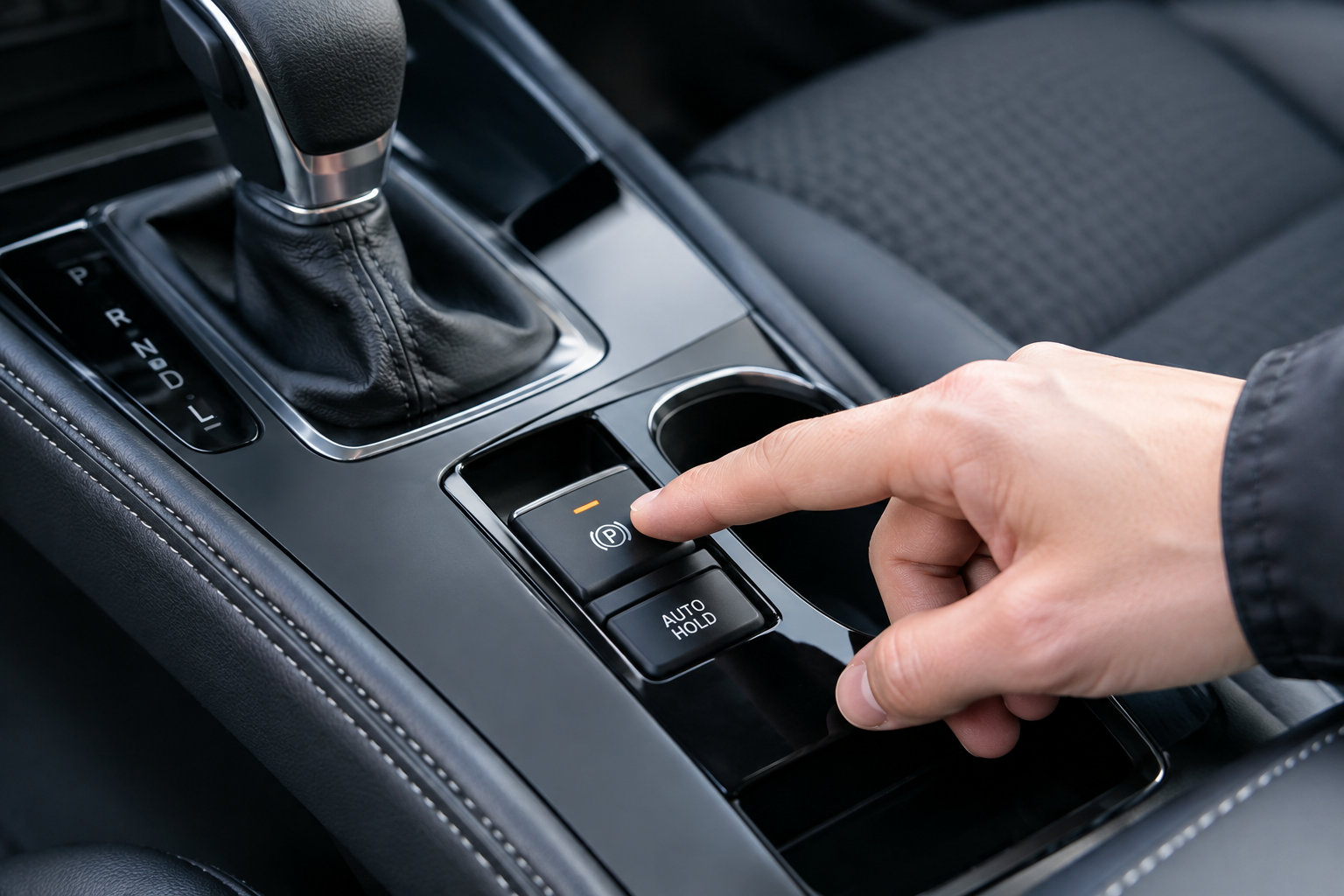
Nothing kills your morning faster than climbing into your Rogue, pressing the brake, hitting the ignition, and seeing that little parking brake light stay on or flash at you while the pedal or switch simply won’t budge. The electronic parking brake (EPB) on the Nissan Rogue is generally reliable, but when it locks up or refuses to release, it can leave you stuck in your driveway or, worse, in a parking lot far from home. Before you assume the worst, there are several safe checks you can run through that solve this problem more often than you’d think.
This guide walks through the most common causes behind an EPB that won’t release, starting with the simplest fixes and working toward the issues that need a scan tool or a trip to the shop. It also covers why forcing the vehicle to roll with the brake engaged is never a safe workaround, even if it seems like a quick fix in the moment.
Start With the Basics: Pedal, Seatbelt, and Door Conditions
The Rogue’s EPB system is picky about the conditions it needs before it will release. Most model years require your foot fully on the brake pedal, the driver’s door closed, and the seatbelt buckled before the switch will do anything. Skip one of these and the system may simply refuse to respond, which can look exactly like a malfunction.
Run through this checklist before you assume there’s a mechanical or electrical fault:
- Ignition is fully in the ON or RUN position, not just accessory mode
- Brake pedal is pressed firmly and held for a couple of seconds
- Driver’s door is fully closed and latched
- Seatbelt is buckled (some trims require this as part of the release logic)
- The EPB switch is pulled up fully, not partially, then released
If any of these steps were skipped, try the release again with all conditions met. This alone resolves a surprising number of “stuck brake” complaints, especially on Rogues where a passenger or kid accidentally triggered the switch while the car was in an unusual state.
Check Battery Voltage Before Anything Else
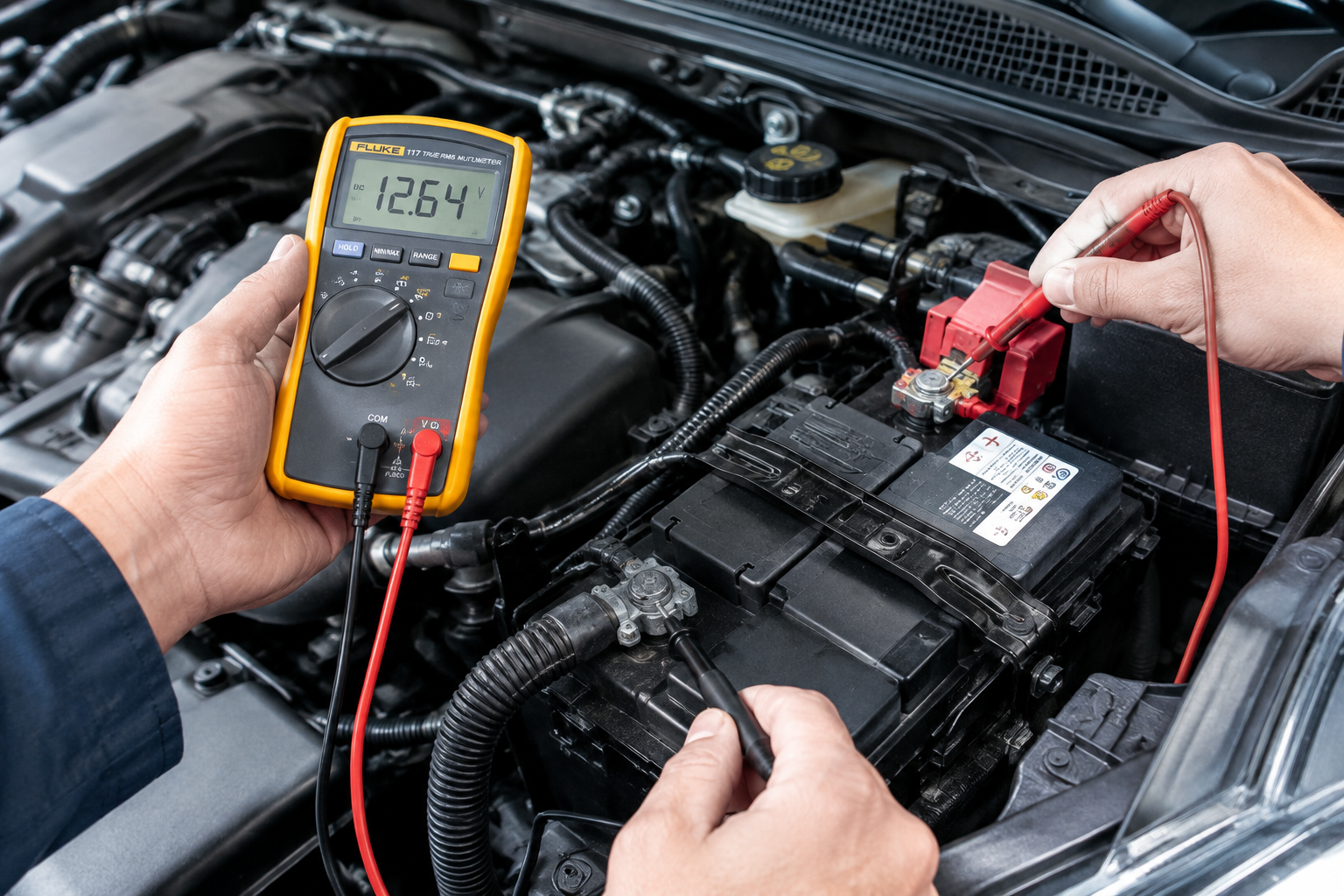
The EPB actuator at each rear caliper needs a solid, consistent voltage supply to release the clamping mechanism. If your battery is weak, has a loose terminal, or is dropping voltage under load, the EPB module may refuse to release the brake as a protective measure rather than risk leaving the actuator in a half-engaged state.
A battery sitting below 12.4 volts at rest, or one that sags significantly when you crank the engine, is a common trigger for EPB warning lights and release failures. This is especially true after a jump start, after the battery has been disconnected for service, or on an older battery that’s simply reaching the end of its life.
If you suspect voltage is the issue, a basic multimeter or even a cheap battery tester can confirm it in under a minute. Clean the terminals, check for corrosion, and make sure the connections are tight before moving on to more involved diagnostics. A lot of EPB complaints get chalked up to “electrical gremlins” when the real problem was a battery that needed replacing months ago.
Switch Faults and Communication Errors
The EPB switch itself is a simple electromechanical part, but it does fail. A worn switch can send an incomplete or intermittent signal to the brake control module, which then refuses to release the caliper because it doesn’t receive a clean “release” command. You might notice the switch feels loose, doesn’t spring back fully, or the parking brake light flickers when you touch it.
Beyond the switch, the Rogue’s EPB relies on communication between several modules, including the ABS/VDC control unit and the body control module. If there’s a wiring fault, a blown fuse, or a corroded connector anywhere in that chain, the system can lock into a fail-safe state where the brake stays applied until the fault is cleared.
This is where a scan tool becomes genuinely useful instead of optional. A code reader that supports manufacturer-specific EPB and ABS codes will tell you whether the module sees a switch fault, a communication error, or an actuator problem, which saves you from guessing. If you’re troubleshooting this kind of issue at home, it’s worth picking up a scanner that can pull Nissan-specific codes rather than a basic generic OBD2 reader.
Nissan Rogue OBD2 Scanner
A scan tool with manufacturer-specific coverage can pull EPB, ABS, and body control codes that generic readers often miss.
Once you know which module is throwing a fault, you can decide whether it’s a simple fix like a fuse or connector, or something that needs a dealer-level diagnostic session.
Actuator and Caliper Problems
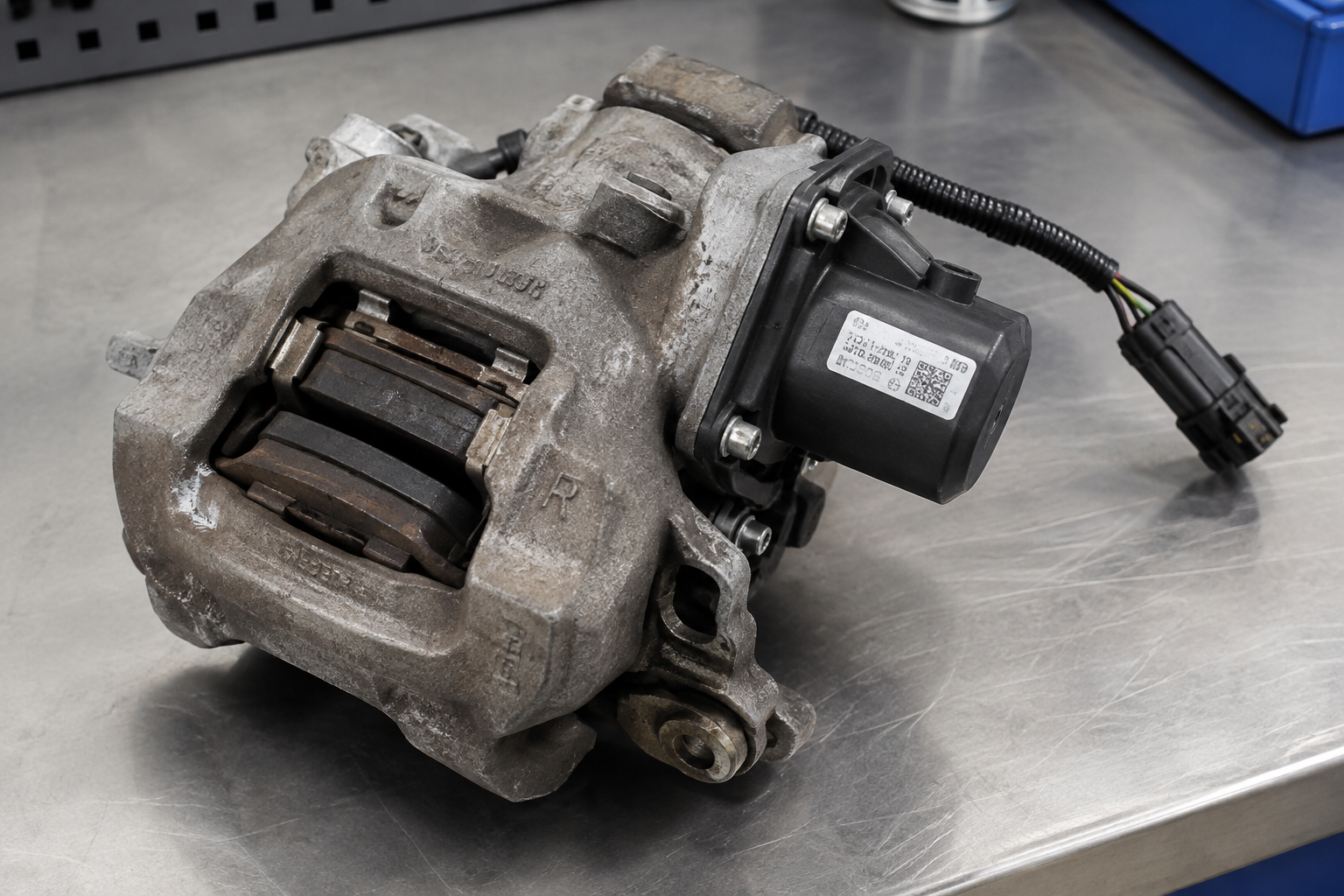
If the switch, battery, and basic conditions all check out, the next suspect is the actuator motor built into each rear caliper. These small motors physically clamp and release the brake pads, and over time they can seize due to corrosion, water intrusion, or simple wear. A seized actuator won’t respond to a release command no matter how clean the electrical signal is.
Signs that point toward an actuator or caliper issue include a grinding or clicking noise from one rear wheel when you try to release the brake, uneven brake wear between the two rear wheels, or a situation where the dashboard warning light comes on only when the vehicle is cold and damp. Corrosion buildup is more common in regions that use road salt, and it tends to hit one side before affecting both.
This is a repair that typically needs a lift and some hands-on diagnostic work rather than something you tackle in your driveway. If you’re already dealing with brake system quirks on your Rogue, it’s worth reading through what to check when your brake pedal goes to the floor after sitting overnight, since some of the same moisture and seal issues that affect a soft pedal can also affect EPB actuators.
Service Mode and Why It Complicates Things
Nissan built a service mode into the EPB system specifically so technicians can retract the caliper pistons during brake pad replacement without triggering the motor to clamp down mid-repair. If a previous brake job wasn’t finished correctly, or if the system got left in service mode after a battery disconnect, the EPB can behave erratically, including refusing to release normally.
Getting in and out of service mode correctly depends heavily on your Rogue’s model year. Earlier generations use a different button sequence and dashboard confirmation than newer ones, and using the wrong procedure can leave the system in a confusing in-between state. This is exactly why checking your owner’s manual or a year-specific service procedure matters here, rather than following a generic YouTube tutorial that might apply to a different model year.
If your Rogue was recently serviced for brake pads, rotors, or calipers, and the EPB issue started right after that appointment, service mode is one of the first things worth ruling out. Most competent shops know to exit this mode properly, but it does get missed occasionally, especially at quick-service chains that aren’t as familiar with Nissan-specific procedures.
Emergency Release: Know Your Model Year
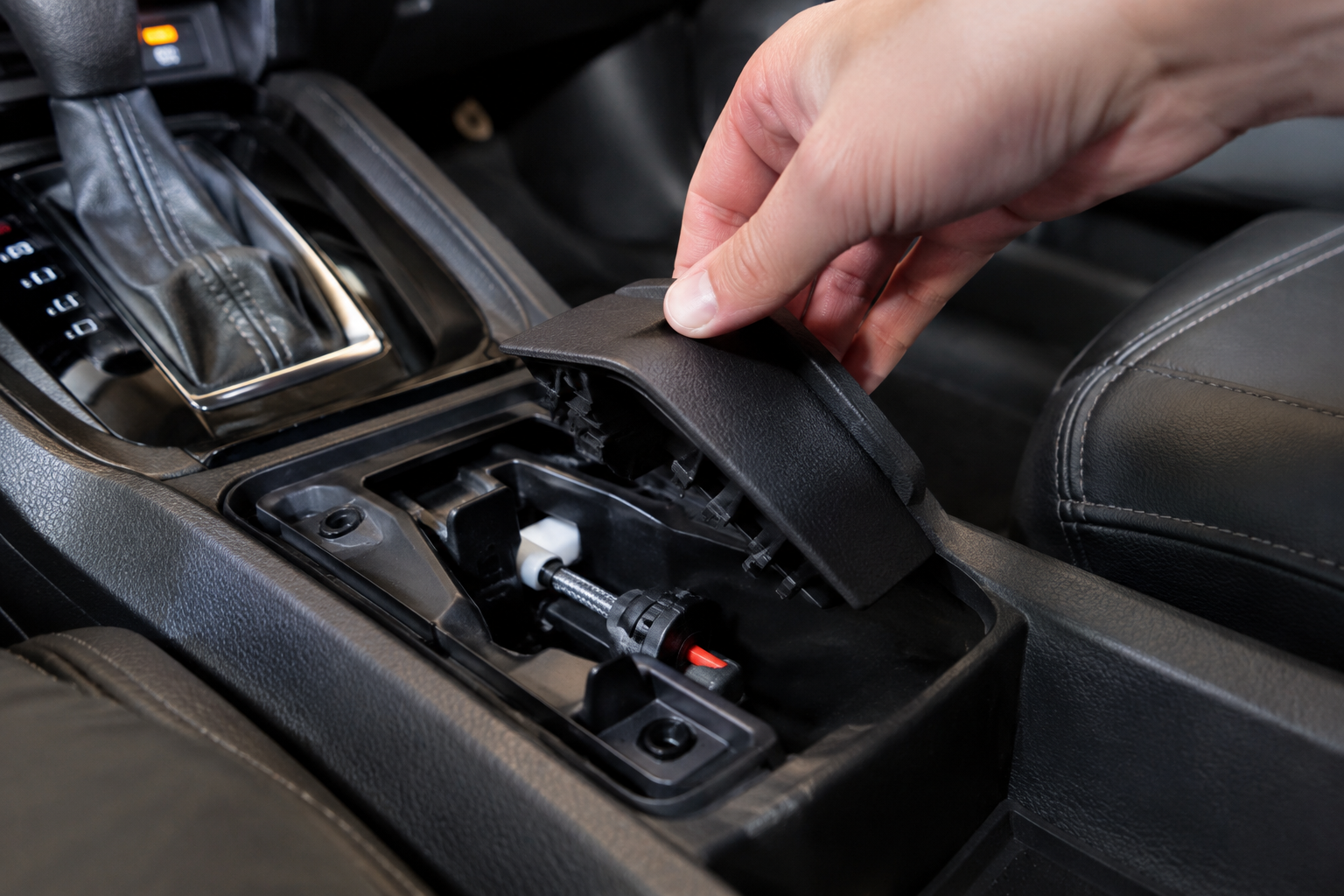
Every Rogue has some form of manual or emergency release built in for situations where the electronic system fails completely, but the exact location and procedure differs by generation. On some model years it’s a cable-release lever behind a panel near the trunk or under the rear seat, while others require a specific dealer procedure using a scan tool.
Never assume the emergency release process from a different Nissan model or a different Rogue year applies to your vehicle. Using the wrong procedure, or trying to force the vehicle to roll while the brake is still engaged, can damage the caliper, actuator, or drivetrain components, and it puts you at risk if the vehicle isn’t fully secured. Always confirm the correct steps in your owner’s manual before attempting a manual release.
If you don’t have your owner’s manual handy, Nissan’s own digital manuals are searchable by VIN and model year, and they’ll walk you through the exact emergency release location for your specific Rogue. It’s a five-minute read that can save you from a bigger repair bill later.
Frequently Asked Questions
Can a dead battery cause the Nissan Rogue EPB to get stuck?
Yes. The EPB actuators need stable voltage to release, and a weak or dying battery is one of the most common reasons the system refuses to disengage. Check your battery’s voltage and connections before assuming there’s a deeper mechanical fault.
Is it safe to drive with the parking brake light on if the EPB seems to release?
If the warning light stays on even after a successful release, it usually points to a sensor or communication fault rather than the brake still being engaged. It’s still worth having it scanned soon, since an intermittent fault today can turn into a full failure later, and it’s not something to ignore for weeks.
Why does my Rogue’s parking brake work fine most of the time but occasionally fails to release?
Intermittent failures often point to a marginal connection, a switch that’s starting to wear out, or moisture affecting the actuator, especially after washing the car or driving through heavy rain. If it’s happening more than once, get it scanned rather than waiting for it to fail completely at an inconvenient time.
Related posts:
 Toyota Highlander Electronic Parking Brake Won’t Release: Causes and Safe Checks
  Subaru Outback Electronic Parking Brake Won’t Release: Causes and Safe Checks
  Subaru Forester Electronic Parking Brake Won’t Release: Causes and Safe Checks
  Hyundai Tucson Electronic Parking Brake Won’t Release: Causes and Safe Checks
Leave a Reply