
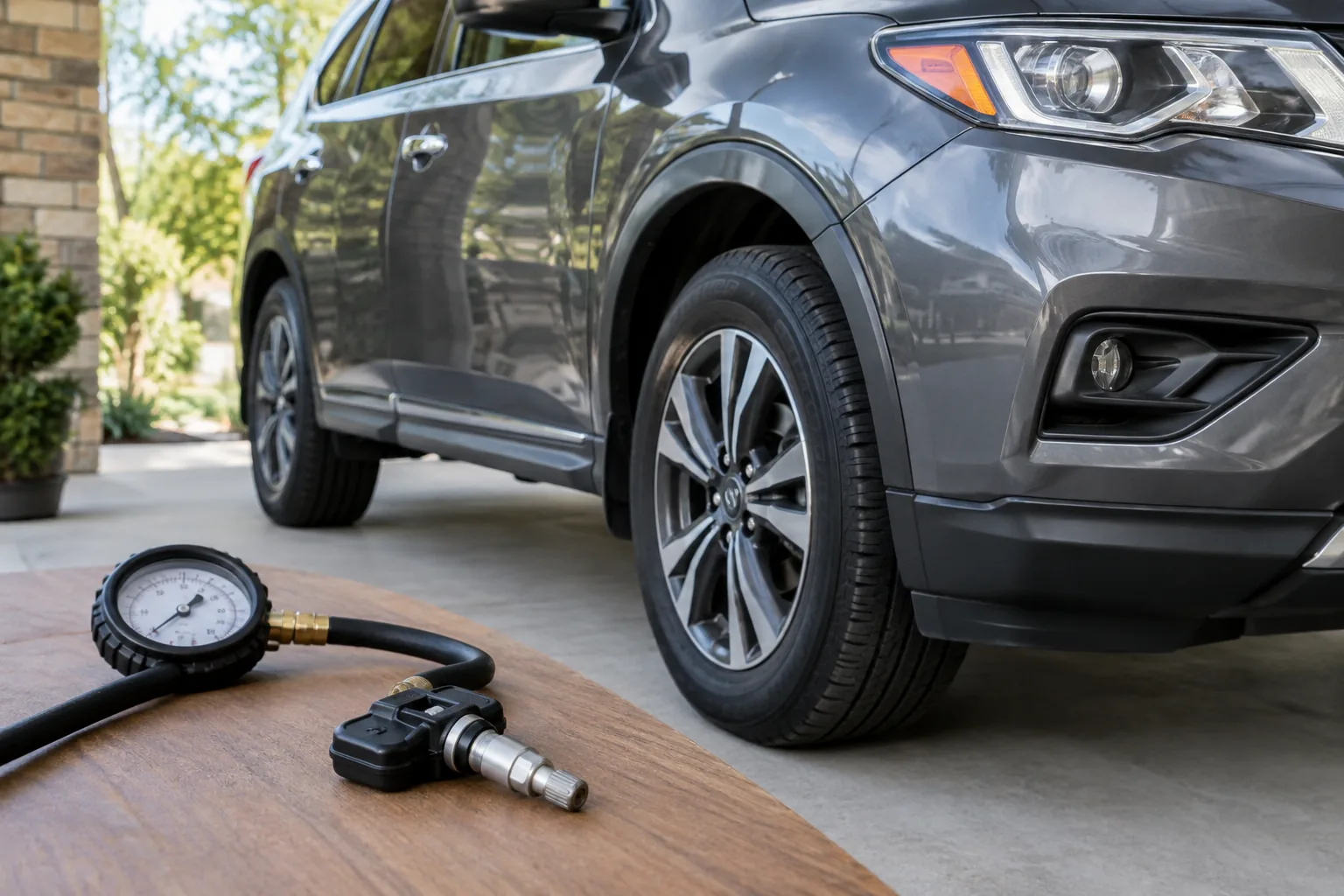
The short answer is that you don’t reset a Nissan Pathfinder tire pressure light so much as correct whatever caused it. Set all four tires to the placard pressure when they’re cold, then drive, and a normal low-pressure warning should go out on its own. Don’t assume your Pathfinder has a reset button, because the right steps depend on model year and equipment, and your owner’s manual is the final word.
A light that blinks and then stays on is a different problem. That pattern usually points to the system itself, such as a sensor or a missing sensor, not a soft tire. Here’s how to sort out which one you have.
Start With Cold Pressures and a Leak Check
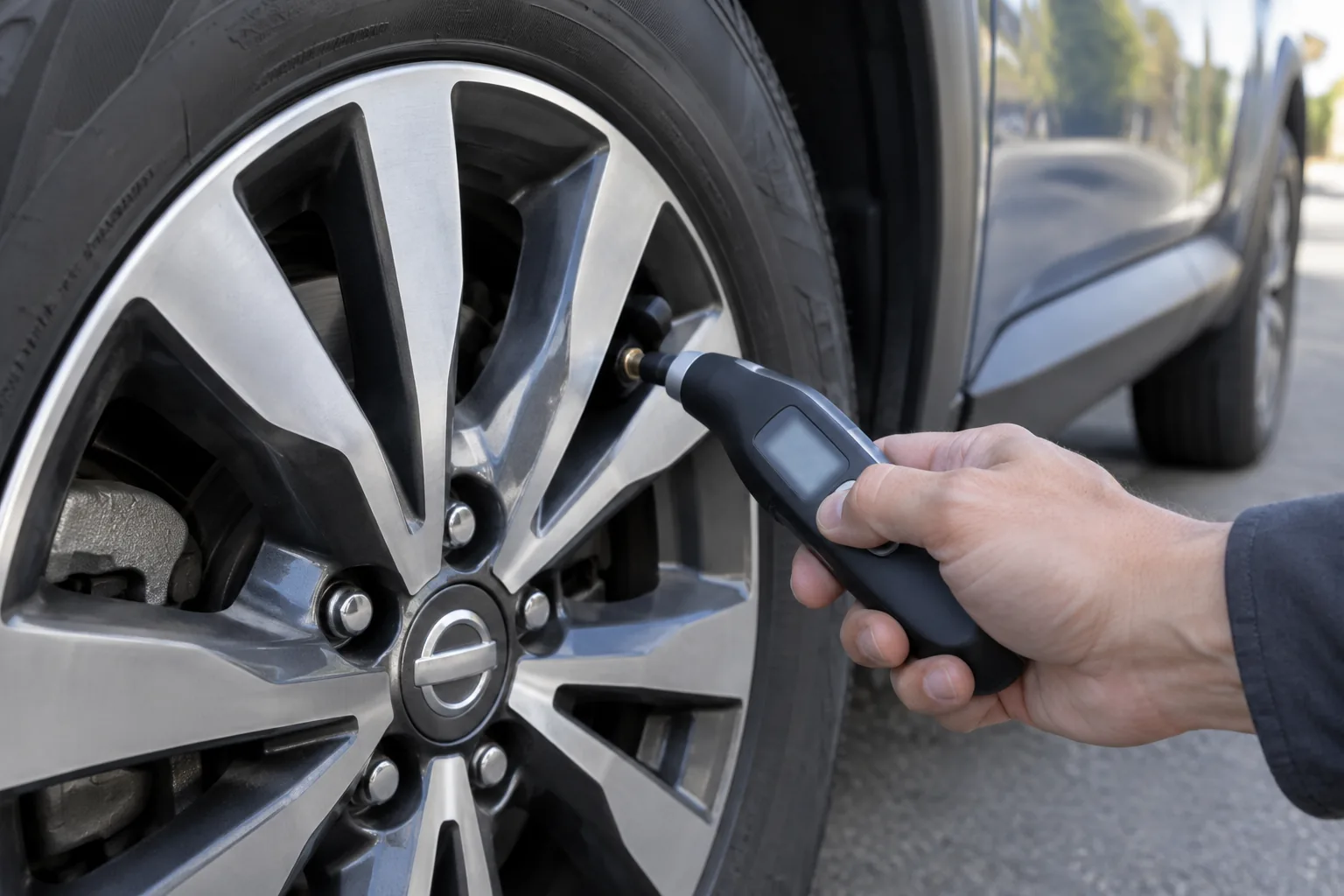
Before you think about clearing anything, find out why the light came on. Check all the tires when they’re cold, meaning the vehicle has sat for a few hours or has been driven only a short distance. A reading taken right after a highway drive will be higher than the true cold pressure and can mislead you.
Use the pressure on the tire placard, which is normally on the driver’s door pillar. Don’t use the maximum number molded into the tire sidewall. That figure is the tire’s limit, not your Pathfinder’s recommendation. The placard can differ by trim and tire size, so read it for your exact vehicle.
Then look for a reason the tire lost air:
- Nails, screws, or other debris in the tread
- A valve stem that’s cracked, loose, or hissing when you press on it
- A tire that needs topping up every week or two, which suggests a slow leak
- Corrosion around the wheel bead, which can leak on older alloy wheels
Brushing soapy water over the tread, valve, and bead area will show bubbles at a leak. A tire that drops pressure repeatedly needs a proper repair, and the light will keep coming back until it gets one. Cold weather can also trigger the light, because pressure drops as temperatures fall. Adding air fixes that case.
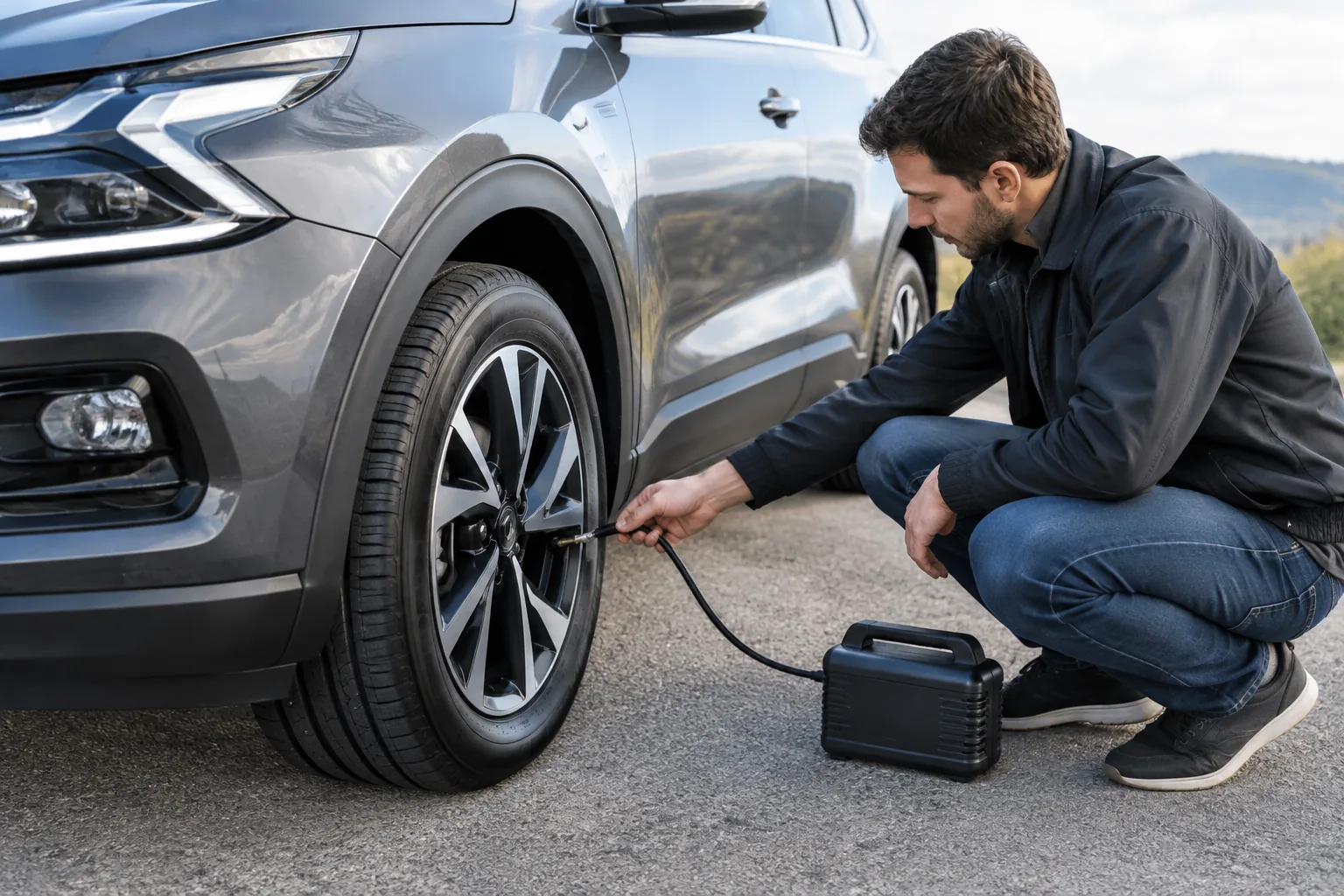
A reliable gauge matters here. A portable tire inflator with a digital pressure gauge is optional, but it makes setting cold pressures at home easy, especially when the light comes on at 6 a.m. and the nearest air pump is across town. Its only job is getting the tires to the placard number. It won’t reset, relearn, or program anything in the TPMS.

Portable Tire Inflator with Digital Pressure Gauge
Handy for topping off to the placard pressure at home; it only inflates and measures, and doesn’t reset or program the TPMS.
Our list of must-have tools for DIY car owners covers other basics worth keeping in the garage.
Low Pressure Warning vs. Malfunction Indication
The Pathfinder’s tire pressure monitoring is a direct system, with a pressure sensor mounted inside each wheel, not an indirect system that estimates pressure from wheel speed. Confirm that in the TPMS section of your owner’s manual for your model year, since that’s the document that governs your exact vehicle.
The light can mean two separate things:
- Steady light: One or more tires are low on pressure. Check and inflate to the placard value.
- Light flashes for a period, then stays on: Nissan’s manuals describe this as a TPMS malfunction, not low pressure. Check your manual’s wording for your year.
If the light is flashing and then staying on, adding air won’t fix it. That points to a sensor that isn’t communicating, a dead sensor battery, a wheel with no sensor, or a system fault. A steady light that appears at the same moment a tire is visibly low is almost always a pressure issue.
Reset, Relearn, Activation, Programming: What Each Term Means
These terms get mixed up constantly, and the difference affects what you can do yourself.
Pressure correction (owner task)
After you bring the tires to the placard pressure, the system generally needs the vehicle to be driven before it updates and turns the light off. Nissan manuals describe this, but the exact speed and time requirements vary, so check your manual instead of relying on a generic drive cycle. If your Pathfinder has Nissan’s Easy-Fill Tire Alert, the vehicle signals when you reach the target pressure while inflating. Confirm whether your model year has it and how it behaves.
Sensor-ID registration (shop or equipment task)
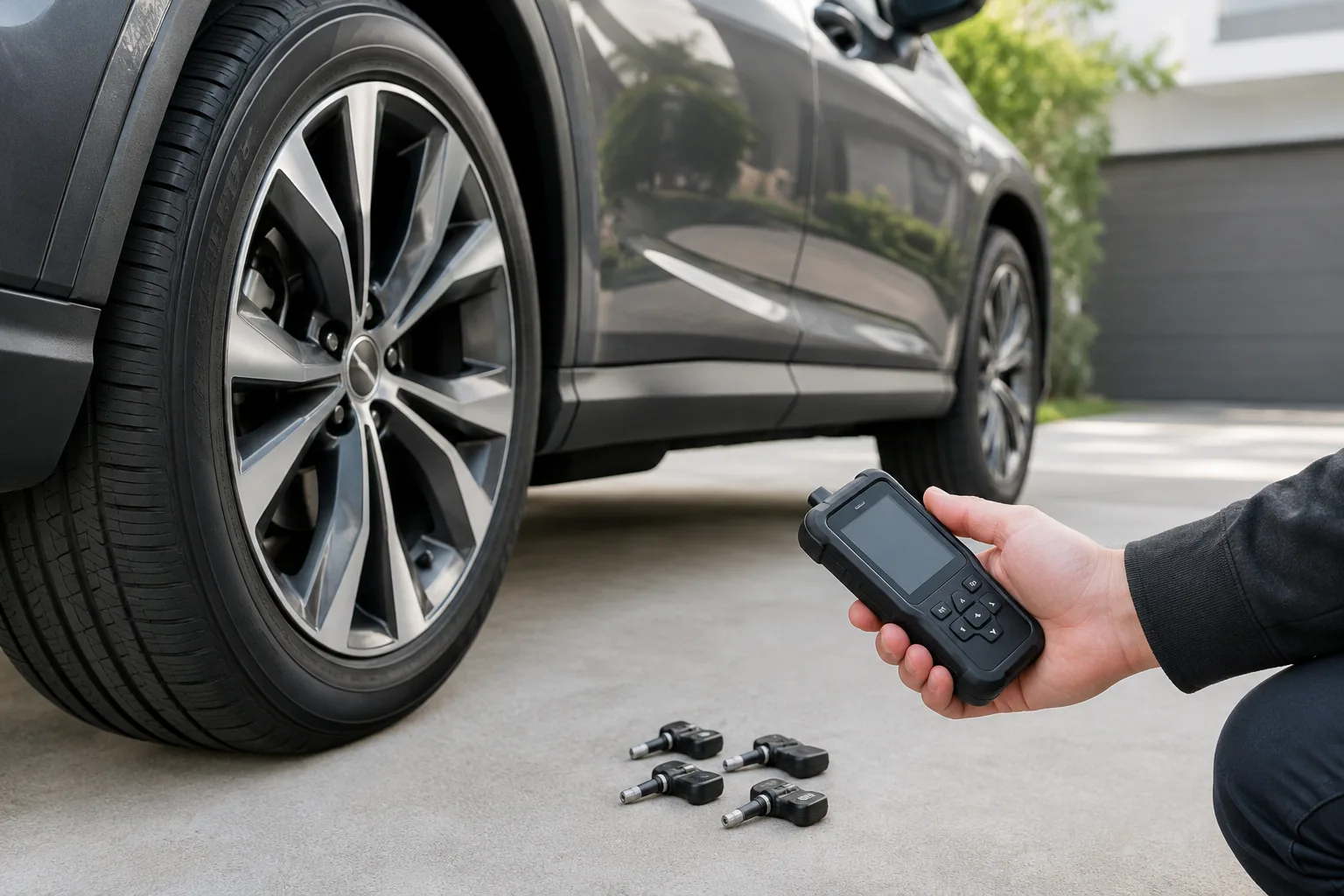
Each sensor has a unique ID, and the vehicle has to know the IDs of the sensors currently on the wheels. This matters when you replace a sensor, swap to a different set of wheels with sensors, or install new ones. Registering IDs normally takes a TPMS-capable tool, so it’s typically a job for a tire shop or dealer, not something done with a button press at home.
Sensor activation and programming (equipment required)
Some sensors need to be activated or programmed with a compatible tool before they’ll work in the vehicle. A basic OBD2 code reader generally can’t do this, and it often can’t even read TPMS data. Don’t count on a cheap reader to register or program sensors.
Rotation
Whether rotating tires requires any TPMS step depends on the generation and on whether your Pathfinder shows individual tire positions or pressures. Some systems only need a light check afterward, and others tie sensor IDs to wheel positions. Read the tire rotation and TPMS pages in your manual before assuming either way.
Sensor Fixes and When to Go to a Shop
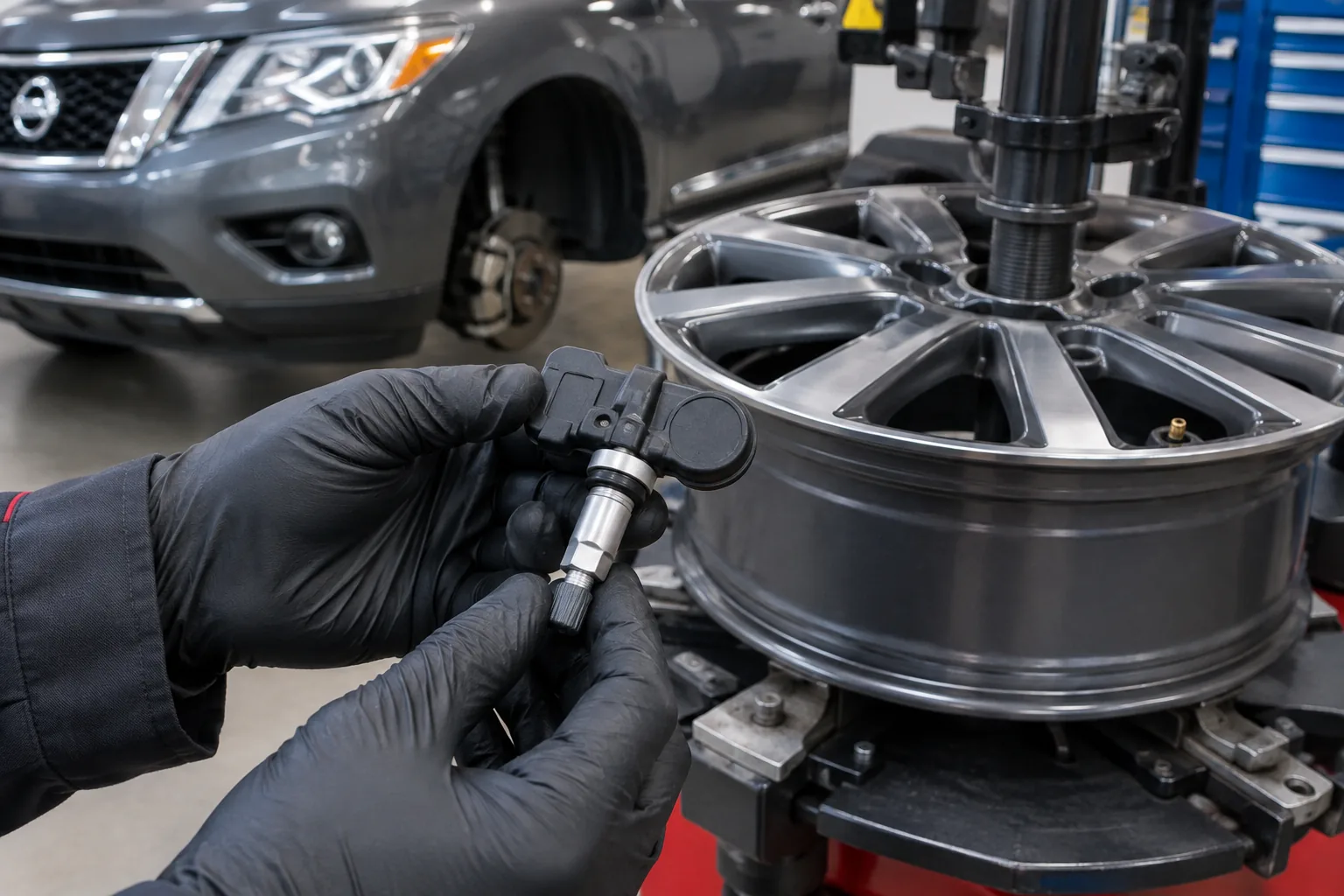
When the light flashes and stays on, the usual suspects are these:
- Weak sensor battery. The batteries are sealed inside the sensors and generally can’t be replaced separately, so the sensor is replaced. On an older Pathfinder, age alone is a common reason sensors start failing.
- Different wheels installed. Winter wheels or aftermarket wheels without working, registered sensors can keep the malfunction light on.
- Recent tire service. A damaged sensor or a sensor ID that wasn’t registered after a tire change can cause a fault. Go back to the shop that did the work.
- Spare tire. Whether the spare has a sensor, and whether it’s monitored, depends on the vehicle. Check your manual before blaming it.
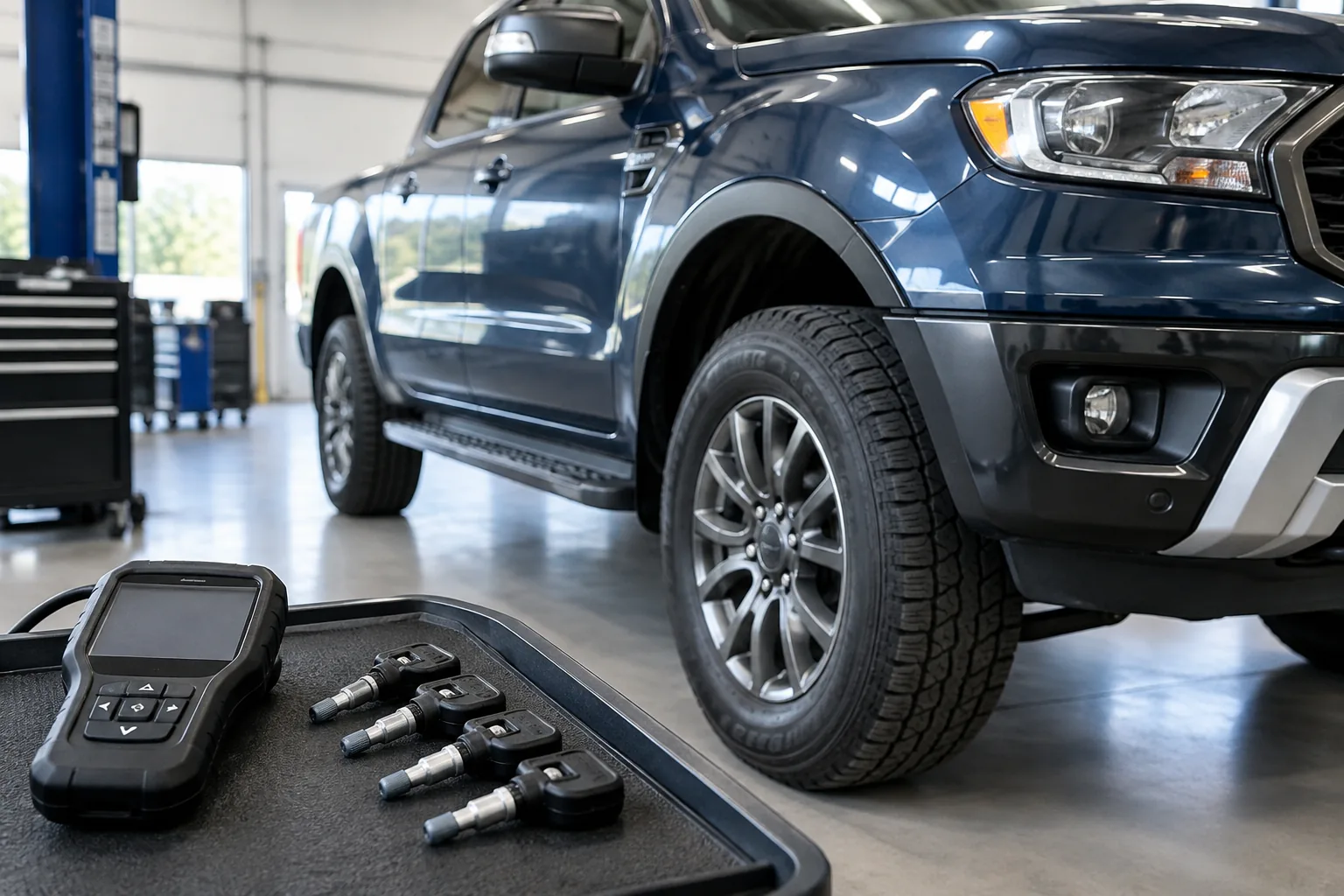
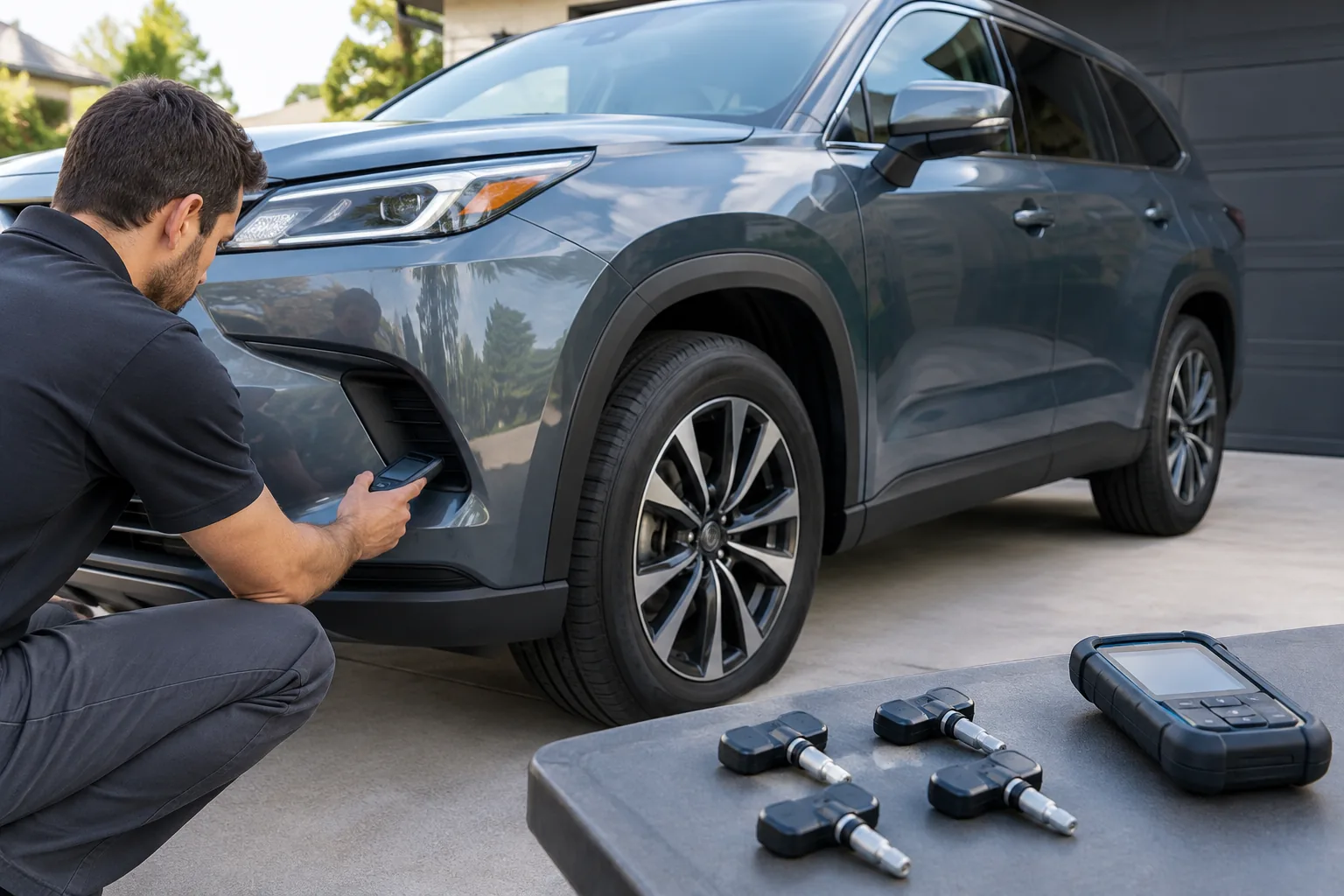
A shop with a TPMS tool can read which sensor isn’t responding, check its signal, and register replacements. That’s usually the most efficient route when you’ve confirmed pressures are correct and the light still flashes. Ask them to scan all four wheels, not just the one that looks suspicious, because sensors tend to age at about the same rate.
If you’re curious how other Nissan sensor warnings are handled, our Nissan Rogue blind spot monitoring guide follows a similar check-the-basics-first approach.
FAQ
Why is my Pathfinder tire pressure light on when the tires look fine?
A tire can be several PSI under the placard value without looking flat. Cold weather also lowers pressure overnight. Check all four tires with a gauge when they’re cold, and inflate to the door-jamb placard value. If the light was flashing before staying on, the cause may be a sensor or system fault instead.
Is there a reset button for the TPMS on a Nissan Pathfinder?
Don’t assume there is one. Whether any reset-type control exists depends on the model year and equipment, and I can’t confirm a universal procedure. Check the TPMS section of your owner’s manual for the exact steps and menu names for your vehicle.
Can I fix a malfunctioning TPMS sensor myself?
You can confirm tire pressures and look for obvious problems like a damaged valve stem. Replacing a sensor and registering its ID requires compatible equipment, and a basic OBD2 reader generally isn’t enough. A tire shop or dealer is the safer route for anything beyond correcting pressure.
Leave a Reply