
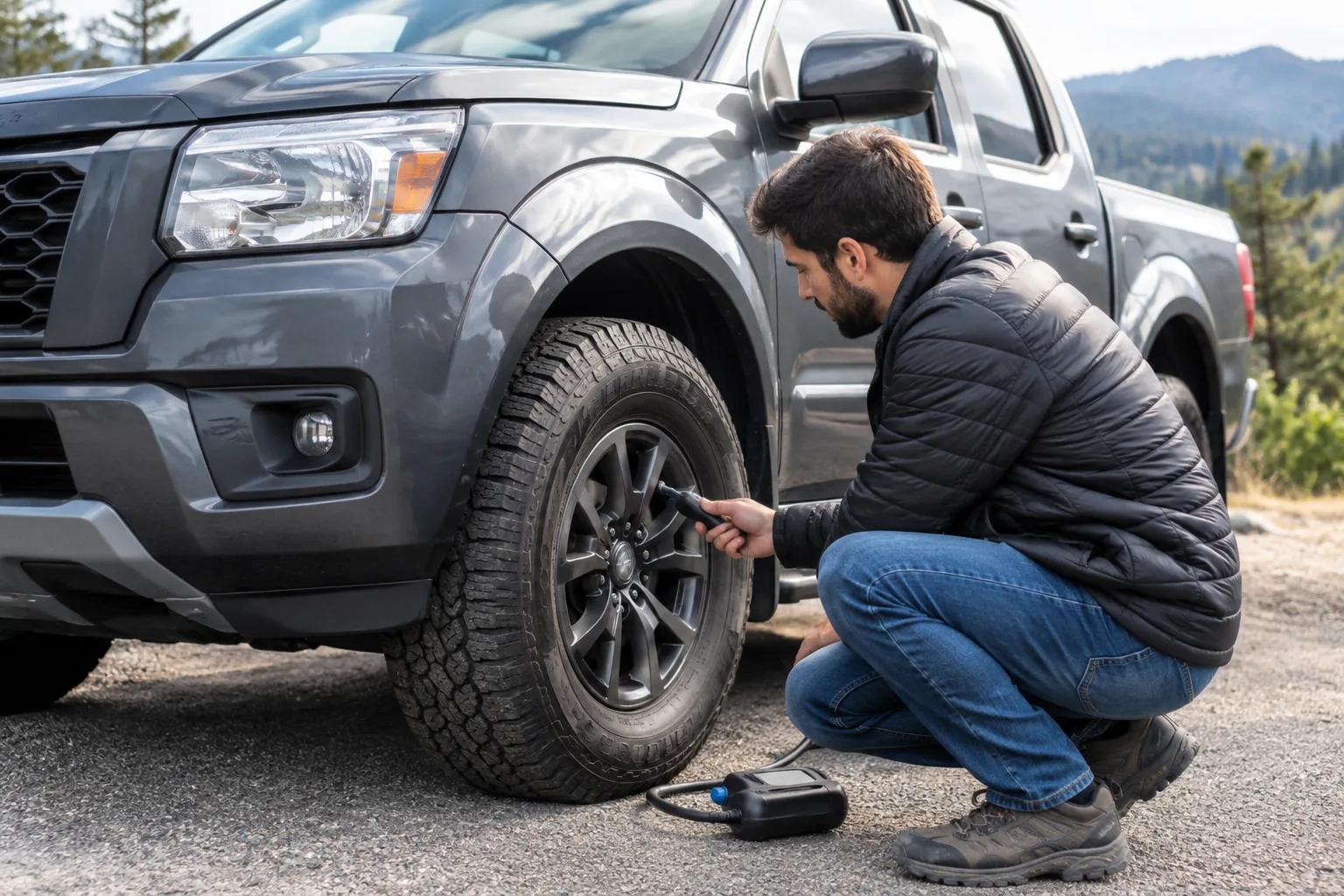
When the tire pressure light comes on in your Frontier, the first move isn’t to hunt for a reset. Check all four tires with a gauge while they’re cold, compare them to the pressures on the placard, and fix whatever is low. In most cases the light is doing its job, and correcting the pressure is the fix.
This guide covers how to tell a low-pressure warning from a system fault, what “reset” and “relearn” mean, and when you need a tire shop. Menu names and procedures vary by model year and trim, so the owner’s manual for your exact truck is the final word.
Start With Cold Pressures, Not the Reset
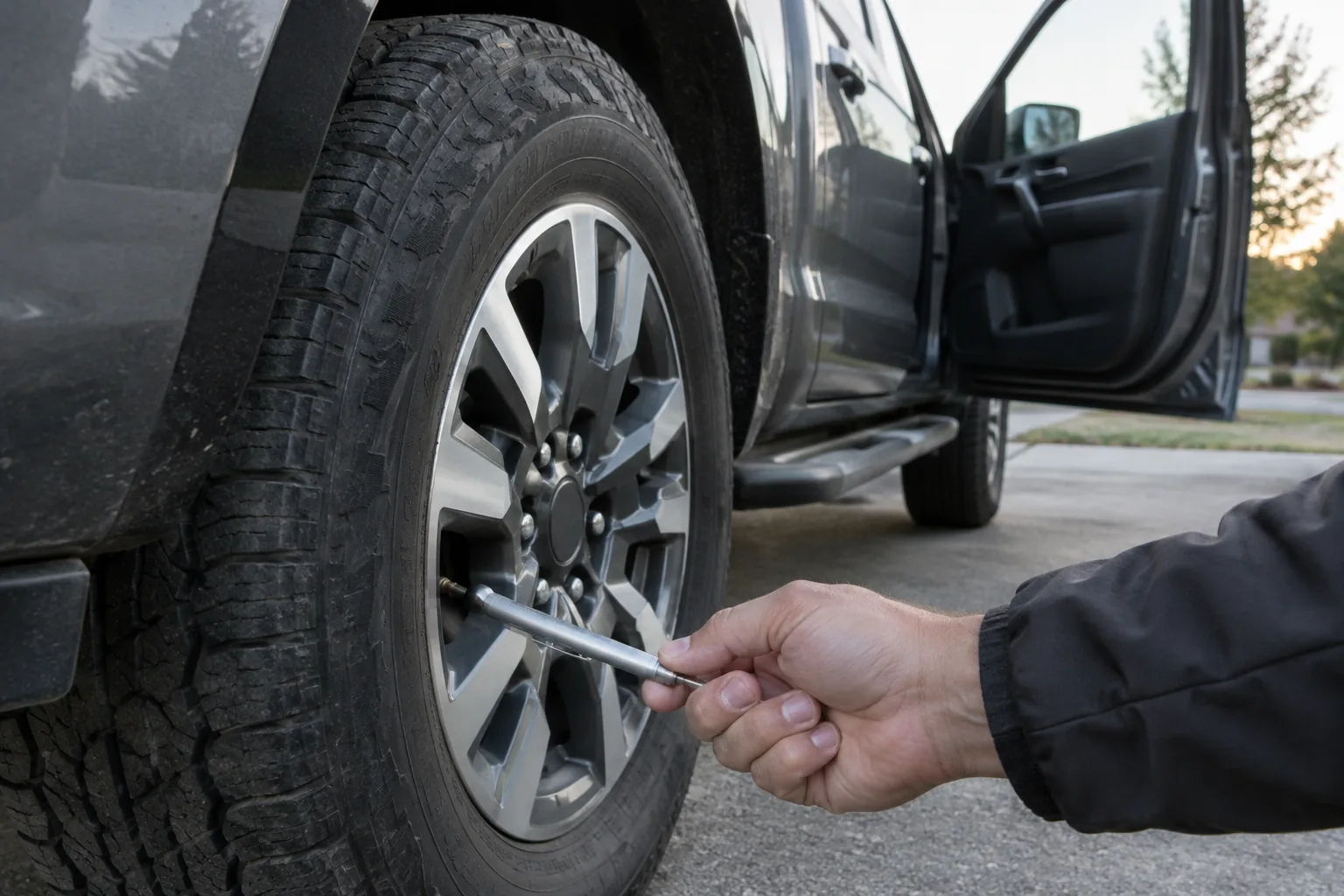
Clearing the light without checking pressures just hides a real problem. A slow leak from a nail, a leaking valve stem, or a rim seal issue will bring the light back, and an underinflated truck tire wears unevenly and runs hot.
- Check when the tires are cold. That means parked for a few hours or driven only a short distance. Cold weather alone can drop pressure enough to trigger the light on a chilly morning.
- Find the placard. It’s normally on the driver’s door jamb area. Use that number, not the maximum pressure molded into the tire sidewall. The placard value can differ by tire size and trim, and may differ front to rear.
- Measure each tire with a good gauge, including the spare if your manual says it’s monitored (many systems don’t monitor the spare, so confirm).
- Inflate to the placard value. If a tire is far below the others, don’t just top it off. Look for the cause.
- Inspect for leaks. Look at the tread and sidewalls for nails and screws, check the valve stem and cap, and watch for a tire that’s low again within days. A soapy water spray on the tread, valve, and bead can show a slow leak.
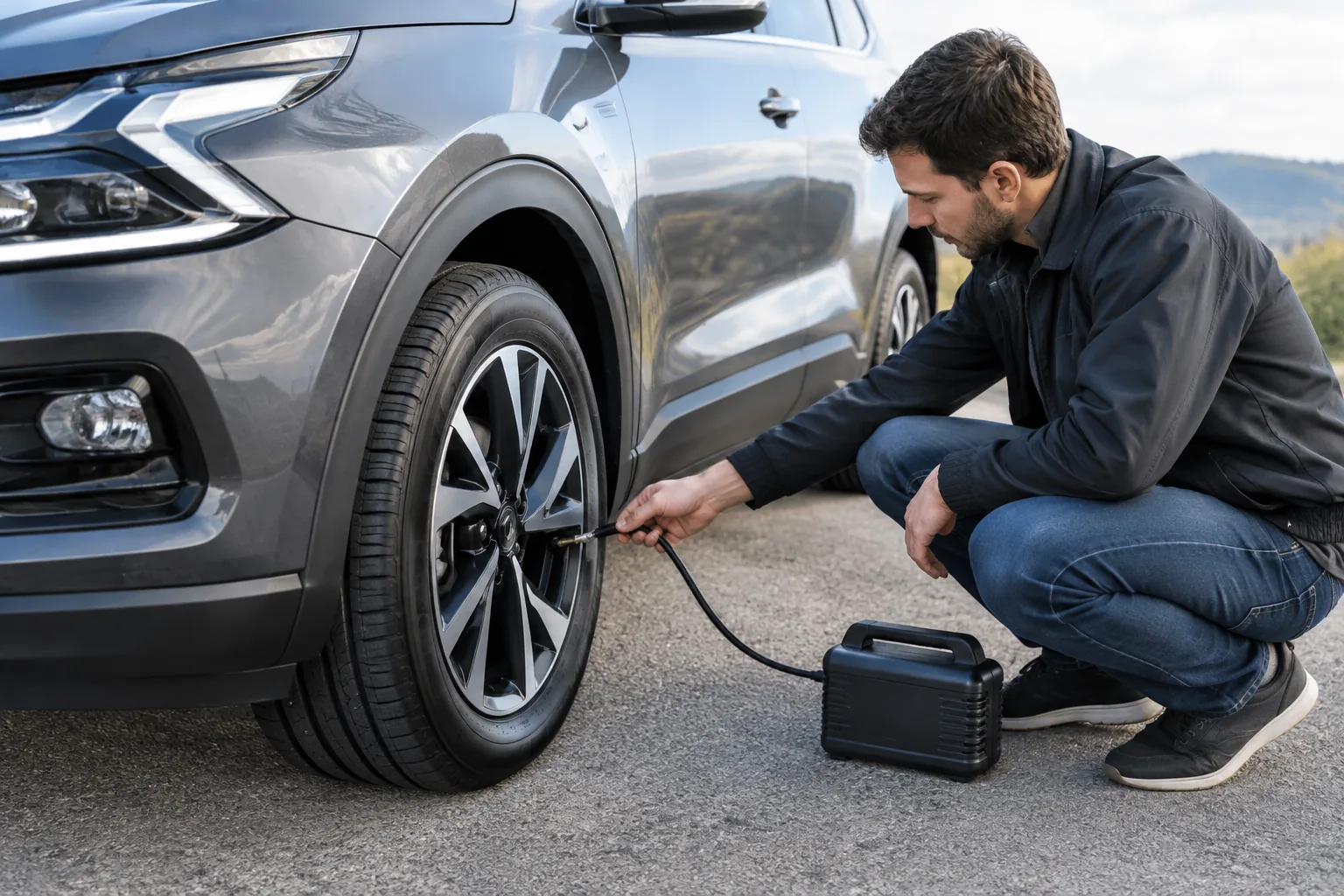
A portable inflator with a built-in gauge makes step four easy at home, especially for a truck with larger tires. It’s optional, but handy for setting cold pressures to the placard number. Check the gauge against a separate tire gauge now and then, since cheap built-in gauges can drift. A basic DIY tool kit should include a reliable stick or digital gauge anyway.

Portable Tire Inflator with Digital Pressure Gauge
Handy for setting cold tire pressures to the door placard value at home, though it’s an inflation tool only and won’t reset or relearn anything.
Many Nissan trucks also have Easy-Fill Tire Alert, which signals with the horn or lights as you inflate. Whether your Frontier has it, and how it behaves, depends on year and trim. Check the tire section of your manual.
Low-Pressure Warning vs. System Malfunction
These are two different conditions, and the fix depends on which one you have. Your Frontier’s manual describes how each one looks on your dash, so read the TPMS section before you assume.
- Low-pressure warning: The light comes on and stays on because one or more tires fell below the threshold. Inflate to the placard pressure and follow the manual’s instructions for how the light clears.
- Malfunction indication: Nissan manuals commonly describe the light flashing for a period at startup and then staying on when the system itself has a problem. Confirm the exact behavior for your truck in the manual. A fault means the system may not be able to warn you about low pressure at all.
If you’ve set every tire correctly and the light is still on, or it flashes and then stays lit, that points to a fault. Pumping more air won’t clear a fault.
Reset, Relearn, and Sensor Programming Are Different Things
People use “reset” for everything, which causes a lot of wasted effort. Here’s how the terms separate:
- Pressure initialization or reset: Some vehicles have a button or menu item that tells the system the current pressures are the new baseline. Don’t assume your Frontier has one. Look in the manual for a TPMS reset procedure, and if it isn’t listed, there isn’t an owner step to perform.
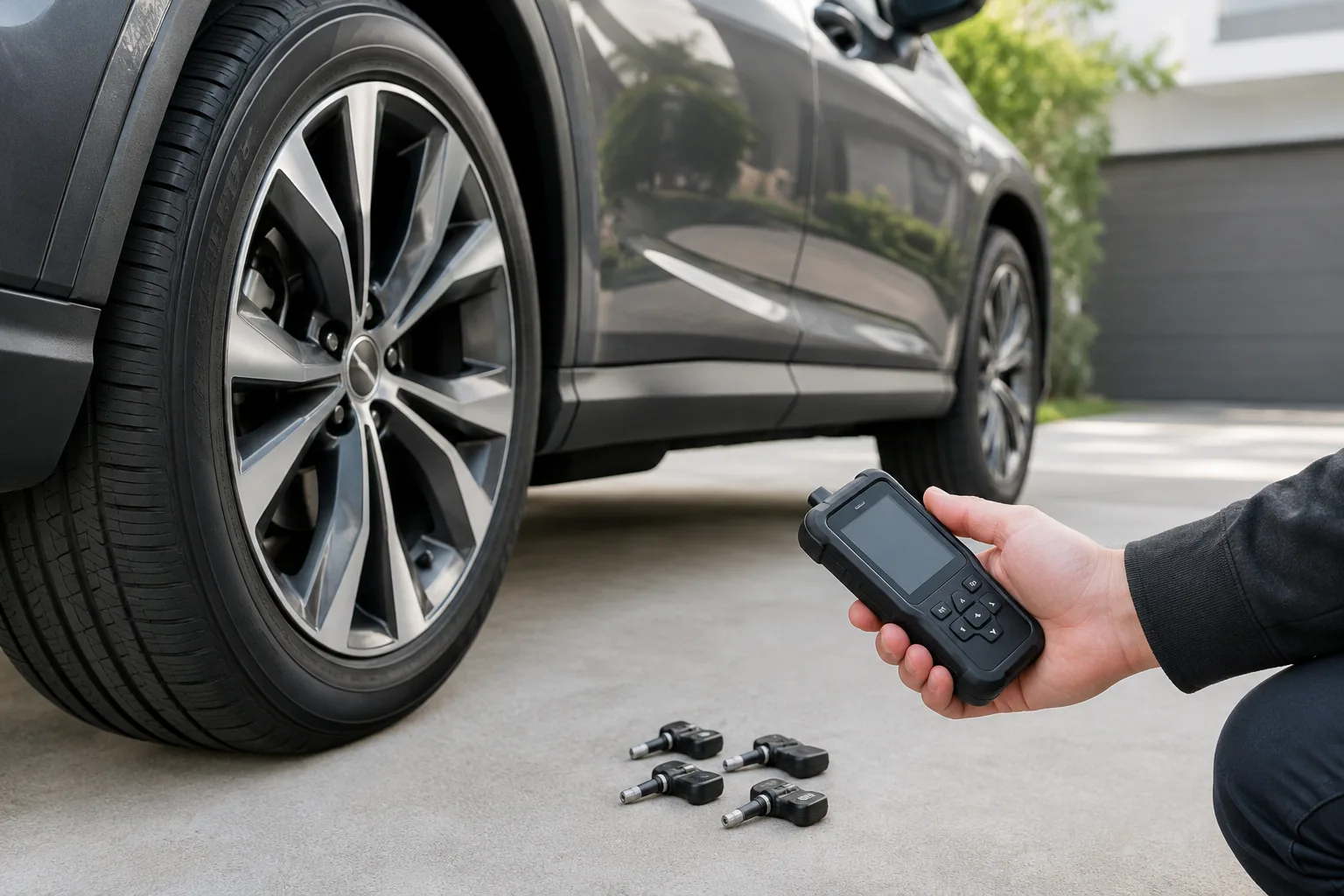
- Sensor activation: A scan tool or TPMS tool wakes a sensor so it can be read or registered. This needs compatible equipment.
- Sensor-ID relearn or registration: The truck has to know which sensor ID belongs to which wheel position, or that the ID exists at all. Whether it happens automatically or needs a tool depends on the generation and system.
- Sensor programming: A new aftermarket sensor may need to be programmed with the right protocol and ID before it can be registered. This is shop work.
- Fault diagnosis: Reading TPMS codes and sensor data to find out why the system is unhappy.
A basic OBD2 code reader can’t program TPMS sensors or run a relearn. It might not even see TPMS data. Don’t buy one hoping it will clear this light.
Direct Sensors, Rotations, and New Tires
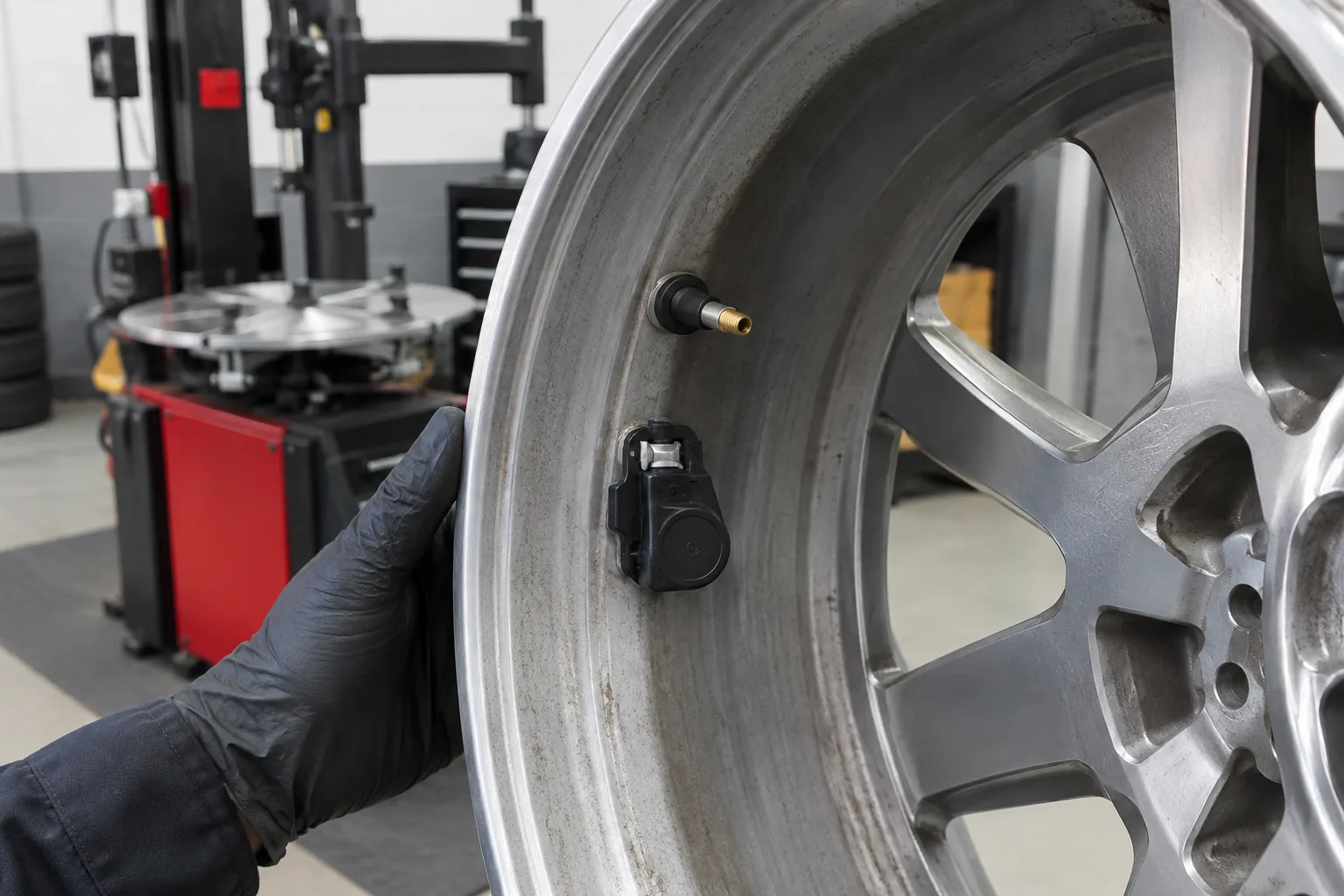
The Frontier’s TPMS uses a sensor mounted inside each wheel that reports actual pressure, which is direct monitoring. That matters because it means every wheel carries electronics that can fail, get damaged during tire service, or need to be registered. Confirm this against your manual, since equipment can vary by year and trim.
Whether a tire rotation requires a relearn depends on the generation and system. Some systems need the wheel positions re-registered, and others don’t care which corner a sensor ends up on. Your manual will say which applies to your truck, and a shop with the right tool can handle it either way. Don’t guess and rotate with the light on.
When you replace tires or wheels, tell the shop you have TPMS. Mounting can damage a sensor if the technician isn’t careful, and swapped wheels may need sensor registration. Winter wheel sets with their own sensors are another case where registration comes up.
Sensor Fixes and When to Go to a Shop
If pressures are correct and the light persists, these are the usual suspects:
- A weak or dead sensor battery. The battery is typically sealed inside the sensor, so the fix is usually replacing the sensor. Age is the main factor. If your truck is older and the original sensors are still in place, a dead battery is plausible.
- A damaged sensor or valve stem. This often follows tire service or curb damage.
- A sensor that was never registered after a wheel or tire change.
- A slow leak that keeps retriggering the low-pressure warning. Don’t forget this one.
- Aftermarket wheels with the wrong or no sensors installed.
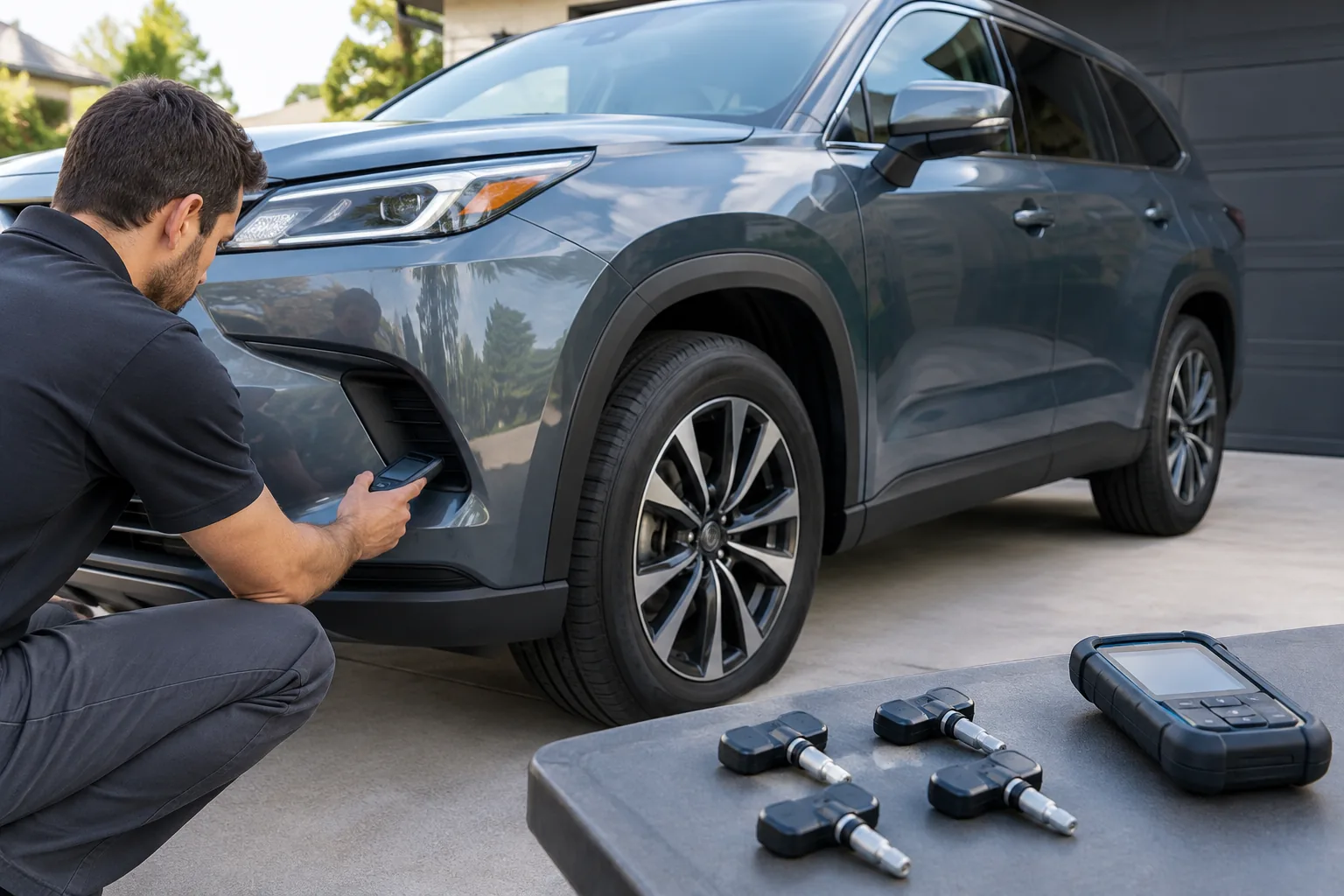
Owner steps stop at checking pressures, inspecting for leaks, and reading the manual. Anything involving sensor activation, registration, programming, or diagnosis needs compatible equipment, so take it to a tire shop or a Nissan dealer. Ask them to read each sensor’s status so you know which wheel has the problem, and replace only what’s actually bad.
FAQ
Does the Nissan Frontier have a TPMS reset button?
Don’t assume it does. Some vehicles have one, but the right answer for your truck is in the TPMS section of the owner’s manual for your model year. If the manual doesn’t list a reset procedure, the light is meant to clear after the pressure problem or fault is corrected.
Why is my tire pressure light on when all my tires look fine?
A tire can be several psi low without looking flat, and temperature swings can push a tire under the threshold overnight. Check all four with a gauge while cold. If they’re all at the placard pressure and the light stays on or flashes then stays lit, suspect a sensor or system fault and have it scanned.
Can I replace a TPMS sensor myself?
The physical swap involves dismounting the tire, and the new sensor usually needs to be registered or programmed to the truck with the right equipment. For most owners that’s a tire shop job. A basic OBD2 reader won’t handle it.
Leave a Reply