
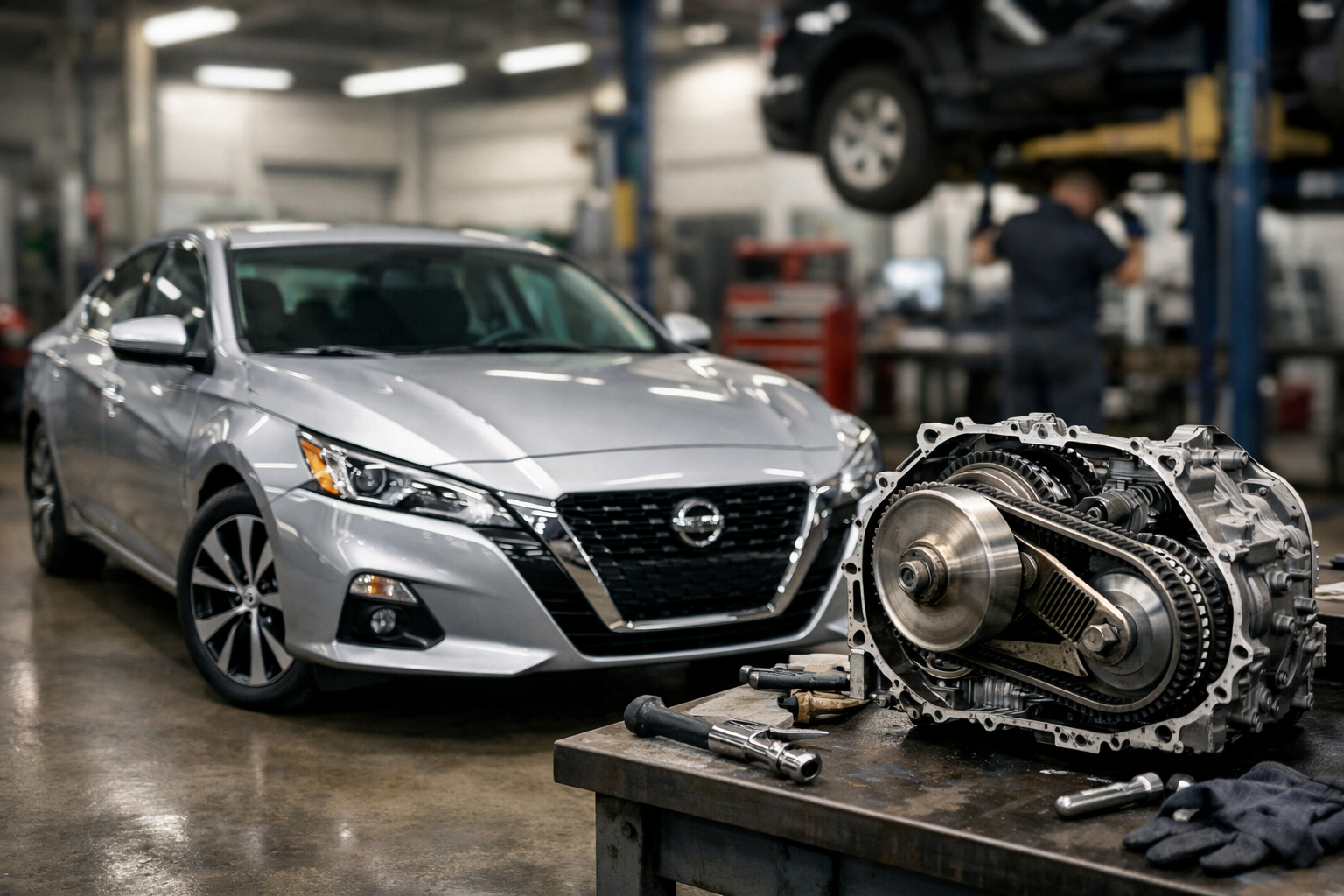
The Nissan Altima is one of the most affordable midsize sedans on the used market, but there’s a reason prices are consistently lower than the Camry and Accord: the Jatco CVT (Continuously Variable Transmission) has a well-documented history of premature failure that spans multiple model years.
Understanding which years are worst, how the CVT fails, and whether the extended warranty covers your potential purchase can mean the difference between a great deal and an expensive mistake.
Altima Years to Avoid
2013-2015 (Worst CVT Transmission Failures)
These are the worst Altima model years for CVT reliability, and they’re the primary reason the Altima’s used market reputation suffers. The Jatco CVT7 used in these models is prone to shuddering during acceleration, overheating under load, and complete transmission failure.
Failures often occur between 60,000 and 100,000 miles, which is well short of what buyers expect from a modern transmission.
The failure pattern is consistent: owners first notice a shudder or vibration during acceleration, particularly when climbing hills or merging. The shudder worsens over time, eventually accompanied by delayed acceleration (pressing the gas produces RPM increase but no forward motion for 1 to 2 seconds).
Finally, the transmission slips severely or fails entirely, requiring a complete replacement that costs several thousand dollars.
Nissan extended the CVT warranty to 10 years/120,000 miles on certain 2013-2017 model years in response to the overwhelming volume of complaints. However, many 2013-2015 vehicles have now aged past this extended coverage, leaving owners responsible for the full replacement cost.
If you’re considering a used Altima from these years, you’ll want to understand what happens if you total a car you still owe money on, since CVT failure could leave you underwater on your loan.
2002 (Catalytic Converter Failure)
The 2002 Altima had a high rate of premature catalytic converter failure caused by engine management issues that allowed unburned fuel to reach the converter. The rich fuel mixture overheated the converter’s substrate, causing it to disintegrate and sometimes clog the exhaust system entirely.
2005 (Crankshaft Position Sensor)
The 2005 Altima had recurring crankshaft position sensor failures that caused stalling, no-start conditions, and rough running. The sensor would fail intermittently, making diagnosis frustrating because the problem might not occur during a shop visit.
The CVT Problem Explained in Detail
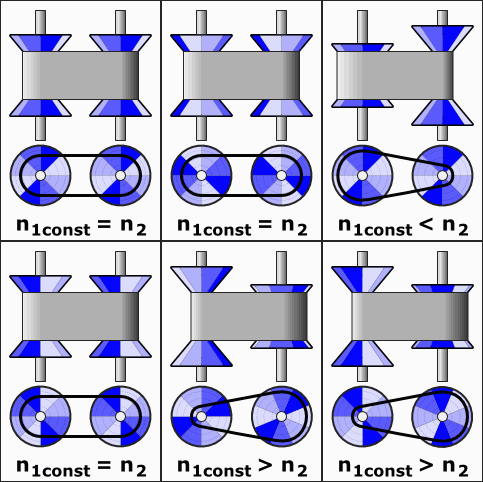
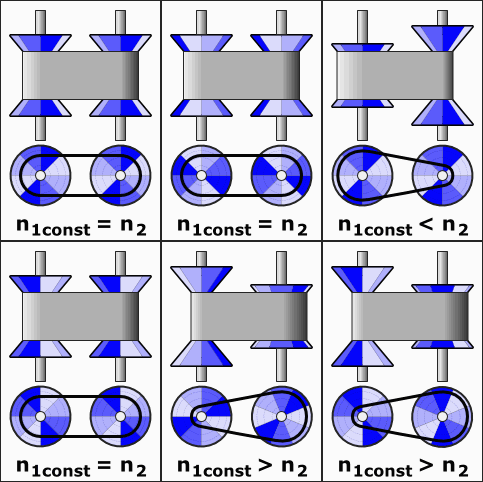
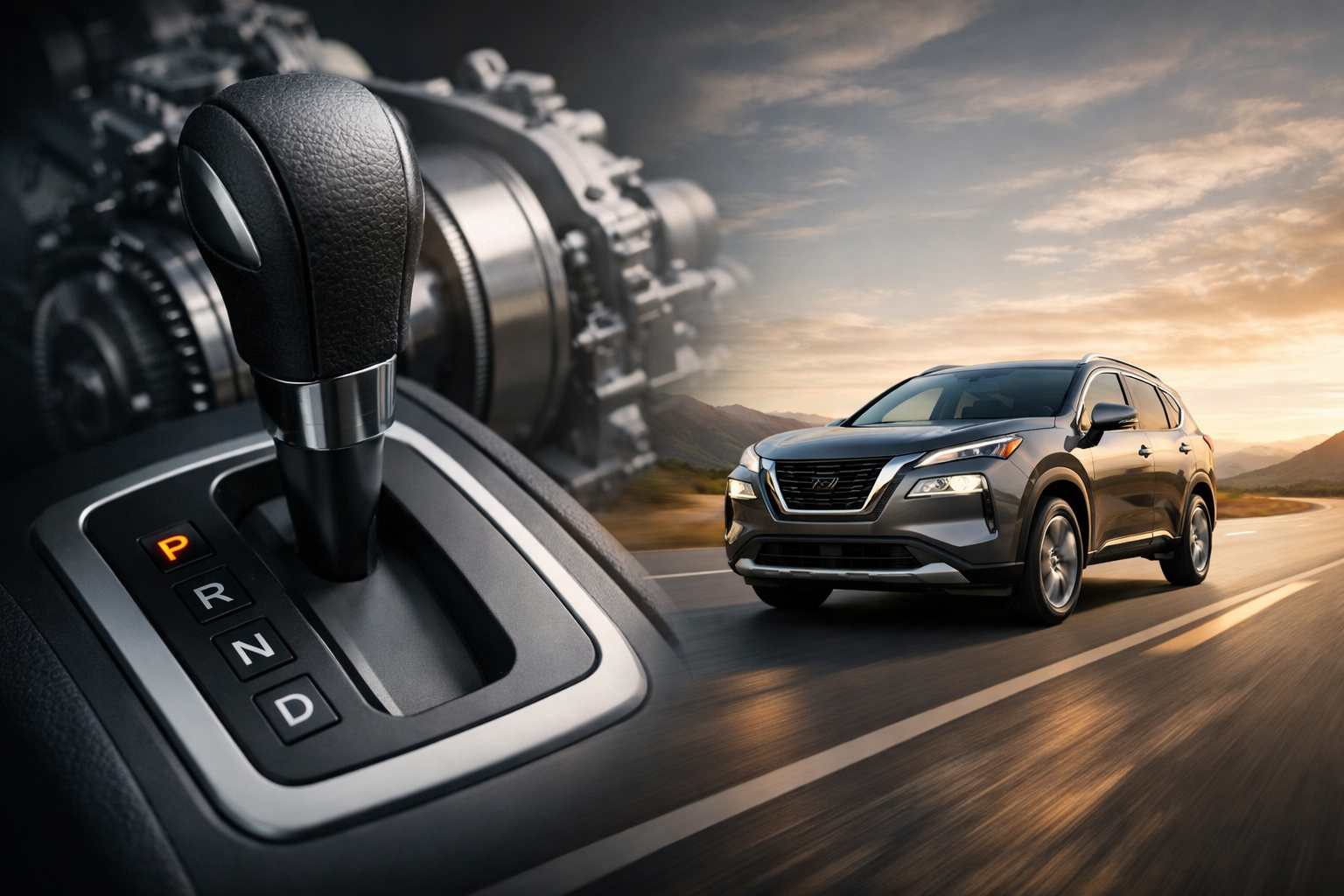
Nissan’s Jatco CVT uses a steel push belt running between two variable-diameter pulleys instead of the traditional gear sets found in conventional automatic transmissions. The belt and pulleys adjust continuously to provide an infinite range of gear ratios, which is theoretically more efficient than stepped gears.
The design generates significantly more heat than a conventional transmission, especially under load (hill climbing, towing, stop-and-go traffic). The CVT fluid degrades faster under this heat, and the steel belt and pulley surfaces wear as the fluid loses its protective properties.
Once wear progresses past a critical point, the belt begins to slip on the pulleys, producing the characteristic shudder that precedes failure.
Hot weather, mountainous terrain, and stop-and-go traffic accelerate the wear cycle. Nissan’s recommended CVT fluid change interval was originally 60,000 miles, but many transmission specialists recommend 30,000-mile intervals for Altimas driven in severe conditions.
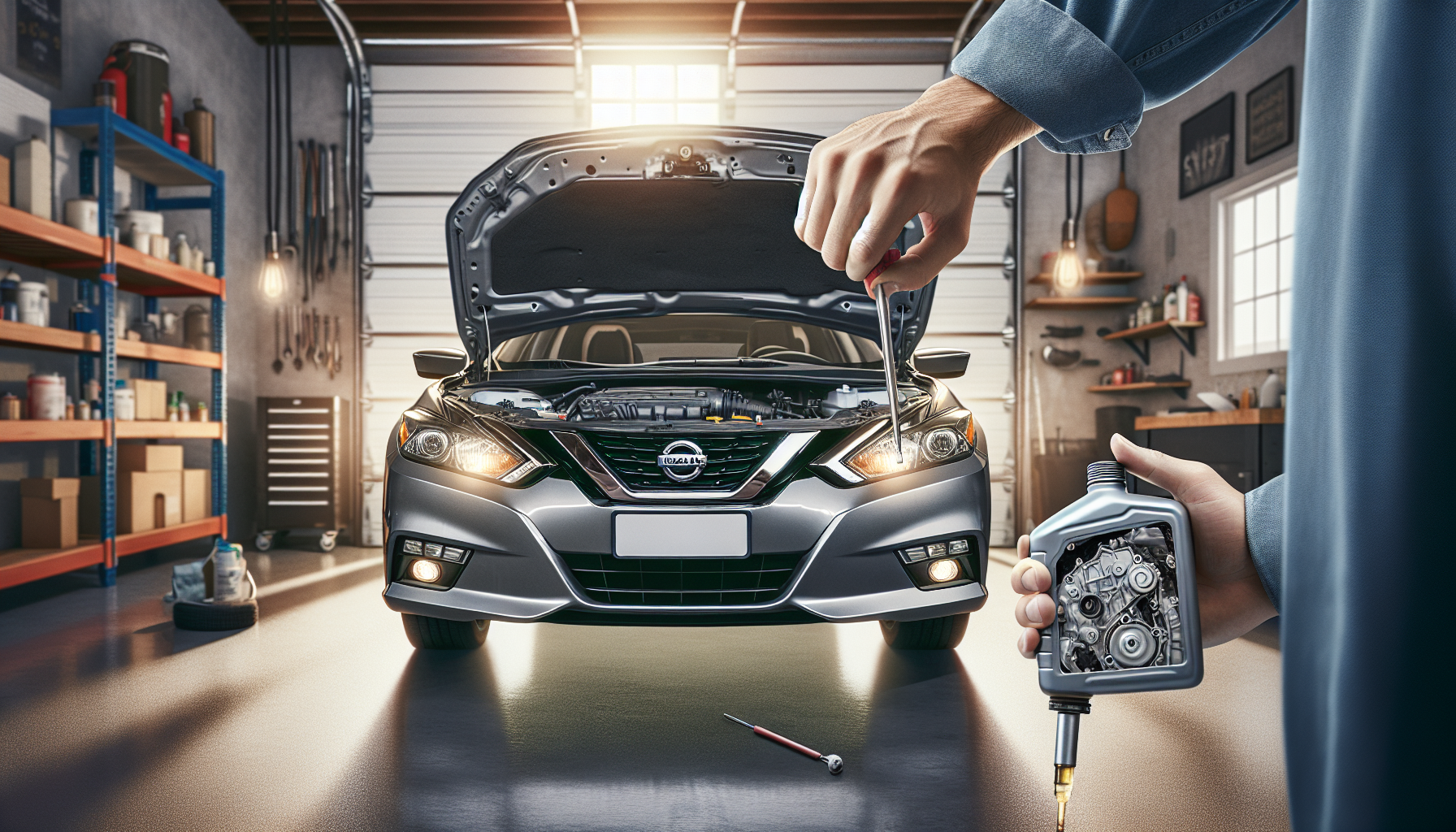
Regular fluid changes are the single most effective way to extend CVT life. You’ll want to use proper CVT transmission fluid designed specifically for Nissan transmissions.
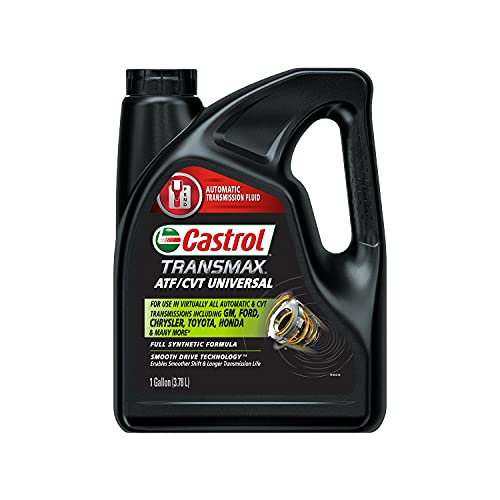
CVT Transmission Fluid
Regular fluid changes every 30,000 miles can significantly extend your CVT’s lifespan
If you’re interested in learning more about how CVTs work and why they have such a controversial reputation, check out our detailed guide on what is a CVT transmission and why do some people hate them.
CVT Extended Warranty
Nissan extended the CVT warranty to 10 years/120,000 miles on certain 2013-2017 model years. Check the VIN with a Nissan dealer to verify coverage.
If the CVT has already been replaced under warranty, the replacement unit may have a separate warranty period (typically 1 year/12,000 miles from the replacement date).
Vehicles that had their CVT replaced under warranty are actually reasonable used purchases since the replacement transmission has fewer miles and potentially improved fluid and components. Ask for documentation of the replacement.
Altima Years to Buy
For the 4th gen (2007-2012): 2010 and 2011 are the best picks, with improved CVT calibration and fewer complaints than the problematic 2013+ era.
For the 5th gen (2013-2018): 2017 and 2018 benefit from revised CVT calibration and the extended warranty.
For the 6th gen (2019+): 2021 and later benefit from further CVT refinements and improved cooling. The newer CVTs are more reliable than the 2013-2015 units but still don’t match the longevity of a traditional automatic transmission.
Use an OBD2 scanner to check for stored transmission codes on any used Altima. CVT-related codes include P0868 (line pressure low), P0730 (incorrect gear ratio), and P0740 (torque converter circuit malfunction).

OBD2 Scanner for Nissan
Check CVT-related codes before purchasing a used Altima
When test driving any used Altima, make sure you know what to look for during a used car test drive and how to read a vehicle history report and what the red flags are.
Frequently Asked Questions
Are all Nissan CVTs unreliable?
The newer CVTs (2019+) have proven more durable than the 2013-2015 units, with better cooling systems and improved fluid formulations. They still don’t match the longevity expectations of a traditional automatic, but they represent a significant improvement.
Regular CVT fluid changes every 30,000 miles help extend life significantly on all years.
Is the V6 Altima more reliable?
The 3.5L V6 Altima (available before 2019) uses a different, more capable CVT than the four-cylinder models. The V6 CVT handles the additional torque with better cooling and stronger internals.
V6 Altimas generally have better transmission reliability but are harder to find on the used market.
Should I just buy a Camry or Accord instead?
If long-term reliability is your top priority, the Camry and Accord have consistently stronger track records, particularly in the transmission department.
The Altima offers more features and more car for the money at any given price point, but the CVT risk is a real tradeoff that buyers should weigh carefully against the lower purchase price. If you’re also considering a Honda Accord, it’s worth understanding the best and worst years for that model as well.
Will my insurance go up if I buy a problematic Altima?
Insurance rates are based more on your driving record and demographics than the specific reliability of your car. However, you might want to understand why your car insurance went up even though you had no accidents and how your credit score affects your car insurance rate.

Leave a Reply