

Every driver has been there: you’re filling up your tank and feel tempted to squeeze in just a little more gas after the pump automatically shuts off. You might think you’re getting better value or extending your driving range, but topping off your fuel tank can actually cause serious damage to your vehicle’s emissions system and cost you hundreds in repairs.
Modern cars rely on complex vapor recovery systems to meet environmental standards, and overfilling your tank can overwhelm these delicate components. Understanding why that automatic shutoff exists will save you from expensive mistakes and keep your car running properly.
How Your Car’s Fuel System Actually Works
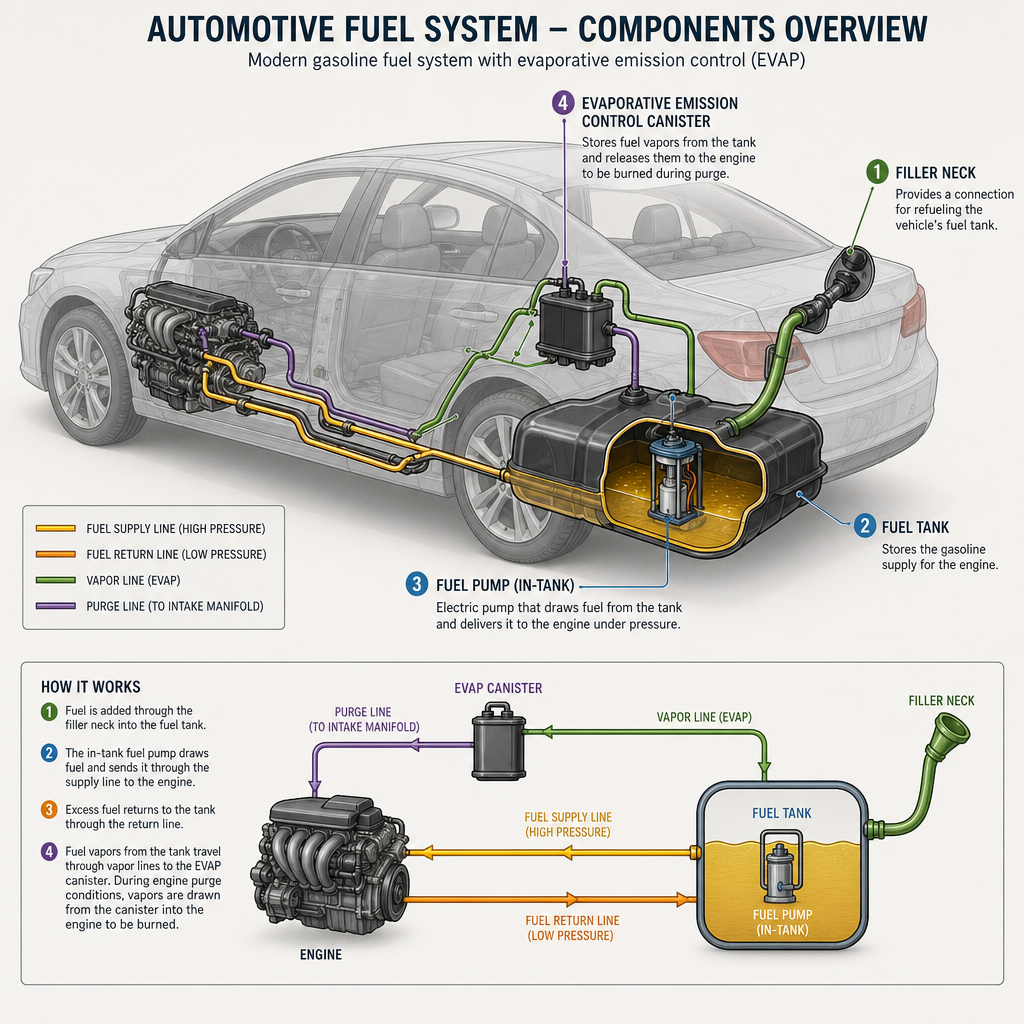
Your vehicle’s fuel system isn’t just a simple tank with a cap on top. Modern cars include an Evaporative Emission Control (EVAP) system designed to capture fuel vapors before they escape into the atmosphere. This system includes several key components: a charcoal canister, vapor lines, a purge valve, and various sensors that monitor the entire network.
The charcoal canister acts like a sponge, absorbing fuel vapors from your tank and storing them until your engine can burn them during normal operation. When you’re driving, the purge valve opens periodically to allow these stored vapors into the intake manifold, where they mix with incoming air and combust in your cylinders.
Your fuel tank also needs room for thermal expansion. Gasoline expands significantly as temperatures rise, and without adequate space in the tank, this expansion creates excessive pressure throughout the vapor recovery system. The tank’s design includes specific void space to accommodate this expansion safely.
What Happens When You Top Off After the Click
When the gas pump clicks off, it’s responding to a signal that your tank has reached its safe capacity. The pump nozzle contains a venturi valve that detects when fuel reaches the end of the fill tube. This isn’t a suggestion or estimate – it’s a precise measurement based on your tank’s engineered capacity.
Adding more fuel after this point forces liquid gasoline into areas designed only for vapor. The excess fuel can travel through vapor lines directly into your charcoal canister, saturating the activated carbon with liquid fuel instead of just vapors. Once this happens, the canister loses its ability to absorb and process fuel vapors properly.
Liquid fuel in the EVAP system creates a domino effect of problems. Your purge valve, designed to handle vapors, can become damaged when liquid fuel passes through it. The engine’s intake system may receive too much fuel during purge cycles, causing rough idle or stalling. Sensors throughout the system will detect these abnormal conditions and trigger diagnostic trouble codes.
The Expensive Consequences of EVAP System Damage
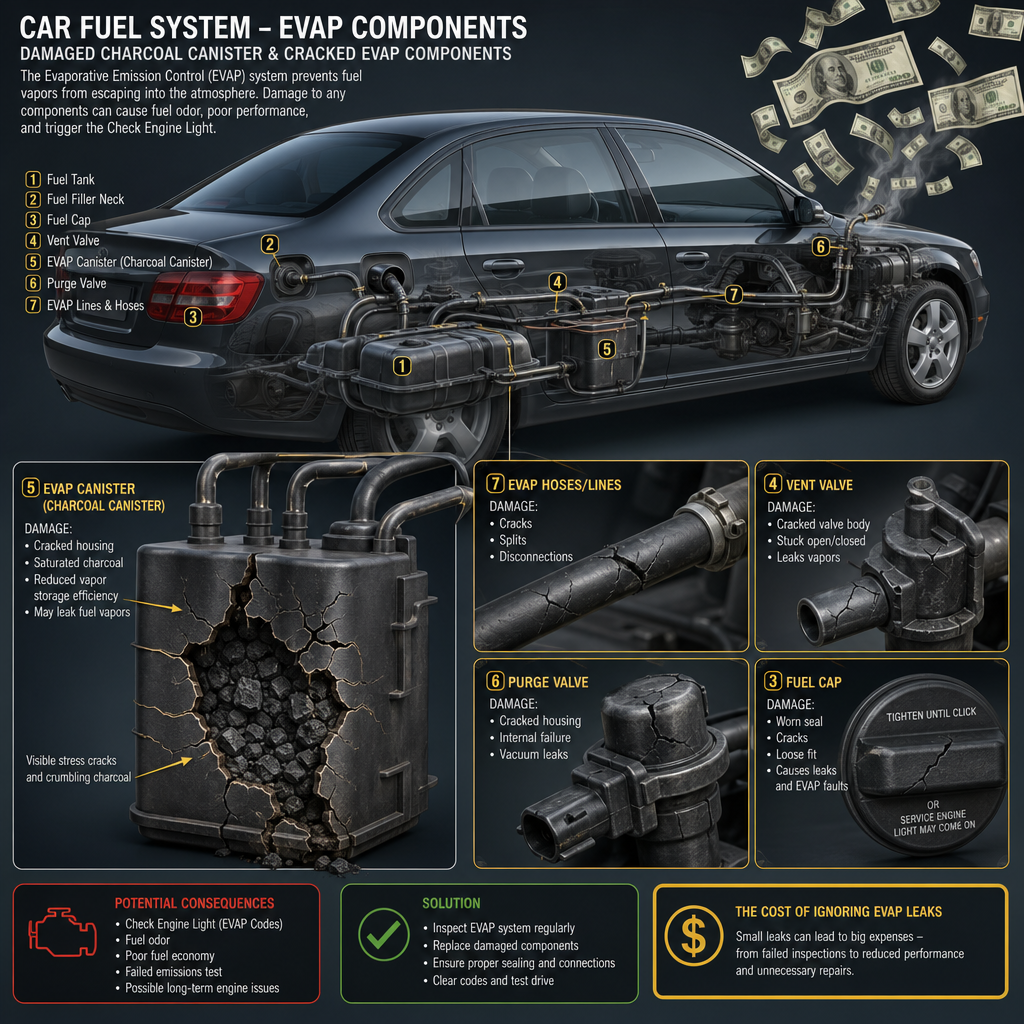
A saturated charcoal canister typically costs between check current prices and check current prices to replace, and that’s just the part. Labor adds another check current prices depending on your vehicle’s design and your location. Some luxury vehicles or trucks with complex EVAP systems can cost even more to repair.
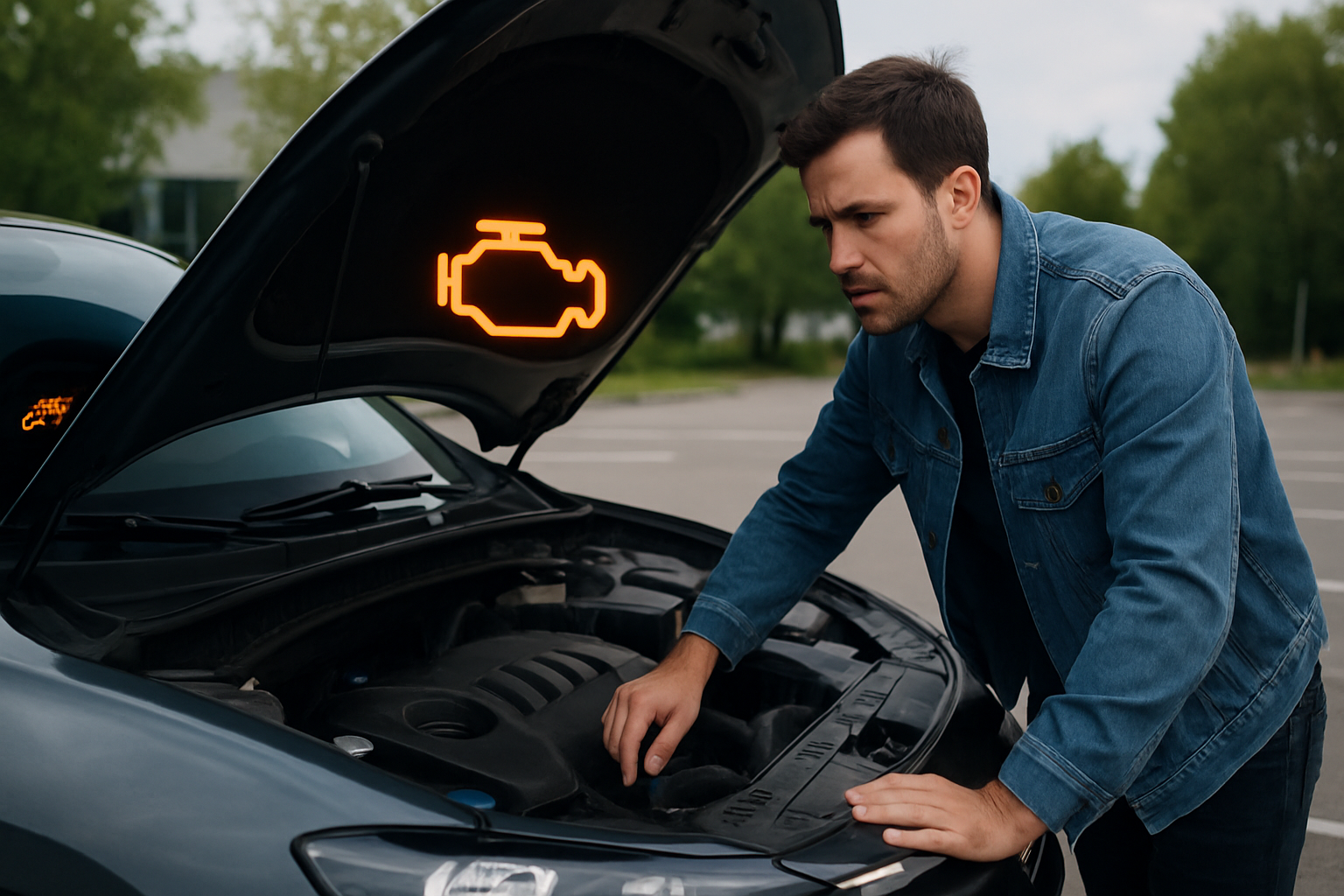
Your check engine light will illuminate when the system detects EVAP problems, and your vehicle may fail emissions testing in states that require it. You can’t legally drive with a failed emissions system in many areas, and you definitely can’t register or renew your vehicle’s registration until the repairs are complete.
The damage often extends beyond just the charcoal canister. Purge valves can fail, requiring replacement of components that cost check current prices each. Vapor lines may need cleaning or replacement if they’ve been contaminated with liquid fuel. Some vehicles require complete EVAP system diagnosis, which adds diagnostic time to your repair bill.
Fuel Expansion and Hot Weather Risks
Gasoline expands approximately 1% for every 15-degree temperature increase. If you fill your tank completely in cool morning temperatures and then park in direct sunlight, the fuel expansion can create dangerous pressure in your system. This pressure has to go somewhere, and it usually forces fuel through vapor lines into components that can’t handle it.
Hot weather makes topping off even more problematic. That extra fuel you added after the pump clicked off may expand beyond your tank’s capacity as temperatures rise throughout the day. The excess fuel gets pushed into your EVAP system, causing the same saturation problems but potentially more severe because of the additional volume.
Temperature swings also affect the accuracy of fuel level sensors. Your gauge might show completely full, but thermal expansion could make your actual fuel volume exceed your tank’s safe capacity. This internal pressure can damage seals, gaskets, and other components throughout your fuel system.
Why Gas Stations Want You to Stop Topping Off
Gas stations post signs asking customers not to top off their tanks for good reason. Overfilled tanks often result in fuel spillage, which creates environmental hazards and cleanup costs for the station. Spilled gasoline can contaminate groundwater and soil, leading to expensive remediation requirements.
Modern fuel pumps include vapor recovery systems that capture vapors during normal filling operations. When you top off your tank, these systems can’t work properly because they’re dealing with liquid fuel instead of vapors. This reduces the efficiency of the station’s environmental controls and can trigger regulatory violations.
Station owners also deal with increased maintenance costs when customers consistently overfill their tanks. Pump nozzles can become contaminated with fuel that backs up from overfilled tanks, requiring more frequent cleaning and calibration to maintain accurate fuel delivery.
Recognizing Signs of EVAP System Problems
If you’ve been topping off your tank regularly, watch for several warning signs that indicate EVAP system damage. A persistent fuel odor around your vehicle, especially when parked, suggests that vapors are escaping instead of being captured properly. This smell is often strongest near the rear of the vehicle where the charcoal canister is typically located.
Your check engine light may illuminate with specific diagnostic trouble codes related to the EVAP system. Common codes include P0441 (incorrect purge flow), P0446 (vent control malfunction), and P0456 (small leak detected). These codes indicate that your vehicle’s computer has detected problems with vapor recovery operations.
You might notice changes in how your vehicle runs during certain conditions. Some cars with EVAP problems experience rough idle when the purge valve operates, usually during highway driving when the engine is at normal operating temperature. Stalling or hesitation during acceleration can occur if liquid fuel in the system disrupts the normal air-fuel mixture.
How to Fill Your Tank Properly
Proper fueling technique prevents EVAP system damage and ensures your vehicle operates as designed. Insert the pump nozzle fully into your fuel filler neck and select your desired grade of fuel. Hold the nozzle trigger at the first detent position for a moderate flow rate rather than squeezing it fully for maximum flow.
When the pump clicks off automatically, remove the nozzle immediately and replace your fuel cap. Don’t attempt to add more fuel by changing the nozzle angle, pulling it out slightly, or squeezing the trigger again. The automatic shutoff indicates that your tank has reached its proper capacity.
Choose cooler times of day for fueling when possible. Early morning or evening temperatures reduce fuel expansion issues and allow you to get closer to a true full tank without risking overflow. Your fuel will have more room to expand safely as temperatures rise throughout the day.
Special Considerations for Different Vehicle Types
Trucks and SUVs with large fuel tanks face increased risks from topping off because of their tank size and configuration. Many trucks have dual tanks or complex filler neck designs that make overflow more likely when you add fuel after the automatic shutoff. The larger volume of excess fuel can cause more extensive EVAP system damage.
Hybrid vehicles require extra caution because their fuel systems operate differently than conventional cars. Some hybrids have smaller fuel tanks and more sensitive EVAP systems that can be damaged more easily by overfilling. The integration between the electric and fuel systems in hybrids can make repairs more complex and expensive.
Older vehicles without modern EVAP systems still shouldn’t be topped off because of thermal expansion risks and the potential for fuel spillage. While they may not have charcoal canisters to damage, overfilling can still cause fuel to escape through vents and create safety hazards.
What to Do If You’ve Already Been Topping Off
If you’ve been regularly adding fuel after the pump clicks off, monitor your vehicle for the warning signs mentioned earlier. Stop the practice immediately to prevent further damage to your EVAP system. Even if you haven’t noticed problems yet, continued overfilling will eventually cause damage that requires expensive repairs.
Consider having your EVAP system inspected by a qualified mechanic if you’ve been topping off for an extended period. Many shops can perform smoke tests or other diagnostic procedures to check for system problems before they trigger your check engine light. Early detection can save you money compared to waiting for complete system failure.
If your check engine light is already on, have the diagnostic trouble codes read as soon as possible. Many auto parts stores will scan codes for free, giving you an idea of whether EVAP problems are present. Professional diagnosis will be required to determine the extent of any damage and the necessary repairs.
Frequently Asked Questions
How much extra fuel can I actually get by topping off?
Most drivers can only add between half a gallon to one gallon by topping off after the pump clicks. This small amount of extra fuel isn’t worth the risk of hundreds of dollars in EVAP system repairs. The automatic shutoff is calibrated to leave just enough space for thermal expansion, so any additional fuel encroaches on this safety margin.
Will topping off void my vehicle’s warranty?
While topping off itself won’t void your entire warranty, manufacturers can deny coverage for EVAP system repairs if they determine that overfilling caused the damage. Warranty claims adjusters are trained to recognize saturation patterns in charcoal canisters that indicate repeated overfilling. Save your receipts and follow proper fueling procedures to avoid warranty disputes.
Can I repair a saturated charcoal canister myself?
Charcoal canister replacement typically requires removing parts of the vehicle’s underbody panels and working with fuel system components. While mechanically inclined DIYers can perform this repair, it involves handling fuel vapors and requires proper safety precautions. Most insurance and emissions regulations require professional installation to ensure the repair meets safety and environmental standards.
How long does it take for EVAP damage to appear after topping off?
EVAP system damage can occur immediately if you force enough liquid fuel into the charcoal canister, but symptoms often develop gradually over weeks or months. The activated carbon becomes less effective with each saturation event, so you might not notice problems until the system fails completely. Hot weather and thermal expansion can accelerate the timeline by pushing saturated vapors further into the system.

Leave a Reply