
The useful bed measurement is not the truck’s overall length, the distance from the back seat or the number in a marketplace headline. A tonneau has to match a particular cargo box and its mounting arrangement. Start with the truck you can inspect, then use the cover manufacturer’s application list to interpret the measurement.
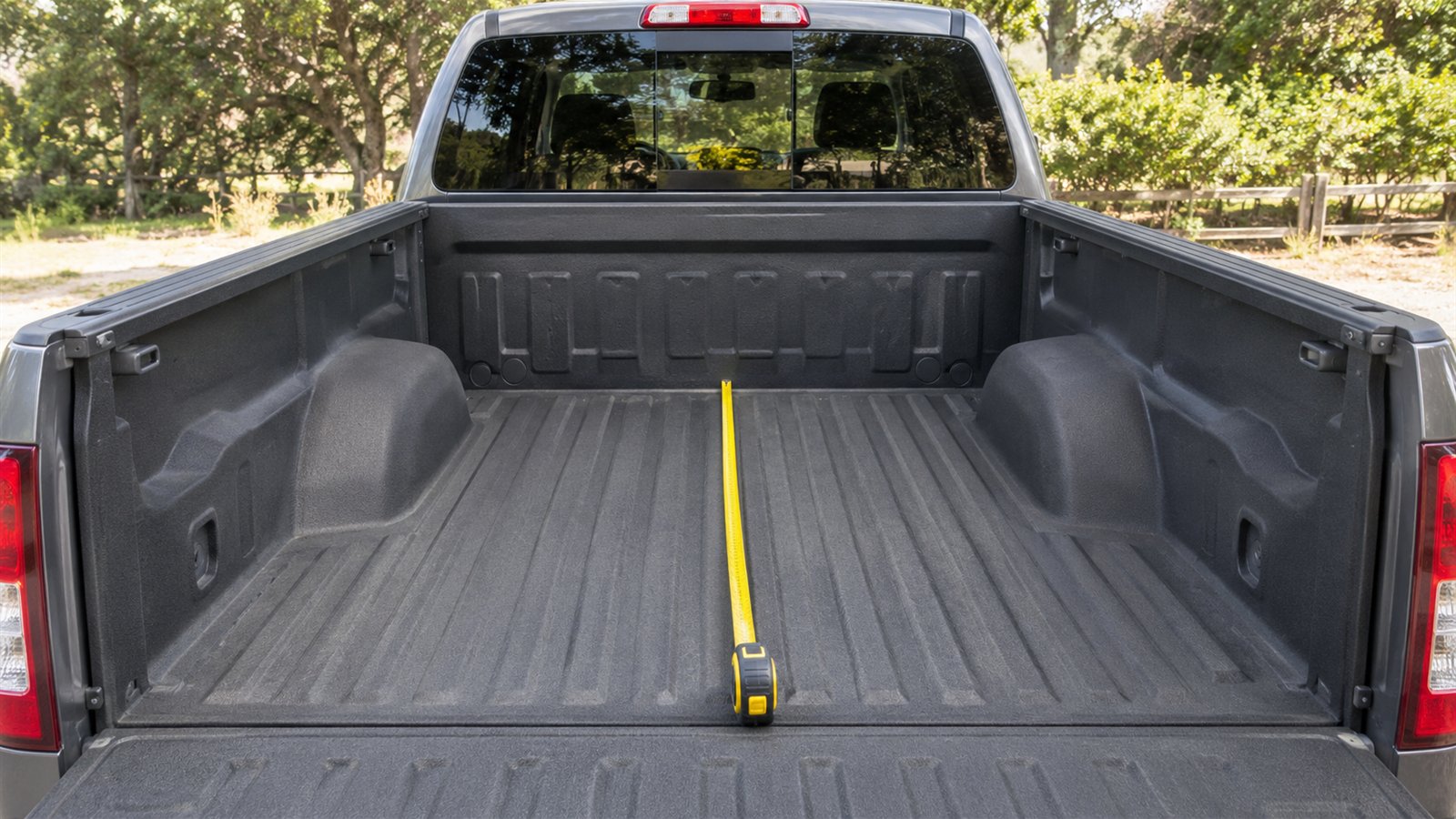
Keep a tape measure, a phone camera and a short shopping note together. The aim is a repeatable record you can show a supplier, rather than a rounded number that sounds close to a listing. This guide explains that buying process; the illustration does not establish an exact bed dimension.
Identify the box before measuring it
Write down the model year and body family, including any carryover name such as Classic, LD or Limited. Add the actual cab style. Those fields help distinguish applications, but they do not replace the bed measurement: a cab name can be paired with more than one box.
Look at existing equipment before laying out the tape. A drop-in liner, thick front-wall protector or toolbox may conceal the original surface. Note those pieces instead of measuring to the easiest visible edge and assuming that is the supplier’s reference point. If you cannot reach the specified surface, ask how the manufacturer wants that configuration measured.
Use the cover maker’s reference points
A common approach measures inside the box from the front wall to the inside of the closed tailgate, but the instructions for the cover you are considering control. Keep the tape aligned along the specified path rather than diagonally across the bed. A closed tailgate and an open tailgate are different endpoints.
Record the unrounded reading in inches and photograph the start and finish. Repeat the measurement once. If the two readings disagree, resolve the tape position before shopping; do not average two measurements taken from different surfaces. A photo showing the reference points is more useful than a close-up of an unexplained number.
Keep nominal names separate from measured length
| Information | What to record |
|---|---|
| Truck identity | Exact year, model and body/carryover family. |
| Cab | Manufacturer’s actual cab designation. |
| Box measurement | Reading and the specified reference points. |
| Listing description | Supplier’s matching nominal bed name and application. |
| Installed equipment | Liner, caps, rails, toolbox and other possible interference. |
Names such as short box, five-and-a-half foot and five-foot-eight are shopping labels, not permission to choose the nearest length. Different makers and generations use different dimensions. A listing may also include several applications under one product-family heading, so select the precise vehicle option before comparing prices.
If your reading does not clearly match the fit table, send the record to the supplier. Ask for the application and part number in writing. It is better to resolve the discrepancy while the bed is empty than after opening a heavy cover carton and trying to explain why a rail is almost the right length.
Measure the space the hardware will need
The length match is only the first check. Cover clamps, side rails, drainage arrangements and front seals need the mounting surfaces described by the manufacturer. Record factory cleats and rail systems, and photograph anything attached below or above the rail. Do not assume an aftermarket liner leaves every clamp location unchanged.
Then consider the open cover. A retractable canister occupies space near the cab; a folding design needs room for its stack or upright position. A toolbox lid needs its own movement. Measure these relationships separately from box length so that an accurate cover application does not become an inconvenient overall arrangement.
Turn the measurement into a purchase decision
Choose the opening method only after you have the vehicle record. Our comparison of tonneau-cover mechanisms explains how roll-up, folding and retractable designs use the bed differently. That comparison helps you choose a mechanism; it does not replace the selected product’s fit list.
For an ordinary example, imagine two covers correctly listed for your box. One retracts into a canister where your regular cooler needs to stand, while the other folds clear enough for that cooler. The length application is correct for both, but only a full layout check reveals which one suits the cargo you carry.
Compare options on Amazon: Compare clear, easy-to-read tape measures · Browse cover types after confirming your application
Keep the record for the next accessory
Save the photographs, dimensions and selected part number with the vehicle records. The same information will help when you consider a mat, storage box or rack, although each product can have different reference points and mounting requirements. A cover measurement is not automatically a complete specification for another accessory.
Before final ordering, check that the product option in the cart still matches the exact year, body and box you selected. Read the installation document and return terms. The successful result is a documented match with room to operate, rather than a collection of approximately correct measurements.
Leave a Reply