
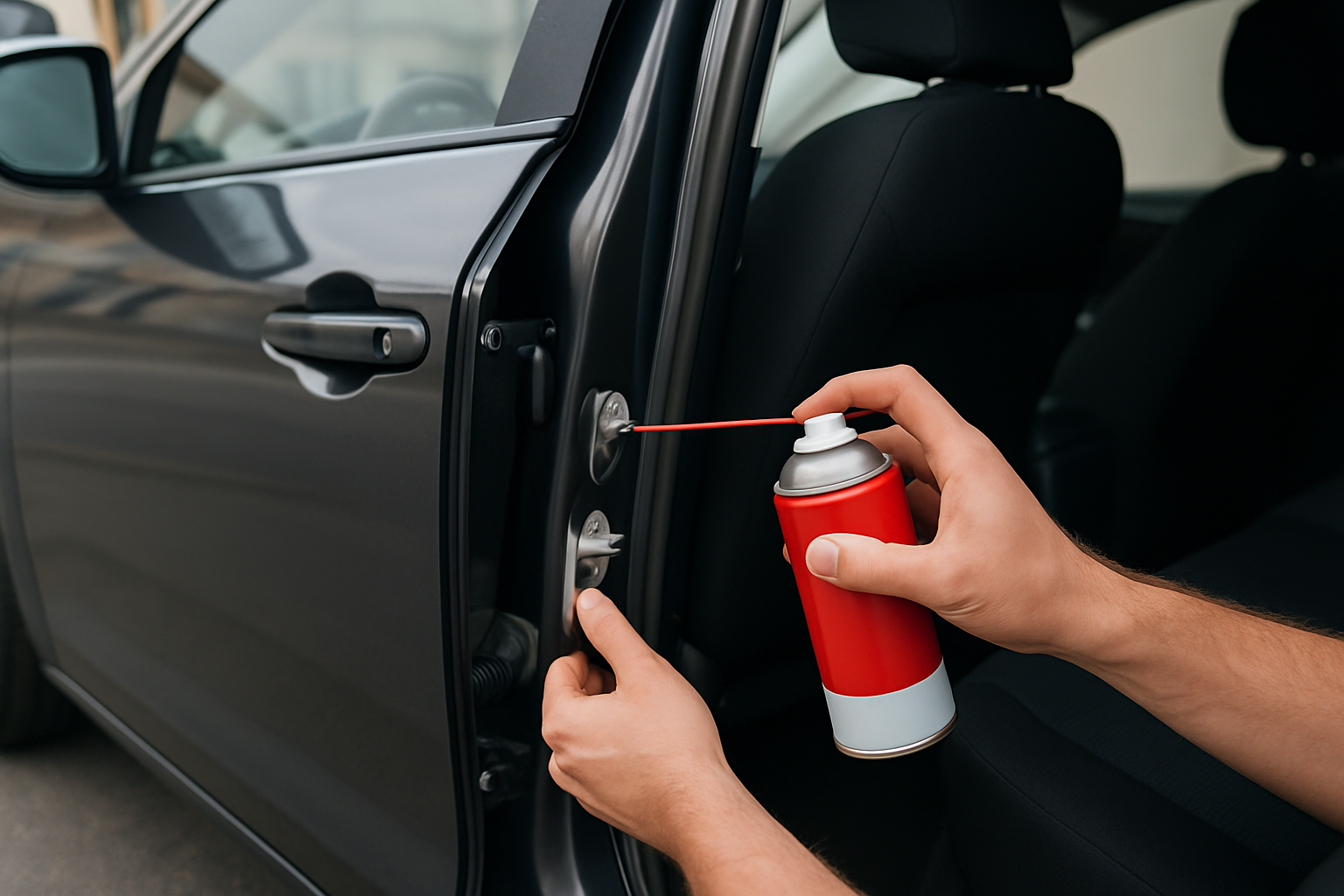
Squeaky car doors aren’t just annoying, they’re embarrassing. Every time you get in or out of your car, those creaking hinges announce your arrival to everyone within earshot. The good news is that fixing this problem takes just five minutes and delivers a huge improvement in how your doors sound and operate.
Car door hinges and latches need regular lubrication to function smoothly. When they dry out, metal components grind against each other, creating that unmistakable squeak. Different parts of your door mechanism require different types of lubricants, and using the right product in the right place makes all the difference.
Why Car Doors Start Squeaking
Your car doors have multiple moving parts that work together every time you open and close them. The hinges bear the weight of the door and pivot constantly. The door latches engage and disengage with the striker plate. Weather seals compress and expand with temperature changes.
Over time, factory lubricants break down or wash away from rain and car washes. Dirt and debris work their way into the mechanisms, acting like sandpaper between metal surfaces. Cold weather makes the problem worse by thickening what little lubrication remains.
Regular maintenance prevents these issues, but most people only think about door lubrication after the squeaking starts. Fortunately, you can restore smooth, quiet operation with the right approach and products.
Choosing the Right Lubricants for Each Component
Different parts of your door system need different types of lubrication. Using the wrong product can attract dirt, cause sticky operation, or even damage rubber components. Here’s what works best for each area:
White Lithium Grease for Hinges
Door hinges need heavy-duty lubrication that stays put. White lithium grease is perfect because it’s thick enough to cling to vertical surfaces and won’t drip off over time. It resists washing away in rain and provides long-lasting protection against squeaks.
The white color also makes it easy to see where you’ve applied it, helping ensure complete coverage of all contact points. Most automotive stores carry white lithium grease in convenient spray cans with precision nozzles.
Silicone Spray for Rubber Seals
Door seals and weather stripping require a different approach. Petroleum-based lubricants can damage rubber over time, causing it to swell, crack, or deteriorate. Silicone spray keeps rubber seals flexible and prevents them from sticking to the door frame.
Silicone spray also works well on window tracks and other areas where you need smooth movement without attracting dirt. It dries to a thin, protective film that repels moisture.
Dry Lubricant for Locks
Door locks and latch mechanisms need lubrication that won’t collect dirt and debris. Wet lubricants in these areas can gum up over time, making locks sticky or difficult to operate. Dry lubricants, usually graphite or PTFE-based, provide smooth operation without the mess.
These products go on wet for easy application but dry to a slippery coating that lasts for months. They work especially well in dusty environments or on frequently used doors.
Tools and Supplies You’ll Need
Gathering the right materials before you start makes the job quick and easy. You probably have most of these items already:
Essential supplies:
- White lithium grease spray
- Silicone spray lubricant
- Dry lubricant (graphite or PTFE)
- Clean rags or paper towels
- Wire brush or old toothbrush
Optional but helpful:
- Flashlight or work light
- Drop cloth to protect driveway
- Penetrating oil for stuck hinges
Step-by-Step Lubrication Process
Work on one door at a time to stay organized. Most people start with the driver’s door since it gets the most use, but you can tackle them in any order.
Preparing the Door
Open the door completely and prop it open if necessary. You need full access to all hinge pins and pivot points. If your car has door-mounted side mirrors, be careful not to hit anything when opening doors fully.
Clean away any visible dirt, old grease, or debris from the hinges using a wire brush or old toothbrush. Don’t worry about getting everything perfectly clean, just remove the bulk of any buildup.
Lubricating the Hinges
Start with the hinge pins, which are usually visible at the top and bottom of each hinge. Spray white lithium grease directly onto these pins, focusing on the areas where metal contacts metal.
Work the door back and forth several times to distribute the lubricant. You should see the grease work its way into the hinge joints. Add more if needed until all pivot points are covered.
Don’t forget the door check mechanism, which controls how far the door opens and holds it in position. This usually requires a separate application of white lithium grease.
Treating the Door Latches
Locate the door latch mechanism on the edge of the door. This is the part that catches the striker plate when you close the door. Apply dry lubricant to all moving parts of the latch assembly.
Open and close the door several times to work the lubricant into all the components. You should notice smoother operation immediately.
Also treat the striker plate on the door frame. A light coating of white lithium grease helps the latch engage smoothly without sticking.
Conditioning Rubber Seals
Apply silicone spray to all rubber door seals, including the main weather stripping around the door opening. Don’t soak the rubber, just apply a light, even coating.
Pay special attention to areas where the rubber might stick to painted surfaces. Window seals also benefit from silicone treatment, especially if your windows stick when going up or down.
Recommended Products for Best Results
Quality lubricants make a noticeable difference in how long your repair lasts. Here are some proven products that deliver excellent results for car door maintenance:
White lithium grease spray formulated specifically for automotive use provides the best combination of staying power and weather resistance. Look for products that include precision applicator nozzles for accurate placement.
Marine-grade silicone sprays work exceptionally well for rubber seals because they’re designed to withstand harsh weather conditions. These products typically last longer than standard silicone lubricants.
For dry lubricants, PTFE-based products generally outperform traditional graphite sprays. They provide smoother operation and don’t leave dark residue that can stain clothing.
How Often to Lubricate Door Components
Regular maintenance prevents squeaks from returning and extends the life of your door hardware. Most doors benefit from lubrication every six months, but usage patterns and climate affect this timing.
Daily-driver vehicles in harsh climates may need attention every three to four months. Cars that sit for extended periods or live in garages can often go eight months or more between treatments.
Listen to your doors. Any hint of squeaking or stiff operation means it’s time for fresh lubrication. Don’t wait until the problem becomes embarrassing.
Troubleshooting Persistent Door Problems
Sometimes lubrication alone won’t solve door issues. If your doors still squeak or operate roughly after proper lubrication, you might have worn components that need replacement.
Hinge pins can wear over time, creating loose fits that no amount of lubricant will cure. Door bushings may deteriorate, especially in high-mileage vehicles. These problems require mechanical repair rather than just maintenance.
Badly sagging doors might have bent hinges or worn mounting points. This type of damage affects door alignment and can cause wind noise or water leaks along with operational problems.
Protecting Your Work and Cleanup
Wipe away excess lubricant after application to prevent dirt attraction. Pay special attention to areas where you might touch the door, like handles and trim pieces.
White lithium grease can stain concrete driveways, so clean up any drips promptly. Most overspray wipes away easily with a rag, but dried grease may require a degreasing cleaner.
Store your lubricants in a cool, dry place away from heat sources. Most aerosol products have shelf lives of several years when stored properly.
Additional Benefits of Proper Door Maintenance
Well-maintained doors do more than just operate quietly. Proper lubrication reduces wear on mechanical components, potentially saving you money on future repairs.
Smooth-operating doors also seal better against weather and road noise. When latches engage properly and seals remain flexible, your cabin stays quieter and more comfortable.
Regular maintenance also helps preserve your vehicle’s resale value. Squeaky, sticky doors give potential buyers the impression that other maintenance may have been neglected.
Common Mistakes to Avoid
Using household oils like WD-40 as long-term door lubricants creates more problems than it solves. These light oils attract dirt and wash away quickly, leaving you back where you started.
Over-lubricating is almost as bad as under-lubricating. Excess grease collects dirt and can interfere with proper door operation. Apply products sparingly and add more only if needed.
Forgetting about door checks and striker plates means you’re only solving part of the problem. Complete lubrication addresses all moving components for best results.
Frequently Asked Questions
Can I use the same lubricant on all door components?
No, different components require specific lubricants for optimal performance. White lithium grease works best for hinges, silicone spray protects rubber seals, and dry lubricants prevent dirt buildup in locks and latches.
How long does door lubrication typically last?
Properly applied automotive lubricants usually provide smooth, quiet operation for six to eight months under normal conditions. Harsh weather, frequent use, or dusty environments may require more frequent maintenance.
Will lubricating my doors affect my vehicle’s warranty?
Routine maintenance like door lubrication actually supports your warranty by preventing premature wear. Use automotive-grade products and avoid over-application to prevent any potential issues.
What should I do if lubrication doesn’t stop the squeaking?
Persistent squeaks after proper lubrication usually indicate worn components like hinge pins, bushings, or door checks. These parts may need professional inspection and replacement to restore proper operation.
Leave a Reply